 Ferndale Siding
 Why Decks Near Sandy Point Take a Different Kind of Beating
Sandy Point sits close enough to saltwater that the air itself becomes part of the maintenance equation. Homes here deal with a combination most inland Whatcom County properties don't face at the same intensity: salt-laden air, driving rain off the water, and a moss season that runs longer than almost anywhere else in the continental U.S. A deck built or repaired without accounting for all three won't hold up as long as it should, no matter how good the lumber looked on installation day.
Salt Air and Metal Fatigue
Salt in the air accelerates corrosion on anything metal — fasteners, joist hangers, post bases, railing hardware. A screw or bracket that would last decades in a drier, inland yard can start showing rust streaks and weakening within a few years this close to the water. Once hardware corrodes, it loses holding strength long before it looks obviously bad, which is part of why hidden structural issues are more common in Sandy Point deck repairs than cosmetic ones.
Driving Rain and Standing Water
Storms coming off the water tend to drive rain sideways, which means water finds its way into joints, board gaps, and ledger connections that a straight-down rain would never reach. Add in our normal Pacific Northwest rain volume and you get decks that stay damp far more of the year than most homeowners realize. Wood that never fully dries between rain events is wood that rots from the inside before it ever looks bad on the surface.
A Long Moss Season
Ferndale's mild, wet winters and shoulder seasons give moss and algae months to establish themselves on any shaded or north-facing deck surface. Moss holds moisture directly against the wood, and it also makes boards dangerously slick. A deck that looks "just a little green" is often a deck that's been sitting wet under that growth for weeks or months at a stretch.
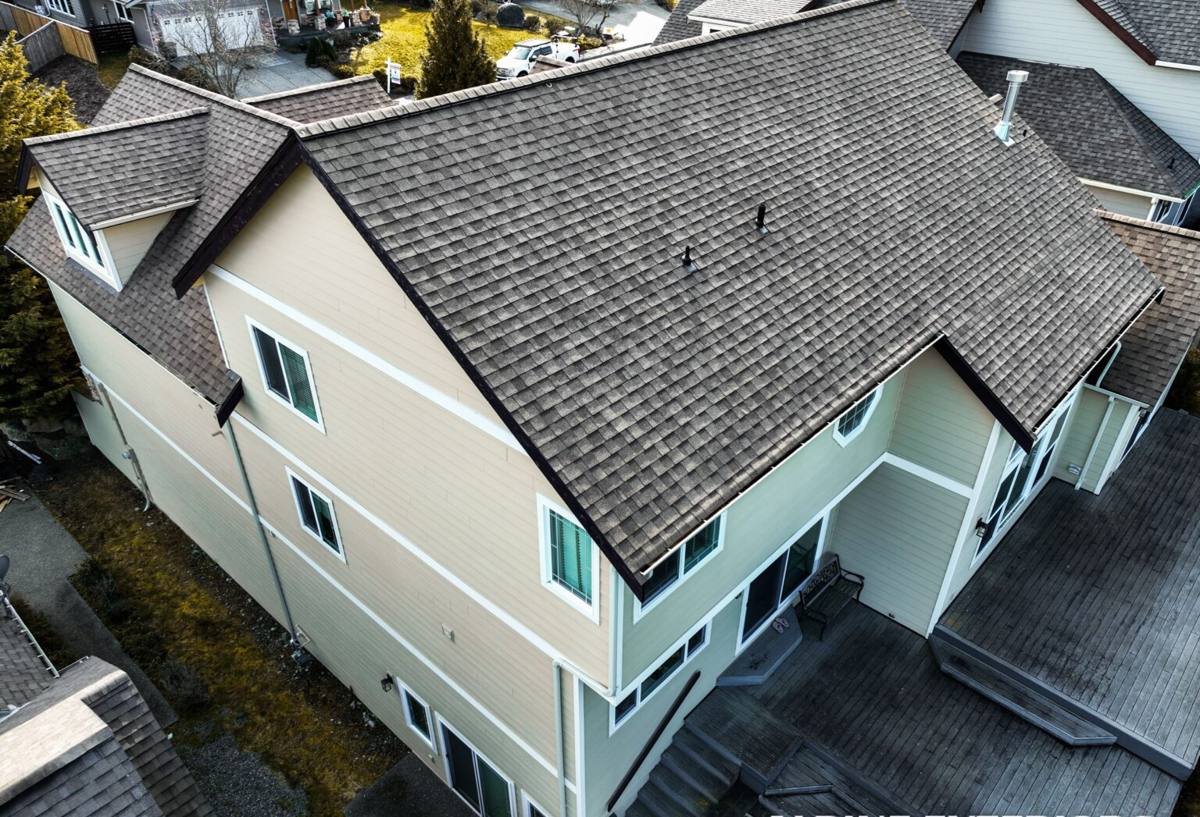
Signs Your Sandy Point Deck Needs Repair, Not Just a Wash
Some problems are obvious. Others hide until someone puts real weight on the wrong spot. Here's what we look for, and what you can check yourself before calling anyone:
- Soft or spongy spots when you walk across the decking, especially near the house or at board ends
- Rust streaking around screws, joist hangers, or post connectors
- Gaps or separation where the deck ledger meets the house siding or foundation
- Railings or stair rails that flex or wiggle more than a firm push should cause
- Persistent moss or dark staining in the same spots season after season
- Visible daylight or cracking where support posts meet footings
- A musty smell coming from underneath the deck structure
- Nails backing out or fasteners that spin freely instead of holding tight
Any one of these on its own might be minor. Two or three together, especially involving the structural framing rather than just the surface boards, usually means it's time for a real inspection rather than another season of "keep an eye on it."
What a Correct Deck Repair Actually Involves
A repair that actually holds up has to address both what you can see and what you can't. We break it into two categories every time.
Structural Components
This is the framework nobody sees once the decking is down: the ledger board bolted to the house, the joists it supports, the beams and posts carrying the weight down to the footings, and every hanger and fastener tying it together. Structural repairs are non-negotiable items — a deck with rotted joists or a failing ledger connection is a safety issue, not a cosmetic one, regardless of how good the surface boards look.
Surface and Rail Components
This covers the decking boards themselves, stair treads, and railings — the parts that take direct weather exposure and direct foot traffic. These are often what prompts the call in the first place, since splintering boards or loose railings are what homeowners notice day to day. But surface repairs done over a compromised structure are a temporary fix at best, which is why we never quote one without checking the other.
Repair or Replace? Weighing the Factors
Not every deck problem calls for a full rebuild, and not every deck is worth patching indefinitely. The honest answer usually comes down to how much of the structural framing is still sound.
| Factor | Repair Usually Makes Sense | Replacement Usually Makes Sense |
|---|---|---|
| Structural framing | Joists and ledger are solid; damage is isolated | Rot or rust affects multiple structural members |
| Age of the deck | Under 10-15 years, built to a reasonable standard | Older deck already near the end of its service life |
| Extent of damage | A few boards, one section, or specific hardware | Damage spread across most of the deck surface |
| Code compliance | Original build already meets current guardrail and attachment code | Older railing heights, spacing, or ledger attachment don't meet current code |
| Budget goals | Lower cost, targeted fix to extend usable life | Investment in a longer-term, lower-maintenance structure |
Cost for isolated repairs — a handful of boards, a hardware upgrade, a railing section — is typically a few hundred to a couple thousand dollars. Structural work involving joists, beams, or a full ledger rebuild runs higher, and a full replacement is its own separate estimate. We give you real numbers after we've actually looked at the deck, not before.
How We Approach a Deck Repair in Sandy Point
- Inspection from the ground up. We check the ledger connection, get underneath the deck to look at joists and posts, and test the surface for soft spots — not just a walk-around from the top.
- Honest diagnosis. We tell you what's actually failing and why, including whether the cause is age, water intrusion, hardware corrosion, or a build issue from the original construction.
- A clear repair plan. You get a written scope and price before any work starts, broken down by structural versus surface work so you know exactly what you're paying for.
- The repair itself. We replace what needs replacing, upgrade hardware where the original fasteners weren't suited to this environment, and correct any drainage or flashing issues that caused the damage in the first place.
- Final walkthrough. We check the repaired areas with you, confirm everything is solid underfoot, and point out anything worth watching going forward.
Material and Hardware Choices That Matter This Close to Saltwater
Fasteners and Connectors
This is where a lot of otherwise decent deck repairs fail early in a Sandy Point setting. Standard galvanized fasteners can hold up fine in a drier inland location but corrode faster here than most homeowners expect. Our standard is to use stainless steel or heavy hot-dip galvanized hardware rated for coastal exposure on any repair we do, even when it costs more up front, because replacing corroded hardware in five years costs more than doing it right the first time.
Decking Material Trade-offs
Wood and composite decking each have real trade-offs in this climate, and we'll walk you through both honestly rather than push whatever's easiest for us to install. Wood costs less initially but needs more consistent upkeep — cleaning, sealing, and moss control — to hold up against the rain and salt air. Composite costs more up front and needs far less maintenance, but it's less forgiving of poor substructure ventilation and requires correct installation to avoid moisture getting trapped underneath. Neither is a bad choice; the right one depends on how much upkeep you want to take on versus pay for once.
Permits and Code Considerations
Deck repair and rebuild work in the Ferndale area falls under Whatcom County and City of Ferndale building requirements depending on your property's exact location, and the scope of work matters — replacing a few boards is different from rebuilding structural framing or changing the deck's footprint. Guardrail height, baluster spacing, and ledger attachment to the house all have code requirements that matter for safety, not just paperwork. We'll tell you plainly whether your project needs a permit before we start, rather than leaving you to find out later.
Why Hiring a Crew That Already Works in Sandy Point Matters
A contractor who's worked decks in this specific area already knows what tends to fail here and why — which hardware holds up, which shaded corners grow moss fastest, and which original construction shortcuts show up as problems five or ten years later. That's different from general deck experience. We'd rather quote you accurately based on what we've actually seen fail in this environment than guess based on how decks perform somewhere drier or further from the water.
Getting the Most Life Out of a Repaired Deck
A good repair is only half the equation — a bit of regular upkeep afterward makes a real difference in how long it lasts:
- Sweep debris off the deck regularly so it doesn't trap moisture against the boards
- Clean moss and algae off shaded areas before it has a chance to spread
- Check railings and stair treads for looseness once or twice a year
- Keep gutters and downspouts clear so runoff isn't landing directly on or under the deck
- Reseal wood decking on the schedule appropriate for the product you have
- Glance underneath the deck occasionally for early signs of rust or dampness
None of this requires a professional visit every time — it just keeps small issues from becoming structural ones between inspections.
If your Sandy Point deck has soft spots, rusting hardware, stubborn moss, or you're just not sure whether it needs repair or replacement, we're happy to take a look. The estimate is free, there's no pressure either way, and you'll get a straight answer about what your deck actually needs.