 Ferndale Siding
 Board & Batten Siding, Built for Where Sandy Point Actually Sits
Sandy Point sits right up against the water in Whatcom County, and that location changes what a home's exterior has to deal with every single day. Homes a few miles inland in Ferndale get rain and cold winters. Homes at Sandy Point get all of that plus salt-laden air blowing in off the water, wind-driven rain that hits siding sideways instead of straight down, and a moss and algae season that runs longer than almost anywhere else in the county because the air stays damp so much of the year. Board & batten siding — the vertical board pattern with narrow strips covering the seams — is a strong look for this kind of setting. But it only performs if it's built from the right material and installed with the coastal exposure in mind, not just installed the way it would be on a sheltered inland lot.
This page is specifically about board & batten siding for homes in the Sandy Point area of Ferndale. It's not a generic siding overview — it's what this particular style needs to hold up in this particular location, what a correct installation actually involves, and why a crew that already works this stretch of shoreline is worth choosing over one that doesn't.
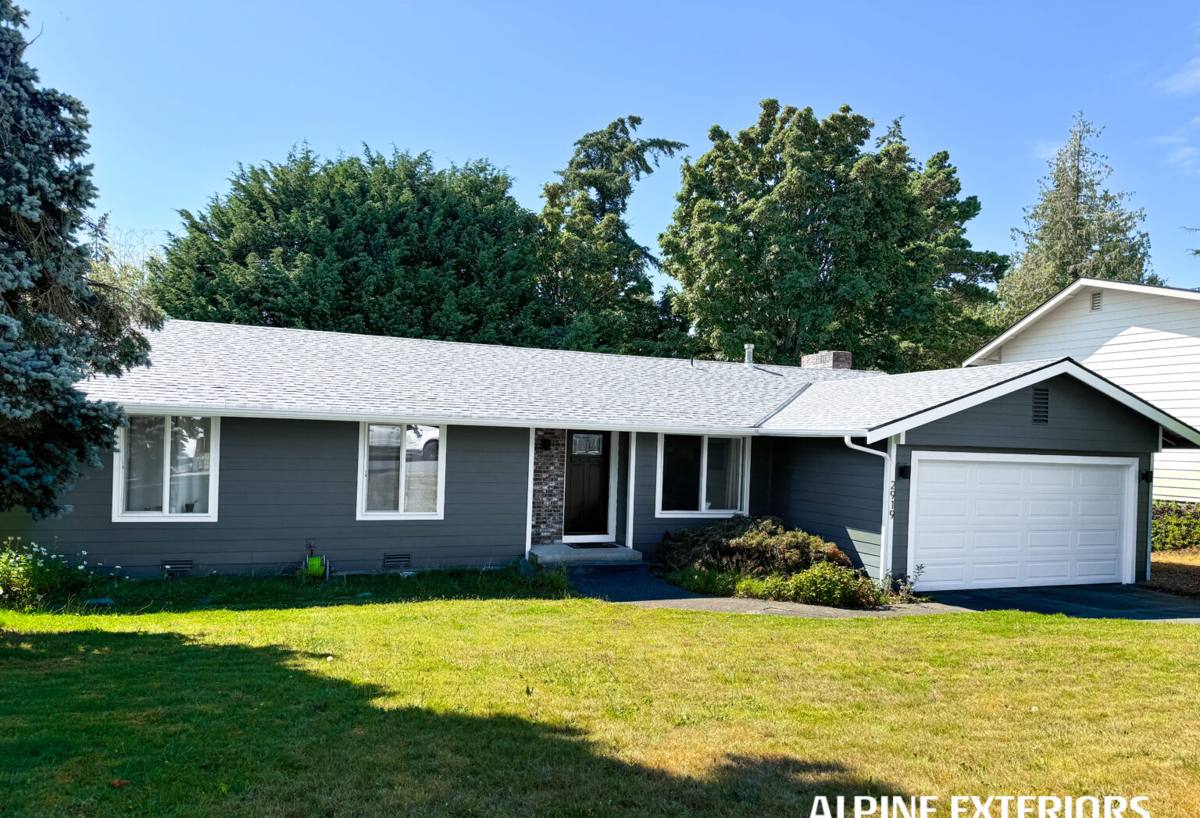
What Salt Air, Driving Rain, and Moss Season Actually Do to Siding
Each of these three conditions attacks siding in a different way, and board & batten's design — vertical boards with raised battens over the seams — means the details matter more than they would on a flatter siding profile.
Salt air
Airborne salt is corrosive to exposed metal fasteners, flashing, and trim, and it accelerates the breakdown of finishes that aren't engineered to resist it. On a waterfront lot like Sandy Point, salt exposure is a daily, year-round condition, not an occasional storm event. Siding, fasteners, and the finish on top of them all need to be chosen with that in mind.
Wind-driven rain
Rain that comes in sideways off open water finds its way into gaps that straight-down rain never would. Board & batten has more vertical seams than lap siding, and every one of those seams — plus every joint where a batten meets a window, door, or corner — is a potential entry point if it isn't flashed and sealed correctly. This is where installation quality matters more than the material choice itself.
Moss and algae season
Constant dampness near the water, combined with shaded north and east-facing walls common on wooded coastal lots, gives moss and algae a longer growing window than siding sees further inland. A siding surface that absorbs moisture stays damp longer and gives moss more to hold onto. A dense, factory-finished surface sheds water faster and gives it far less to grip.
Why Board & Batten Fits Sandy Point Homes
Board & batten has become a popular choice along the Whatcom County coastline for good reason — the strong vertical lines read well against water views and wooded lots, and it pairs naturally with the modern-farmhouse and Pacific Northwest coastal styles common in the area. It also has practical upside in a wet climate: the vertical board orientation sheds water down the face of the wall rather than collecting on horizontal ledges the way some lap profiles can at butt joints. That's a genuine advantage in a location that sees this much rain.
The trade-off is that board & batten has more seams, more trim pieces, and more places where two pieces of material meet than a standard horizontal lap job. Every one of those meeting points is a decision point for the installer — flash it correctly or leave a future leak. That's true with any material, but it's a bigger deal here because Sandy Point homes don't get a break between storms the way an inland lot might.
What Correct Board & Batten Installation Involves
A board & batten job that's actually built for this location isn't just panels and strips nailed to the wall. The details that matter, in order of how often they get skipped:
- Weather-resistive barrier and rainscreen gap: A drainage plane behind the siding lets any moisture that does get past the surface find its way back out instead of sitting against the sheathing.
- Correct fastener type and spacing: Coastal exposure calls for fasteners rated for it, driven at the spacing and depth the manufacturer specifies — not just "close enough."
- Flashing at every horizontal transition: Window heads, door heads, and any horizontal trim need flashing that directs water out and away, not just caulk covering a gap.
- Batten spacing and fastening: Battens need to land over solid backing and be spaced to allow the panel underneath to expand and contract without stressing the seams.
- Sealant used only where it belongs: Sealant is a backup, not the primary water management strategy. A job that relies on caulk to do the flashing's job will fail first at the coast.
- Factory-finished material, not field-primed: A finish applied at the factory under controlled conditions holds up to salt air and UV far longer than a coat of paint or primer applied on site.
James Hardie Board & Batten: The Only System We Install
We install James Hardie fiber cement exclusively — for board & batten and for every other siding profile. We don't install vinyl, LP SmartSide, primed spruce, cedar, or other fiber cement brands, and we're upfront about why: on a lot like Sandy Point, the material and the finish are doing just as much work as the installation.
Hardie's board & batten systems use fiber cement panels with matching fiber cement battens, finished with the ColorPlus factory finish process. That finish is baked on and backed by its own finish warranty, which matters directly here — it resists fading and the finish breakdown that comes from constant salt and UV exposure far better than a field-applied coat. The fiber cement itself is dense, non-combustible, and doesn't rot, swell, or feed moss the way wood-based products can when they stay damp as long as siding does near the water.
We won't put a product on a Sandy Point home that we know is going to need more maintenance, trap more moisture, or fade faster than it should in this exposure — even if it costs less up front. That's the standard, on every job, not just the ones near water.
Comparing the Options Homeowners Ask About
| Material | Behavior in Salt Air / Driving Rain | Moss & Algae Resistance | Why We Do or Don't Install It |
|---|---|---|---|
| James Hardie fiber cement (board & batten) | Dense, non-combustible, factory finish resists salt and UV breakdown | Dense surface, doesn't feed moss the way wood fiber can | What we install — built for this exposure and backed by a real warranty |
| Vinyl board & batten | Can warp or become brittle with temperature swings and long-term UV/salt exposure | Seams and panel laps can trap moisture and grime | We don't install it — trade-offs don't hold up long-term in this climate |
| Cedar or primed wood board & batten | Absorbs moisture, needs ongoing sealing and repainting near water | Wood fiber feeds moss and algae faster when kept damp | We don't install it — maintenance burden is too high for the payoff |
| Other fiber cement brands | Similar base material, but finish systems and warranty structures vary | Generally comparable if dense and factory-finished | We standardized on Hardie for finish quality, product line depth, and warranty support |
Our Process for a Sandy Point Job
Every job starts with a walk of the exterior, not a drive-by estimate. On a waterfront lot we're specifically checking wall orientation relative to prevailing wind and water spray, existing moisture damage around windows and at the base of walls, current ventilation and drainage behind the existing siding, and site access — waterfront lots can have tighter driveways, retaining walls, or limited staging space that need to be planned for before material shows up.
From there:
- Written scope covering tear-off, any sheathing repair found once old siding is off, rainscreen and weather barrier install, Hardie board & batten install, flashing at every opening, and trim.
- Material ordered in the confirmed color and profile — factory-finished, so there's no field painting step to schedule around weather.
- Install, with flashing and fastening inspected as we go, not just at the end.
- Final walkthrough with the homeowner before we call the job done.
We don't shortcut the tear-off inspection on this stretch of coastline. Wall assemblies near the water are more likely to have hidden moisture history than an inland home the same age, and finding that before new siding goes up is a lot cheaper than finding it after.
Maintaining Board & Batten Siding at Sandy Point
Correctly installed Hardie board & batten is low-maintenance, but "low" isn't "none" in this location. A short seasonal checklist:
- Rinse salt residue off the siding a few times a year, especially on walls that face open water directly.
- Check caulking at trim and window edges annually — sealant is a backup layer and does wear over time.
- Keep vegetation and shaded debris off north- and east-facing walls where moss has the longest season to establish.
- Watch gutters and downspouts near board & batten walls — overflow running down the face defeats even a well-flashed install over time.
- Have any impact damage or loose trim looked at promptly rather than waiting for the next scheduled paint or maintenance visit.
Why a Crew That Already Works Sandy Point Matters
Siding installation on a waterfront lot isn't the same job as siding installation three miles inland, even though the materials list looks identical. A crew that already works Sandy Point knows what the wind and spray exposure actually look like on different lots, what Whatcom County permitting and any applicable shoreline or community requirements involve before work starts, and how to plan access and staging on lots that don't always have a wide-open driveway. That local familiarity shows up in fewer surprises mid-job and a finished install that's actually built for the exposure it's going to sit in, not a generic install dropped onto a coastal lot.
If you're planning a board & batten project at Sandy Point, we're glad to walk the exterior with you and put together a straightforward, no-pressure estimate — no games, just what the job needs and what it costs. There's a form below to get that conversation started.