 Ferndale Siding
 Why Semiahmoo's Coastal Exposure Is Hard on Decks
Semiahmoo sits close enough to the water that salt-laden air is a constant, low-grade stress on anything built outdoors. Add in the wind-driven rain that moves through this part of Whatcom County for much of the year, plus the shaded, damp conditions that let moss take hold on decking boards, and you get an environment that ages an ordinary deck faster than it would in a drier, more inland setting. That doesn't mean a deck can't last for decades here — it means the materials, fasteners, and detailing have to be chosen with this specific exposure in mind, not built to a generic spec.
Most of the deck failures we see in this area aren't failures of the decking boards themselves. They're failures of the parts homeowners rarely think about: the ledger connection to the house, the fasteners holding the frame together, and the footings underneath. Salt air accelerates corrosion in anything less than fully rated hardware, and the near-constant moisture load means wood that stays wet longer than it should will rot from the inside before it ever looks bad on the surface.
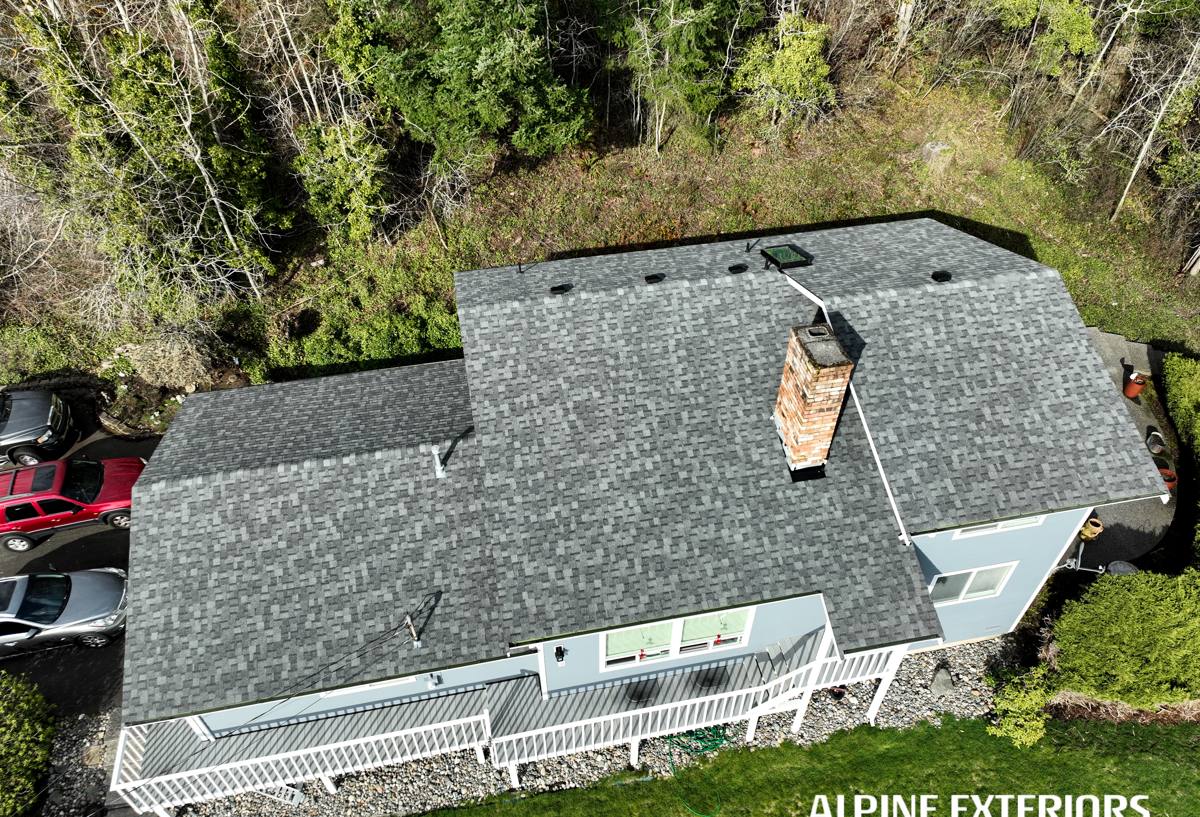
Signs a Semiahmoo Deck Needs Replacement, Not Just Repair
Repair makes sense when the problem is isolated — a cracked board, a loose rail cap, a single damaged post. Replacement becomes the honest answer once the damage is systemic: when the framing, the fasteners, and the surface are all showing wear at the same time, patching one part just shifts the failure to the next. Here's what tells us a deck has crossed that line:
- Soft, spongy, or spring-feeling boards anywhere on the deck surface
- Rust streaking around fastener heads, joist hangers, or ledger bolts
- Cupping, splitting, or graying concentrated on the shaded, north-facing side
- Moss or green growth that comes back within weeks of cleaning
- Noticeable movement or bounce in railing posts when you lean on them
- A ledger board that shows staining, swelling, or a gap where it meets the house
- Footings that have shifted, heaved, or show visible cracking
- A deck older than 15-20 years that has already had several rounds of board or repair patches
Any deck showing the first two items on that list is a safety question, not just a cosmetic one, and is worth having looked at regardless of the deck's age.
What a Correct Deck Replacement Involves
Starting With What's Underneath
A deck replacement done right starts below the surface, not above it. That means full tear-off of the old decking so the framing, ledger, and footings can actually be inspected — not just glanced at from underneath. In a climate like ours, framing lumber that looks fine from a few feet away can be soft at the ledger connection or around joist hangers where water has been sitting the longest. We check footing depth and condition, joist spacing and sizing for the actual span and load, and the ledger-to-house connection, which is the single most safety-critical joint on any attached deck.
The Decking Surface Comes Second
Once the substructure is sound, the decking material, fastening method, and board spacing get decided based on how the deck sits — how much shade it gets, how close it is to the water-facing side of the house, and how much airflow moves underneath it. Board gaps that are too tight trap moisture and encourage moss between boards. Gaps that are too wide look sloppy and catch debris. Getting that spacing right for the material and the site is a small detail that has an outsized effect on how long the deck stays clean and dry.
Decking Material Comparison for Salt Air and Moisture
There's no single "correct" decking material for every home — it depends on budget, how much maintenance you're willing to do, and how exposed the deck is. Here's how the common options generally hold up in a salt air, high-moisture setting like Semiahmoo:
| Material | Salt Air & Moisture Behavior | Maintenance Load | General Cost Position |
|---|---|---|---|
| Pressure-treated wood | Prone to fastener corrosion and surface checking; needs a sealed finish to resist moss and graying | Higher — annual cleaning and periodic re-sealing | Lower upfront |
| Cedar | Naturally moisture-resistant but still needs sealing near salt air; softer surface shows wear faster | Higher — regular finish maintenance | Mid-range |
| Capped composite | Doesn't absorb moisture or support rot; can still stay slick with moss if not cleaned periodically | Lower — occasional washing | Mid to higher |
| PVC / cellular vinyl | Fully moisture-sealed, no wood fiber to rot; best resistance to salt air and constant damp | Lowest — washing only | Higher |
We'll walk you through this trade-off honestly rather than push whatever has the best margin. A well-sealed and properly maintained wood deck can still make sense on a budget; a composite or PVC deck makes sense if you want to spend less time maintaining it over the next 20 years. What we won't do is put a low-maintenance decking board over framing and fasteners that weren't upgraded to match — that's where the real failures start.
Fasteners and Flashing: Where Coastal Decks Actually Fail First
Given how much salt air matters here, hardware selection deserves its own section. Standard electro-galvanized screws and connectors corrode faster near the water than most homeowners expect, sometimes visibly rusting within a few seasons. For a Semiahmoo deck, we use stainless steel or heavy hot-dip galvanized fasteners and structural hardware rated for the exposure, not the minimum grade that would pass in a drier inland yard.
Flashing matters just as much as the fasteners. The ledger board — where the deck bolts into the house — needs proper flashing to keep wind-driven rain from working its way behind the siding and into the house's own framing. This is one of the most common defects we find on older decks in wet coastal areas, and it's invisible until the rot has already spread. Joist tape over the top of the framing lumber adds another layer of protection, keeping water from sitting directly on cut or fastened wood surfaces where rot typically starts.
Hidden fastener clip systems are worth a mention too — they give a clean, screw-free surface, but the clip material and the gap they leave underneath the board affect how well that area drains and dries. On a shaded or heavily exposed deck, we factor that into which fastening system we recommend rather than defaulting to whatever looks best in a showroom.
Our Deck Replacement Process
- On-site assessment — we inspect the existing deck, ledger connection, footings, and surrounding siding to understand the actual condition, not just the visible wear.
- Written scope and estimate — a clear breakdown of what's being replaced, the materials and hardware involved, and the cost, before any work starts.
- Permit handling — we manage the permit application and required inspections so you don't have to navigate the county process yourself.
- Tear-off and disposal — the old deck comes down and off the property; we don't leave debris piled on-site.
- Framing, ledger, and footing correction — any structural issues found during tear-off get addressed before new decking goes down.
- Decking installation — boards, spacing, and fastening method installed to match the material and the site's exposure.
- Railings and stairs — built and installed to current guardrail and stair code requirements.
- Final walkthrough — we go over the finished deck with you and make sure the site is cleaned up before we consider the job done.
Permits and Code Considerations
Most deck replacements in this area require a building permit, particularly when the framing, footings, or guardrails are being rebuilt rather than just resurfaced. Guardrail height, baluster spacing, and stair rise-and-run all have specific code requirements that we build to as a matter of course, not as an afterthought. If your property sits close to the shoreline, there can also be additional permitting steps beyond a standard residential permit — we sort through that with the county as part of our process rather than leaving you to figure out which department to call.
Skipping permits on a deck rebuild is a common shortcut some contractors offer to save time or money, but it typically becomes the homeowner's problem later — at resale, at insurance claim time, or if the county flags it during an unrelated inspection. We pull the permit because it protects you, not just because it's required.
Why It Matters to Hire a Crew That Already Works in Semiahmoo
A contractor who's worked this area knows which side of a house typically takes the worst of the weather, how fast moss builds back up on a shaded deck here versus an inland yard, and which hardware grade is worth the extra cost given the salt air. That's not something you can fully substitute with a general decking spec sheet — it comes from having seen how decks in this specific setting actually age over time.
It also means fewer surprises during the job. Local familiarity with typical framing conditions, common ledger issues on homes of a certain age, and how the county handles permitting in this area all shorten the distance between an estimate and a finished deck that matches it.
If your deck in Semiahmoo is showing its age — soft boards, rust streaks, stubborn moss, or a rail that doesn't feel as solid as it used to — we're happy to take a look and give you a straightforward, no-pressure estimate using the form below.