 Ferndale Siding
 Window Replacement on Semiahmoo: A Different Set of Conditions
Semiahmoo sits out on a narrow spit between Semiahmoo Bay and Drayton Harbor, at the edge of Blaine and Whatcom County's coastline. Homes here take on weather most inland properties never see — salt-laden air moving in from more than one direction, wind-driven rain that hits window assemblies sideways instead of straight down, and a moss and mildew season that runs long into the year on shaded, north-facing walls. Windows sit right at the front line of all of that. They're one of the few building components that combine glass, frame, hardware, and a sealed weather barrier into a single unit, and on an exposed property like this, every one of those parts is working harder than it would a few miles inland.
That's the backdrop for window replacement here. We're not just swapping glass for newer glass — we're replacing a weak point in the building envelope with one that's built and installed to actually hold up to Semiahmoo's exposure. This page covers what that looks like: what the climate does to windows over time, how to tell when repair stops being the right answer, what a correct replacement job involves, and why local experience on this specific stretch of coastline matters.
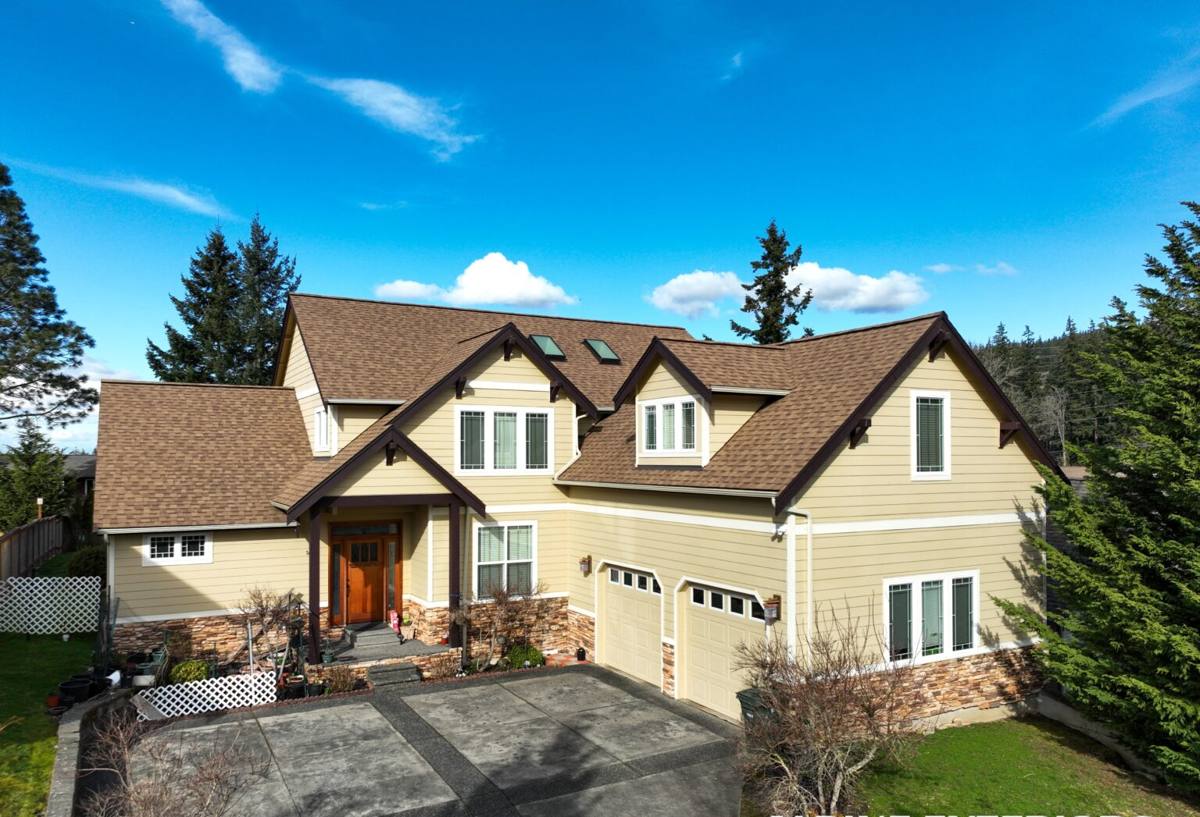
What This Climate Does to Aging Windows
Salt Air and Failing Hardware
Because Semiahmoo has water on more than one side, homes here get salt-laden air from multiple directions rather than a single prevailing exposure. Salt accelerates corrosion in window hardware — hinges, locks, balance mechanisms, and the fasteners holding the frame in place. On older windows, that shows up as locks that stick, cranks that grind, or sashes that no longer sit tight in the frame. Corroded hardware doesn't just make a window annoying to operate; it lets a unit sit slightly open or misaligned, which gives wind and water an opening they wouldn't otherwise have.
Driving Rain Finding Old Flashing Gaps
With almost no windbreak on the spit, wind-driven rain gets pushed sideways into window openings with more force than a typical inland lot ever sees. Flashing and sealant that were adequate when a window was installed years ago can shrink, crack, or separate from the surrounding wall over time, and on an exposed property that gap turns into an active leak path faster than it would somewhere calmer. This is one of the most common reasons we get called out to older Semiahmoo homes — not because the glass has failed, but because water has been getting behind the frame for a while before anyone noticed.
Moss, Mildew, and Rot Around Frames and Sills
Mild temperatures and near-constant humidity support a moss and mildew season that runs most of the year across this part of Whatcom County, and it doesn't spare window trim and sills. Wood sills and trim on the shaded or north-facing sides of a house are usually the first place it shows up, and once moisture is holding against a wood component for months at a time, rot follows. By the time rot is visible at a sill, it's often already reached the framing underneath, which changes a window replacement from a straightforward swap into an opening repair as well.
Signs a Semiahmoo Home Needs Window Replacement
Not every window problem means full replacement — some issues are legitimately fixable with resealing, hardware repair, or a re-glaze. But certain signs point toward replacement being the more honest answer, especially on a property exposed to this much weather:
- Fogging or moisture trapped between panes on a dual-pane window, which means the seal has failed and can't be repaired
- Drafts you can feel around the sash even when the window is fully closed and locked
- Soft, spongy, or visibly rotted wood at the sill, jamb, or surrounding trim
- Windows that are difficult or impossible to open, close, or lock properly
- Visible daylight or gaps between the frame and the surrounding wall
- A noticeable difference in indoor comfort or a spike in heating costs tied to specific rooms
- Paint or finish that keeps failing on the interior sill despite regular upkeep, often a sign of ongoing moisture intrusion
If what you're seeing is limited to one or two of these and the frame itself is still sound, a repair may genuinely be the more cost-effective move. We'll tell you that directly rather than pushing replacement on a window that doesn't need it.
Full-Frame vs. Insert Replacement: Which Fits a Semiahmoo Home
There are two general approaches to replacing an existing window, and which one makes sense depends heavily on the condition of the opening — something that matters more here than in a drier, calmer climate, because moisture damage around the opening is common enough that it changes the right approach.
| Factor | Insert (Pocket) Replacement | Full-Frame Replacement |
|---|---|---|
| What it involves | New window unit installed inside the existing frame | Old frame removed entirely down to the rough opening; new frame and window installed |
| Best suited for | Frames that are still structurally sound and free of rot or water damage | Frames with rot, water damage, or that need resizing or correction |
| Access to flashing | Limited — existing flashing largely stays in place | Full — flashing can be inspected, repaired, or replaced entirely |
| Glass area | Slightly reduced, since the new unit sits inside the old frame | Can match or maximize the original opening size |
| Typical timeline | Faster installation, less disruption to interior trim | Longer, since exterior trim and siding tie-in are also involved |
| Where it matters most here | Fine for openings with no history of water intrusion | The right call anywhere salt air or driving rain has already compromised the original frame or flashing |
On a property like this, we don't default to the faster, cheaper option without checking the opening first. An insert replacement installed over hidden rot or failed flashing just seals the problem back up behind a new window — it doesn't fix it. Part of our assessment is figuring out honestly which approach the opening actually needs, not which one is quickest to install.
Frame Material and Glass Choices for This Climate
Frame material matters more on an exposed waterfront property than it does a few miles inland, since the frame is what's absorbing the ongoing salt exposure and moisture cycling. Vinyl and fiberglass frames generally hold up to sustained coastal conditions with less upkeep than an all-wood exterior finish, which is why we lead with them on weather-facing replacements in Semiahmoo. Fiberglass in particular resists expansion and contraction across temperature swings better than vinyl, which can matter on larger openings. Wood-frame windows with a durable exterior cladding can still be the right choice when the interior look is a priority, but that decision should be made with the exposure in mind, not by default.
On glass, dual-pane units with a low-E coating are the standard we install for both comfort and moisture performance — they reduce condensation on the interior glass surface, which matters in a humid coastal climate where condensation can otherwise contribute to the kind of sill and trim moisture problems described above. We'll walk through the specific glass and frame options that make sense for your home's exposure and budget rather than steering every job toward the same package.
What a Correct Window Replacement Job Involves
Removal and Opening Inspection
The old window comes out carefully, and the opening gets inspected before anything new goes in. This is where hidden rot, failed flashing, or framing damage usually turns up — problems that were invisible from the outside but were already compromising the wall assembly. On Semiahmoo properties, we treat this inspection step as standard, not optional, given how often driving rain finds its way behind older window installations here.
Flashing and Weatherproofing
This is the step that matters most given the exposure on the spit. Flashing has to be sequenced correctly at the head, jambs, and sill so that any water reaching the assembly is directed back out rather than trapped behind the siding or sill. On a full-frame replacement, this means new flashing tied cleanly into the surrounding wall. On an insert replacement, it means confirming the existing flashing is actually sound before covering it back up.
Sealing, Insulation, and Trim
Gaps around the new frame get properly insulated and sealed, not just caulked over on the surface. Exterior trim is reinstalled or replaced to match the surrounding siding, and interior trim is finished cleanly. A window that's correctly sealed and insulated performs better in both directions — it keeps wind-driven rain out and keeps conditioned air in.
Our Process, Start to Finish
- On-site assessment — we look at each window in question, check the condition of the frame and sill, and identify any signs of existing moisture damage
- Honest recommendation — repair, insert replacement, or full-frame replacement, explained with the reasoning behind it
- Written scope and timeline — a clear plan before any work begins, including realistic lead time for the window units to arrive
- Removal and inspection — the old unit comes out and the opening is checked for hidden damage before the new window goes in
- Installation and flashing — the new unit is set, shimmed, and flashed to a sequence built for this climate's exposure
- Sealing and trim — interior and exterior finish work completed to match the rest of the home
What Actually Drives Cost
We won't quote a number without seeing the windows in person, but a handful of factors consistently move the price on window replacement projects here: how many windows are being replaced at once, whether the job is an insert or full-frame replacement, frame material, glass package, window size and configuration, and the condition of the existing opening. A project involving hidden rot repair will naturally cost more than a straightforward insert swap into a sound frame — which is exactly why the on-site assessment happens before any pricing conversation, not after.
Why a Local Semiahmoo Crew Matters
Manufacturer installation guidance is written for average conditions in a moderate climate. Semiahmoo's exposure doesn't match that description — salt air, wind-driven rain, and a long wet season put more stress on a window installation than most manufacturer instructions account for. A crew that regularly works this specific stretch of coastline knows where to spend the extra time: how much flashing lap a given sill detail actually needs here, which fastener grade holds up against the salt exposure, and which older Semiahmoo homes are likely to have hidden sill or framing damage before the old window even comes out.
Those decisions don't come up in a sales conversation, but they're what separates a window replacement that's still performing cleanly in twenty years from one that's showing drafts and soft trim again in five.
What to Ask Before Hiring for Window Replacement Work
- Ask whether they recommend insert or full-frame replacement for your specific windows, and why
- Ask how they inspect for hidden rot or water damage before installing
- Confirm current Washington contractor licensing and active liability insurance
- Get a written scope of work and realistic lead time before signing anything
- Ask how the window unit and the installation labor are each covered under warranty
If windows on your Semiahmoo home are drafty, fogged, sticking, or showing soft trim, it's worth having someone look at the actual openings before you start pricing units. We offer free, no-pressure estimates for window replacement in Semiahmoo and the surrounding area — use the form below to get a time on the schedule.