 Ferndale Siding
 Why Board & Batten Fits the Semiahmoo Waterfront Look
Board and batten has a long history on Pacific Northwest coastal and farm-style homes, and it's easy to see why it keeps showing up on new builds and remodels around Semiahmoo. The vertical lines read as clean and modern on a contemporary build, but the same profile also sits comfortably on a cottage-style or craftsman home without looking out of place. For homeowners near the water who want a facade that feels substantial rather than flat, the shadow lines that board and batten creates do real visual work — even from across the street.
That said, board and batten is a functional decision as much as an aesthetic one. The wide panels and raised battens change how water sheds off the wall, how the assembly handles wind-driven rain, and how much seam length is exposed to the weather compared to standard lap siding. In a marine environment like Semiahmoo's, those differences matter more than they would inland.
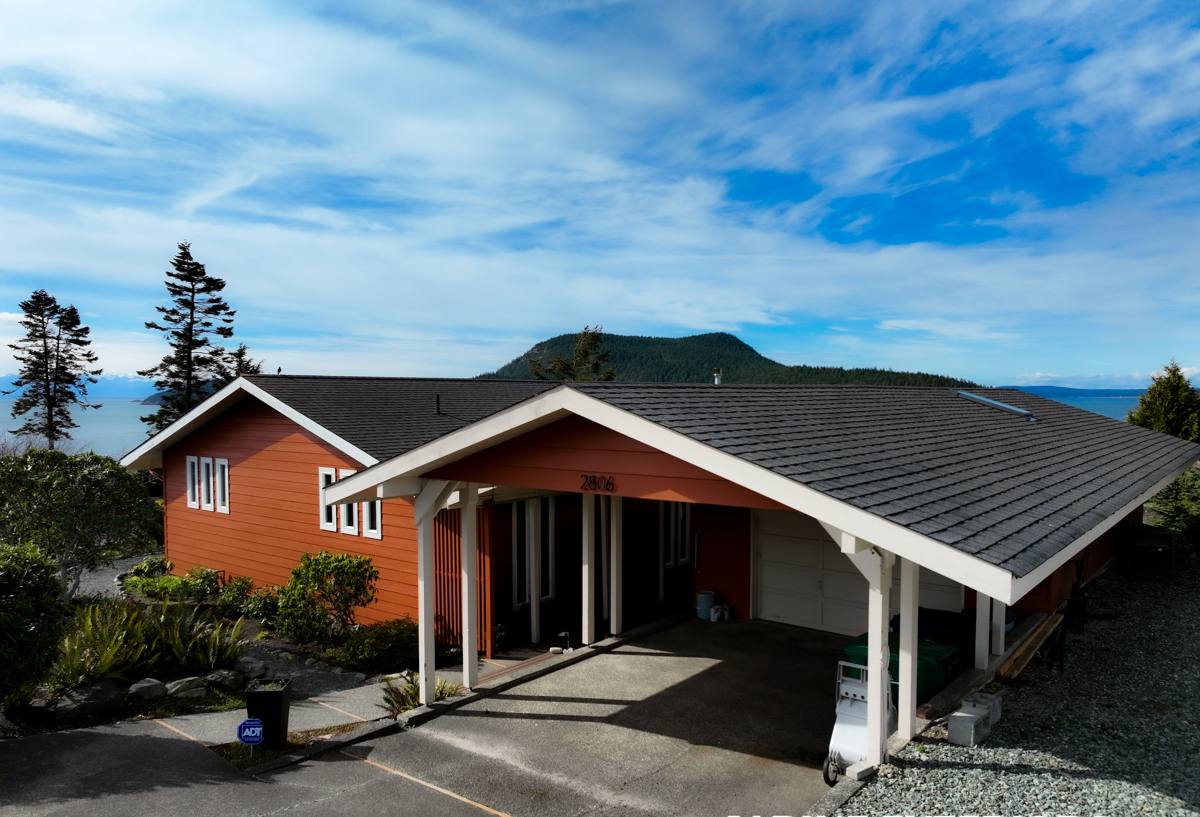
What Salt Air, Driving Rain, and Moss Actually Do to a Wall
Whatcom County's coastal edge deals with a specific combination of stress that inland siding jobs don't have to plan for:
Salt Air
Airborne salt from the water settles on exterior surfaces and accelerates corrosion on anything metal — fasteners, flashing, trim connectors — and it's abrasive to finishes that aren't built to handle it. Over years, a coating that isn't rated for coastal exposure can chalk, fade, or lose adhesion faster than the same product would fifty miles inland.
Driving Rain
Open water exposure means wind-driven rain hits the wall at an angle instead of falling straight down, which pushes water into laps, seams, and fastener penetrations that a calmer inland site would never test. Every horizontal joint and batten seam on a board and batten wall is a place water can try to get behind the siding if it isn't detailed correctly.
Moss and Prolonged Dampness
Western Washington's long wet season keeps north-facing and shaded walls damp for extended stretches, which is exactly what moss and mildew need to take hold. Once organic growth establishes on a wall, it holds moisture against the surface even longer, which is a slow but real threat to any siding material that isn't dimensionally stable or that absorbs water into its core.
Why Board & Batten Installation Quality Matters More Than the Product Choice
Board and batten has more vertical seams per square foot of wall than horizontal lap siding, and every one of those seams is a potential water entry point if it's not backed, flashed, and fastened correctly. This is a profile where installation detail decides whether the siding performs for decades or starts showing problems in year five.
A correct board and batten install on a coastal Whatcom County home should account for:
- Proper weather-resistive barrier and rain screen strategy behind the panels, not just house wrap stapled flat
- Batten spacing and fastening that lets the wall move seasonally without cracking caulk lines or popping fasteners
- Corrosion-resistant fasteners and flashing rated for salt air exposure, not standard interior-grade hardware
- Correct flashing at every window, door, and roof-to-wall transition, since these are the highest-risk leak points on any siding job
- Factory-finished panel faces and cut edges properly sealed, so field cuts don't become the weak point in an otherwise good coating system
Skip any one of these and the siding can look fine for a season or two while the real damage happens behind the wall, out of sight.
James Hardie Board & Batten: The Only System We Put on a Semiahmoo Home
We install James Hardie fiber cement exclusively — we don't offer vinyl, LP SmartSide, Cemplank, Allura, primed spruce, or raw cedar board and batten, and that's a deliberate standard, not a limitation of what we're able to source. Fiber cement is non-combustible, dimensionally stable, and doesn't absorb and swell with moisture the way wood-based products can, which matters directly in a climate with this much sustained dampness.
Hardie's ColorPlus factory finish is baked on and warranted separately from the substrate, which is relevant on a coastal wall — a field-applied paint job has to fight salt exposure and UV from day one, while a factory finish is engineered and tested for exactly that kind of exposure before it ever reaches the site. Hardie also builds climate-specific HZ product lines, so the panels specified for a Pacific Northwest install are formulated for this region's wet-side conditions rather than a generic national spec.
We're not going to tell you every alternative product is unusable — cedar has real appeal, and engineered wood products have improved over the years. But for a coastal wall that has to handle salt air, driving rain, and a long moss season without repainting or re-caulking every few years, fiber cement's stability and factory-finish warranty are why we've standardized on it and why it's what we recommend for Semiahmoo homes specifically.
Our Installation Process
1. On-Site Assessment
We walk the home and look at wall orientation, existing moisture damage, roof overhangs, and how exposed each elevation is to prevailing wind and rain off the water. North and west-facing walls near the shoreline typically need the most attention to detailing.
2. Water Management Plan
Before any siding goes up, we confirm the weather-resistive barrier, rain screen gap, and flashing plan for every penetration — windows, doors, hose bibs, light fixtures, and roof-to-wall intersections. This is the step that determines whether the wall stays dry for the next 30-plus years.
3. Panel and Batten Installation
Hardie panels and battens go up with corrosion-resistant fasteners, correct spacing for expansion, and factory or field-sealed edges per Hardie's published fastening and finishing specs. We don't deviate from manufacturer instructions to save time, because that's exactly where warranty coverage and long-term performance get compromised.
4. Final Walkthrough
We inspect seams, caulk joints, and trim details with you before calling the job finished, and we explain what routine maintenance — if any — the finish will need going forward.
Board & Batten vs. Other Common Profiles for Coastal Homes
| Factor | Board & Batten | Standard Lap Siding |
|---|---|---|
| Visual style | Vertical, bold shadow lines, farmhouse/modern | Traditional horizontal, widely familiar |
| Seam exposure | More vertical seams to detail and flash | Fewer seams, simpler water path |
| Coastal wind-driven rain handling | Excellent when rain screen and flashing are done correctly | Good, more forgiving of minor detailing gaps |
| Best fit | Accent walls, gables, contemporary or farmhouse-style full exteriors | Full-home coverage on most architectural styles |
Many Semiahmoo-area homes end up using both — board and batten on gables or an accent elevation, lap siding on the main walls — which balances the look homeowners want with the practical water-management benefits of fewer seams on the largest wall areas.
Moss and Ongoing Maintenance in a Marine Climate
No siding material is immune to moss growth if a wall stays shaded and damp long enough, but the maintenance burden differs by material. Fiber cement's factory finish resists moss adhesion better than bare or field-painted wood, and it won't swell or rot if moss does take hold before it's cleaned off. Homeowners near the water should still plan on periodic gentle washing of north-facing and heavily shaded walls, keeping gutters clear so runoff doesn't sheet down the siding face, and trimming back vegetation that keeps a wall in constant shade.
Pre-Project Checklist for Semiahmoo Homeowners
- Note which walls face the water or prevailing wind — these need the most careful flashing and rain screen detailing
- Check current siding and trim for soft spots, staining, or paint failure, which can signal moisture already behind the wall
- Ask any contractor for their specific rain screen and flashing approach, not just what siding brand they're quoting
- Confirm fastener and flashing hardware is rated for coastal/salt exposure, not standard interior-grade material
- Get the manufacturer warranty terms in writing, including what's covered on the finish versus the substrate
- Ask how field cuts and panel edges will be sealed before installation
Why Local Experience in Semiahmoo Matters
A crew that already works this stretch of Whatcom County's coastline knows which walls take the worst of the weather off the water, how far salt air travels inland on this shoreline, and how long moss season actually runs here versus a generic regional estimate. That local knowledge shows up in small decisions — where to add extra flashing, which elevation needs a tighter rain screen, how battens should be spaced given the seasonal humidity swings — that a crew unfamiliar with this specific coastal exposure might not think to address.
If you're weighing board and batten for a home in the Semiahmoo area, we're happy to walk the property, look at your specific exposure, and put together a straightforward, no-pressure estimate — use the form below to get started.