 Ferndale Siding
 Roofing Built for Semiahmoo's Marine Climate
Homes in and around Semiahmoo sit close enough to the water that the roof over your head is doing a different job than a roof twenty miles inland. Salt-laden air accelerates corrosion on exposed fasteners and metal flashing. Wind-driven rain off the Strait of Georgia doesn't just fall straight down — it gets pushed sideways under shingle edges and around penetrations that would stay dry in a calmer climate. And the long, wet stretch of fall through spring that defines weather in this part of Whatcom County gives moss and algae months at a time to take hold on any roof plane that doesn't get direct sun or airflow.
None of that means a roof in Semiahmoo needs exotic materials or a completely different design. It means the details — flashing choices, fastener selection, ventilation, and underlayment — have to be handled correctly, every time, because this climate finds every shortcut eventually.
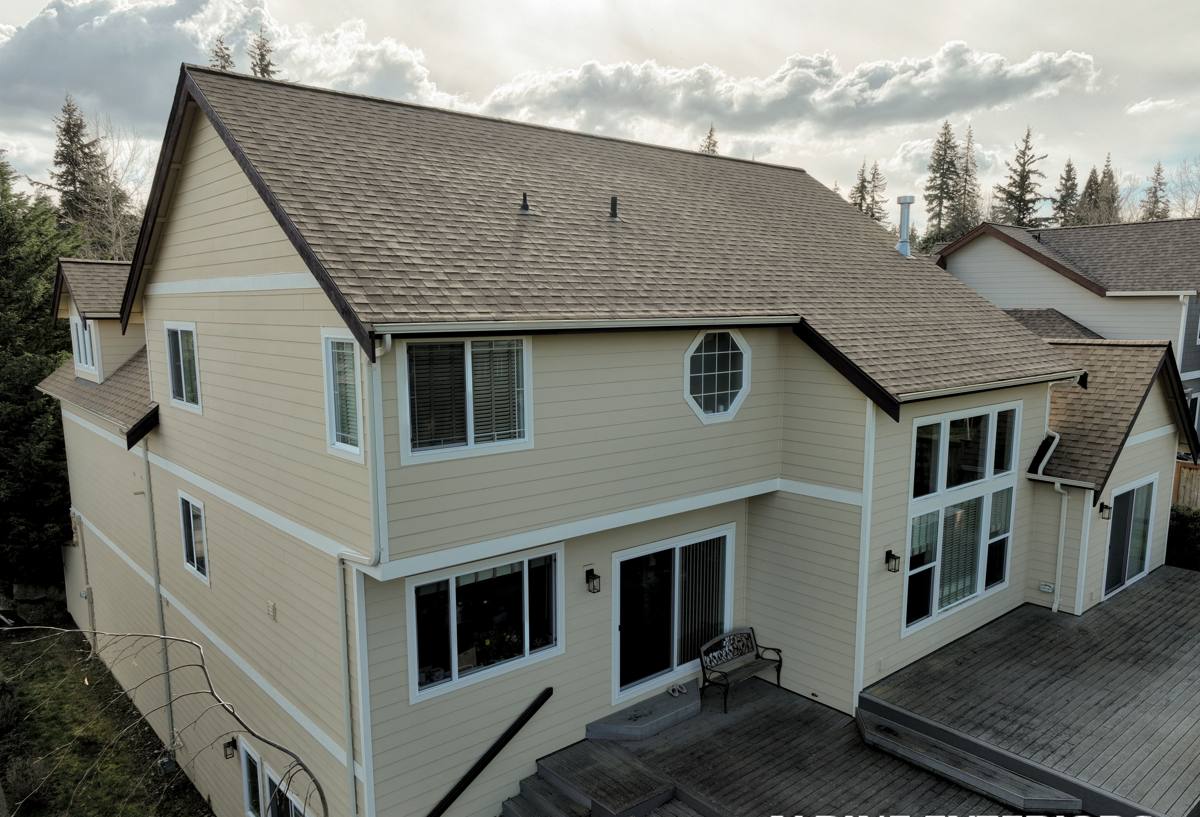
How to Tell a Roof Needs Replacing, Not Just Repairing
Not every roof problem calls for a full tear-off. But in a coastal, moss-prone area, small issues tend to compound faster than they would in a drier climate, so it's worth knowing where the line is.
- Granule loss heavy enough that you can see bare asphalt on multiple slopes, not just one weathered patch
- Shingles that are cupping, curling, or cracking across large sections rather than isolated spots
- Soft or spongy decking felt underfoot in the attic, especially near valleys or eaves
- Repeated leaks in different locations after previous patch repairs
- Moss growth that has lifted shingle edges rather than just sitting on the surface
- Visible daylight through the roof deck from inside the attic
- A roof already past or near the manufacturer's expected service life for its material and exposure
If you're only seeing one or two of these, a repair or a moss treatment plan may still make sense. A straight, honest inspection is the only way to know for sure — we'll tell you if replacement isn't warranted yet.
What a Correct Roof Replacement Actually Involves
Tear-Off and Deck Inspection
We remove the existing roofing down to the deck rather than layering over old material. That's the only way to see the actual condition of the sheathing, catch soft or delaminated plywood before it becomes a bigger problem, and set new underlayment on a flat, stable surface. Any damaged decking gets replaced before anything new goes down.
Underlayment and Water Barrier
Given how much wind-driven rain this area sees, underlayment isn't a place to cut corners. Ice-and-water shield membrane goes at eaves, valleys, and around every penetration — chimneys, vents, skylights — where water is most likely to find a way in. The rest of the deck gets a synthetic underlayment that sheds bulk water and gives the roof a second line of defense if wind ever drives moisture past the primary roofing material.
Flashing
Flashing failure, not shingle failure, is the most common reason coastal roofs leak. We use corrosion-resistant flashing at all transitions — chimneys, sidewalls, valleys, and roof-to-wall junctions — and integrate it properly with the underlayment and siding rather than just caulking gaps. Caulk is a stopgap; correctly lapped flashing is the actual fix.
Ventilation
A roof that can't breathe traps moisture in the attic, which shows up as premature deck rot, mold, and shortened shingle life — problems that show up faster in a humid marine climate than almost anywhere else. We balance intake at the eaves with exhaust at the ridge so the attic actually moves air instead of just having vents installed for appearance.
Final Roofing Material and Fasteners
We use corrosion-resistant fasteners throughout, which matters more here than in a dry inland climate where standard fasteners might hold up fine for decades. The final material — shingles, metal, or another system — gets installed to manufacturer spec with correct nailing patterns and exposure, since improper installation is what voids warranties, not the product itself.
Material Options for Semiahmoo Homes
| Material | Typical Lifespan | How It Handles Salt Air & Moss | Maintenance Load |
|---|---|---|---|
| Architectural asphalt shingles | 25-30 years | Good with algae-resistant granules; needs periodic moss removal | Moderate |
| Standing seam metal | 40-50+ years | Excellent water shedding; coastal-grade coating recommended near the water | Low |
| Synthetic/composite shingle | 30-50 years | Resists moisture absorption; performs well in wet, shaded areas | Low to moderate |
| Wood shake | 20-30 years | Absorbs moisture readily; higher moss and rot risk in this climate | High |
We'll walk through which of these fits your home's exposure, roof pitch, and budget rather than pushing one product across every job. A steeply pitched, sun-exposed roof plane has very different needs than a low-slope, shaded one thirty feet away on the same house.
Designing Around Moss and Algae, Not Just Fighting It
Moss doesn't grow because a roof is old — it grows where moisture sits and sunlight doesn't reach. Trees close to the house, north-facing slopes, and valleys with poor drainage are the usual culprits around Semiahmoo. A few design decisions during replacement reduce how much moss maintenance a roof needs over its life:
- Zinc or copper strips near the ridge on shaded slopes, which release trace metal ions that inhibit moss growth as rain washes over them
- Proper valley design and gutter apron flashing so water doesn't pool at low points
- Adequate attic ventilation so the roof deck itself sheds moisture instead of holding it
- Algae-resistant shingle granules on asphalt roofing, which slow the black streaking common on shaded coastal roofs
None of this eliminates the need for occasional moss removal — nothing does, in this climate — but it stretches the interval and protects the roof between cleanings.
Our Process, Start to Finish
- On-site inspection. We look at the roof, the attic, and the decking condition, not just the shingles from the ground.
- Written estimate. A clear scope of work and price, with material options explained rather than a single take-it-or-leave-it number.
- Scheduling around weather. We plan tear-off for a dry window whenever possible and have a plan to dry-in the deck if weather turns mid-job.
- Tear-off and deck repair. Old material removed, deck inspected, damaged sheathing replaced.
- Underlayment, flashing, and ventilation installed. The parts that don't show but determine whether the roof actually performs.
- Final roofing material installed to spec. Correct exposure, fastening, and detail work at every penetration.
- Cleanup and magnetic sweep. Debris, old material, and stray nails cleared from the property.
- Final walkthrough. We go over the finished roof with you before calling the job done.
Permits, Timing, and Working in Whatcom County
Roof replacement in Whatcom County typically requires a building permit, and we handle that process as part of the job rather than leaving it on the homeowner. Timing matters here more than in drier regions — a competent crew plans around the wet season instead of fighting it, scheduling tear-offs for stretches of stable weather and having tarping and dry-in procedures ready if conditions change mid-project. Rushing a roof in the rain to hit a deadline is how leaks get built into a brand-new roof.
What Affects the Cost of a Roof Replacement
| Factor | Why It Matters |
|---|---|
| Roof size and pitch | More surface area and steeper slopes increase material and labor time |
| Deck condition | Rotten or soft sheathing found during tear-off adds repair cost |
| Material choice | Asphalt, metal, and synthetic products carry different material and labor costs |
| Number of penetrations | Chimneys, skylights, and vents each require careful flashing work |
| Layers of existing roofing | Multiple old layers mean more tear-off labor and disposal |
| Access and complexity | Steep pitches, multiple stories, or tight lot access affect labor time |
We'd rather walk your roof and give you real numbers than quote a range that doesn't mean anything for your specific house.
Why a Crew That Already Works Semiahmoo Matters
Roofing crews who mainly work drier, inland climates sometimes bring installation habits that don't hold up here — standard fasteners instead of corrosion-resistant ones, underlayment specs that assume less wind-driven rain, or ventilation that's adequate for a dry attic but not a consistently humid one. A crew based in Ferndale and familiar with Semiahmoo's exposure isn't guessing at what this climate does to a roof over time — it's what we see on every job in this part of Whatcom County.
That familiarity also means fewer surprises during the project itself: knowing which weather windows are reliable, which local suppliers stock the coastal-grade materials we specify, and what this area's permitting process actually requires.
Get a Free, No-Pressure Estimate
If your roof is showing its age or you just want an honest read on what shape it's in, we're happy to take a look. The estimate is free, there's no pressure to move forward, and you'll get a straight answer about whether you need a full replacement or something less. Use the form below to get started.