 Ferndale Siding
 Building a Custom Deck for Life on the Semiahmoo Spit
Semiahmoo sits out on a narrow finger of land between Semiahmoo Bay and Drayton Harbor, near the edge of Blaine and the Canadian border, in a part of Whatcom County where the water is never far from any given property line. A deck built here doesn't get the option of a sheltered orientation the way one built a few miles inland might. It sits outside year-round, fully exposed, in a spot where salt air, driving rain, and a long moss season all take their toll faster than almost anywhere else in the area.
A custom deck for a Semiahmoo property has to be designed around that exposure from the start, not as an upgrade tacked onto a standard design after the fact. This page covers what that actually means: what the local climate does to a deck out here, what a correctly built one involves, and how our process works for homeowners on the spit specifically.
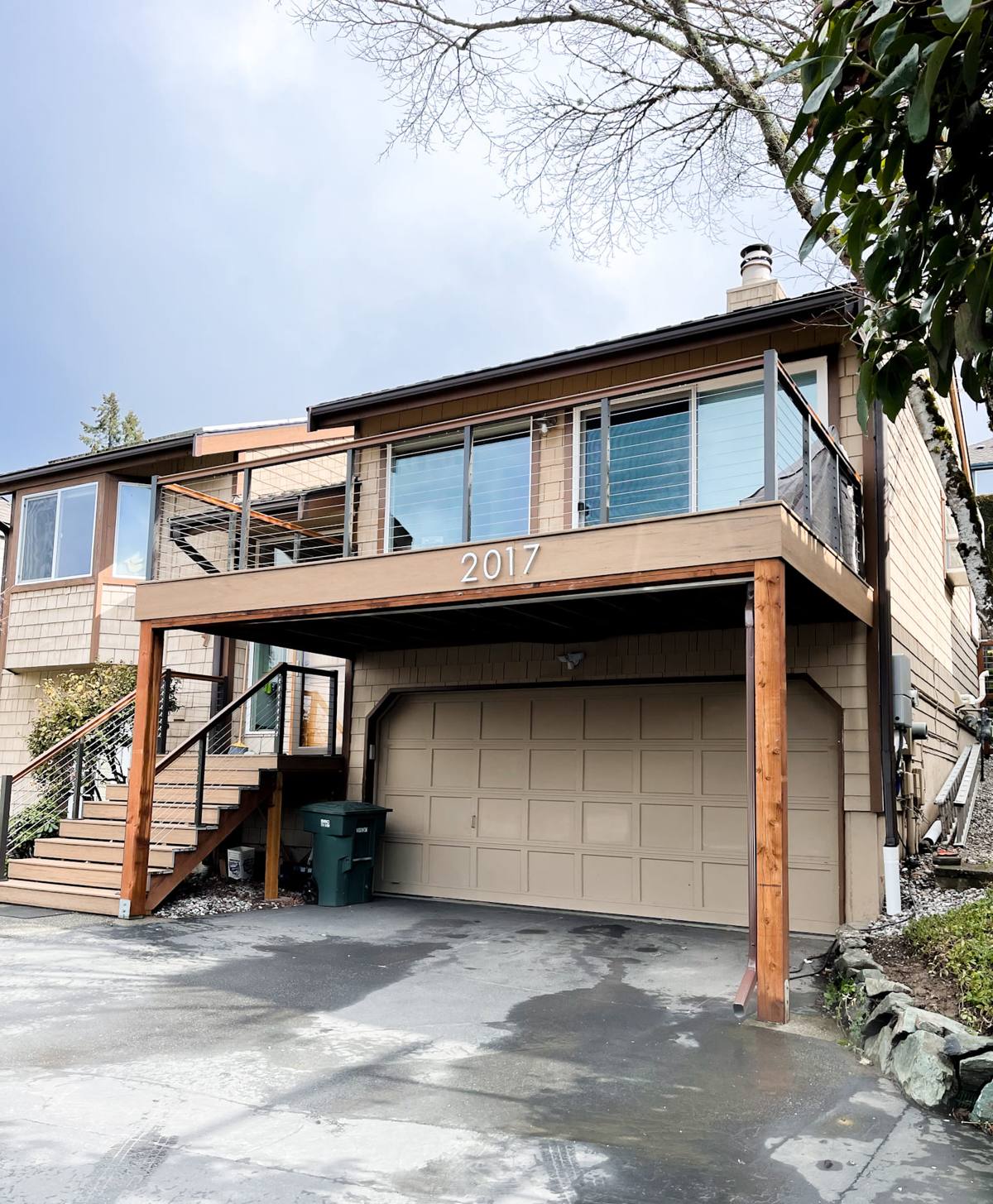
What the Spit's Climate Does to a Deck
Salt Air From More Than One Direction
Because Semiahmoo has water on more than one side, homes here don't get a single prevailing salt exposure the way most properties do; they get it from multiple directions depending on the day and the season. A deck sits fully out in that, with no wall or roofline to take the brunt of it the way the rest of the house does. Salt-laden air corrodes exposed fasteners, brackets, post hardware, and railing connectors faster than a drier or more sheltered site would, and a fastener that has lost holding strength to corrosion often still looks fine on the surface right up until it doesn't.
Wind-Driven Rain With Almost No Break
There's very little on the spit to slow wind down before it reaches a house, which means rain here arrives sideways more often than it falls straight down. That drives water up under railings, into ledger connections, and between deck boards that aren't gapped correctly for it. A deck surface that would shed water fine in calm conditions can still trap moisture the moment wind gets involved, and on Semiahmoo, wind is involved more often than not.
A Moss Season That Runs Most of the Year
Mild temperatures and near-constant humidity keep moss and mildew active across most of the calendar in this part of Whatcom County, and a horizontal deck surface holds water longer between rain events than a vertical wall does, which makes it one of the first places moss takes hold. Shaded decks and north-facing surfaces usually show it first, and any decking material with even a little surface texture or porosity gives it something to grip.
Choosing the Right Decking Material for This Exposure
Material choice matters more here than it would on a calmer inland lot, because the gap between a well-suited product and a poorly-suited one shows up faster on a spit with water on two sides. Most homeowners weigh three categories: wood, capped composite, and cellular PVC.
Wood
Pressure-treated lumber and cedar remain a traditional, lower-cost option and can look great when new, but both need regular sealing or staining to hold up against sustained moisture, and both are more vulnerable to fastener corrosion over time in salt air. Left unmaintained even a season or two on a Semiahmoo lot, wood decking is usually the first material to show moss, graying, or soft spots.
Capped Composite
Capped composite boards use a plastic shell around a wood-fiber composite core, which resists moisture absorption, staining, and UV fade far better than uncapped composite or bare wood. On a property taking salt exposure from more than one direction, that cap layer is doing real work; it's the difference between a deck that needs occasional washing and one that needs ongoing sealing just to keep up.
Cellular PVC
PVC decking contains no wood fiber at all, so it doesn't absorb moisture the way even capped composite can at cut edges or fastener holes. It costs more than composite and can flex a bit more under heavy point loads, but for a deck sitting close to open water on both sides, some homeowners decide the added moisture resistance is worth paying for.
| Material | Handling Salt Air & Moisture | Moss Resistance | Upkeep |
|---|---|---|---|
| Cellular PVC | Excellent — no wood fiber to absorb moisture | Strong, smooth non-porous surface | Occasional washing |
| Capped composite | Strong — cap layer resists moisture and staining | Good on most lines | Occasional washing |
| Uncapped composite | Moderate — some moisture absorption at exposed fiber | Fair; more prone to buildup over time | Periodic cleaning |
| Cedar | Moderate — natural resistance, but needs sealing | Fair when sealed and maintained | Regular oiling or sealing |
| Pressure-treated wood | Weak against sustained salt exposure over time | Poor without regular treatment | Regular sealing or staining |
What a Correctly Built Deck Involves on an Exposed Spit Lot
The decking surface gets most of the attention when homeowners picture a custom deck, but on Semiahmoo, the framing, fasteners, and drainage details underneath are what actually determine how long it lasts. A build done right for this location includes:
- Framing material rated for sustained moisture exposure, sized correctly for the span and load rather than built to a generic minimum
- Stainless steel or coastal-grade corrosion-resistant fasteners throughout, not standard hardware that starts corroding within a few seasons in this kind of salt exposure
- Hidden fastener systems on the deck surface where the product allows, which reduces exposed metal and gives a cleaner walking surface
- Correct board gapping for drainage and material movement, so wind-driven rain from any direction can actually drain and dry between boards
- Proper ledger board flashing where the deck ties into the house, one of the most common places moisture gets into a wall assembly on a poorly built deck
- Joist spacing matched to the specific decking product's span rating, not a generic framing layout
- Railing and post attachment sized for multi-directional wind exposure, especially on elevated decks or lots closer to open water
- Grading and ventilation underneath the deck so moisture doesn't sit against the framing between storms
Skip any one of those and the deck will usually still look fine on day one. The problems show up a season or two later, as a soft joist, a loosening railing post, or fastener corrosion staining the boards around it.
Custom Design Considerations for Semiahmoo Properties
Beyond material and structure, a handful of site-specific questions shape a custom deck out here. Many properties on the spit sit close to the water's edge, which usually means the deck is a larger, view-oriented space rather than a small utility platform, and a bigger deck means more square footage exposed to the same wind and salt. Orientation matters too: because exposure can come from more than one direction depending on which side of the spit a lot faces, railing openness, partial wind screens, and glass panel options all need to be weighed against how much wind-break value they actually add versus how much they block the view homeowners are usually building the deck to enjoy in the first place.
Condos and townhome-style properties are common on Semiahmoo, and many of those are governed by an HOA or association with its own design and material guidelines. If that applies to your property, deck design typically needs association approval before permitting or construction starts, and we build that step into the timeline rather than treating it as a surprise partway through the project.
How Our Process Works
We start with a site visit to look at what's actually there: existing structure condition if it's a replacement, drainage and grade around the deck area, and which directions the property is exposed to wind and salt through the day and across seasons. From there we talk through decking material options that fit the budget and how the space will actually get used, whether that's a quiet spot for two or a larger deck built for entertaining with a water view.
Permitting on Semiahmoo generally follows standard Whatcom County setback, structural, and elevation requirements, with an added step for HOA or association approval where it applies, and we handle both as part of the job rather than leaving them for the homeowner to sort out. Once approved, the build follows the sequence above: substructure and framing first, sized and fastened for the site's actual exposure, then the decking surface, railing, and any stairs or trim work. We finish with a walkthrough covering what the specific material you chose actually needs going forward, which for most modern decking is minimal, but not nothing.
What Your Deck Still Needs From You
Even a well-built deck in the right material needs some routine attention in this climate to reach its full lifespan. A short list worth keeping in mind:
- Rinse the deck surface periodically to clear salt residue, pollen, and organic buildup before it works into the surface or cap layer
- Keep gaps between boards clear of leaves and debris so water and airflow can move through the way the design intends
- Check railing posts and hardware once a year for early corrosion or loosening, especially heading into the wet season
- Trim back overhanging branches or plants that hold moisture against the deck or block sun and airflow across the surface
- Address any soft framing or standing water underneath right away; that's a structural issue, not a cosmetic one, and it won't improve on its own
Why It Matters That We Already Work Semiahmoo
A crew that mostly builds decks further inland can still put one together competently, but a Semiahmoo project has variables that don't come up as often elsewhere in Whatcom County: corrosion-grade fastener requirements from salt exposure on more than one side, wind loads that shift direction depending on which side of the spit a lot faces, and HOA or association approval steps that a contractor unfamiliar with the area might not build into the timeline. Working this specific location regularly means we're not guessing at those requirements on your project. We've seen which decking lines actually hold up against this combination of salt air, driving rain, and moss, and which fastener grades and framing details are worth the extra time rather than an upsell.
That familiarity also shows up in the smaller judgment calls: how to orient a deck for wind that can come from more than one direction, or being straightforward with homeowners about what a deck here realistically needs to last versus what's just an extra line item.
Get a Straight Answer About Your Deck
Whether you're replacing a tired deck, building new, or want an honest read on what a custom deck would take on your Semiahmoo property, we're happy to walk the site with you and lay out the options plainly. Reach out using the form below for a free, no-pressure estimate.