 Ferndale Siding
 Windows Built for Life Near the Water
Semiahmoo sits close enough to salt water that it changes how a house should be built and maintained — windows included. Homes here deal with a combination that inland Whatcom County properties don't face nearly as often: salt-laden air, wind-driven rain coming off the water, and long stretches of gray, damp weather that never quite lets building materials fully dry out. Standard window installation practices that work fine in a sheltered inland neighborhood can fall short here, and the failures usually show up slowly — a sticking sash, a foggy double-pane unit, corroded hardware — long after the crew that installed them is gone.
We install custom windows for homes in and around Semiahmoo and Ferndale with that environment in mind from the start. That means paying attention to frame material, hardware finish, flashing detail, and sealing method — not just picking a window out of a catalog and setting it in the opening.
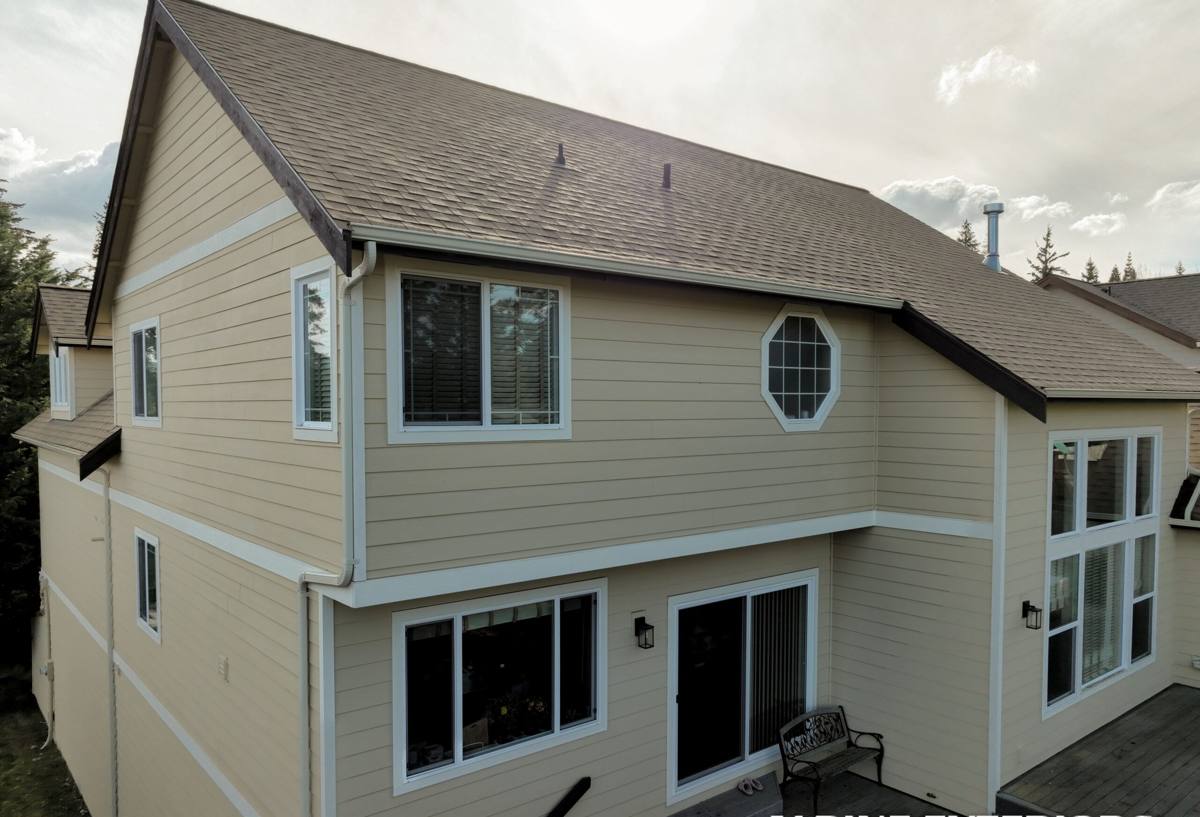
What Salt Air and Driving Rain Actually Do to a Window
It helps to understand the specific ways coastal exposure wears down a window system, because it changes what "good work" looks like on a job like this.
Corrosion on Hardware and Frames
Salt in the air accelerates corrosion on exposed metal — hinges, locks, cranks, and screws. On lower-grade windows, this shows up within a few years as stiff or seized hardware, staining around fasteners, and pitting on aluminum components. It's one of the most common complaints we hear about older windows in homes close to the water.
Wind-Driven Rain and Water Intrusion
Rain that comes in sideways, rather than straight down, puts pressure on parts of a window installation that don't get tested in calmer conditions — the top and side flashing, the sill pan, and the seal between the window frame and the wall. A window that's watertight in a light rain can still leak under driving rain if those details weren't done correctly.
Constant Moisture and Slow Drying
Whatcom County's long damp season, combined with the extra humidity near the water, means wood trim, sills, and framing around windows spend more time wet and less time drying out compared to drier inland areas. Materials that can't tolerate that cycle — repeated wetting and slow drying — deteriorate faster, and moss and algae growth on nearby siding and trim is a visible sign of how much moisture the exterior is holding.
Choosing the Right Frame Material for a Marine Environment
There's no single "best" window material for every home — it depends on the home's style, budget, and how exposed the window locations are. But some materials handle salt air and moisture better than others, and we walk homeowners through the real trade-offs rather than just pushing whatever's easiest to install.
| Material | How It Handles Salt Air & Moisture | Maintenance | Typical Use |
|---|---|---|---|
| Vinyl | Won't corrode or rust; performs well in coastal conditions | Low — occasional cleaning | Good value option for most window types |
| Fiberglass | Very stable, resists warping and doesn't corrode | Low | Larger openings, view windows, higher-exposure walls |
| Wood-clad (exterior aluminum or vinyl cladding) | Cladding protects the wood from direct weather exposure | Moderate — interior wood still needs periodic attention | Homes wanting a wood interior look with protected exteriors |
| Solid wood, uncladded | Requires diligent upkeep to hold up against constant moisture | High — regular refinishing needed near salt water | Best reserved for sheltered or covered locations |
| Bare aluminum | Prone to pitting and corrosion over time in salt air unless finish-coated | Moderate to high | Generally not our first recommendation this close to the water |
For most Semiahmoo homes, we lean toward vinyl or fiberglass for exposed elevations, and reserve solid wood for covered porches or areas that don't take direct weather. It's not that other materials can't be made to work — it's that they demand more upkeep to hold up, and we'd rather be upfront about that than sell a homeowner something that becomes a maintenance chore.
Hardware and Finish Matter Too
Even a good frame material can be let down by cheap hardware. We look for corrosion-resistant hinges, locks, and cranks — stainless steel or coated finishes hold up far better near salt water than standard mill-finish hardware.
Installation Details That Actually Prevent Leaks
Most window failures near the water aren't a defect in the window itself — they're an installation shortcut that didn't account for wind-driven rain. Getting this right takes more time than a basic install, but it's the difference between a window that lasts and one that needs re-caulking every couple of years.
Sill Pan Flashing
A properly sloped sill pan under the window directs any water that does get past the exterior seal back outside instead of into the wall framing. This is a step that's easy to skip and impossible to inspect once the siding goes back on, which is exactly why it matters who's doing the work.
Head and Jamb Flashing Sequencing
Flashing has to be layered correctly — like shingles — so water sheds downward and outward at every layer, not just at the surface caulk line. On a home exposed to driving rain, sequencing errors here are usually what cause slow leaks that show up as stains or soft trim months or years later.
Sealants Rated for the Conditions
We use sealants and flashing tapes rated for sustained UV, moisture, and temperature swings — not generic caulk that hardens and cracks within a season or two of coastal exposure.
Custom Sizing for Semiahmoo's Waterfront-Style Homes
A lot of homes in this area are built or renovated to take advantage of water views, which often means larger window openings, picture windows, and multi-unit combinations rather than standard-sized units. Custom windows let us match those openings precisely instead of forcing a stock size and patching the gaps.
Matching Existing Openings
On older homes, rough openings are rarely a perfectly standard size. Custom-built units mean we're not cutting corners on fit — a properly fitted window is also a properly sealed window.
Larger Glass Areas and Structural Considerations
Bigger view windows carry more wind load, which matters in an area that gets exposed to strong weather off the water. We size framing and glazing to handle that load rather than just maximizing glass for the view and hoping the frame holds up.
Our Process, Start to Finish
- On-site assessment — we look at existing window condition, framing, and exposure on each elevation of the home.
- Material and style recommendation — based on exposure, budget, and the look you're going for, with honest trade-offs explained.
- Precise measurement and custom ordering — no forcing stock sizes into non-standard openings.
- Removal and inspection — checking the framing and sill for hidden moisture damage before new windows go in.
- Correct flashing and sealing — sill pan, head flashing, and sealants rated for coastal exposure.
- Final walkthrough — operation check on every window, cleanup, and a look at the finished work with you.
Maintaining Custom Windows in a Salt Air Climate
Even a well-installed window benefits from a bit of regular attention near the water. Homeowners who stay on top of this short list get noticeably longer life out of their windows.
- Rinse exterior frames and hardware periodically to remove salt residue, especially after storms
- Lubricate hinges, locks, and cranks on a regular schedule to prevent salt-related seizing
- Check exterior caulking annually for cracking or gaps and re-seal as needed
- Keep gutters and downspouts clear so water isn't running down over window heads
- Watch for moss or algae building up on sills and trim, which signals trapped moisture nearby
- Wipe down interior sills after heavy rain if condensation collects during cold, damp stretches
Why It Matters to Hire a Crew That Already Works This Area
Window installation practices that are perfectly adequate in a dry, sheltered inland neighborhood aren't automatically adequate at Semiahmoo. A crew that regularly works properties this close to the water already knows which flashing details actually hold up, which materials are worth the extra cost, and which shortcuts show up as callbacks two winters later. That local, hands-on experience is hard to substitute for — it's the difference between a window that's rated for coastal exposure on paper and one that's actually installed to perform that way in Whatcom County's marine weather.
If you're planning new windows or a replacement project for a home in the Semiahmoo area, we're glad to take a look and walk you through your options. Reach out for a free, no-pressure estimate — we'll assess your home's specific exposure and give you a straightforward recommendation, no obligation.