 Ferndale Siding
 Why Siding Replacement Works Differently Near the Water
Semiahmoo sits close enough to open water that its siding takes a different kind of beating than a house a few miles inland in Ferndale. Salt-laden air corrodes exposed metal faster, wind-driven rain finds gaps that would stay dry on a more sheltered lot, and shaded, damp corners grow moss and algae for a good chunk of the year. None of that is unusual for Whatcom County's coastline — it's just something a siding replacement has to account for, not fight against after the fact.
A lot of siding failures we see in this area aren't really "the siding's fault." They're the result of a product or an installation that wasn't matched to the exposure. Replacing siding here isn't just a cosmetic upgrade — it's a chance to correct whatever let moisture and salt air win the first time.
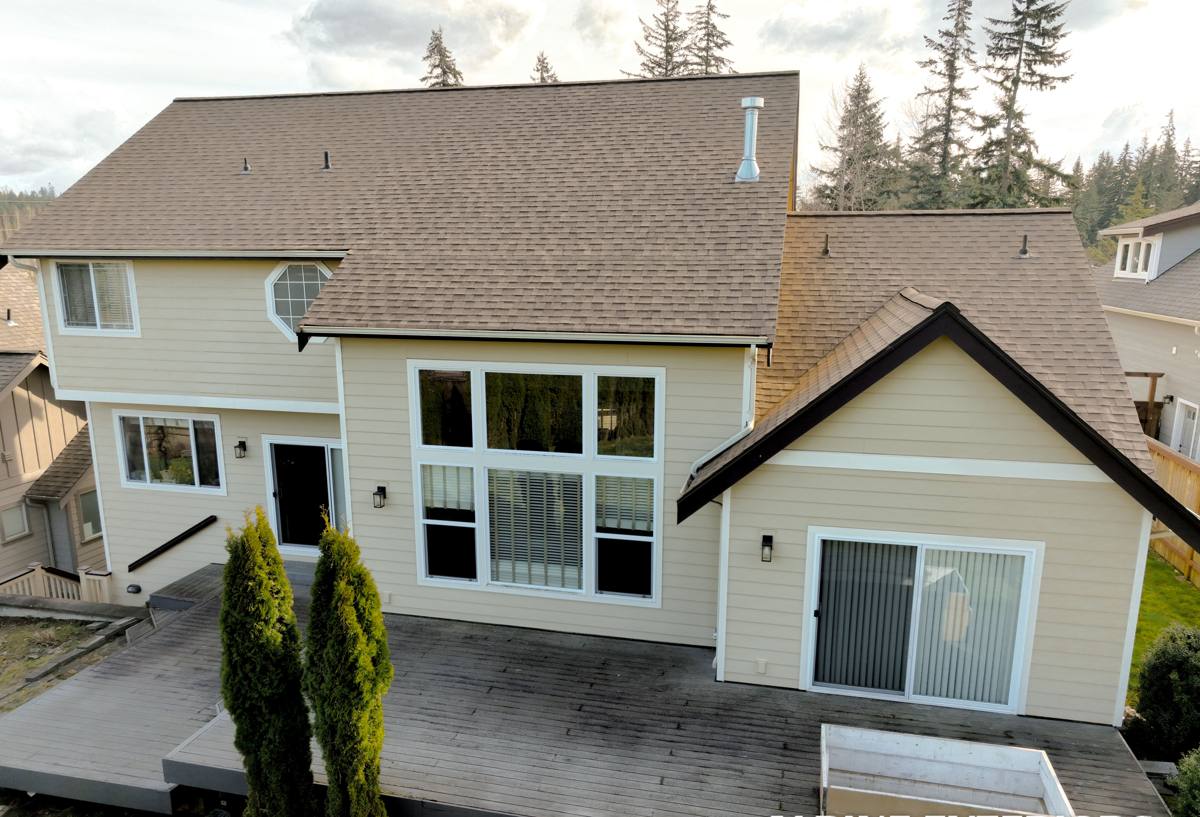
Signs a Coastal Home Needs Replacement, Not Just Repair
Repair makes sense when the problem is isolated. Replacement makes sense when the siding system itself has been fighting a losing battle against the local climate. Common signs we look for on homes in this area include:
- Soft or crumbling sections near the bottom courses, where splash-back and driving rain concentrate
- Persistent moss or black-green staining on north- and west-facing walls that comes right back after cleaning
- Rust streaks or corroded fasteners bleeding through the paint film
- Cupping, bowing, or visible gaps at seams and corners, which let wind-driven rain behind the cladding
- Paint that's failing evenly across an entire elevation rather than in one weathered spot
One or two of these in isolation might just need a repair and repaint. Several at once, especially paired with soft wall sheathing underneath, usually means the whole assembly needs to come off and be rebuilt correctly.
What a Correct Replacement Actually Involves
Pulling old siding off and nailing up new boards isn't a replacement — it's a reskin, and it tends to fail for the same reasons the original siding did. A proper job addresses what's underneath, not just what's visible. That means:
Inspecting and repairing the sheathing
Once the old siding is off, we check the wall sheathing for rot, soft spots, and prior water damage — which is common on coastal-exposed walls that have been slowly taking on moisture for years. Damaged sheathing gets replaced before anything new goes up.
A water-resistive barrier built for the exposure
The house wrap or weather barrier is the layer that actually keeps bulk water out. It needs to be installed shingle-style (upper layers overlapping lower ones) and properly taped at every seam, especially around windows and doors, where driving rain concentrates.
Flashing at every penetration
Windows, doors, hose bibs, light fixtures, and vents all need flashing that directs water out and away from the wall assembly. On a home taking direct wind-driven rain, sloppy flashing is the single most common cause of hidden rot behind otherwise good-looking siding.
Corrosion-resistant fasteners
Salt air accelerates fastener corrosion, and a rusting nail head eventually stains and weakens the siding around it. We use fasteners rated for the exposure rather than whatever's cheapest, because replacing corroded fasteners later means pulling siding again.
Proper clearance and drainage
Siding installed too close to grade, decks, or roof lines traps moisture against the material. Correct clearances and a drainage gap behind the cladding let any moisture that does get in dry out instead of sitting there feeding rot and moss.
Why We Only Install James Hardie Fiber Cement
We don't install vinyl, LP SmartSide, primed spruce, cedar, or off-brand fiber cement products like Cemplank or Allura. That's a deliberate standard, not a sales pitch, and it matters more in a marine-influenced climate like this one than it would somewhere dry and inland.
Vinyl expands and contracts with temperature swings and can warp or crack under sustained wind pressure; it also isn't fire-resistant, which matters given Washington's fire seasons. Wood-based products like LP SmartSide, primed spruce, and cedar are more moisture-sensitive — exactly the vulnerability that salt air and constant damp both exploit. They can perform well with diligent maintenance, but that maintenance burden is real and easy to fall behind on, especially on a home exposed to near-constant moisture.
James Hardie fiber cement is non-combustible, doesn't rot, and holds its shape and paint line in freeze-thaw and wet-dry cycling far better than wood-based alternatives. Hardie's ColorPlus factory finish is baked on and warranted against fading and flaking — which matters here, since salt air and UV both work harder on paint near the water than they do further inland. Hardie also builds specific HZ (HardieZone) product formulations engineered for regions with higher moisture exposure, which is a better match for a Semiahmoo lot than a generic siding product never designed for this kind of climate.
| Siding Material | Moisture/Salt Air Performance | Maintenance Burden | Fire Resistance |
|---|---|---|---|
| James Hardie Fiber Cement | Engineered for wet climates; won't rot | Low — factory finish, periodic washing | Non-combustible |
| Vinyl | Won't rot, but can warp/crack under wind and heat | Low, but limited repair options once damaged | Combustible |
| Cedar | Attractive but moisture-sensitive; needs sealing | High — regular refinishing required | Combustible |
| Primed Spruce / LP SmartSide | Vulnerable at cut edges and seams if maintenance lapses | Moderate to high — paint and caulk upkeep | Combustible |
Our Siding Replacement Process
The process for a Semiahmoo home follows the same disciplined steps everywhere we work, with extra attention paid to flashing, fastener choice, and drainage detailing given the exposure:
- On-site assessment — we walk the exterior, check for soft sheathing, moss patterns, and problem elevations before quoting anything
- Removal — old siding, trim, and any compromised building paper or wrap come off completely
- Sheathing repair — any rotted or water-damaged sheathing is cut out and replaced
- Weather barrier and flashing — new house wrap, taped seams, and flashing at every window, door, and penetration
- Hardie installation — panels or planks installed to manufacturer spec, with correct fastener spacing, clearances, and drainage gap
- Trim, caulking, and finish detailing — corners, trim boards, and joints sealed correctly, not just caulked over gaps
- Final walkthrough — we go over the finished work with the homeowner before calling the job done
What Affects the Cost of a Coastal Siding Replacement
Every home is different, but the same handful of factors drive most of the price variation we see on jobs in this area:
| Factor | Why It Matters |
|---|---|
| Extent of sheathing damage | Hidden rot behind old siding adds repair scope once walls are opened up |
| Home size and wall complexity | More corners, dormers, and trim detail mean more labor and material cuts |
| Siding profile chosen | Lap siding, shingle-style panels, and board-and-batten all price differently in labor and material |
| Exposure and elevation | Walls taking the brunt of wind-driven rain often need extra flashing and drainage detail |
| Trim and accessory work | Fascia, soffit, and trim replacement alongside siding adds scope but avoids mismatched future repairs |
We don't quote off a square-footage rule of thumb pulled from a national average — every estimate is based on what we actually find on your walls.
Why a Crew That Already Works This Area Matters
A siding crew that mostly works drier, more sheltered neighborhoods can underbuild for a coastal exposure without meaning to — using standard fastener schedules, standard flashing details, and standard clearances that hold up fine inland but fall short a few miles closer to the water. Working Whatcom County's coastal communities regularly means we already know which elevations take the worst of the wind-driven rain, where moss tends to establish first, and which detailing shortcuts show up as callbacks two winters later.
That local pattern recognition doesn't replace a proper on-site inspection — every home still gets one — but it means fewer surprises and a job that's built for the conditions it will actually face, not a generic spec sheet.
Keeping New Siding Looking Right After Installation
Correctly installed Hardie siding is low-maintenance, not no-maintenance. A little routine care goes a long way in a salt-air, high-moisture climate:
- Rinse siding once or twice a year to clear salt residue, pollen, and early moss growth before it takes hold
- Keep gutters clean and downspouts directed away from the wall so water isn't sheeting down siding runs
- Trim back shrubs and trees that keep a wall shaded and damp — those are the spots moss returns to fastest
- Check caulking at trim and penetrations every year or two and re-seal any joints that have opened up
- Address any impact damage or chipped paint promptly so moisture can't get behind the panel
None of this is heavy upkeep — it's the kind of seasonal check most homeowners already do for gutters and decks, just extended to the siding.
If your Semiahmoo home's siding is showing moss that won't stay gone, soft spots, or paint failure that keeps coming back, we're happy to take a look and walk you through what we find. Request a free, no-pressure estimate below and we'll give you an honest read on repair versus replacement.