 Ferndale Siding
 Building a Deck for Semiahmoo's Marine Climate
Semiahmoo sits close enough to the water that every deck built here has to answer to conditions a deck in a drier, inland part of Whatcom County never faces. Salt-laden air, driving rain that comes in sideways off the Strait, and a moss season that can stretch from October well into spring all put steady pressure on wood, fasteners, and finishes. A deck that would hold up fine in a sheltered inland yard can start showing problems within a couple of years out here if it wasn't designed and built with that exposure in mind.
We build decks for homes throughout the Ferndale area, and Semiahmoo's combination of salt air and heavy moisture is one of the more demanding environments we work in locally. That's not a reason to avoid an outdoor deck — it's a reason to build it correctly the first time, with material choices and construction details that match what the site actually throws at a structure year-round.
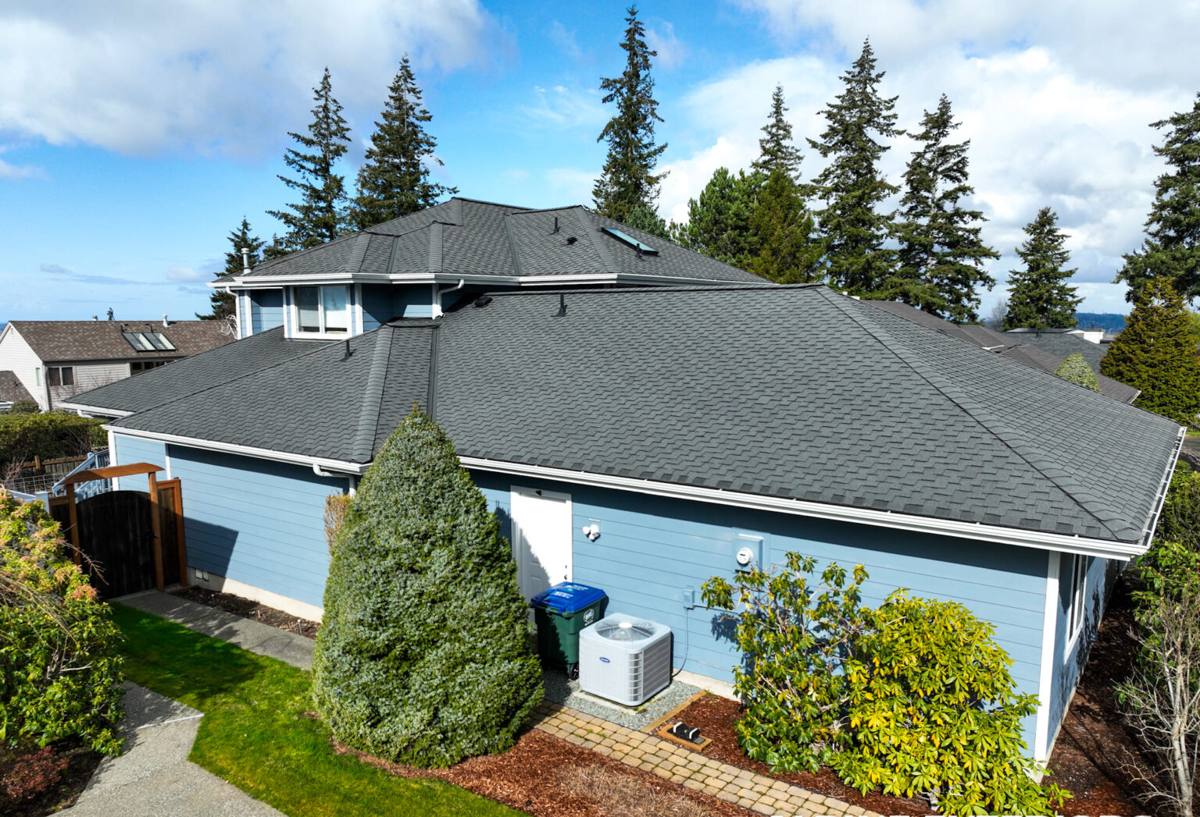
What Salt Air, Driving Rain, and Moss Actually Do to a Deck
Salt Air and Corrosion
Airborne salt accelerates corrosion in fasteners, brackets, and railing hardware. Standard galvanized screws and joist hangers that would last decades in a low-exposure setting can start rusting and staining the wood around them much sooner near the water. Once a fastener begins to corrode, it loses holding strength and can streak the decking or railing posts with rust, which is both a cosmetic problem and an early warning sign of a bigger one.
Driving Rain and Moisture Intrusion
Wind-driven rain doesn't just fall on a deck — it gets pushed sideways and upward, finding its way into ledger connections, under railing posts, and into any gap where flashing or sealant is incomplete. Over time, that moisture works into end grain and fastener holes, which is where rot and mold actually start. The issue is rarely the decking surface itself; it's almost always what's happening underneath or behind it, out of sight.
Moss and Extended Shade Season
Whatcom County's long wet season gives moss and algae plenty of time to establish, especially on decks that sit under tree cover or on the north side of a house. Moss holds moisture against the deck surface, which speeds up wood decay and turns boards slick and dangerous underfoot. A deck built with proper drainage and gapping sheds water faster and gives moss far less to grip onto.
Choosing the Right Decking Material for This Environment
There's no single "best" decking material for every home — the right choice depends on budget, how much upkeep you want to do, and how exposed the deck is to salt air and standing moisture. Here's how the common options generally compare for a site like Semiahmoo:
| Material | Moisture & Salt Air Behavior | Maintenance | Typical Lifespan |
|---|---|---|---|
| Pressure-treated lumber | Resists rot if sealed and drained well; fasteners are the weak point in salt air | Needs re-staining/sealing every 2-3 years | 15-20 years with upkeep |
| Cedar | Naturally rot-resistant, but surface grays and can hold moss without regular cleaning | Periodic cleaning and sealing | 15-25 years with care |
| Composite decking | Doesn't absorb water or rot; some early composite products struggled with mold in shaded, damp spots — newer capped composites handle this much better | Occasional washing; no staining/sealing | 25-30+ years |
| PVC decking | Fully moisture-proof surface; best resistance to salt and standing water of the common options | Lowest upkeep of the group | 25-30+ years |
We don't push one material on every job. A cedar deck with correct spacing and finish can look great and hold up well for a homeowner who's willing to maintain it. A composite or PVC deck makes more sense for a shaded, water-exposed spot where minimizing upkeep matters more than the traditional wood look. What we won't do is install decking in a way that ignores drainage and airflow just because the material itself is labeled "low maintenance" — even the best board still fails early over a poorly built frame.
What a Correctly Built Deck Actually Involves
The decking boards get all the attention, but the structure underneath is what determines whether a deck lasts ten years or thirty. In a high-moisture, salt-air setting, a few details matter more than usual:
- Footings sized and set for the actual soil and frost conditions, not just poured to the minimum code depth
- Ledger board flashing that actually sheds water away from the house rim joist, not just a bead of caulk
- Joist tape or butyl flashing on top of every joist to keep water out of fastener holes and end grain
- Stainless steel or coated fasteners and hardware rated for coastal/marine exposure, not standard galvanized
- Proper board gapping so water and debris don't sit trapped between boards
- Airflow underneath the deck so the frame can dry out between rain events instead of staying damp
- Post bases that keep wood off standing water, using proper post base hardware rather than posts set directly in or against concrete
Skip any one of these and the deck can still look fine going in — the problems show up two, five, or ten years later, usually as soft spots near the ledger, rust streaks around fasteners, or a frame that's rotted from underneath while the surface boards still look okay.
Our Process for Semiahmoo Deck Projects
Every deck we build starts with actually looking at the site — sun exposure, wind direction, drainage, and how close the deck sits to salt-influenced air off the water. That assessment drives the material and hardware recommendations, not the other way around.
- Site evaluation: we check existing drainage patterns, soil conditions, and how exposed the deck location is to wind-driven rain and salt air
- Design and material selection: we walk through decking, railing, and hardware options based on your budget and how much maintenance you actually want to take on
- Permitting: we handle the permit process with Whatcom County or the applicable jurisdiction so the structure is inspected and code-compliant
- Framing and flashing: footings, ledger flashing, joist protection, and fastener selection are done to marine-exposure standards, not just minimum code
- Decking and railing installation: boards are gapped and fastened correctly for the material; railing hardware matches the same corrosion resistance as the frame
- Final walkthrough: we go over the finished deck with you, including what maintenance (if any) the material requires going forward
Railings, Fasteners, and Hardware: Where Salt Air Does the Most Damage
If a deck near the water is going to show wear early, it's almost always in the metal — not the decking boards. Standard zinc-plated screws, brackets, and railing brackets can start corroding within a few years of salt exposure, leaving rust stains and weakened connections long before the wood itself is a problem. We spec stainless steel or marine-rated coated fasteners and hardware for Semiahmoo projects specifically because the cost difference upfront is small compared to the cost of redoing a railing connection or replacing rusted joist hangers a few years down the road.
Railing material matters too. Wood railings need the same fastener and finish attention as the deck frame. Metal or composite railing systems vary widely in how well their hardware resists coastal corrosion — this is worth asking about directly with any contractor, since the railing post connections take real structural load and are a bad place to cut corners.
Maintenance Realities for a Deck in This Environment
No deck material here is truly "no maintenance" — the marine climate just changes what maintenance looks like. A realistic yearly routine:
- Rinse or sweep the deck surface periodically to clear salt residue, pollen, and organic debris before it holds moisture
- Clean moss and algae off the surface each fall before the wet season sets in, using a deck-safe cleaner rather than a pressure washer alone
- Check railing post connections and visible fasteners once a year for early rust staining
- Keep gutters and downspouts near the deck clear so runoff isn't dumping extra water onto or under the structure
- For wood decks, plan on re-sealing or re-staining every 2-3 years; composite and PVC decks just need periodic washing
- Trim back overhanging branches that keep the deck shaded and damp longer than it needs to be
Why Hiring a Crew That Already Works in Semiahmoo Matters
A lot of deck problems in this area aren't a failure of the decking material — they're a failure to plan for what the site is actually exposed to. A crew that hasn't built decks near this kind of salt air and driving rain before may default to standard hardware and standard flashing details that are fine for a typical inland lot but undersized for this one. We build in Ferndale and the surrounding Whatcom County communities regularly, so the fastener grade, flashing approach, and drainage details on a Semiahmoo deck aren't an afterthought — they're the starting point.
That local familiarity also matters for permitting and code compliance, since requirements and inspection expectations can vary by jurisdiction. A contractor who's already navigated that process locally can move a project along faster and with fewer surprises than one working here for the first time.
If you're planning a new deck or replacing one that's showing its age, we're happy to take a look and talk through what makes sense for your specific spot in Semiahmoo. Reach out for a free, no-pressure estimate using the form below.