 Ferndale Siding
 Windows Built for Where Marietta Sits
Marietta is a waterfront community just northwest of Ferndale, tucked along Bellingham Bay in Whatcom County. That location is part of what makes it a great place to live, and it's also exactly why windows here take more abuse than windows fifteen miles inland. Salt-laden air off the bay works on metal hardware and finishes year-round. Driving rain off the water finds any gap in flashing or sealant. And the mix of shade, moisture, and mild temperatures that defines this stretch of the Pacific Northwest gives moss and algae a long season to work on anything that stays damp — including window sills, trim, and frames.
None of that means Marietta homes need exotic windows. It means they need windows and installations that were actually specified for a marine environment, put in by people who understand why that matters. A lot of window problems we get called out for in this area aren't product failures — they're installation shortcuts that a drier climate would have forgiven for years, but this one doesn't.
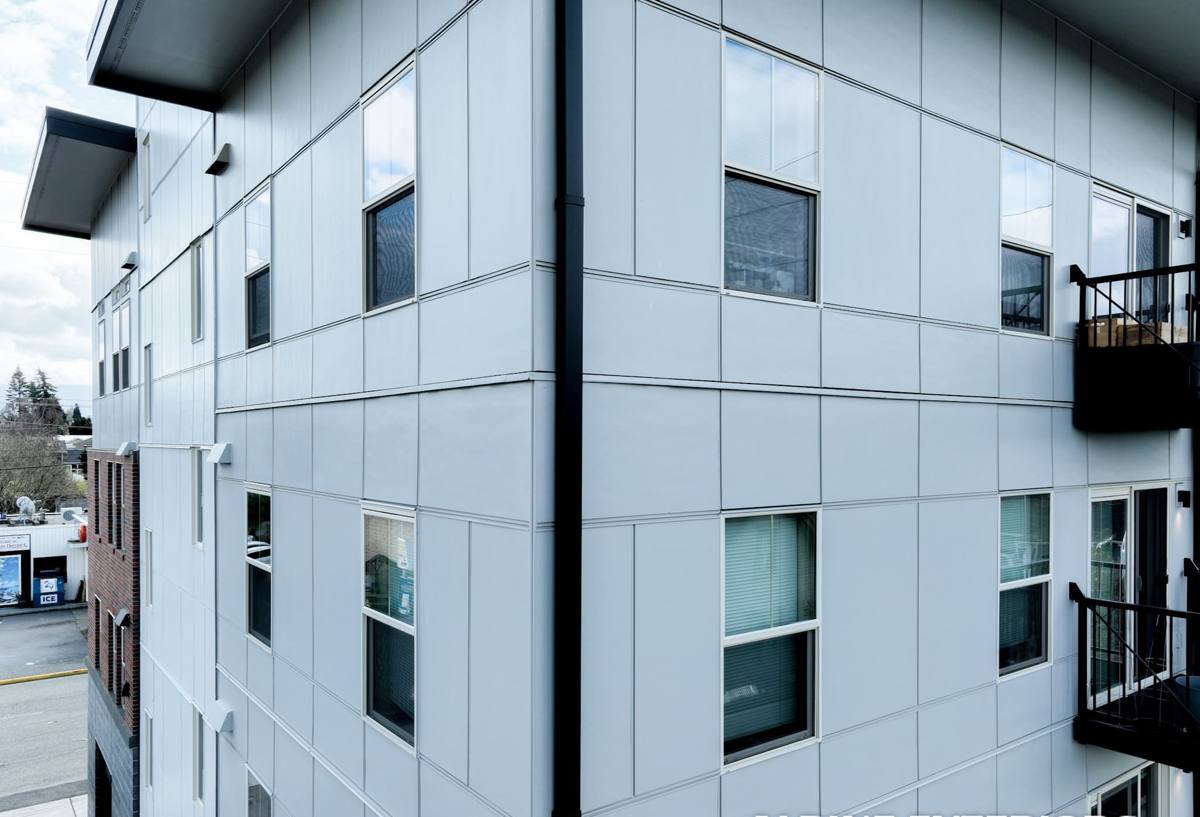
What Salt Air and Driving Rain Actually Do to a Window
It helps to know what you're up against before deciding on materials or a contractor.
- Hardware corrosion — cheap or unprotected latches, hinges, and balances pit and seize faster near salt water. Once hardware fails, windows won't lock or open cleanly, and moisture gets a way in.
- Wind-driven rain intrusion — rain here doesn't just fall, it's pushed sideways by bay wind. Flashing details and sealant lines that would be adequate elsewhere can leak under those conditions.
- Finish breakdown — salt accelerates UV and oxidation damage to lower-grade vinyl and painted aluminum, leading to chalking, pitting, and discoloration years before it should happen.
- Moss and algae growth — anywhere shaded and slow to dry (north-facing walls, deep eaves, tree cover) grows a green film that holds moisture against wood trim and can work its way into seams over a wet Whatcom County winter.
- Wood rot at sills and jambs — the classic failure point. Once bare or unsealed wood sits wet for a season, rot spreads quietly behind the trim before it shows on the surface.
Any one of these is manageable. Left unaddressed together over a decade or two, they're why a lot of older Marietta-area homes end up needing full window replacement rather than simple repair.
What "Custom" Means for This Area
Custom windows aren't about fancy shapes — though we do those too. In a community like Marietta, with a mix of older cottages, mid-century homes, and newer builds, "custom" usually means matching what's actually there instead of forcing a standard size to fit.
Common situations we run into
- Older homes with settled or slightly out-of-square openings that off-the-shelf replacement windows won't seat properly against
- Non-standard sizes from additions, renovations, or homes built before modern sizing conventions
- Waterfront-facing elevations that need higher-performance glass and hardware than the sheltered sides of the same house
- Historic or character homes where the owner wants the original look preserved with modern performance underneath
Custom sizing and detailing costs more up front than a stock window, but it's the difference between a window that seals correctly for twenty years and one that needs shims, extra caulk, and constant attention to stay weathertight.
Material and Glass Choices for a Marine Climate
There's no single "best" window material — the right call depends on the home, the budget, and how exposed that particular wall is to bay wind and rain. Here's how the common options actually compare in this environment.
| Material | Salt Air Performance | Maintenance | Typical Fit |
|---|---|---|---|
| Vinyl (quality-grade) | Good — won't corrode, but lower-grade vinyl can chalk and stiffen faster near salt air | Low | Most homes, best value |
| Fiberglass | Very good — dimensionally stable, resists pitting and UV breakdown | Low | Waterfront-facing walls, long-term owners |
| Wood-clad | Fair — clad exterior protects the frame, but any breach at the cladding seams needs prompt attention | Moderate to high | Historic or character homes where wood interior is wanted |
| Aluminum | Poor to fair unless marine-grade — prone to corrosion and condensation near salt water | Moderate | We generally steer clients away from it on exposed elevations here |
On glass, we typically recommend dual-pane with a low-E coating and argon fill as the baseline for this climate — it manages both heat loss and the condensation that comes with our humid, mild winters. For rooms facing the water directly, upgraded seals and impact-resistant options are worth discussing, since that's the elevation that takes the worst of the wind-driven rain.
Why we're selective about which products we install
We don't install every window line on the market. That's not a knock on every product we skip — it's that we've settled on a shorter list of window systems with hardware, weatherstripping, and warranty structures that hold up to marine exposure without high maintenance demands. If a product requires more upkeep than an owner should reasonably expect to keep up with, we'd rather not put our installation behind it.
Installation Details That Matter More Here Than Elsewhere
The window itself is maybe half the job. The other half — the part you can't see once it's done — is what actually keeps water out over the long run.
- Removal without damaging the opening — old sealant, nails, and trim come out carefully so the rough opening isn't chewed up in the process.
- Inspection of the opening — this is where we find hidden rot or old water damage, before it gets sealed behind a new window and forgotten.
- Flashing, correctly lapped — installed so water sheds down and out, never trapped behind the window. This single detail is responsible for more leak failures than any product defect.
- Sill pan or sloped sill detail — gives any water that does get past the exterior seal somewhere to drain instead of sitting on bare wood.
- Proper shimming and fastening — so the window operates smoothly and the frame isn't stressed, which matters as homes settle over the years.
- Marine-appropriate sealants — not all caulks and sealants perform the same under constant salt and moisture exposure; we use products rated for it.
- Interior and exterior trim finished properly — including back-priming or sealing any exposed wood before it's installed, not after.
Skip any one of these steps and the window can look fine for a year or two before a leak shows up — usually as a stain, soft spot, or musty smell that's much more expensive to fix than it would have been to prevent.
Our Process for Marietta Homes
We keep it straightforward because window replacement shouldn't feel complicated:
- On-site assessment — we look at each opening individually, note which elevations face the worst weather, and check for any existing moisture damage.
- Honest recommendation — material, glass, and detailing suited to that specific wall and budget, not a one-size pitch.
- Clear written estimate — scope, materials, and timeline spelled out before any work starts.
- Careful installation — following the sequence above, on every window, every time.
- Walkthrough at completion — we check operation, sealing, and finish with you before we consider the job done.
What Affects the Cost
| Factor | Why It Matters |
|---|---|
| Window count and size | The most direct cost driver — more glass, more labor |
| Custom vs. stock sizing | Custom-built units cost more but avoid gaps and shimming compromises |
| Material grade | Fiberglass and higher-grade vinyl cost more upfront than economy vinyl, but hold up better to salt exposure |
| Glass package | Upgraded low-E coatings and impact-resistant glass add cost, especially on water-facing walls |
| Condition of the existing opening | Hidden rot or water damage found during removal adds repair scope |
| Trim and finish work | Matching existing trim or restoring a historic look adds labor |
We'd rather give you a real range after seeing the actual openings than quote a number over the phone that doesn't hold up once we're on site.
Maintaining Custom Windows Through a Whatcom County Winter
Even a well-installed window benefits from a little seasonal attention in this climate:
- Rinse salt residue off exterior frames and glass periodically, especially after storms
- Check and clear weep holes so drainage paths don't clog with debris or moss
- Wipe down sills after heavy rain rather than letting standing water sit
- Inspect exterior caulk lines once a year for cracking or separation and reseal as needed
- Keep gutters and downspouts clear so runoff isn't sheeting directly across window trim
- Trim back vegetation that keeps a wall shaded and damp, which is what feeds moss growth
Why a Local Crew Matters for This Kind of Job
Anyone can sell a window. Installing it correctly for a bay-facing wall in Whatcom County takes familiarity with how that specific combination of salt air, wind direction, and rain actually behaves against a house — and that comes from doing the work in this area repeatedly, not from a general contracting background somewhere drier. A crew that already works Marietta and the surrounding Ferndale area knows which elevations take the worst weather, which older homes tend to have hidden moisture issues behind the trim, and which installation shortcuts simply don't hold up here. That local pattern recognition is worth more than it sounds like on paper.
If your windows are showing their age, letting in drafts, or you're planning a renovation and want it done right the first time, we're glad to take a look and give you a straightforward, no-pressure estimate. Use the form below to get started.