 Ferndale Siding
 Marietta's Roofs Work Harder Than Most
If you own a home in Marietta, you already know the weather here isn't gentle on a roof. Sitting close to Bellingham Bay and the open water around Ferndale, Marietta homes take on a steady mix of salt-laden air, driving rain off the Strait of Georgia, and heavy tree cover that keeps everything shaded and damp for weeks at a time. That combination shortens the life of a poorly installed roof fast, even when the materials themselves are rated to last decades. A new roof installation in this neighborhood isn't just about covering the house — it's about building a system that can shed water fast, resist wind-driven rain intrusion, and stand up to moss and algae growth that never really stops.
We install roofs across Whatcom County, but Marietta's mix of waterfront exposure and mature tree canopy makes it its own case. What works fine on a dry, open lot inland can fail early here if the details aren't right.
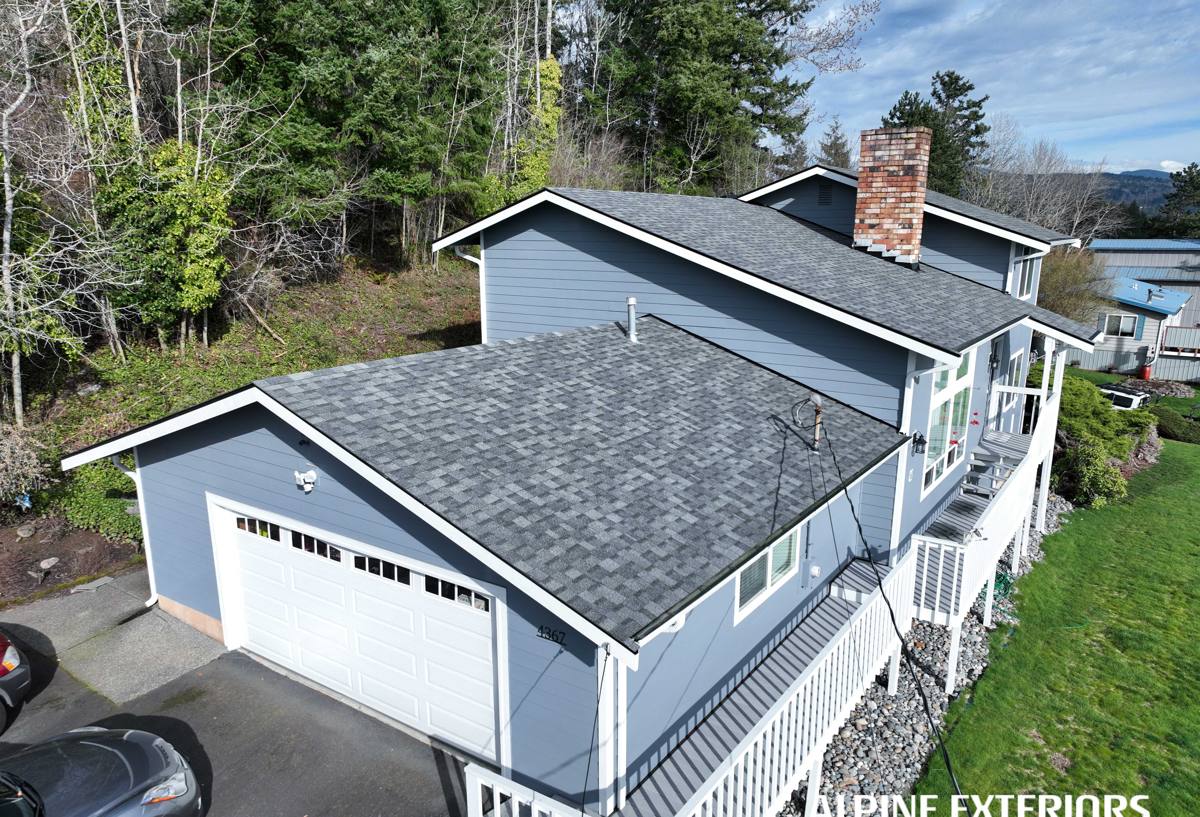
What a Correct Installation Actually Involves
A lot of roofing problems in this area trace back to shortcuts taken during installation, not the shingles or metal panels themselves. Here's what we consider non-negotiable on every Marietta roof we install.
Full Tear-Off and Deck Inspection
We remove the old roofing down to the deck rather than layering over it. That lets us actually see the sheathing underneath — which matters a great deal in a climate where trapped moisture from a failed roof can rot plywood or OSB for years before anyone notices a soft spot inside the attic. Any damaged decking gets replaced before a single new shingle or panel goes down. Roofing over rotten decking just hides the problem and voids most manufacturer warranties anyway.
Ice, Water, and Underlayment Details
Given how much rain Ferndale gets in the fall and winter, we run self-adhering waterproof membrane at the eaves, valleys, and around every penetration — not just where code minimums require it. Synthetic underlayment goes over the rest of the deck. This is the layer that actually keeps water out if wind drives rain up under the shingle tabs, which happens regularly during winter storms off the water.
Ventilation That Actually Balances
Attic ventilation is one of the most overlooked parts of a roof job. A roof deck that can't breathe traps moisture from everyday household humidity, and in a marine climate like Marietta's, that moisture doesn't dry out the way it might in a drier region. We balance intake at the soffits with exhaust at the ridge so air actually moves through the attic instead of sitting still. Poor ventilation is a common, quiet cause of premature deck rot and shingle failure that has nothing to do with the roofing material itself.
Flashing and Penetration Details
Chimneys, skylights, vent pipes, and wall-to-roof transitions are where most leaks actually start — not in the open field of shingles. We use new step flashing, counter-flashing, and pipe boots at every penetration rather than reusing old flashing or relying on caulk and sealant as the primary defense. Sealant fails; properly lapped metal flashing doesn't.
Fastening for Wind and Rain
We fasten to the manufacturer's high-wind specification, with the correct nail placement and count, rather than the bare minimum. Homes exposed to open water and storm winds off the Strait need that extra margin, especially at ridges, hips, and roof edges where wind uplift is strongest.
Choosing a Roofing Material for Marietta's Conditions
There's no single "best" roofing material for every home, but some perform noticeably better than others given the salt air, rain, and shade that define this part of Whatcom County. Here's how the common options compare for a Marietta home specifically.
| Material | Performance in Marietta's Climate | Maintenance Reality |
|---|---|---|
| Architectural asphalt shingle | Good wind resistance when properly fastened; algae-resistant granule options help slow the dark streaking common under tree cover | Periodic soft-wash cleaning recommended; typical 25–30 year lifespan with correct ventilation |
| Standing seam metal | Sheds moss and rain very effectively due to smooth, steep-shedding surface; handles salt air well with the right coating | Low ongoing maintenance; higher upfront cost, longer service life |
| Cedar shake | Traditional look, but retains moisture longer under shade and moss pressure in this climate | Higher maintenance burden — regular treatment and moss removal needed to avoid premature decay |
| 3-tab asphalt shingle | Lower wind rating and shorter lifespan than architectural shingles | Generally not what we recommend for a waterfront-adjacent, wind-exposed property |
We're upfront that cedar shake, while attractive, asks a lot of a homeowner in a climate this damp and shaded — it needs consistent upkeep to avoid the moisture and moss issues that shorten its life. If a homeowner wants that look, we'll talk through the maintenance commitment honestly rather than just selling the material. Most Marietta homeowners land on a algae-resistant architectural shingle or standing seam metal, both of which handle this climate with far less babysitting.
Moss, Algae, and the Long Whatcom County Growing Season
Moss isn't cosmetic here — it's a structural issue if left unaddressed. Under the shade of mature trees common in Marietta, moss can establish on a roof surface within a year or two and hold moisture against the shingles or decking long after the rest of the roof has dried out. Over time that trapped moisture lifts shingle edges, degrades granules, and can work its way into the deck.
A correctly installed roof reduces how fast moss takes hold: proper slope and drainage, algae-resistant shingle granules where applicable, and zinc or copper strips near the ridge (which release trace metal ions that inhibit moss and algae growth as rain washes over them) all help. But no roof in this environment is maintenance-free. We recommend periodic soft washing — never pressure washing, which strips granules and can force water under shingles — and keeping overhanging branches trimmed back to let more light and airflow reach the roof surface.
Our Installation Process
- On-site inspection and estimate. We walk the roof, check the attic for ventilation and moisture issues, and give you an honest read on what the job actually needs.
- Material selection. We go over the tradeoffs for your home specifically — sun exposure, tree cover, roof pitch, and budget — and help you pick a material that fits.
- Tear-off and deck inspection. Old roofing comes off, the deck is inspected, and any damaged sheathing is replaced before we move forward.
- Underlayment and flashing. Waterproof membrane, synthetic underlayment, and new flashing go in at every critical point.
- Installation. Shingles or panels go on to manufacturer spec, with attention to fastening pattern and ventilation balance.
- Cleanup and final walkthrough. We clear debris, magnet-sweep for stray fasteners, and walk the finished roof with you before calling the job done.
What Affects the Cost of a New Roof in Marietta
Every roof is different, so we won't quote a number without seeing the job, but a few factors consistently move the price up or down:
- Roof size and the number of planes, valleys, and penetrations
- Pitch — steeper roofs take longer and require more safety setup
- Whether decking replacement is needed once the old roof comes off
- Material choice, from standard architectural shingle up through standing seam metal
- Ventilation upgrades if the existing attic airflow is inadequate
- Access — tree cover, tight lots, or difficult staging areas near the water can add time
As a broad general range, most Marietta-area asphalt shingle roof replacements land somewhere in the mid five figures for an average-sized home, with metal roofing running higher due to material and labor differences. The only way to get a real number is a walkthrough of your specific roof.
Why It Matters to Hire a Crew That Already Works This Neighborhood
A crew unfamiliar with Marietta's particular exposure to salt air and moss pressure can install a technically fine roof that still underperforms here — wrong flashing details for wind-driven rain, standard shingles instead of algae-resistant ones under heavy tree cover, or ventilation sized for a drier climate. We work this part of Whatcom County regularly, which means we're not guessing at how a roof will hold up two winters from now — we've already seen how these conditions treat different materials and installation choices on homes nearby.
Signs a Marietta Home May Need a New Roof
- Granules collecting in gutters or at downspout discharge points
- Shingles that are curling, cracking, or missing, especially after a windstorm
- Visible moss or algae streaking that keeps returning after cleaning
- Daylight visible through the roof deck from inside the attic
- Soft spots or sagging when walking the roof or viewing from the ground
- Water stains on interior ceilings or in the attic after heavy rain
- A roof approaching or past 20–25 years old, particularly under heavy tree cover
If a few of these sound familiar, it's worth having someone take a real look before a small issue turns into deck damage. We're happy to come out, inspect the roof, and give you a straightforward, no-pressure estimate — just use the form below to get started.