 Ferndale Siding
 Board & Batten Siding for Marietta Homes
Marietta sits low and close to the water on Ferndale's western edge, in the stretch of Whatcom County where Bellingham Bay meets farmland and old fishing-town streets. It's a setting with real character — and a climate that doesn't go easy on exterior building materials. Homes here take on salt-laden air off the bay, long stretches of driving rain through fall and winter, and a moss season that can run most of the year in the shaded, low-lying lots common to the area. Any siding job in Marietta has to be chosen and installed with that specific exposure in mind, not just general Pacific Northwest weather.
Board & batten is a strong fit for a lot of Marietta homes — it reads as clean and vertical, works well on both older farmhouse-style homes and newer builds, and it can handle the region's moisture demands better than most people expect, provided it's the right material and the right install. This page covers what that actually looks like: what local conditions demand from a board & batten system, what a correct installation involves, and why we only do this work in James Hardie fiber cement.
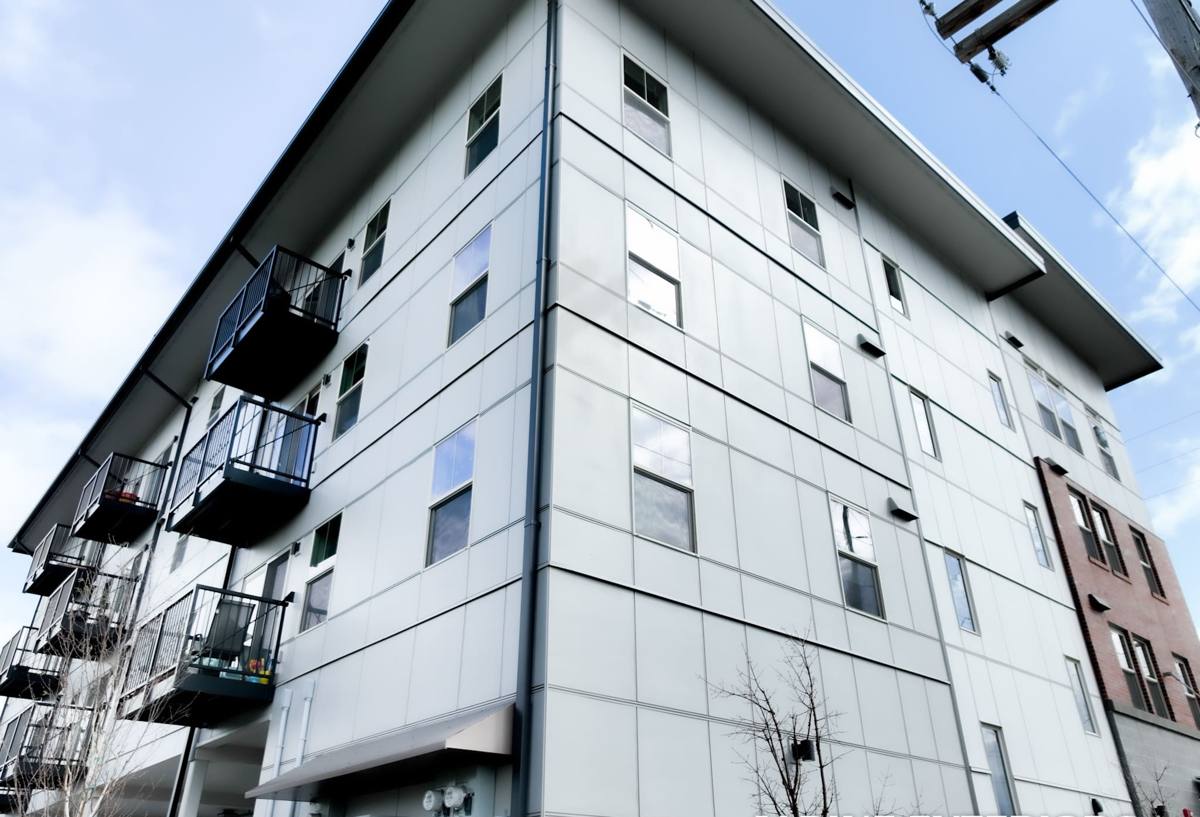
Why Marietta's Climate Is a Real Factor, Not a Footnote
It's tempting to treat siding as siding — pick a look, get it installed, done. But Marietta's location makes the climate part of the decision, not background noise.
Salt Air Off the Bay
Airborne salt accelerates corrosion on fasteners, flashing, and any metal trim, and it degrades certain paints and coatings faster than inland exposure would. Board & batten in particular relies on battens, seams, and often more trim than lap siding — every one of those is a place where salt exposure can shorten the life of the wrong material or the wrong fastener.
Driving Rain
Wind-driven rain off the water doesn't just wet a wall — it pushes moisture sideways and up under laps, seams, and trim edges. A board & batten system depends on the vertical boards and battens shedding water cleanly and on the water-resistive barrier behind them doing its job when wind pushes rain past the surface layer.
Moss Season
Shaded, low-lying, or tree-covered lots in and around Marietta hold moisture longer, which means moss and algae growth get a long runway. Moss isn't just cosmetic — it holds water against the siding surface and, on materials that aren't dimensionally stable or properly sealed, that sustained moisture contact is where problems start.
What Board & Batten Actually Needs to Work Long-Term Here
Board & batten looks simple — vertical boards, battens over the seams — but the system underneath the visible surface is what determines whether it holds up in this climate for one winter or for decades.
- A functioning water-resistive barrier behind the entire assembly, lapped correctly so water sheds outward and down, not into the wall cavity.
- Rainscreen or furring strategy where called for, so any moisture that does get behind the boards has a path to drain and dry rather than sitting against the sheathing.
- Correct board and batten spacing and fastening — fastener placement and spacing that account for material expansion and contraction, so boards aren't fighting the fasteners as they move with temperature and moisture swings.
- Properly flashed openings at every window, door, and penetration — these are the highest-risk points for water intrusion on any vertical siding profile, board & batten included.
- Trim and butt joints sealed correctly, using materials and sealants rated for coastal, wet-climate exposure rather than generic caulk that will crack out in a season or two.
- A finish that resists moss and algae growth on the specific exposures of the home — north-facing walls, shaded elevations, and areas near mature trees need this more than open, sun-exposed walls.
Skip any one of these and the visible board & batten look can still go up fine — the failures just show up later, as trapped moisture, soft trim, streaking, or paint that won't hold.
Why We Install Board & Batten Only in James Hardie Fiber Cement
We don't install board & batten in vinyl, LP SmartSide, primed spruce, cedar, or other fiber cement brands like Cemplank or Allura. That's a deliberate standard, not a sales position, and in a climate like Marietta's it matters more than it would somewhere drier and milder.
Non-Combustible and Dimensionally Stable
James Hardie fiber cement doesn't expand and contract with moisture and temperature the way wood-based products do, and it doesn't soften or swell at cut edges and joints the way engineered wood products can when water gets in. In a board & batten profile — which has more seams and butt joints per square foot than lap siding — that stability matters at every one of those joints.
ColorPlus Factory Finish
Hardie's ColorPlus finish is baked on at the factory under controlled conditions, which gives it better long-term color retention and adhesion than field-applied paint, especially against the UV and moisture cycling common on the coast. That matters directly for moss and algae resistance and for how the finish holds up over years of Marietta's wet season.
Climate-Engineered HZ Product Lines
Hardie's HZ5 formulation is engineered specifically for the wet, moderate Pacific Northwest climate zone Ferndale sits in — it's built to perform where freeze-thaw cycling and sustained moisture exposure are the norm, which is exactly the profile Marietta's bay-adjacent location produces.
A Warranty That Reflects Confidence in the Product
Hardie backs its siding with a strong, transferable limited warranty — useful not just for the current owner but for resale, since it follows the house rather than the original buyer.
Board & Batten Material Comparison
| Material | Salt air / moisture behavior | Dimensional stability | Finish longevity |
|---|---|---|---|
| James Hardie fiber cement | Engineered for wet coastal climates (HZ5) | High — doesn't swell or rot at joints | Factory-baked ColorPlus finish |
| Vinyl | Can warp or become brittle with UV and temperature swings | Moderate — expands/contracts noticeably | Color molded in, but fades over time; not repaintable easily |
| LP SmartSide (engineered wood) | Vulnerable at cut edges and joints if moisture gets in | Moderate — wood-based core | Field or factory finish, needs edge sealing diligence |
| Primed spruce / cedar | Natural wood — absorbs moisture, prone to rot without upkeep | Lower — swells, cups, checks over time | Requires regular repainting/staining |
| Other fiber cement (Cemplank, Allura) | Similar base material to Hardie | High | Varies by finish system and warranty structure |
This isn't a claim that every alternative fails on a Marietta home — many perform adequately with diligent upkeep. It's why, weighing moisture behavior, joint performance, and long-term finish life against this specific coastal climate, we standardized on Hardie for the work we put our name on.
How Our Process Works for a Marietta Board & Batten Job
1. On-Site Assessment
We look at the home's actual exposures — which elevations face prevailing wind and rain, where shade and moisture linger, what the current siding and water-resistive barrier condition looks like — before recommending a spacing, batten width, or trim approach.
2. Moisture and Substrate Check
Before any new siding goes up, we check the sheathing and framing underneath for existing moisture damage. Covering a problem with new siding doesn't solve it — it hides it.
3. Water-Resistive Barrier and Flashing
We install or verify a correctly lapped water-resistive barrier and flash every window, door, and penetration to shed water outward, accounting for the wind-driven rain this stretch of the county sees regularly.
4. Hardie Board & Batten Installation
Boards and battens go up to Hardie's specified fastening pattern and spacing, with attention to butt joints, corners, and trim details that hold up against salt air and sustained moisture.
5. Finish and Walkthrough
We finish with a walkthrough covering what maintenance the home will realistically need — and what it won't, which is one of the practical advantages of a factory-finished fiber cement system over field-painted wood.
What to Check Before Hiring for Board & Batten in Marietta
- Does the crew have hands-on experience with board & batten specifically, not just lap siding — the fastening and joint details are different.
- Do they talk through water-resistive barrier and flashing details, or just the visible board layout?
- Are they familiar with coastal Whatcom County exposures, or applying a generic install approach regardless of site conditions?
- Do they carry proper licensing and insurance for exterior work in Washington?
- Will they check existing sheathing condition before covering it, rather than siding over unknown damage?
- Do they give a clear, written scope — material, fastening pattern, flashing approach, and warranty terms — before work starts?
Why Local Experience in Marietta Matters
A crew that already works Marietta and the surrounding Ferndale area knows which elevations typically take the worst of the wind-driven rain off the bay, which lots hold moisture and grow moss fastest, and how salt exposure plays out on trim and fasteners over a few winters — not in theory, but from having gone back to homes in the area and seen what held up and what didn't. That's the kind of judgment that shows up in the small decisions on a board & batten job: batten spacing, trim material, sealant choice, where to add extra flashing attention — decisions a generic install approach doesn't account for.
If you're considering board & batten siding for a home in Marietta, we're glad to take a look and walk through what your specific site needs. Reach out for a free, no-pressure estimate — the form below gets you started.