 Ferndale Siding
 Siding Replacement Built for Marietta's Conditions
Marietta sits low, flat, and close to the water on the edge of Ferndale, and that location shapes what siding has to survive here. Homes in this part of Whatcom County take on a mix of salt-laden air off Bellingham Bay, driving rain that comes in sideways during winter storms, and long stretches of shade and dampness that keep moss and algae growing on north-facing walls for much of the year. A siding replacement in Marietta isn't just a cosmetic upgrade — it's a chance to put a wall system on the house that's actually built to handle this specific combination of salt, water, and organic growth, rather than one that just looks good on the day it goes up.
We work throughout Ferndale and the surrounding Whatcom County communities, and Marietta homes get particular attention because the exposure here is genuinely different from siding a house set back in the trees a few miles east. Salt air accelerates corrosion on fasteners and trim, and it breaks down some siding materials faster than manufacturers' general climate ratings account for. That's the starting point for every Marietta siding conversation we have with a homeowner.
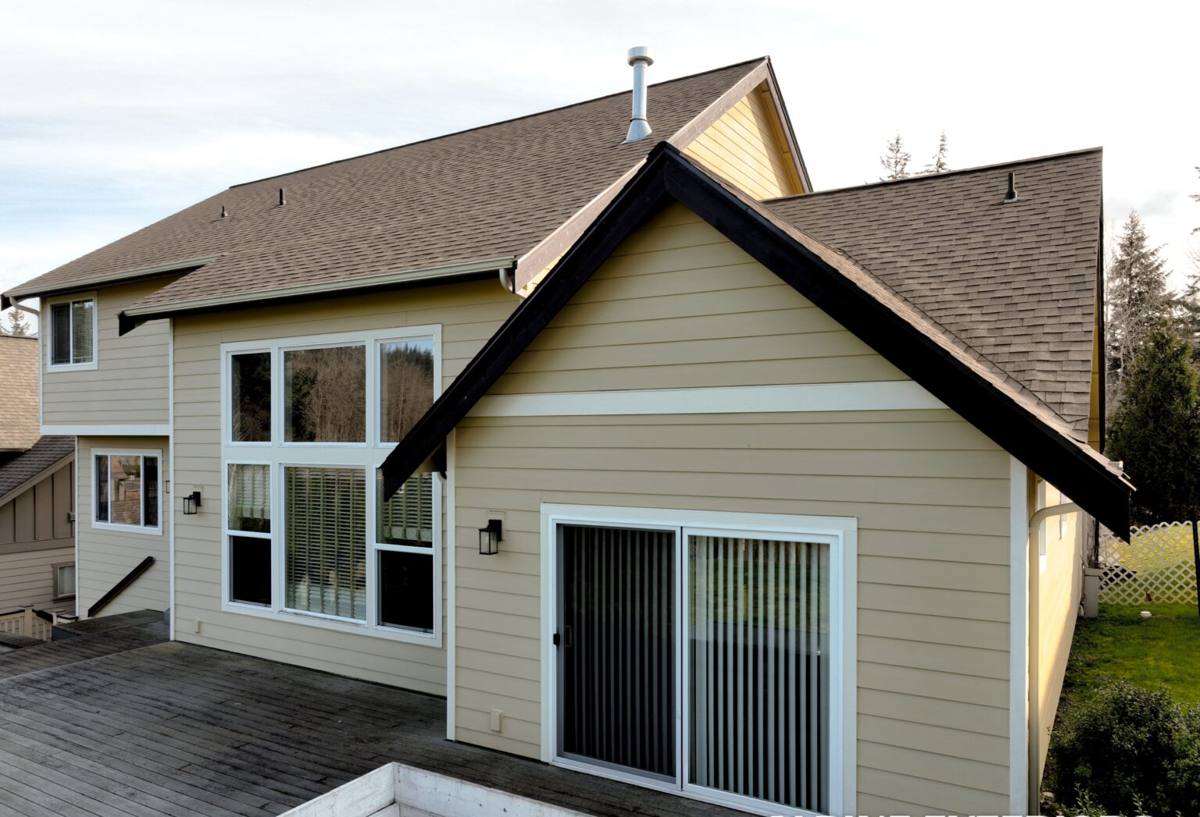
What Salt Air, Rain, and Moss Actually Do to Siding
Salt Air and Corrosion
Airborne salt doesn't just sit on the surface — it works into seams, fastener heads, and any place two materials meet. Over years, that accelerates rust on unprotected metal trim and fasteners, and it can degrade certain paints and coatings faster than they'd wear inland. Siding and trim systems that aren't specifically engineered for coastal-adjacent exposure often show chalking, fading, or pitting well ahead of their expected lifespan in a location like Marietta.
Driving Rain and Wind-Driven Moisture
Whatcom County storms frequently push rain horizontally, not straight down. That means wall assemblies need real drainage and flashing detail — not just a water-resistant face material — because wind-driven rain finds its way into laps, corners, and penetrations that a calm-weather installation would never test. A siding job that looks fine in July can fail in a February windstorm if the water management behind the siding wasn't done right.
Moss, Algae, and Prolonged Dampness
Marietta's tree cover, low elevation, and marine humidity mean some exterior walls barely dry out between fall and spring. Moss and algae take hold on any surface that stays damp and shaded, and once established they hold moisture directly against the siding surface, which speeds up whatever deterioration process the underlying material is already prone to. This is a much bigger factor here than in drier parts of the state, and it should influence both the material choice and the maintenance plan.
Why We Install Only James Hardie Fiber Cement
Given what Marietta's climate does to exterior materials, we standardized on James Hardie fiber cement siding for every job we do, including replacements in this neighborhood. Fiber cement is non-combustible and dimensionally stable, meaning it doesn't swell, cup, or rot the way wood-based or wood-fiber products can when they take on repeated moisture. Hardie's ColorPlus factory finish is baked on and warranted, so it holds its color and resists the fading and chalking that salt air and UV exposure cause faster than most homeowners expect. For a location like Marietta, that combination — a material that doesn't absorb water the way wood does, and a finish that's engineered to hold up outdoors rather than touched up on-site — matters more than it would somewhere drier and further from the water.
We don't install vinyl, LP SmartSide, primed wood, or cedar siding, and we're upfront with homeowners about why. Each of those products has legitimate strengths, but each also has a real-world weak point — moisture sensitivity, installation-dependent performance, or a shorter practical lifespan in a wet marine climate — that we're not willing to put our name behind when a homeowner is paying for a full replacement. Hardie's HZ5 product line is specifically engineered for climates with more moisture exposure, which is exactly the profile Whatcom County homes near the water fall into.
Material Comparison for Marietta Conditions
| Material | Salt Air Behavior | Moisture/Rot Risk | Moss Resistance | Finish Longevity |
|---|---|---|---|---|
| James Hardie Fiber Cement | Non-combustible, dimensionally stable | Very low — doesn't rot | Cleans easily, doesn't feed growth | Factory ColorPlus finish, long warranty |
| Vinyl | Can become brittle, fasteners corrode | Low direct rot, but traps moisture behind panels | Surface growth common in shade | Fades and chalks over time, not repaintable |
| LP SmartSide (wood-strand) | Moderate — depends on seal integrity | Moderate to high if seams fail | Can hold moss if coating wears | Field-applied finish wears faster |
| Cedar / Primed Wood | Higher maintenance in salt exposure | High without diligent upkeep | Prone to moss and algae in shade | Requires repainting/staining on a cycle |
What a Correct Siding Replacement Involves
Replacing siding on a Marietta home is about more than swapping old boards for new ones. Done right, it's a full rebuild of the wall's water management system, and skipping steps here is exactly what leads to trouble a few winters down the line.
- Full tear-off and inspection: Old siding comes off so the sheathing underneath can actually be checked, not guessed at.
- Sheathing repair: Any water-damaged or rotted sheathing gets replaced before anything new goes up — covering damaged sheathing just hides a problem.
- Weather-resistive barrier: A correctly lapped and sealed house wrap or building paper goes down as the primary drainage plane behind the siding.
- Rainscreen or drainage gap: A furring strip or drainage mat creates space for incidental moisture to drain and the wall to dry, which matters a lot given how often Marietta walls stay damp.
- Flashing at every penetration: Windows, doors, hose bibs, vents, and other penetrations get properly flashed so wind-driven rain can't track in around them.
- Correct fastening and clearances: Hardie panels fastened per manufacturer spec, with proper ground clearance and gaps at trim to allow for expansion and drainage.
- Caulking and sealant discipline: Sealant used only where Hardie's install guide calls for it — over-caulking traps moisture just as badly as under-caulking lets it in.
Our Process for a Marietta Siding Replacement
1. On-Site Assessment
We walk the exterior with you, looking specifically at the sides of the house that take the worst of the wind-driven rain and the shaded areas where moss has been building up. We check trim, window flashing, and any soft spots in the existing siding before we talk about scope.
2. Scope and Product Selection
We go over which Hardie plank, panel, or shingle profile fits the home, which HZ climate configuration makes sense for a Marietta lot, and where trim and accent details make sense. You get a clear, written scope — no vague allowances.
3. Tear-Off and Sheathing Check
Removal is done in sections to limit how long the wall is exposed, with sheathing inspected and repaired as we go rather than assumed to be fine.
4. Water Management Installation
Weather-resistive barrier, drainage gap, and flashing go in before a single piece of finished siding is hung. This is the step that determines whether the job holds up through actual Whatcom County winters, not just how it looks at completion.
5. Siding, Trim, and Finish Install
Hardie siding and trim go up to manufacturer fastening and clearance specs, with attention to the corners and rain-exposed elevations that took the worst wear on the old siding.
6. Final Walkthrough
We walk the finished exterior with you, point out anything you should know for upkeep, and make sure you're clear on what the Hardie warranty covers.
Why a Crew That Already Works Marietta Matters
A siding crew that already works this specific area knows which elevations of a Marietta home typically take the worst of the wind-driven rain, which yards stay shaded long enough for moss to become a recurring issue, and how much the salt-air exposure this close to the water actually affects fastener and trim choices versus a home a few miles inland. That's not something you get from a general contractor bidding the job off a set of photos. It shows up in small decisions — where extra flashing attention goes, which trim details get sealed differently, how ground clearance is handled on a lower-lying lot — that don't show up on an estimate sheet but matter a lot ten years later.
It also matters for scheduling and troubleshooting. A crew familiar with Whatcom County's wet season plans tear-off and dry-in around the weather instead of leaving sheathing exposed during a stretch of driving rain, which is exactly the kind of mistake that causes hidden damage on a job that otherwise looks fine.
Maintenance After Replacement
Fiber cement siding doesn't rot, but it still benefits from basic upkeep in a climate like this one:
- Rinse siding annually, focusing on shaded, north-facing walls where moss and algae tend to build up.
- Keep vegetation trimmed back from siding so airflow can help walls dry between storms.
- Inspect caulking at trim and penetrations every year or two, since sealant is the one component that does wear over time.
- Check gutters and downspouts before the wet season so water isn't dumping directly against a wall.
None of this is heavy maintenance — it's the same basic care any exterior benefits from — but staying on top of it is what lets a correctly installed Hardie system reach its full lifespan in a marine climate like Marietta's.
What Replacement Typically Involves Cost-Wise
Every Marietta home is different, and the honest answer is that cost depends on square footage, how much of the existing wall system needs repair once it's opened up, trim complexity, and which Hardie profile you choose. Broad cost drivers to expect a conversation about:
| Factor | Why It Matters in Marietta |
|---|---|
| Sheathing condition | Homes with long-term moss or moisture exposure sometimes need sheathing repair, which isn't known until tear-off |
| Wall square footage and stories | Larger and multi-story homes take more labor and material |
| Trim and architectural detail | Corner boards, window trim, and accent details add labor time |
| Siding profile chosen | Lap, shingle, and panel Hardie products differ in material and install time |
| Access and site conditions | Lot layout, landscaping, and setback affect how efficiently a crew can work |
We give straightforward, itemized estimates after an on-site look — not a ballpark over the phone — so you know exactly what you're paying for before work starts.
If your Marietta home's siding is showing moss buildup, fading, soft spots, or damage from the last few storm seasons, we're glad to come take a look. Reach out for a free, no-pressure estimate using the form below, and we'll walk the exterior with you and give you a straight answer on what it needs.