 Ferndale Siding
 Windows in Marietta Take a Different Kind of Beating
Marietta sits low and close to the water on Ferndale's western edge, and that location shapes what happens to a house over time. Salt-laden air off Bellingham Bay works into aluminum tracks and steel hardware year-round. Driving rain off the water finds its way sideways into gaps that would stay dry on a house a few miles inland. And Whatcom County's long, wet moss season means anything shaded or north-facing stays damp for months at a stretch. None of this is dramatic on its own, but stacked together over ten or fifteen years, it's exactly the combination that ages window frames, sills, and seals faster than the manufacturer's brochure ever accounted for.
We bring this up first because it changes what "correct" window replacement actually means for a Marietta home. A window that's rated fine for a dry inland climate can still fail early here if it's not detailed for wind-driven moisture and salt exposure. Good work in this neighborhood isn't about buying the fanciest window — it's about getting the flashing, sealing, and material choices right for what the site actually throws at the house.
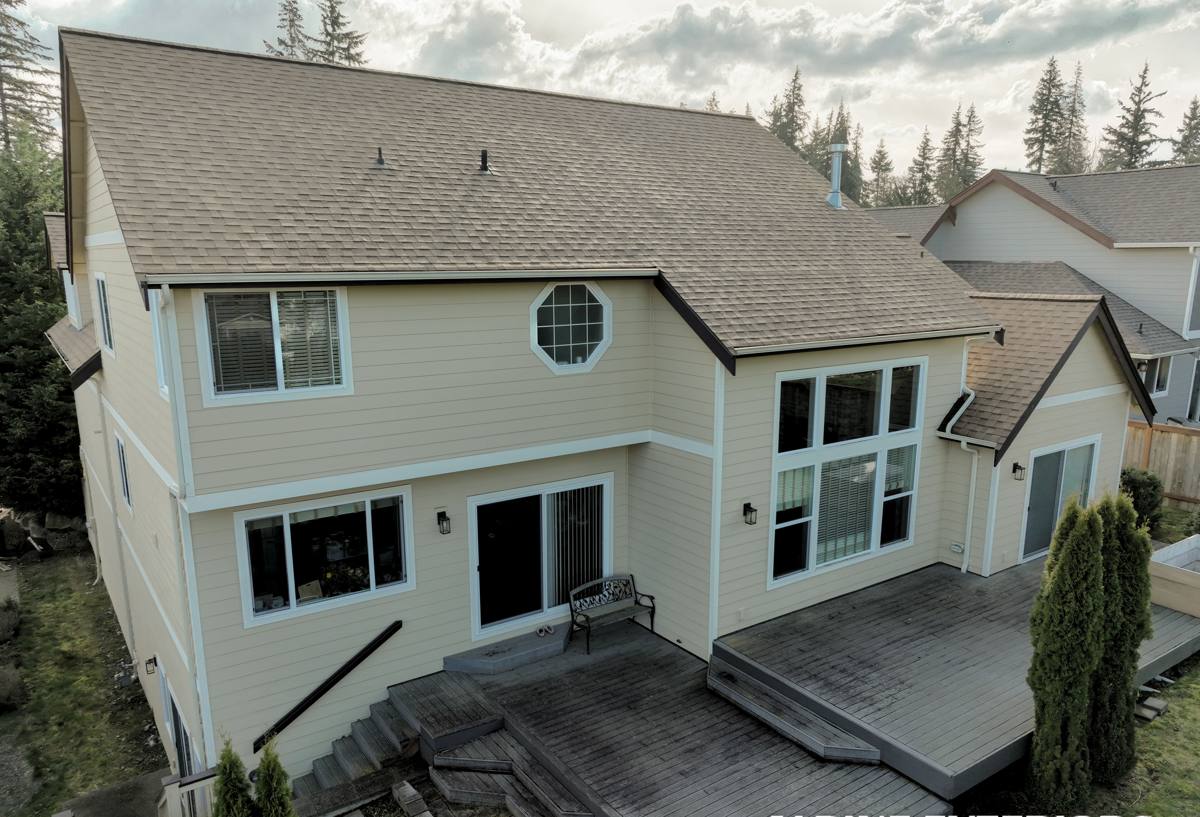
What "Correct" Window Replacement Actually Involves
Removal and Inspection
Every replacement starts the same way: pull the old unit carefully and actually look at what's behind it before setting the new one. This is the step that gets skipped on rushed jobs, and it's the one that matters most in a wet, salt-exposed area. We're checking the sill plate, the framing, and the sheathing for soft spots, staining, or old water paths that were hidden by the trim. If moisture has been working its way in slowly, the old window may have been masking a problem rather than causing it.
Flashing and Water Management
Window flashing is the part of the job nobody sees once it's done, and it's the part that determines whether the house stays dry for the next twenty years or starts leaking again in five. In a location that takes driving rain off open water, we pay close attention to how water is directed down and out at the sill, how the head flashing overlaps the housewrap above the opening, and how the side flashing ties into the existing weather-resistive barrier. Sealant has a role here, but sealant alone is not a flashing strategy — it's a backup, not the plan.
Frame and Glass Selection
Once the opening is prepped correctly, the window itself needs to match the exposure. That means thinking about frame material, glass package, and hardware finish together, not picking a style off a showroom floor and hoping it holds up near the water. We'll walk through the honest trade-offs for your specific exposure — a shaded north wall that stays damp most of the year calls for different choices than a sun-exposed south wall.
Choosing Frame Materials for a Salt-Air, High-Moisture Climate
There's no single "best" window material for every house — it depends on exposure, budget, and how much upkeep you want to take on. Here's how the common options actually compare for a Marietta-area home:
| Frame Material | Salt-Air / Moisture Behavior | Maintenance Needs | Typical Lifespan Here |
|---|---|---|---|
| Vinyl | Doesn't corrode; performs well in salt air; can flex slightly in temperature swings | Low — occasional track cleaning | 20–30 years with correct installation |
| Fiberglass | Very stable in moisture and temperature; strong resistance to warping | Low — repaint or refinish optional, not required | 30+ years |
| Wood / Wood-Clad | Handsome appearance but the wood core is vulnerable if seals or cladding fail near the coast | Higher — periodic inspection and refinishing of exposed wood | Varies widely; depends on upkeep and exposure |
| Aluminum | Prone to pitting and corrosion in salt air over time; conducts cold, increasing condensation risk | Moderate — hardware and tracks need attention | Shorter effective lifespan in this specific climate |
We don't push one material on every job. For most Marietta homes we recommend vinyl or fiberglass because they hold up against salt exposure with the least ongoing maintenance, but a wood-clad window can still be the right call on a home where appearance and historic character matter more than minimizing upkeep — as long as you go in knowing the maintenance commitment.
Glass Packages: What Actually Matters Here
Double-pane, low-E glass with argon fill is the practical baseline for this climate — it cuts heat loss, reduces condensation risk on the interior pane, and holds up fine under normal coastal conditions. Triple-pane glass adds another layer of insulation and can help with sound dampening if road or wind noise is a factor, but it also adds weight and cost, and on some frame types it isn't worth the premium unless you're chasing maximum efficiency on a north-facing wall that never gets sun. We'll tell you honestly when triple-pane is worth it and when double-pane low-E is the smarter spend.
Signs a Marietta Home Needs Window Replacement
Because of the moisture and salt exposure here, problems often show up earlier and more visibly than they would inland. Watch for these:
- Fogging or a permanent haze between the panes — the seal has failed and the insulating gas is gone
- Persistent condensation on the inside of the glass, especially on north-facing or shaded windows
- Drafts you can feel at the frame edge even when the window is fully latched
- Wood sills or trim that feel soft, spongy, or show dark staining
- Windows that are hard to open, close, or lock — swollen frames or corroded hardware are common culprits
- Visible moss, algae, or mildew building up on the sill or lower trim, a sign that area stays damp longer than it should
- A noticeable jump in heating bills without any other explanation
Any one of these on its own isn't necessarily urgent. Several at once, or any sign of soft framing, usually means it's time to stop patching and start planning a replacement before the damage spreads into the wall structure.
Our Process, Start to Finish
We keep the process straightforward and try not to make a homeowner guess what's happening at any stage:
- Walkthrough and measurements — we look at every window being considered, note the exposure of each wall, and check for existing moisture or framing issues.
- Honest recommendation — we tell you which frame material and glass package fit your budget and exposure, and why, including where a cheaper option is genuinely fine.
- Written estimate — clear pricing, no vague allowances, so you know what's included before work starts.
- Removal and inspection — old units come out carefully, and we flag anything found behind them before proceeding.
- Correct flashing and installation — sill pan, flashing sequence, insulation, and air sealing done in the right order, not shortcuts covered by trim.
- Final check and cleanup — every window operates smoothly, seals tight, and the job site is left clean.
Mistakes We Commonly Find on Older Installations
A large share of the window problems we get called out for in this area didn't start with the window itself — they started with how it was installed the first time. The most frequent issues: sealant used as the only water barrier instead of proper flashing, no sill pan to catch and direct incidental water, insulation packed too tightly around the frame (which restricts the window's normal expansion and contraction), and trim reinstalled over damaged sheathing without ever addressing the rot underneath. In a climate that gets this much wind-driven rain, those shortcuts tend to surface as problems within a handful of years rather than staying hidden for decades.
Why a Crew That Already Works Marietta Matters
Window replacement done right depends on understanding the specific site — which walls take the worst of the weather off the bay, how a given block tends to hold moisture, and what kind of exposure is typical for the neighborhood's older housing stock. A crew that's already spent time working in Marietta and elsewhere in Ferndale isn't guessing at how the local climate treats a house; they've seen the pattern of moisture damage, corrosion, and moss buildup that shows up here repeatedly, and they plan the install to account for it from the start. That local familiarity also means straightforward answers about realistic lifespans, honest material trade-offs, and what actually needs doing versus what can wait — instead of an upsell built around general national averages that don't reflect Whatcom County's climate.
After the Install: Keeping Windows Performing Long-Term
Even a correctly installed window benefits from a little seasonal attention in this climate. Rinse salt residue off frames and tracks a few times a year, especially after storms. Keep an eye on exterior caulking at the trim line and touch it up if it starts to crack or pull away. Clear moss or debris off sills and nearby trim so moisture doesn't sit against the frame. None of this is heavy maintenance — it's the kind of upkeep that adds years to a window's service life for very little effort.
If your Marietta home has windows showing any of the signs above, or you're simply ready to stop fighting drafts and fogged glass, we're glad to take a look. We offer free, no-pressure estimates — use the form below to get started.