 Ferndale Siding
 Deck Repair Built for Marietta's Weather
Marietta sits low and close to the water, which means homes here take a different kind of beating than decks a few miles inland. Salt-laden air off the bay, driving rain that comes in sideways during winter storms, and a moss season that can stretch from October through April all work against wood and fasteners in ways that a lot of general contractors don't plan for. If your deck has soft spots, rusted hardware, a wobbly rail, or a green film that never fully goes away, that's not just cosmetic — it's usually a sign the structure underneath is starting to lose the fight.
We repair decks in Marietta and the rest of Ferndale on a regular basis, so we're not guessing at what's causing the damage. We're looking for the same handful of failure points every time, because the climate here creates them predictably.
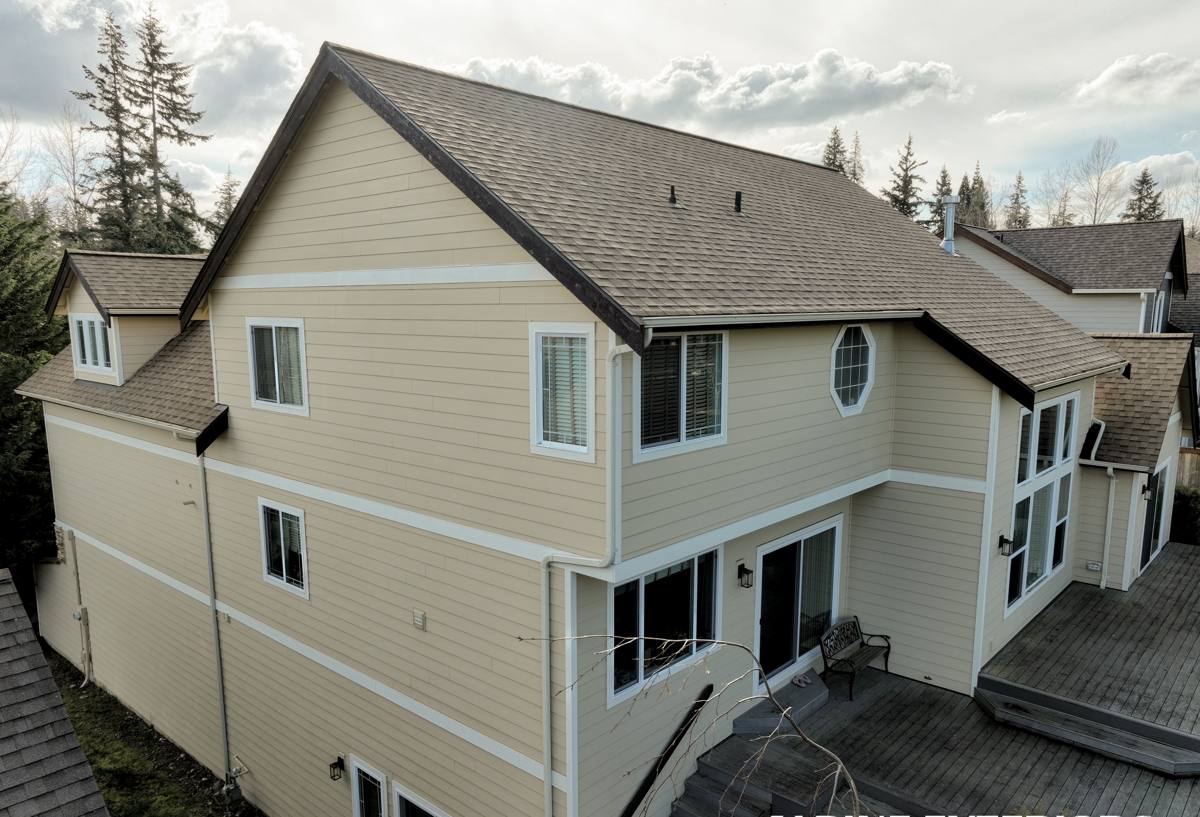
What Salt Air, Rain, and Moss Actually Do to a Deck
Salt Air and Metal Fasteners
Proximity to salt water accelerates corrosion on anything metal — nails, screws, joist hangers, bolts, and post bases. Standard electro-galvanized fasteners that might last two decades further inland can start rusting and weakening in half that time near the coast. Once a fastener corrodes, it loses grip on the wood fibers around it, and the connection it's supposed to hold gets loose long before the wood itself looks bad.
Driving Rain and Water Intrusion
Whatcom County rain doesn't always fall straight down. Wind-driven rain gets pushed into every horizontal-to-vertical seam on a deck — where the ledger board meets the house, where rail posts meet the frame, where deck boards butt against trim. If flashing is missing, damaged, or was never installed correctly in the first place, water works its way behind it and stays wet far longer than it should, since these hidden areas don't get the sun and airflow that dry out the exposed decking.
Moss and Extended Wet Season
A long, mild, wet season is ideal moss-growing weather. Moss holds moisture directly against the wood surface and grout lines between boards, which keeps the deck's surface wet for days after a storm has passed elsewhere. Beyond the rot risk, a mossy deck surface gets slick fast — it's one of the more common slip hazards we get called out for in this area.
Signs Your Marietta Deck Needs Repair, Not Just Cleaning
- Deck boards that feel spongy or flex noticeably underfoot
- Rail posts that wiggle or have visibly separated from the frame
- Rust streaks running down from screw heads or hardware
- Gaps or dark staining where the deck ledger meets the house siding
- Persistent green or black growth that returns within weeks of cleaning
- Stair stringers that feel less solid than the rest of the structure
- Visible daylight or gaps between joists and hangers when viewed from below
- A musty smell coming from underneath the deck
Any one of these on its own might be minor. Several at once usually means moisture has been getting into the structure for a while, not just sitting on the surface.
What a Correct Deck Repair Actually Involves
A repair that only replaces the boards you can see often leaves the real problem in place. We look at the whole system, because deck framing and skin work together, and a weak point below the surface will just resurface a season or two later.
Structure First
We check joists, beams, posts, and footings for rot, checking, and movement before we touch the visible decking. If a support post has settled or a beam has softened, replacing boards on top of it just delays the real fix.
Ledger Board and Flashing
The ledger — where the deck attaches to the house — is the single most common source of hidden water damage on decks in this region. Proper flashing, correctly lapped with the house's weather barrier, is what keeps rain from tracking behind the deck and into the wall framing. If we open this area up and find soft wood or missing flashing, we address it as part of the repair, not as an upsell.
Fasteners and Hardware
Given the salt air, we don't use standard fasteners as a default. Stainless steel or heavy hot-dip galvanized hardware costs more up front but resists corrosion far longer in a coastal-influenced climate, which matters more here than it would on a deck built twenty miles east.
Surface and Rail
Once the structure and connections are sound, we address decking boards, guardrails, and stairs — replacing what's damaged, resecuring what's loose, and making sure railing meets a safe, stable standard rather than just being reattached in place.
Repair or Replace? How We Help You Decide
Not every deck problem calls for a full rebuild, and not every deck is worth patching. The right call usually comes down to how much of the structure is still sound versus how much has been compromised by long-term moisture exposure.
| Factor | Leans Toward Repair | Leans Toward Replacement |
|---|---|---|
| Framing condition | Joists and beams are solid, only surface boards affected | Widespread soft or rotted framing members |
| Age of deck | Under 15-20 years, built with decent materials | Original construction is older and near end of service life |
| Extent of damage | Isolated areas — a few boards, one rail section | Damage spread across multiple systems (rail, ledger, framing) |
| Ledger and flashing | Intact or easily corrected | Failed flashing has caused damage into the house framing |
| Footings and posts | Level, stable, no visible movement | Settling, heaving, or undersized footings for current code |
We'll always tell you honestly which side of that table your deck falls on. Sometimes a repair now genuinely buys you several more good years; sometimes it's a temporary fix on a structure that needs to be replaced, and we'd rather say that up front than have you pay twice.
Our Repair Process
- On-site inspection. We walk the full deck, check underneath, test rail stability, and look at the ledger connection — not just the parts that are obviously damaged.
- Honest scope and estimate. You get a clear breakdown of what's failing, what's causing it, and what it will take to fix it correctly, with pricing explained rather than a single lump number.
- Repair work. Structural issues are addressed first, then flashing and connections, then surface boards, rail, and stairs.
- Final check and cleanup. We confirm the deck is solid and safe to use, and we don't leave debris or old hardware behind.
Materials: What We Use and Why
Wood decking is still common in Marietta, and there's nothing wrong with sticking with wood if it's properly maintained — it's often the more economical repair path when the framing is sound. Composite decking holds up well against moss staining and doesn't need refinishing, but it comes with its own trade-offs: it's a bigger investment up front, and if the substructure underneath isn't handled correctly, composite boards can trap moisture against framing just as easily as wood can. We'll talk through what fits your deck, your budget, and how much upkeep you actually want to do, rather than pushing one material as a default answer.
Whatever the surface material, we treat framing lumber, fasteners, and flashing as the part of the job that determines how long the repair actually lasts — that's where coastal Whatcom County weather does the most damage, and it's the part homeowners can't easily inspect themselves.
Why a Crew That Already Works Marietta Matters
A deck repair crew that mostly works dry, inland job sites can miss things that are second nature to a crew that works Ferndale's coastal side regularly. We already know which fastener grades hold up here, where flashing tends to fail first on local ledger connections, and how aggressively moss and algae grow through a typical Whatcom County wet season. That means less time spent diagnosing and more time spent fixing the actual problem — and repairs that are built to handle the specific conditions your deck sits in, not generic conditions from somewhere else.
We're also familiar with Ferndale's permitting expectations for structural deck work, which matters when a repair involves footings, framing, or rail height — cutting corners there can leave you with a deck that doesn't pass inspection or, worse, isn't actually safe.
Keeping Your Deck Solid After Repair
- Sweep leaves and debris off the deck surface regularly, especially in fall
- Clean moss and algae buildup before it has a chance to stain or hold moisture
- Check the gap between deck boards periodically — debris packed into gaps traps water
- Inspect rail connections once or twice a year for looseness
- Look underneath the deck occasionally for new staining, rust, or soft spots
- Reseal or refinish wood decking on the schedule your material calls for, not just when it looks faded
A repaired deck can last a long time in this climate if it's looked after, but the same conditions that caused the original damage don't go away — they just get managed with regular attention.
If your deck in Marietta has soft boards, loose rail, rust streaks, or moss that keeps coming back, we're happy to take a look and give you a straight answer on what it needs. Use the form below to request a free, no-pressure estimate.