 Ferndale Siding
 Storm Damage Roof Repair in Marietta: What Makes This Job Different
Marietta sits close enough to the water that storm damage here rarely looks like the textbook version of a "storm-damaged roof." There's often no single dramatic tear or missing shingle field that's obvious from the driveway. Instead, homeowners find a lifted shingle tab at a valley, a soft spot in a ceiling weeks after the wind actually blew, or a slow stain spreading around a chimney that started with one bad storm and got worse with every rain since. Repairing that correctly takes more than nailing a shingle back down — it takes understanding how wind-driven rain, salt-tinged marine air, and a long moss season interact with a roof over time, not just what a single storm did on the day it happened.
This page is about that one job — storm damage roof repair for homes in and around Marietta — not roofing in general. If you've had a recent windstorm, a fallen branch, or you're noticing water intrusion you can't quite explain, this is what a correct repair actually looks like here, and why it matters who does it.
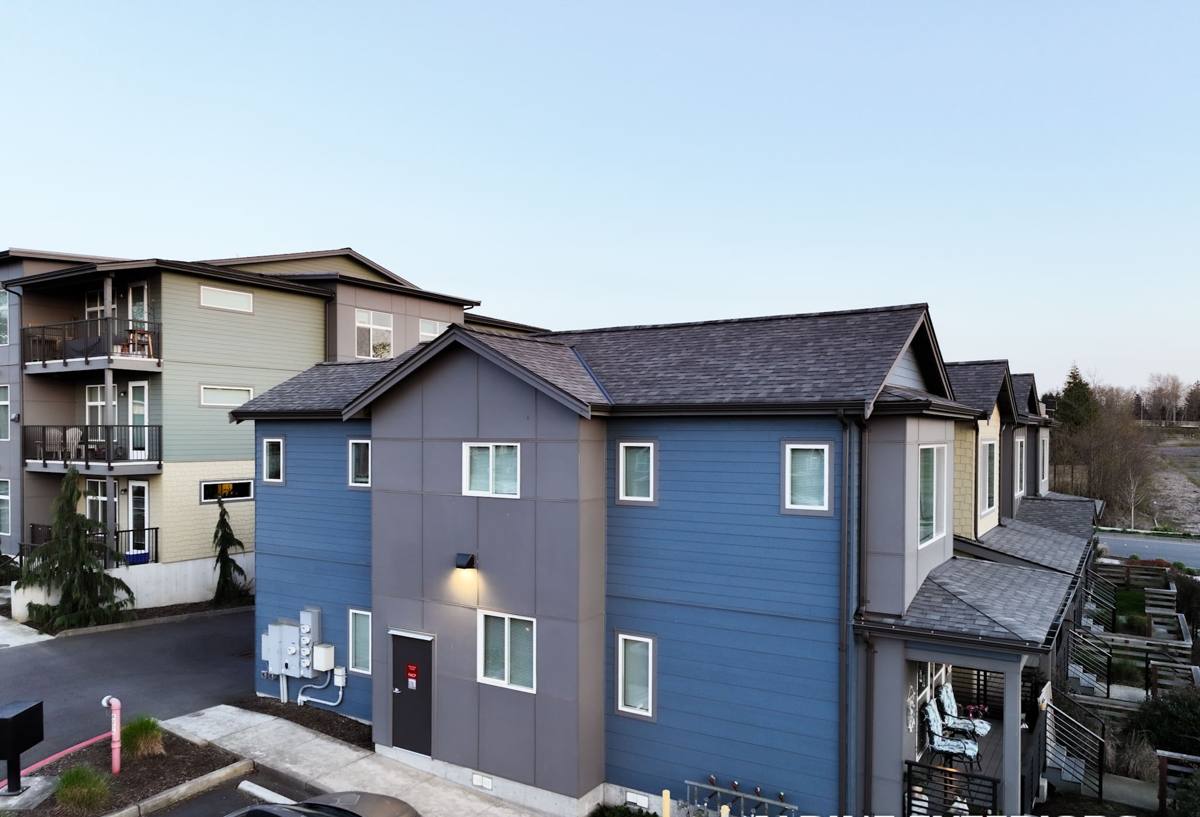
What Marietta's Climate Does to a Roof Over Time
Being near the water is part of what makes Marietta a nice place to live, and it's also exactly what stresses a roof harder than it would be a few miles inland. Salt-tinged air accelerates corrosion on exposed fasteners, flashing, and metal drip edge, so a nail or flashing seam that would last decades in a dry inland climate can start failing years sooner here. Driving rain off the water doesn't just fall straight down — wind pushes it sideways and up under shingle edges, valleys, and any flashing lap that isn't sealed tight, which is exactly the kind of intrusion a single hard storm can start and a series of smaller ones can finish. And on top of the wind and rain, a long moss and mildew season keeps shaded, north-facing slopes damp for months at a time, which softens shingles and decking that are already weakened by storm impact.
None of this means every Marietta roof is in bad shape. It means storm damage here tends to compound with existing wear rather than showing up as a clean, isolated problem — which is exactly why a proper inspection after a storm matters more than a quick patch.
Why "It's Just a Few Shingles" Can Be Misleading
A handful of lifted or missing shingles is often the visible tip of a larger issue. Wind strong enough to lift shingles has usually stressed the surrounding field too, loosening seals that won't fail today but will the next time wind-driven rain tests them. Treating storm damage as a spot repair without checking the surrounding area and the underlayment beneath it is one of the most common reasons a "repaired" roof leaks again during the next storm.
Recognizing Storm Damage Before It Gets Worse
Storm damage doesn't always announce itself. Some signs are visible right after a storm; others take weeks to show up once water has had time to work its way through.
Signs Visible From the Ground or Attic Right After a Storm
- Shingles that are cracked, curled, creased, or missing entirely, especially near ridges, valleys, and roof edges
- Granules collecting in gutters or downspouts, a sign of impact damage even where shingles look intact
- Bent, lifted, or missing flashing around chimneys, vents, or skylights
- Debris — branches, needles, or heavier limbs — resting directly on the roof surface
- Visible daylight through the roof deck when viewed from inside the attic
Signs That Show Up Days or Weeks Later
- A new water stain on a ceiling or upper wall that wasn't there before the storm
- A musty smell in an attic or upstairs closet
- Soft or spongy spots when walking the attic decking, if it's safely accessible
- Peeling paint or bubbling drywall near an exterior wall or ceiling line
If you notice any of these after a windstorm, it's worth getting a roof looked at even if nothing seems urgent. Storm damage that sits unaddressed through one or two more rain events tends to get more expensive to fix, not less.
What a Correct Storm Damage Repair Actually Involves
A repair that actually holds starts with a full inspection, not a glance at the obvious damage point. We check the entire roof plane, not just the area a homeowner points to, because wind that damaged one section usually stressed the fasteners and seals around it too.
Inspection First, Repair Second
Every storm repair starts with identifying the full extent of the damage — the roof covering itself, the underlayment beneath it, the decking underneath that, and the flashing at every valley, penetration, and wall intersection nearby. Skipping this step is how a homeowner ends up paying for the same repair twice.
Matching Materials, Not Just Patching Color
Where shingles need replacing, matching the existing product matters for more than appearance. Mismatched granule types or a different shingle profile can create an uneven wear pattern and, in some cases, void portions of an existing manufacturer warranty on the surrounding roof. When an exact match isn't available because a shingle line has aged or been discontinued, we'll tell you that honestly rather than installing something that looks close but behaves differently over time.
Flashing and Underlayment Get the Same Attention as the Shingles
Most roof leaks in this climate start at flashing, not in the open field of the roof. A storm repair that only replaces damaged shingles while leaving compromised flashing or underlayment in place is treating the symptom, not the cause. We re-seal, re-flash, or replace underlayment sections as needed so the repair holds up against the next wind-driven rain event, not just the one that already happened.
Deck Inspection Where Water Has Been Sitting
If water has been getting under the roof covering for any length of time, the decking beneath it can soften or rot. We check for this directly wherever there's been visible intrusion, because covering damaged decking with new shingles doesn't fix the underlying problem — it just hides it until it fails again, usually at a worse time.
Repair or Replace? How We Help You Decide
Not every storm-damaged roof needs a full replacement, and we won't push one on you if a targeted repair is the honest answer. The right call depends on a few factors we walk through together.
| Factor | Leans Toward Repair | Leans Toward Replacement |
|---|---|---|
| Extent of damage | Isolated to one section or slope | Widespread across multiple slopes |
| Roof age | Roof is well within its expected lifespan | Roof was already nearing the end of its service life |
| Decking condition | Decking is sound beneath the damage | Soft or rotted decking found in multiple areas |
| Underlayment condition | Underlayment elsewhere is still in good shape | Underlayment is aged, brittle, or already failing |
| Insurance coverage | Repair cost is well below the deductible | Claim covers replacement and repair cost is close to it |
We'll show you what we find during the inspection, explain what each option costs and what it buys you, and let you make the call with real information rather than a sales pitch.
Working With Insurance on a Storm Claim
A fair number of storm repairs in this area get filed as insurance claims, and the process goes smoother when the documentation is solid from the start. We photograph and document the damage we find during the inspection, which gives you something concrete to bring to an adjuster rather than relying on a verbal description. We're happy to walk an adjuster through what we found on site if that's useful, and we'll give you a written, itemized estimate you can submit either way — whether you're filing a claim or paying out of pocket.
One honest note: we won't inflate an estimate or list damage that isn't there to help a claim get approved. A documented, accurate estimate holds up better under review than an exaggerated one, and it protects you if the claim is ever questioned later.
Our Process, Start to Finish
| Step | What Happens |
|---|---|
| 1. Contact and scheduling | We schedule an in-person inspection, usually within a few days depending on demand after a widespread storm |
| 2. Full roof inspection | We check the entire roof, not just the reported damage area, including attic access where possible |
| 3. Written estimate | You get a clear, itemized estimate covering scope, materials, and cost — no pressure to decide on the spot |
| 4. Temporary protection if needed | If there's active water intrusion, we can discuss temporary measures to limit further damage while repair is scheduled |
| 5. Repair work | Damaged materials removed, deck checked and repaired if needed, new underlayment, flashing, and shingles installed to match |
| 6. Final walkthrough | We review the completed work with you and answer any remaining questions before calling the job done |
Why a Crew That Already Works Marietta Matters
A roofing crew that works this area regularly has already seen how salt air corrodes cheap fasteners faster than expected, how wind off the water finds its way under improperly lapped shingles, and which north-facing slopes hold moss and moisture longest through the wet season. That's knowledge you don't get from a single job or from a crew that only shows up in this specific area after a storm makes headlines. It shapes small decisions — fastener choice, flashing sequence, where extra underlayment attention is worth the time — that determine whether a repair holds for years or needs revisiting after the next hard rain.
After a significant windstorm, it's common for crews from outside the area to show up offering fast, cheap repairs. Some do fine work. Many aren't set up to stand behind a repair a year or two later because they were never local to begin with, which matters a great deal if a storm repair needs a warranty call down the road.
A Quick Checklist Before Hiring Anyone for Storm Repair
- Do they inspect the full roof, or just the spot you pointed out?
- Do they provide a written, itemized estimate before starting any work?
- Can they explain how they'll handle flashing and underlayment, not just shingle replacement?
- Do they document damage with photos you can keep for your own records or an insurance claim?
- Are they willing to tell you honestly if a repair is enough, instead of pushing a full replacement?
- Do they have an active, verifiable presence doing roofing work in this area, not just a temporary storm-season setup?
Getting Ahead of the Next Storm
Once a storm repair is complete, a little attention goes a long way toward avoiding a repeat. Keeping gutters and valleys clear of debris helps water shed the way it's supposed to instead of backing up under shingle edges. Trimming back branches that overhang the roof reduces both impact risk during wind and the shaded, damp conditions that encourage moss growth. And a roof that's a few years past a storm repair is worth a periodic look, since flashing seals and fastener corrosion don't always announce themselves until they've already let water in.
If you're dealing with recent storm damage, or you're just not sure whether something you're seeing is worth worrying about, we're glad to take a look. We'll give you a straightforward, no-pressure inspection and a written estimate so you know exactly what you're dealing with and what your options are — no obligation either way.