 Ferndale Siding
 Deck Building in Marietta: Built for the Climate, Not Just the Backyard
Marietta sits close to the water on the edge of Ferndale, and that proximity changes what a deck needs to survive here. A deck built to a generic national spec will often look fine for the first year or two, then start showing problems that a deck built for this specific climate never develops: soft spots near fasteners, slick green growth on the walking surface, railings that loosen faster than they should. Building a deck in Marietta isn't just carpentry — it's carpentry with Whatcom County's marine weather factored into every material choice and every joint.
We treat a Marietta deck project as a local build from the first conversation. That means talking about drainage, air movement under the structure, and material choices before we ever talk about layout and style.
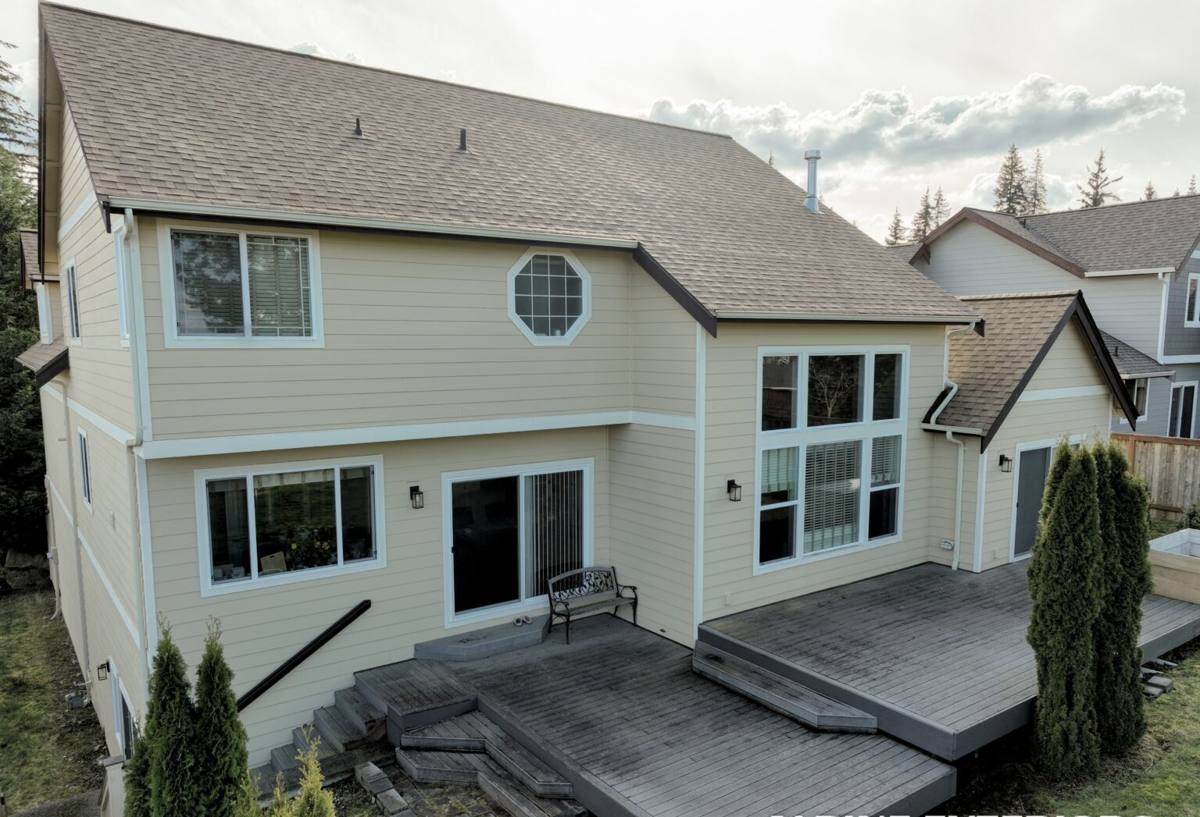
What Salt Air, Rain, and Moss Actually Do to a Deck
Three separate stresses hit a Marietta deck year-round, and they compound each other.
Salt-Laden Air
Being close to the water means fasteners, brackets, and any exposed metal hardware are exposed to airborne salt more than a deck built further inland. Standard hardware corrodes faster in this environment, and once a fastener starts to rust, it loses holding strength long before it looks obviously bad.
Driving Rain
Whatcom County rain doesn't just fall straight down — wind off the water pushes it sideways into railings, under rail caps, and into any seam or joint that isn't properly flashed or sloped to shed water. A deck that isn't detailed for driving rain will trap moisture in exactly the spots you can't see until the damage is already done.
Long Moss Season
Cool, damp, and shaded conditions for much of the year mean moss and algae get a long window to establish themselves on horizontal wood and composite surfaces. Beyond looking bad, a mossy deck surface holds moisture against the boards and becomes genuinely slippery — a real safety issue on stairs and near doorways.
Choosing the Right Decking Material for a Marietta Home
There's no single "best" decking material — there's a best material for your budget, your maintenance appetite, and how exposed your specific site is to wind, rain, and shade. Here's how the common options actually perform in this climate:
| Material | Moisture Behavior | Moss/Algae Resistance | Maintenance | Typical Lifespan Here |
|---|---|---|---|---|
| Pressure-Treated Wood | Absorbs and releases moisture; prone to cupping/checking if not sealed | Low — needs regular cleaning and re-sealing | Annual cleaning, re-stain/seal every 1-3 years | Shorter without upkeep, longer with consistent maintenance |
| Cedar | Naturally moisture-resistant but still needs sealing here | Moderate — natural oils help but fade over time | Regular cleaning, periodic oil/sealant | Solid if maintained; degrades faster if neglected |
| Composite (Uncapped) | Can absorb moisture at cut edges and fastener holes | Moderate — surface texture can trap moisture | Occasional wash; less than wood | Good, but edge exposure is the weak point |
| Capped Composite / PVC | Fully sealed shell resists moisture intrusion | Higher — smoother, denser surface sheds growth better | Low — periodic rinse | Longest of the common options in wet, shaded conditions |
We're honest with clients about the trade-off: capped composite and PVC cost more upfront but ask far less of you over the years, which matters in a climate that punishes low-maintenance neglect. Wood costs less to install but only holds up if someone actually keeps up with sealing and cleaning on schedule. Neither answer is wrong — it depends on what you're willing to do every year versus what you're willing to spend once.
Framing and Substructure: What Actually Determines How Long a Deck Lasts
Ledger Attachment and Flashing
Where the deck meets the house is the single most common failure point on any deck, anywhere, and it's worse in a climate that sees this much rain. Proper flashing at the ledger board keeps water from working its way behind the siding and into the rim joist — a problem that can go unnoticed for years until there's real structural damage.
Footings and Post Bases
Ground moisture around a low-lying, water-adjacent property means footings and post bases need to be set correctly and kept elevated off standing moisture. We don't set posts directly on grade or skip proper post base hardware — that's exactly the kind of shortcut that turns into a soft, unstable deck a few years down the road.
Joist Spacing and Airflow
Tighter joist spacing than the bare code minimum, and deliberate airflow underneath the deck, both help lumber dry out between rain events instead of staying damp. A deck that never gets a chance to dry out is a deck that rots and grows moss faster, regardless of what decking material sits on top.
Railings, Fasteners, and Hardware
The small parts of a deck take the biggest beating in this environment. We use fasteners and structural hardware rated for coastal or wet-climate exposure rather than standard interior-grade hardware, because the cost difference is small next to the cost of replacing a railing post that's rusted from the inside out. Railing caps and post tops get detailed to shed water rather than pool it, since a flat surface on top of a post is exactly where standing water sits and eventually finds its way into end grain.
Our Deck Building Process
- On-site consultation — we walk the property, look at sun and shade exposure, drainage patterns, and how close the build site is to prevailing wind and rain direction.
- Material and design conversation — we go over decking, railing, and hardware options honestly, including what each choice will actually cost you in upkeep over time, not just at install.
- Permitting — we handle the permit application and inspections required for the project so it's built to code, not just to look right.
- Framing and structural work — footings, posts, ledger flashing, and joists get built first and inspected before decking goes down.
- Decking, railing, and finish work — surface material, railings, stairs, and any trim details are installed with attention to drainage and fastener placement.
- Final walkthrough — we go over the finished deck with you, including what maintenance (if any) your specific material choice will need going forward.
Permits and Code in Ferndale and Whatcom County
Most new decks above a certain height or attached to the home require a building permit, and setback rules can apply depending on your lot and how close the structure sits to property lines. Skipping permitting isn't a shortcut worth taking — it can create real problems at resale and with insurance if an unpermitted structure is ever involved in a claim. We handle the permit process as a standard part of the job rather than treating it as optional paperwork.
Maintenance Checklist for Marietta Deck Owners
Whatever material you choose, a little seasonal attention goes a long way in this climate. A basic yearly routine:
- Sweep debris off the deck surface regularly, especially in fall when leaves and needles trap moisture against the boards
- Rinse or gently scrub visible moss and algae before it spreads, particularly on shaded sections and stairs
- Check railing posts and stair stringers for looseness at least once a year
- Inspect fasteners for early rust or staining and replace any that show corrosion
- Keep gutters and downspouts near the deck clear so runoff isn't dumping extra water onto or under the structure
- For wood or uncapped composite, re-seal or re-stain on the schedule your material calls for — don't wait until it visibly needs it
- Confirm airflow underneath the deck isn't blocked by stored items, planters, or overgrown landscaping
Why Hire a Crew That Already Works in Marietta
A contractor who mostly builds decks in drier inland climates will default to specs and details that work fine there but leave gaps here — under-flashed ledgers, standard-grade hardware, decking laid without enough attention to drainage. A crew that already works this stretch of Whatcom County knows which details actually matter for a deck that sits near the water and deals with this much rain and moss pressure every year. That's not a marketing line — it's the difference between a deck that needs real repair work in five years and one that just needs the maintenance checklist above.
If you're planning a new deck or replacing one that's showing its age, we're happy to come take a look, talk through material options honestly, and put together a free, no-pressure estimate. There's a short form below to get that conversation started.