 Ferndale Siding
 What Lynden's Climate Does to Windows Over Time
Lynden sits further inland than the coastal core of Whatcom County, but it doesn't escape the region's weather pattern. The marine air that moves in off Bellingham Bay and the Salish Sea still carries moisture — and a faint trace of salt — across the Nooksack Valley, and it settles on everything, including window frames, sills, and glazing. Combine that with the long stretches of driving rain that define a Pacific Northwest fall and winter, plus a moss season that can run eight months or more on shaded or north-facing walls, and you have conditions that are hard on windows in ways that don't show up right away.
The damage is usually slow. A window that was installed without the right flashing detail won't leak on day one — it might take two or three wet seasons before water finds its way behind the trim and into the framing. By the time you see a stain on the interior sill or soft wood on the exterior casing, the problem has usually been building for a while. That's why window replacement in this area isn't just about picking new glass — it's about getting the installation details right so the next twenty years look different from the last ten.
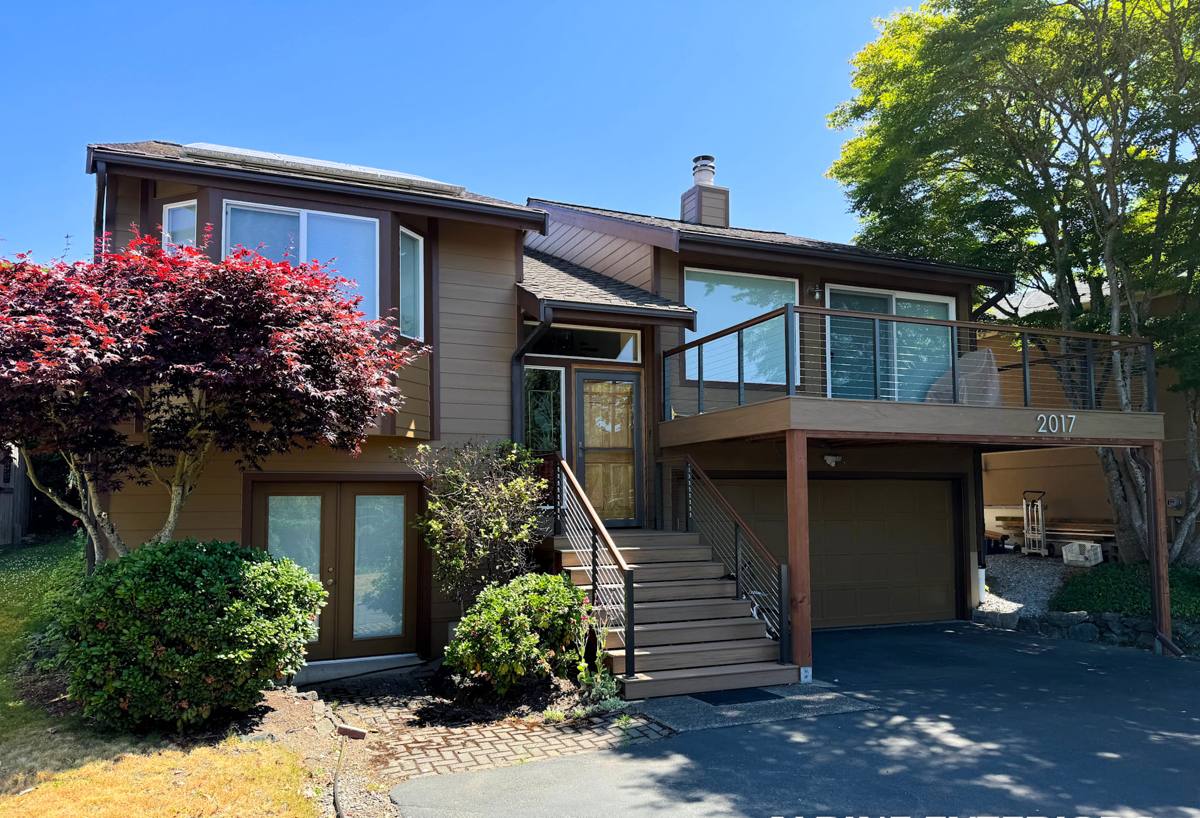
Signs Your Windows Are Past Their Useful Life
Not every old window needs to come out immediately, and not every drafty window is actually failing. Here's what we look for when we're deciding whether a window can be repaired, resealed, or genuinely needs replacement:
- Visible fog or moisture trapped between the panes — this means the seal has failed and can't be fixed, only replaced
- Wood trim or sills that are soft, discolored, or growing moss right at the window opening
- Noticeable drafts near the frame during a windy, rainy day
- Windows that are difficult to open, close, or lock properly
- Paint or caulking that keeps failing in the same spot year after year, no matter how often it's redone
- Single-pane glass still in place in a home that's otherwise been updated
- A heating bill that's crept up with no other clear explanation
If you're seeing two or three of these at once, it's worth a look before another wet season passes.
What a Correct Window Replacement Job Actually Involves
The window itself matters, but in this climate, the installation is what determines whether that window performs for twenty-five years or fails in five. A lot of window problems we get called out to inspect in Lynden aren't product failures at all — they're installation shortcuts that let water in around a perfectly good window.
Removing the Old Window Without Damaging the Opening
Every opening gets checked once the old window is out — not just glanced at. That's the point where hidden rot, soft framing, or a moisture barrier that was never installed correctly in the first place becomes visible. If we find deteriorated framing behind the old unit, we deal with it before anything new goes in. Setting a new window into a compromised opening just buries the problem for a few more years.
Flashing and Moisture Barrier Details
This is the step that gets skipped most often on rushed jobs, and it's the one that matters most in a wet climate. Proper flashing directs any water that gets past the exterior siding down and out, away from the framing, instead of letting it pool at the sill or wick into the wall cavity. Every seam — head, jambs, and sill — gets integrated with the home's weather-resistive barrier in the right order, not just caulked and hoped for.
Sealing, Insulating, and Finishing
Once the window is set, plumb, level, and square, the gap between the window frame and the rough opening gets insulated — not packed so tight it bows the frame, and not left with voids that let cold air and moisture through. Exterior trim and caulking go on last, using materials rated to move with the wood and vinyl through our wet winters and drier summers without cracking.
Choosing a Window Type for Whatcom County Conditions
There's no single "best" window — the right choice depends on your budget, your home's style, and how much upkeep you want to take on. Here's how the common frame materials compare for a home in this climate:
| Frame Material | Moisture Resistance | Maintenance | Typical Lifespan | Best Fit For |
|---|---|---|---|---|
| Vinyl | Very good — won't rot or absorb water | Low, occasional cleaning | 20–30 years | Most homeowners wanting solid performance without upkeep |
| Fiberglass | Excellent — stays dimensionally stable through wet and dry cycles | Low | 30–40+ years | Owners planning to stay long-term and wanting minimal expansion/contraction issues |
| Wood-Clad | Good on the exterior cladding, but vulnerable at cuts and seams if not detailed carefully | Higher — interior wood finish and seam checks over time | 20–30 years with upkeep | Homeowners set on a natural wood interior look |
| Aluminum | Poor in this climate — conducts cold, prone to condensation | Moderate | 15–25 years | Rarely our first recommendation for a Whatcom County home |
We'll walk you through what fits your home rather than pushing one option. For most Lynden homes, vinyl or fiberglass ends up being the practical choice — the maintenance burden of wood-clad windows in a climate with this much sustained moisture is a real factor, not a small one, and it's worth weighing honestly before you commit.
Our Process, Start to Finish
Estimate and Measurement
We come out, look at your existing windows and openings, and give you a straightforward estimate — what needs replacing, what we'd recommend, and why. If we find signs of underlying rot or moisture damage during that first look, we'll tell you before any work starts, not after we've already opened up a wall.
Installation Day
Windows are typically installed one at a time so your home isn't left exposed to the weather for longer than necessary — an important detail when a job might span a rainy stretch. Work areas are protected, and each opening is inspected, flashed, insulated, and sealed before we move to the next.
Final Walkthrough and Cleanup
Before we consider a job finished, we walk through it with you — checking operation, seals, and finish work on every window. Job sites are cleaned up, old windows and packaging hauled off, and you're left with a straight answer on care and warranty coverage going forward.
Why a Crew That Already Works in Lynden Matters
A window installer who mostly works drier inland regions or milder climates isn't necessarily thinking about flashing details the way they need to be handled here. Crews that work Whatcom County regularly see what our specific mix of driving rain, humidity, and moss growth does to a house over time, and that shapes how we handle every opening — not just the window that's obviously failing, but the ones around it that might be a season or two behind.
There's also a practical side to hiring local: if a question comes up two years after installation, you're not trying to track down a crew that passed through once and moved on. We're working in Ferndale, Lynden, and the surrounding communities on an ongoing basis, which means we're accountable to the work we leave behind.
What Affects the Cost of a Window Replacement Project
Every home is different, so we don't quote a number until we've actually looked at your windows — but a few factors consistently move the price up or down:
- Number of windows — full-home replacement typically brings a better per-window cost than one or two at a time
- Frame material — vinyl generally costs less than fiberglass or wood-clad; that gap is worth weighing against long-term maintenance
- Window size and configuration — large picture windows, bays, and custom shapes cost more than standard double-hungs
- Condition of the existing opening — hidden rot or moisture damage found during removal adds time and material
- Access and second-story work — harder-to-reach windows take more time and equipment
- Glass package — double-pane versus triple-pane, and any low-E or gas-fill upgrades
We'll break these out clearly in your estimate so you know exactly what you're paying for, not just a bottom-line number.
Caring for New Windows in a Wet, Mossy Climate
New windows still need a little attention in this environment. Keep weep holes at the bottom of vinyl frames clear of debris and moss so water can drain the way it's designed to. Rinse pollen, salt-tinged grime, and organic buildup off the glass and frames a couple of times a year, and check exterior caulking annually — especially after the first full wet season, when new caulk has had time to cure and settle. Trim back any vegetation that's shading a window enough to keep it damp, since that's exactly the kind of spot where moss and mildew take hold fastest around here.
If you're noticing drafts, moisture, or general wear on your windows and want an honest look at whether repair or replacement makes sense, we're happy to come out, take a look, and give you a straightforward, no-pressure estimate using the form below.