 Ferndale Siding
 Building a Deck That Actually Holds Up in Lynden
Lynden sits inland from Ferndale in the farmland stretch of Whatcom County, but it doesn't escape the weather patterns that shape everything we build in this part of Washington. Long, wet winters, heavy dew and humidity off the surrounding fields and river bottoms, and short summers mean a deck here spends most of the year damp, shaded, or both. A deck design pulled straight from a catalog or built to a generic national standard often ignores that reality. We build decks specifically for how Lynden's climate behaves, not for how a deck performs in a dry climate on paper.
That means paying close attention to drainage, fastener choice, ledger flashing, and the gap between boards long before the finish material is even picked. Get those basics wrong and you're looking at soft spots, rot at the ledger, and moss creeping across the decking within a few seasons. Get them right and a deck built here can genuinely last decades with only routine upkeep.
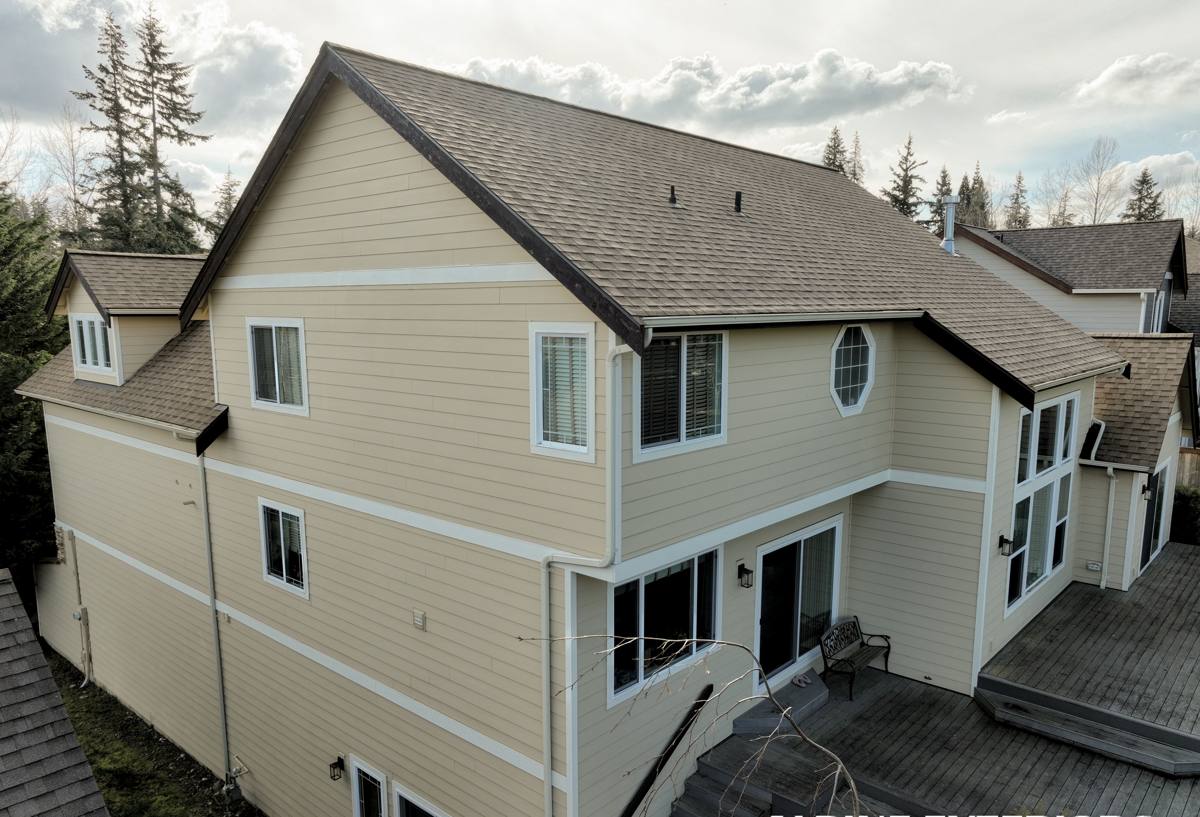
What Whatcom County's Climate Does to an Unprotected Deck
Even away from the immediate shoreline, the same marine-driven humidity and driving rain that hit Ferndale and the coastal parts of the county reach Lynden too, just in a slightly different form. Fields, irrigation, and low-lying ground around town keep moisture in the air longer into the season, and that has direct consequences for a deck.
Moss and Algae Growth
Whatcom County's long moss season isn't limited to roofs. Any deck surface that stays shaded or doesn't drain and dry between rain events will grow moss and algae, especially on the north side of a house or under mature trees common on Lynden properties. Moss holds moisture against the board surface, which accelerates rot in wood decking and can stain composite materials if it's left unaddressed.
Driving Rain and Wind-Driven Moisture
Storms coming off the Strait push rain sideways more often than people expect, which means water gets forced under railings, into fastener heads, and behind ledger boards where a builder wasn't careful with flashing. This is one of the most common failure points we see on older decks in this area.
Freeze-Thaw Cycling
Whatcom County doesn't get deep, sustained freezes most winters, but it gets enough freeze-thaw swings to matter. Water that's trapped in a crack, a fastener hole, or a poorly sealed joint expands and contracts repeatedly, widening small problems into structural ones over a few years.
Decking Material Options for Lynden Homes
There's no single "best" decking material — the right choice depends on budget, how much upkeep the homeowner actually wants to do, and how much sun or shade the deck gets. Here's how the common options stack up for a climate like ours.
| Material | Upfront Cost | Maintenance in This Climate | Typical Lifespan Here |
|---|---|---|---|
| Pressure-treated wood | Lowest | Annual cleaning and re-staining/sealing to fight moss and moisture | 10-15 years with upkeep |
| Cedar | Moderate | Regular sealing; naturally moss- and rot-resistant but still needs care | 15-20 years with upkeep |
| Composite decking | Higher | Periodic washing to prevent surface algae/moss buildup; no staining or sealing | 20-30 years |
| PVC decking | Highest | Lowest — resists moisture absorption almost entirely | 25-30+ years |
We install all of the above. Our job is to walk a homeowner through the real trade-offs — not to push whatever has the best margin — so the choice fits both the budget and how much maintenance someone actually wants to keep up with year after year.
Structural Basics We Never Skip
The parts of a deck nobody sees are the parts that determine whether it's still standing and safe in fifteen years. In a climate like Lynden's, a few details matter more than they would somewhere drier.
Footings Set Below Frost Depth
Footings need to be sized and set correctly for the soil conditions on the property, particularly on the flatter, sometimes poorly-draining ground common around Lynden. Undersized or shallow footings are one of the most common causes of a deck that starts to feel bouncy or uneven over time.
Ledger Board Flashing
Where the deck attaches to the house is the single most water-vulnerable connection on the entire structure. Proper flashing — installed correctly, not just caulked over — keeps driving rain from working its way behind the ledger and into the house framing itself.
Fastener Selection
Standard hardware corrodes fast in a damp, humid climate. We use fasteners and hardware rated for ground contact and coastal/marine-grade exposure, because the cost difference is small compared to what it costs to fix rust-streaked, failing connections down the road.
Board Spacing and Airflow
Boards spaced too tightly trap moisture and encourage moss and rot from underneath, where nobody checks until there's a problem. We set gaps and joist spacing to let a deck actually dry out between rain events instead of staying wet for days.
Our Custom Deck Process, Start to Finish
- On-site assessment: We walk the property, check drainage patterns, sun/shade exposure, and how the deck will tie into the existing structure.
- Design and material discussion: We talk through size, layout, railing style, and material options honestly, including cost and upkeep trade-offs.
- Permitting: We handle the paperwork required for the project's size and scope under Whatcom County rules.
- Foundation and framing: Footings, posts, beams, and joists get built to hold up under this climate's moisture and freeze-thaw conditions, not just to pass a minimum code check.
- Decking and railing installation: Boards, fasteners, and railing systems go in with attention to spacing, flashing, and fastener quality throughout.
- Final walkthrough: We go over care and maintenance specific to the material chosen so the deck stays looking and performing the way it should.
Designing Around How Lynden Properties Actually Get Used
Lynden has a lot of larger lots, farm-adjacent properties, and multi-generational households compared to more urban parts of the county, and that shapes what a deck needs to do. We regularly design decks meant to handle everything from quiet morning coffee space to hosting extended family gatherings, which changes decisions around size, railing style, shade coverage, and even where stairs and access points make the most sense relative to the yard and outbuildings common on these properties.
A deck that's sized and laid out around how a household actually lives outside — not just a generic rectangle off the back door — ends up getting used far more often, which is really the point of building one in the first place.
Permits and Local Considerations
Deck projects in unincorporated Whatcom County or within Lynden's city limits generally require a permit once you're above a certain height or attached directly to the house, and setback rules apply depending on lot lines and any nearby easements or agricultural buffers. We handle this paperwork as part of the job so homeowners aren't stuck navigating it themselves or, worse, finding out after the fact that an unpermitted deck creates problems at resale.
Maintenance Checklist for a Long Deck Life Here
Whatever material a deck is built from, a little seasonal attention goes a long way in this climate. We walk every customer through this at handoff, but it's worth having in writing.
- Sweep debris and standing leaves off the deck surface regularly, especially in fall
- Wash the surface at least once a year to remove early moss and algae growth before it takes hold
- Check and clear any gaps between boards so water and debris keep draining freely
- Inspect railings and stair connections annually for looseness or corrosion at fasteners
- Re-stain or reseal wood decking on the schedule the product calls for — don't wait until it looks obviously worn
- Check the ledger board area for any signs of water staining or soft wood each spring
Why Hiring a Crew That Already Works in Lynden Matters
A deck built without accounting for Whatcom County's rain patterns, humidity, and moss season isn't a deck built wrong on purpose — it's usually just built by someone whose experience is somewhere else. We work in Ferndale, Lynden, and the surrounding communities regularly, which means we already know how footings behave in this soil, how fast moss takes hold on a shaded north-facing deck, and which fastener and flashing choices actually hold up here instead of failing in year four or five.
That local experience shows up in decisions that aren't always visible on day one — where we set drainage slope, how we detail the ledger flashing, which hardware we spec — but it's exactly the kind of thing that determines whether a deck is still solid and good-looking in fifteen years or already showing problems.
If you're planning a new deck or replacing one that's showing its age, we're happy to come take a look and talk through honest options for your property. There's no pressure and no cost to get a straightforward estimate — just fill out the form below and we'll get in touch.