 Ferndale Siding
 Siding Replacement in Lynden: What Local Homes Actually Need
Lynden sits inland from the Salish Sea but still catches plenty of what Whatcom County weather has to offer: salt-tinged air moving in off the water, long stretches of driving rain through fall and winter, and a moss season that can run half the year on shaded north-facing walls. Siding out here isn't just a cosmetic choice — it's the one layer standing between a home's framing and a climate that stays damp for months at a time. When we replace siding on a Lynden home, we're replacing a system that has to perform in exactly those conditions, not just look good on installation day.
A lot of siding failure in this area isn't dramatic. It's slow. Paint that won't hold a finish past year five. Bottom edges that stay soft to the touch after a wet winter. Moss creeping up from the ground line because the material never fully dries between rain events. None of that shows up on a sunny day during a walkthrough — it shows up two or three winters later, which is exactly why the material and installation choices made now matter more than they seem to.
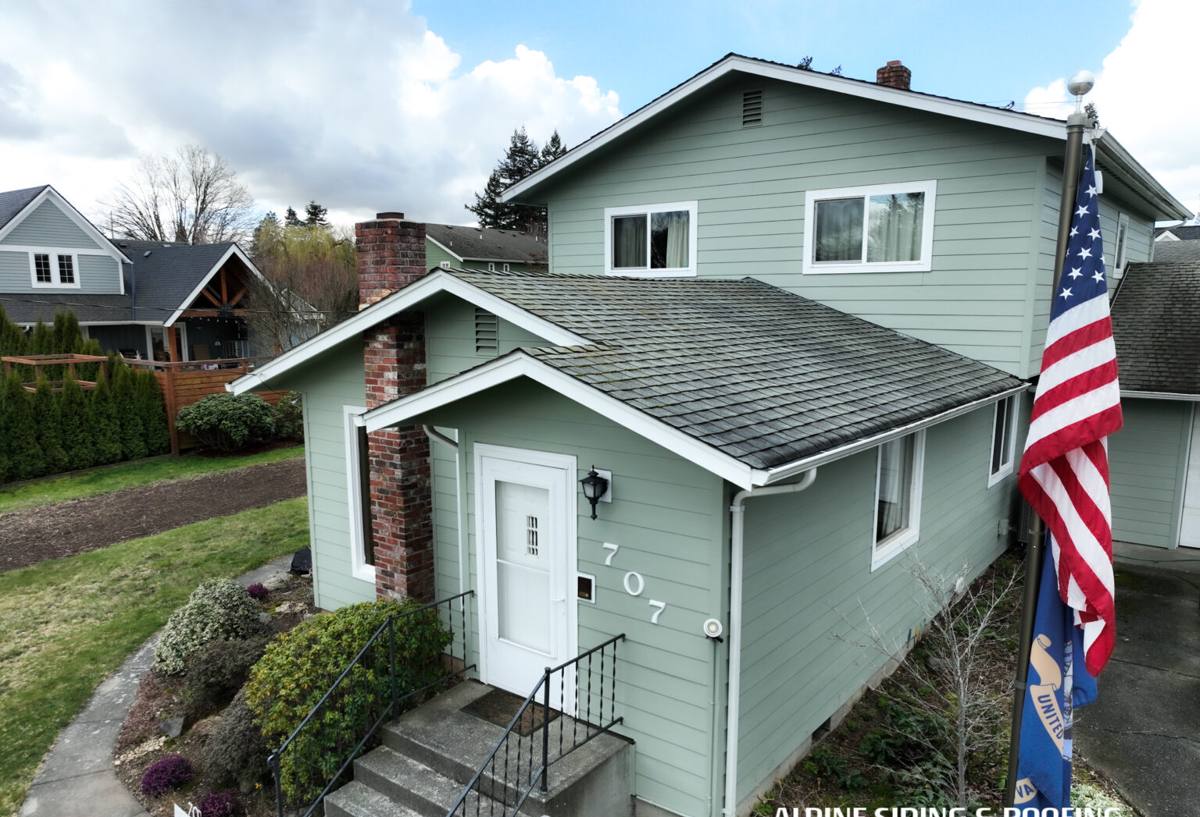
Why Climate Drives This Decision More Than Style Does
Homeowners usually start a siding replacement conversation talking about color and profile. That's fair — it's the part you look at every day. But in Whatcom County, climate performance has to come first, because the wrong material choice doesn't just look worse over time, it costs more in maintenance and repair than the siding job itself.
What the Local Climate Actually Does to Siding
- Salt air: accelerates corrosion of fasteners and metal trim, and speeds up finish breakdown on lower-grade coatings.
- Driving rain: pushes moisture sideways into seams, laps, and butt joints that a calm-weather installation might not account for.
- Extended damp/shade periods: feed moss and algae growth, especially on north- and west-facing walls that don't get much direct sun.
- Freeze-thaw swings: stress any material that absorbs and holds water, opening cracks and gaps over repeated cycles.
Every one of these is a slow, cumulative process. That's why a siding replacement in Lynden should be evaluated on how it performs in year eight and year fifteen, not just how it looks the week it goes up.
Why We Install Only James Hardie Fiber Cement
We made a decision as a company to install one siding system: James Hardie fiber cement. We don't carry vinyl, LP SmartSide, Cemplank, Allura, primed spruce, or cedar. That's not because those products have no place in the market — plenty of homes around the region are sided in one of them. It's because after years of doing exterior work in this specific climate, fiber cement from Hardie is the material we're willing to stand behind for the long haul.
Fiber cement is non-combustible, which matters increasingly to insurers and homeowners in this region. It's dimensionally stable in a way wood-based and vinyl products aren't, so it doesn't warp, swell, or buckle the way products with wood fiber or thin thermoplastic can when they're exposed to repeated wet-dry cycles. Hardie's ColorPlus factory finish is baked on under controlled conditions rather than field-painted, which gives it a more consistent bond and a longer runway before repainting is even a conversation. And Hardie engineers specific product lines (HZ5, for example) for regions that see more moisture and freeze-thaw stress — which describes Whatcom County well.
None of that means other products are junk. Vinyl is inexpensive and low-maintenance in mild climates. Wood has a look some homeowners specifically want. LP SmartSide and similar engineered wood products have improved over the years. But each of those comes with a real-world trade-off — heat distortion, moisture sensitivity at cut edges, coating maintenance schedules, or shorter effective lifespans in a wet coastal-adjacent climate — that we're not willing to install and then be the ones a homeowner calls when it shows up five years later. Hardie is what we put on homes because it's the one system where the maintenance burden and moisture behavior line up with what this climate actually demands.
What a Correct Siding Replacement Involves
Replacing siding is not just stripping the old material and nailing up new panels. Done right, it's a sequence, and skipping steps is where most premature failures start — regardless of what siding brand ends up on the wall.
The Core Steps
- Tear-off and inspection: removing the old siding is also the only real chance to see the sheathing and framing underneath. Any rot, soft spots, or prior water damage gets addressed before anything new goes up.
- Water-resistive barrier: a proper weather barrier, correctly lapped and sealed at penetrations, is what actually keeps driving rain out — the siding itself is the first line of defense, not the only one.
- Flashing at every transition: windows, doors, rooflines, and any wall penetration need flashing detailed to shed water outward, not trap it behind the cladding.
- Correct fastening and clearances: Hardie has specific nailing patterns, gapping, and ground-clearance requirements. These aren't optional details — they're what the warranty is actually built on.
- Caulking and joint treatment: done to spec, not just "enough to look sealed."
- Final finish check: confirming factory finish integrity and touch-up only where genuinely needed, since ColorPlus is meant to minimize field painting, not require it.
Every one of these steps matters more in a climate that stays wet as long as ours does. A gap that would be a non-issue in a dry climate becomes a moisture entry point here after a few seasons of driving rain.
Signs a Lynden Home May Need Siding Replacement
- Paint that's peeling, bubbling, or chalking faster than it should for its age
- Soft or spongy spots when you press on siding, especially near the bottom courses
- Visible warping, buckling, or panels pulling away from the wall
- Persistent moss or algae staining that comes back within a season of cleaning
- Rising energy bills that track with drafts or cold spots near exterior walls
- Visible gaps or cracked caulk at trim, corners, and window/door edges
Any one of these alone isn't necessarily a full-replacement situation. But a few of them together, especially on a home that's had one or two siding systems already, usually means it's worth a real inspection rather than another round of patching.
Cost Factors for Siding Replacement
Every home is different, and we're not going to quote a number without seeing the house. But the factors that move the price are consistent, and knowing them helps a homeowner understand a bid rather than just compare a bottom-line figure.
| Factor | Why It Matters |
|---|---|
| Home size and wall complexity | More corners, gables, and dormers mean more cutting, flashing, and labor time |
| Condition of sheathing underneath | Rot or water damage found during tear-off adds repair scope before new siding goes up |
| Siding profile and accessories | Trim boards, soffit work, and specialty profiles add material and labor beyond flat panel runs |
| Existing material removal | Some old siding (multiple layers, certain wood systems) takes longer to strip than others |
| Access and site conditions | Multi-story sections, tight setbacks, or landscaping constraints affect scaffolding and staging time |
Because fiber cement is a heavier, more labor-intensive material to install correctly than vinyl, the upfront number for a Hardie job is usually higher than a vinyl equivalent. What that difference buys is a system that doesn't need replacing again in 15-20 years the way lower-cost materials often do in this climate — and a finish that isn't asking for repainting on the same short cycle a wood-based product would.
Why Hiring a Crew That Already Works This Area Matters
A siding crew that works Whatcom County regularly already knows what this climate does to a wall over time — where moisture tends to collect, which orientations grow moss fastest, how much clearance actually holds up after a few wet winters versus what's just code minimum on paper. That's not something you get from a crew that mostly works drier inland climates and treats every job the same way.
It also means fewer surprises during the job itself. Local crews know how to plan around the region's rain patterns, how to sequence tear-off and dry-in so a home isn't left exposed longer than necessary, and how to detail flashing for the specific way weather hits homes in this part of the county. That experience shows up less in the sales conversation and more in how the house performs five and ten years after the crew has moved on.
Our Process for a Lynden Siding Replacement
- On-site inspection of current siding, trim, and visible sheathing condition
- Honest assessment of whether replacement or targeted repair is the right call
- Clear written estimate covering material, tear-off, and any anticipated sheathing repair
- James Hardie product and color selection suited to the home's exposure and style
- Scheduled installation following manufacturer specs for flashing, fastening, and clearance
- Final walkthrough before we consider the job done
We don't upsell siding a home doesn't need, and we don't quietly downgrade the install steps to hit a lower price. If a home needs sheathing repair or better flashing detail to do the job right, that gets flagged and priced clearly before work starts — not discovered as a change order halfway through.
Get a Straightforward Estimate
If your Lynden home's siding is showing its age, or you just want an honest read on whether it's a repair situation or a replacement one, we're glad to take a look. Use the form below to request a free, no-pressure estimate — we'll walk the exterior, tell you what we actually see, and give you a clear picture of what a properly installed James Hardie system would look like for your home.