 Ferndale Siding
 Storm Damage Roof Repair Built for Lynden's Weather
Lynden sits in the flat, open farmland of Whatcom County, close enough to the water to pick up salt-laden air and close enough to the Fraser Valley to catch the cold, gusty outflow winds that funnel down out of British Columbia every winter. Add in months of low-angle sun, heavy moss growth, and long stretches of driving rain, and a Lynden roof takes a different kind of beating than a roof forty miles inland. When a storm rolls through and lifts shingles, drives water under flashing, or snaps a branch onto a roof plane, the repair needs to account for all of that — not just patch the visible damage and move on.
We repair storm-damaged roofs for homeowners around Lynden and greater Ferndale on a regular basis, and we've learned that the damage you can see is rarely the whole story. This page walks through what we actually find on local roofs after a storm, what a correct repair involves, and how we approach the job from first call to final cleanup.
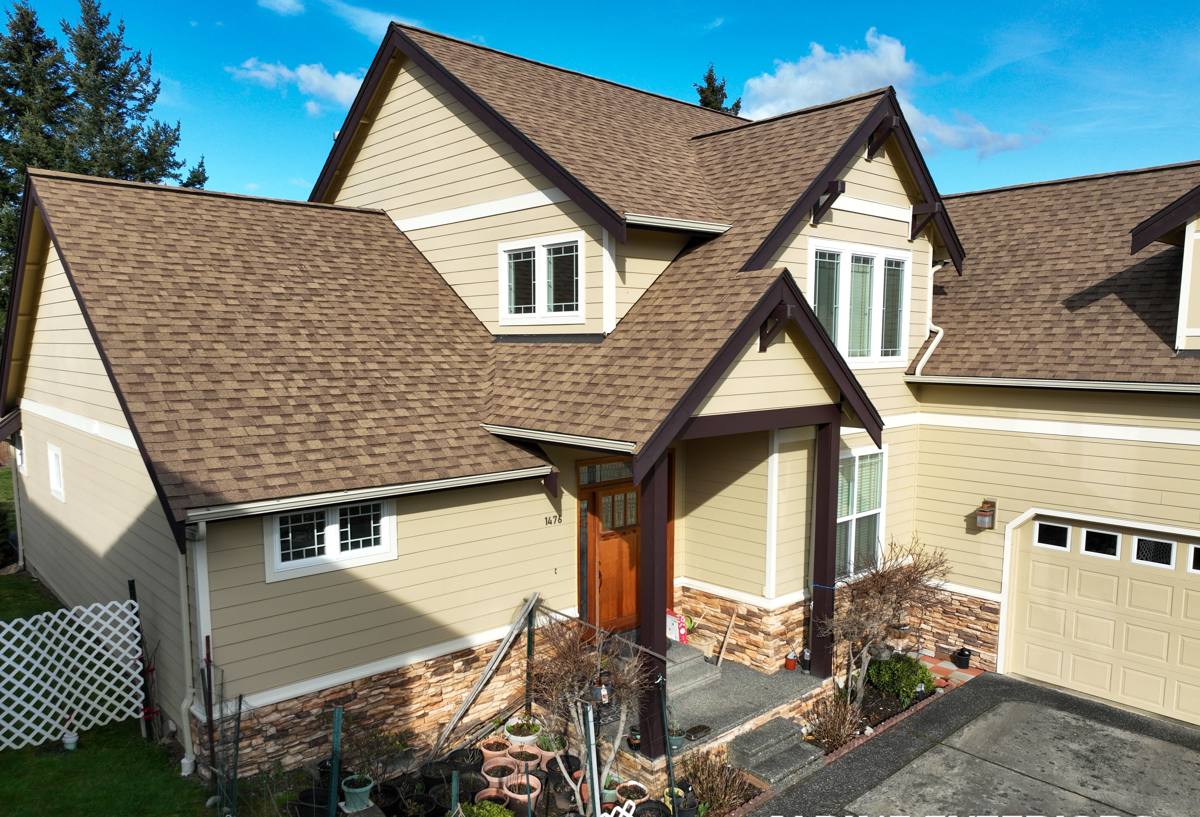
What Storms Actually Do to Roofs Around Here
Wind Damage
Whatcom County's outflow wind events aren't hurricane-force, but they're persistent, cold, and dry — a different animal than a short, wet coastal squall. That combination can work shingle tabs loose over several wind events rather than one dramatic storm, so damage often shows up gradually: a few lifted or missing shingles here, a curled edge there, until a heavier rain finally finds the opening.
Wind-Driven Rain
Rain that comes in sideways doesn't behave like rain falling straight down. It gets pushed up under shingle edges, into open flashing seams around chimneys and vents, and behind gutters that are running full. A roof that would shed a normal rain just fine can leak during a wind-driven storm simply because the water is being pushed uphill against the shingle laps.
Moss and Trapped Moisture
Lynden's long, mild, wet season is close to ideal moss-growing weather, especially on north-facing slopes and roof sections shaded by trees or fences. Moss holds water against the roofing material long after a storm has passed, which slows drying, promotes rot in the decking underneath, and makes the roof more vulnerable the next time weather moves through. A lot of what looks like "storm damage" is really storm damage on top of a roof section that moss had already been quietly weakening.
Impact and Debris
Branches, fence panels, and blown debris cause the most obvious damage — cracked shingles, dented metal panels, punctured underlayment — but the impact point is often smaller than the water damage that follows if the hole isn't found and sealed quickly.
Why a "Quick Patch" Often Isn't a Real Repair
It's tempting to just replace the shingles you can see are missing or torn and call it done. The problem is that storm damage in this climate is rarely limited to the surface. Underneath a wind-lifted shingle, there's usually a compromised nail seal, sometimes softened underlayment, and occasionally decking that's already absorbed water from smaller leaks that predate the storm. A correct repair checks all of that before anything new goes down.
A repair that only addresses the visible symptom tends to fail again in the next storm — sometimes worse, because the underlying decking has had more time to weaken. That's the difference between a repair that lasts one season and one that lasts the life of the roof.
What a Correct Storm Repair Involves
- Full roof inspection, not just the damaged area — storms rarely affect only one spot, and adjacent sections often show early wind or moss stress worth flagging
- Checking the decking under the damaged material for soft spots, staining, or rot before any new roofing goes down
- Matching shingle type, color, and exposure to the existing roof as closely as possible so the repair doesn't stand out
- Re-flashing around chimneys, vents, and valleys if the storm drove water past the original flashing, not just resealing it
- Clearing moss and debris from the repair area and nearby roof planes so trapped moisture isn't sealed back in
- Checking gutters and downspouts near the repair, since overflowing gutters are a common hidden cause of "roof" leaks
- Photo documentation of the damage and repair, useful if you're filing an insurance claim
Our Process
1. Assessment
We inspect the full roof, not just the reported damage, and identify what the storm caused versus what was already a developing issue — moss, aging flashing, prior minor leaks. You get a clear, honest picture of both.
2. Diagnosis and Estimate
We explain what needs to happen and why, including whether decking replacement is likely once we open up the damaged section. Estimates are written in plain terms with no pressure to upsell into a full re-roof if a targeted repair will genuinely hold.
3. Repair
We match materials, repair or replace decking as needed, re-flash where water intrusion occurred, and install new roofing correctly integrated with the surrounding material — not just laid over the top.
4. Cleanup and Documentation
Job site is cleared of debris and old material, and we provide documentation of the damage and work performed, which most insurance carriers want if you're filing a claim.
Repair or Replace? How We Help You Decide
Not every storm-damaged roof needs a repair, and not every one needs full replacement. The right call depends on the roof's age, how widespread the damage is, and what we find once we look underneath it.
| Factor | Repair Usually Makes Sense | Replacement Worth Considering |
|---|---|---|
| Roof age | Under roughly 12-15 years, or well within expected lifespan for the material | Already near or past its expected service life |
| Extent of damage | Limited to one section or a few isolated spots | Damage spread across multiple roof planes |
| Decking condition | Solid, dry decking found under the damaged area | Widespread soft or rotted decking discovered during repair |
| Moss history | Light, manageable moss with no visible decking impact | Heavy, long-term moss growth with signs of underlying rot |
| Shingle match | Close match to existing roofing still available | Discontinued or badly weathered roofing that won't blend |
Our goal is a roof that actually holds up through the next storm season, not the most expensive answer we can justify. If a repair is the honest, durable option, that's what we'll recommend.
Moss and Salt Air: Keeping a Repaired Roof Healthy
A storm repair is only as good as the maintenance that follows it. In Lynden's climate, that mostly comes down to two things: keeping moss from taking hold again, and keeping metal fasteners and flashing protected from the corrosive edge that salt-tinged air puts on exposed hardware over time. Regular moss removal on shaded or north-facing slopes, clear gutters, and an occasional look at flashing points go a long way toward making sure the next storm is a non-event instead of another repair call.
Why Hire a Crew That Already Works in Lynden
A roofer who works this specific stretch of Whatcom County knows what a Lynden roof is actually up against — the wind pattern, the moss pressure, the way salt air ages fasteners and flashing faster than it does forty miles inland. That local familiarity shapes real decisions: which flashing details hold up best here, where moss tends to concentrate on a given roof orientation, and how to read storm damage against a backdrop of normal regional wear instead of guessing at both at once.
It also means a faster, more realistic response after a storm. We're not driving in from across the region trying to fit you into a schedule built around a different climate; we're already working roofs in this area and understand the urgency of getting a damaged roof sealed before the next system moves through.
After a Storm: What to Check Right Away
- Look for shingles or roofing material in the yard, gutters, or on the ground near the house
- Check ceilings and attic spaces for new water stains, especially after wind-driven rain
- Look at gutters and downspouts for sagging, separation, or debris blockage
- Note any visible dents, cracks, or missing sections on the roof from ground level — avoid climbing up yourself
- Photograph anything unusual for your records and any potential insurance claim
- Call for an inspection sooner rather than later — a small opening left through one more storm often becomes a much larger repair
If a recent storm has left you with damage, missing shingles, or a leak you can't quite place, we're glad to come take a look. Fill out the form below for a free, no-pressure estimate — we'll tell you plainly what we find and what it actually needs.