 Ferndale Siding
 Why Decks in the Lynden Area Wear Out Faster Than You'd Expect
Whatcom County doesn't get brutal winters, but it makes up for that with duration. From late fall through early spring, decks in and around Lynden sit under a near-constant blanket of damp air, low-angle sun, and slow-drying shade. Add in the driving rain that blows through on a regular basis and the moss season that can stretch four or five months, and you have a recipe for slow, steady deck failure that most homeowners don't notice until it's a safety issue rather than a maintenance one.
This isn't a coastal saltwater problem the way it is right on Bellingham Bay, but the broader marine-influenced climate across Whatcom County still pushes a lot of moisture through wood fiber, fasteners, and connection points. The result is the same family of problems whether a home sits closer to the water or further inland: trapped moisture, slow rot, and hardware that corrodes faster than most people expect from "just a deck."
What Actually Causes the Damage
It's rarely one dramatic event. It's the accumulation of small failures — a ledger board that never quite dries out, a fastener that starts to rust and loosen, a low spot where water pools instead of running off. Each one seems minor on its own. Together, over several wet seasons, they add up to a deck that looks fine from a distance but has real structural weak points underneath.
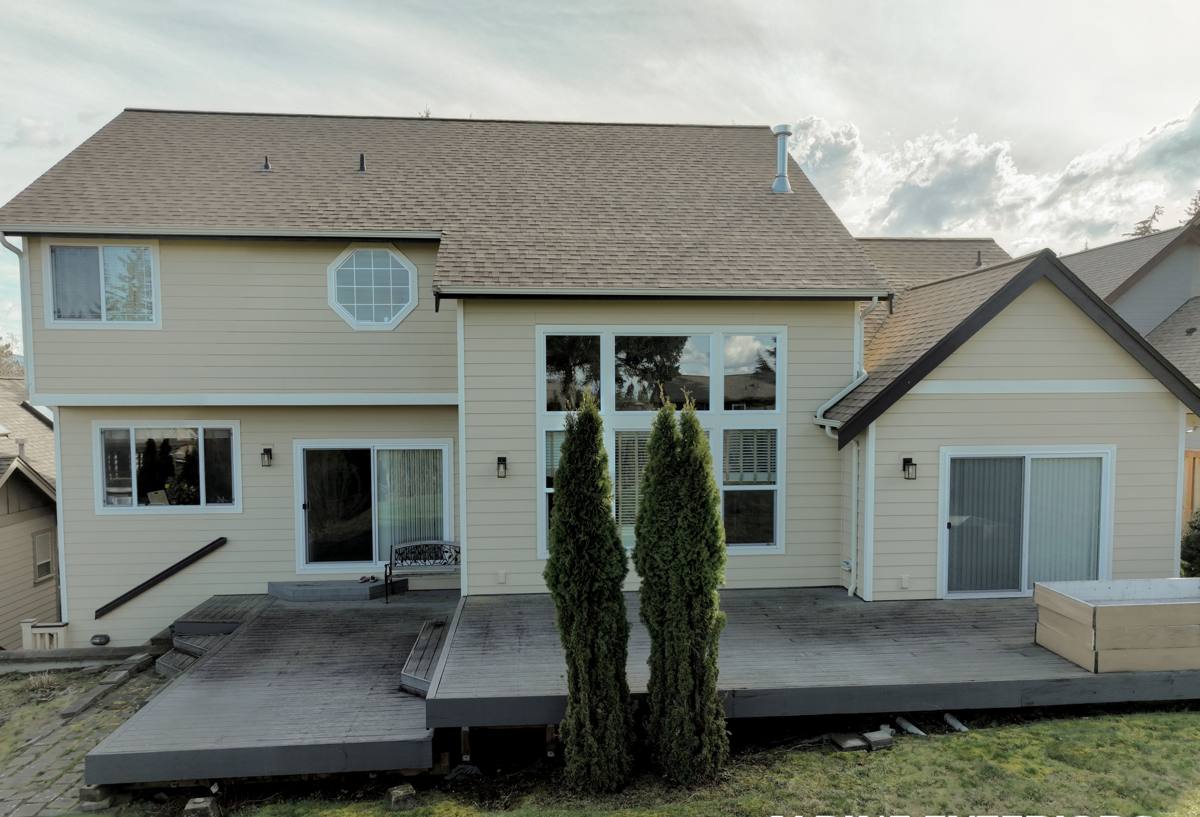
Signs a Lynden-Area Deck Needs Repair
Most deck problems in this region show up in predictable places. If you own a deck that's more than eight to ten years old and hasn't had a close structural inspection, it's worth checking these areas before assuming a coat of stain will fix things.
- Soft, spongy, or springy spots in the decking boards, especially near the house or in shaded corners
- Green or black staining that keeps coming back within weeks of cleaning
- Visible gaps, rust streaks, or popped heads at fastener locations
- A ledger board (where the deck attaches to the house) that looks discolored or feels soft when pressed
- Railings or stairs that have developed noticeable wobble or play
- Standing water that doesn't drain within an hour or two after rain stops
- Gaps opening up between decking boards and support framing
Any one of these on its own might be a simple fix. Several together usually mean the moisture problem has been working on the deck for a while and it's worth a full inspection rather than a spot repair.
What a Correct Deck Repair Actually Involves
A lot of "deck repair" in this region amounts to replacing a few obviously rotten boards and calling it done. That approach treats the symptom, not the cause, and in a climate like this the same failure tends to reappear within a season or two. A repair that actually holds up addresses four things, in order.
1. Find the Moisture Source
Before any board gets replaced, we look at why that spot failed. Is water pooling because of poor slope? Is a gap in the flashing letting water behind the ledger board? Is a downspout or gutter dumping water directly onto the deck surface? Replacing wood without fixing the water path just buys a little time.
2. Inspect the Structure, Not Just the Surface
Decking boards are the part you see, but joists, beams, posts, and the ledger connection are what keep the deck safe. We check these at every repair, because surface rot is often a visible clue pointing at a hidden structural issue underneath.
3. Address Fasteners and Hardware
Corroded or undersized fasteners are one of the most common failure points on older Whatcom County decks. Repairs that don't upgrade hardware to code-appropriate, corrosion-resistant fasteners tend to fail again at the same spots.
4. Rebuild With Proper Drainage and Flashing
Any repair that touches a ledger board or framing gets proper flashing and a drainage path, not just a reinstalled board. This is the step that's easiest to skip and the one that determines whether the repair lasts five years or fifteen.
Repair or Replace? Cost and Condition Factors
Not every deck problem calls for a full rebuild, and not every deck is worth repairing. We look at the age, structural condition, and scope of damage before recommending either path. Here's a general breakdown of how we think through it.
| Factor | Favors Repair | Favors Replacement |
|---|---|---|
| Framing and posts | Solid, dry, no soft spots | Rot or soft spots in multiple joists or posts |
| Ledger board | Sound, properly flashed | Soft, water-stained, or improperly flashed |
| Decking boards | Isolated bad boards | Widespread cupping, splitting, or rot |
| Deck age | Under 15 years, well-maintained | Original construction 20+ years old |
| Fasteners/hardware | Recently updated or code-compliant | Original, corroded, or undersized |
| Overall footprint | You're happy with current size/layout | You want a different size or layout anyway |
As a broad rule of thumb, if the framing and ledger connection are still structurally sound, repair is usually the more cost-effective path. Once rot has reached the structural members in more than one location, the math often shifts toward replacement, since you'd otherwise be paying repair labor twice — once now and again in a few years.
Our Deck Repair Process
When we come out for a Lynden-area deck repair, we walk through the same process every time so nothing gets missed.
- Full inspection of decking, framing, ledger connection, posts, footings, and railings
- Identification of the moisture source, not just the visible damage
- Written scope covering exactly what needs to be replaced, repaired, or upgraded
- Removal of compromised material down to sound wood or framing
- Correction of drainage, slope, or flashing issues found during inspection
- Rebuild using appropriately rated fasteners and materials for our climate
- Final check of railings, stairs, and connection points for code compliance
We don't start replacing boards until we know why the last set failed. That's the difference between a repair that lasts and one you'll be calling someone about again in a couple of wet seasons.
Materials: What We Use and Why
Material choice matters more here than in drier climates, because everything spends more time wet. We're upfront about the trade-offs rather than pushing one option as universally "best."
Pressure-Treated Wood
Still a solid, budget-friendly choice for framing and, in many cases, decking. It needs regular maintenance — cleaning, sealing, and occasional board replacement — to perform well in a climate this wet, but it's a proven material when installed and maintained correctly.
Composite and Capped Decking
Composite decking resists moss, rot, and moisture absorption far better than wood, which makes it attractive for this climate. The trade-off is higher upfront material cost and the fact that composite still needs proper framing and drainage underneath — it doesn't fix a moisture problem in the structure, it just resists moisture better on the surface.
Hardware and Fasteners
We use fasteners and connectors rated for the moisture exposure this region gets, not generic hardware. This is a small line item that has an outsized effect on how long a repair actually lasts.
Maintenance Checklist Between Repairs
A repaired deck still needs upkeep, especially through a Whatcom County moss season. This is the same short list we give clients after a repair.
- Clear leaves and debris from between boards before fall rains set in
- Keep gutters and downspouts directed away from the deck surface
- Treat or remove moss growth before it spreads across the whole surface
- Check the ledger board area yearly for staining or soft spots
- Reseal or restain wood decking on the manufacturer's recommended schedule
- Tighten or replace any fasteners showing rust before they fail
- Confirm water still drains off the surface within an hour or two after rain
Why a Crew That Already Works in Lynden Makes a Difference
Deck repair done right depends on understanding how a specific climate treats wood and hardware over time, not just knowing general carpentry. A crew that regularly works decks around Ferndale and Lynden has already seen which ledger connections fail first, which shaded corners hold moisture longest, and which fastener choices hold up through repeated wet seasons versus which ones don't. That local pattern recognition is what separates a repair that solves the actual problem from one that just replaces the boards you can see.
It also means faster, more accurate estimates. We're not guessing at how Whatcom County's rain and moss season will treat a repair — we're basing the scope on what we've already seen hold up and what hasn't, on decks not far from yours.
Get an Honest Look at Your Deck
If your deck has soft spots, recurring moss, or hardware that's starting to show rust, it's worth getting an honest assessment before those small issues turn into a full rebuild. We offer free, no-pressure estimates for Lynden-area homeowners — we'll tell you straight whether you're looking at a repair or a replacement, and why. Use the form below to get started.