 Ferndale Siding
 Siding Repair for Lynden Homes, Handled by a Crew That Already Works the Area
Lynden sits inland from the water, but that doesn't mean the siding on Lynden homes has an easy life. Whatcom County's marine-influenced weather reaches well past the shoreline, and the low, often-shaded farmland around Lynden holds moisture in ways that surprise a lot of homeowners. We're a Ferndale-based crew that repairs siding throughout this part of the county, and Lynden is regular territory for us, not a once-in-a-while drive. This page covers what siding repair actually means for a Lynden home, what we look for, and what a correct repair involves.
Siding repair gets treated as a small job, and sometimes it is. But "small" repairs done wrong are how a $400 fix turns into a $4,000 wall rebuild two years later. The goal of this page is to give you a straight, no-hype rundown of what to expect.
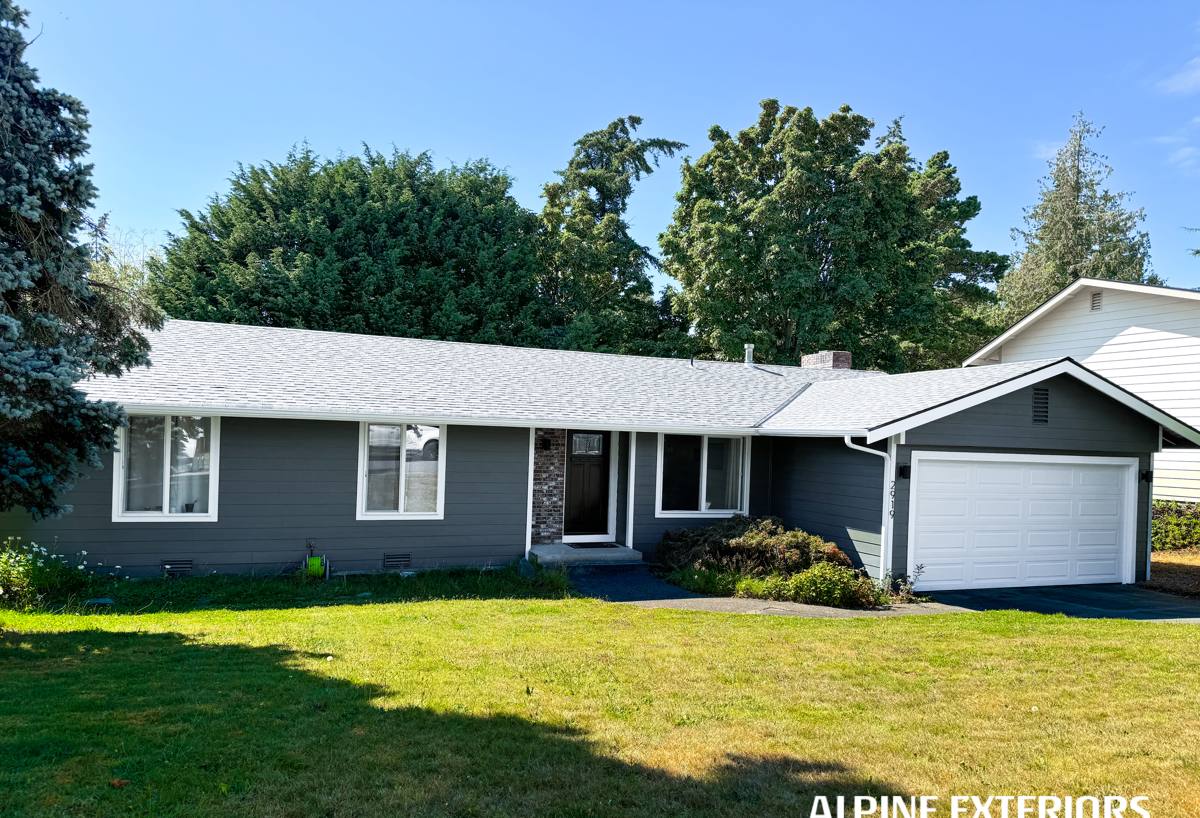
Why Lynden's Climate Is Harder on Siding Than It Looks
Whatcom County gets a steady diet of driving rain for much of the year, and that rain doesn't fall straight down — wind off the Strait of Georgia and the surrounding lowlands pushes it sideways into walls, especially on west- and south-facing elevations. Add in salt-tinged marine air that drifts across the county from the coast, and you've got a combination that slowly works on fasteners, caulk joints, and any exposed wood or damaged panel edges.
Lynden itself sits back from open water, so the salt exposure is milder than it is right on the coastline, but the county's damp, low-sun winters more than make up for it. Farmland and tree cover around Lynden keep a lot of properties shaded and slow to dry out after a storm. That's exactly the kind of environment moss and mildew like: siding that stays damp for days at a stretch, especially on north-facing walls, under eaves, and behind landscaping that blocks airflow.
Put those three things together — driving rain, humid air, and a long moss season — and you get a climate that's genuinely tough on siding, even though it never gets dramatic. There's no single storm that wrecks a wall here. It's years of small moisture exposure finding every weak point in the material and the installation.
What This Means in Practice
- Fastener corrosion and popped nails show up faster on exposed, weather-facing walls
- Caulk joints and trim seams fail gradually, letting water track behind the siding before it's visible on the surface
- Moss and algae growth accelerates rot in any wood-based siding or trim that isn't drying out between rain events
- Panel damage that goes unrepaired for even one wet season can telegraph into the sheathing behind it
Signs Your Lynden Home Needs Siding Repair
Most siding problems don't announce themselves. They show up as small, easy-to-dismiss details that add up. Here's what we tell Lynden homeowners to watch for, particularly heading into fall and winter:
- Soft or spongy spots when you press on siding near the bottom courses or around windows
- Visible gaps, cracks, or warping in individual panels or boards
- Paint that's peeling, bubbling, or failing faster in one area than the rest of the house
- Dark streaking, moss patches, or persistent green tinge on shaded or north-facing walls
- Caulk that's cracked, shrunk, or pulled away from trim and window edges
- Nail heads that have popped, backed out, or left rust streaks below them
- Any spot where you can see daylight or feel a draft through the wall from inside
Any one of these on its own might not be urgent. Two or three in the same area, especially near ground level or under a window, usually means water has been getting behind the siding for a while.
What a Correct Siding Repair Actually Involves
A repair done right is a diagnostic job first and a patch job second. That order matters. Anyone can screw a new piece of siding over a damaged spot — the harder, more important part is figuring out why that spot failed and whether the damage goes deeper than the visible surface.
Step One: Find the Actual Cause
Damaged siding is usually a symptom, not the root problem. Common causes we look for include failed flashing above windows and doors, caulk joints that gave out, gutters or downspouts dumping water where they shouldn't, grading or landscaping that keeps a wall wet, and original installation mistakes like panels installed too close to the ground or without proper clearance. Replacing the panel without fixing the cause just buys you a repeat repair in a year or two.
Step Two: Check What's Behind the Siding
Once damaged material comes off, we look at the water-resistive barrier (the house wrap or building paper) and the sheathing underneath. If those are intact, the repair stays straightforward. If water has been tracking behind the siding for a while, there can be soft sheathing or compromised house wrap that needs to be addressed before anything new goes back on. Skipping this step is the single most common shortcut in bad siding repairs — it looks fine from the driveway and fails again from the inside out.
Step Three: Match, Fasten, and Seal Correctly
Replacement material needs to match the existing siding's profile, exposure, and finish as closely as possible, fastened per manufacturer spec, with flashing and caulk detailed to shed water rather than trap it. This is where a lot of quick patch jobs cut corners — wrong fastener placement, caulk used in place of proper flashing, or a color mismatch that leaves an obvious patch on the wall.
Patch, Panel Replacement, or Full Re-Side: How to Tell Which You Need
Not every repair call ends with a small patch, and not every damaged wall needs a full re-side. Here's how we think through it:
| Situation | Typical Fix | What Drives the Decision |
|---|---|---|
| Isolated damage — one or two panels, impact damage, or a small rot pocket | Spot repair / panel replacement | Sheathing underneath is sound; damage hasn't spread |
| Recurring damage in the same area (window, corner, low wall) | Targeted repair plus flashing/drainage correction | Underlying cause has to be fixed or the repair won't hold |
| Damage scattered across multiple walls or elevations | Larger-scale repair, sometimes wall-by-wall re-side | Age and general condition of the existing siding system |
| Widespread rot, failed original installation, or siding near end of service life | Full re-side | Repair cost approaches replacement cost, or original product is failing systemically |
We'll always tell you honestly which category your home falls into. If a patch will hold, we recommend a patch — there's no reason to sell a Lynden homeowner a full re-side when a targeted repair solves the actual problem.
Why We Repair With James Hardie Fiber Cement — and Repair Other Materials Carefully
We install and repair with James Hardie fiber cement siding as our standard. It's non-combustible, engineered for the kind of wet Pacific Northwest climate Whatcom County sits in, and holds its ColorPlus factory finish far longer than field-applied paint on wood-based products. When we're patching into existing Hardie siding, matching profile and color is usually straightforward because the product line is consistent and well documented.
When a Lynden home has vinyl, LP SmartSide, cedar, or another wood-based product, we'll still repair it — but we're honest about the trade-offs. Vinyl can crack in cold snaps and fades unevenly over time, so a repaired section may never quite match older, sun-faded panels. Wood-based products like LP SmartSide and cedar are more sensitive to the moisture and rot issues this climate specializes in, especially at cut edges and fastener points, which is exactly where we tend to get repair calls. We'll patch what's there to get you through, but if a homeowner is looking at repeat repairs on the same wall, we'll tell you plainly when it's time to talk about a full re-side rather than continuing to chase the same problem.
Our Process When We Come Out to Lynden
- Initial look and conversation. We ask what you've noticed and where, since homeowners often catch the first signs (a stain, a soft spot, a draft) before we ever see it.
- Full exterior inspection. We check the flagged area plus the rest of the house — problems on one wall often have a twin on another elevation that hasn't been noticed yet.
- Diagnosis and honest recommendation. We explain what's causing the damage, not just what it looks like, and lay out whether a patch, panel replacement, or larger repair makes sense.
- Written scope and estimate. No verbal-only quotes. You get a clear description of the work and the cost before anything starts.
- Repair, matched and sealed correctly. Damaged material out, cause addressed, new material fastened and flashed to shed water going forward.
- Walkthrough. We show you what we found and what we did before we consider the job finished.
What Affects the Cost of a Siding Repair
Every repair is different, so we won't quote a number without seeing the wall, but these are the main factors that move the price up or down:
| Factor | Effect on Cost |
|---|---|
| Extent of hidden damage behind the siding | The biggest variable — sound sheathing keeps costs down, rot repair adds significantly |
| Height and accessibility of the damaged area | Second-story and steep-roofline access takes more time and equipment |
| Material match availability | Common profiles and colors match easily; discontinued products may need creative matching or a larger repair scope |
| Root-cause correction (flashing, drainage, grading) | Fixing the underlying cause adds labor but prevents repeat repairs |
| Scope — spot patch vs. multi-wall repair | Scales roughly with square footage and number of separate repair areas |
Why Hiring a Crew That Already Works Lynden Matters
Siding repair is one of those trades where local familiarity actually changes the outcome. A crew that regularly works Whatcom County knows what driving rain off the marine layer does to west-facing walls, understands why moss shows up on shaded north sides even on newer homes, and has seen enough Lynden-area properties to recognize patterns fast — which flashing details tend to fail, which original installations cut corners, which repairs hold up and which ones come back.
That familiarity means fewer surprises during the job and a more accurate first estimate, because we're not learning the region's quirks on your dime. It also means we're not a crew that shows up once, patches the visible problem, and disappears. We work this area regularly, and a repair with our name on it is one we expect to still be doing right in five and ten years.
A Few Honest Notes Before You Call
We won't sell a full re-side when a repair will hold, and we won't tell you a patch is fine when the sheathing behind it is compromised. If we find damage beyond what you called about, we'll show it to you and explain it — not just add it to the invoice. And if the cause of the damage is something simple, like a downspout aimed wrong or a gap in caulking, we'll fix that as part of the job so the repair actually lasts through the next wet season.
If you're seeing soft spots, moss buildup, or damaged panels on a Lynden-area home, we're happy to come take a look. Reach out for a free, no-pressure estimate using the form below, and we'll give you a straight answer about what's going on and what it'll take to fix it right.