 Ferndale Siding
 Fiber Cement Siding for Lynden Homes
Lynden sits inland from the water, out in the flat farmland of the Nooksack River valley near the Canadian border, and it has a different feel than the coastal parts of our service area. It's an agricultural community first, with dairy and berry farms surrounding the town, and homes here face a version of Whatcom County's weather that comes without the direct salt spray you get closer to Bellingham Bay but makes up for it with sustained valley dampness, wind-driven rain, and one of the longer moss seasons in the county. On breezy days, air moving in off the water can still carry some of that salt-laden moisture inland, but the bigger factor for a Lynden home is simply how long the ground and the air here stay wet through the fall, winter, and spring.
We install James Hardie fiber cement siding exclusively, and for a Lynden property that spends a good part of the year damp, it's the material we recommend without qualification. This page focuses specifically on what fiber cement siding installation looks like for homes in and around Lynden — what the local conditions demand from it, what a correct job actually involves, and why the installation details matter as much as the product itself.
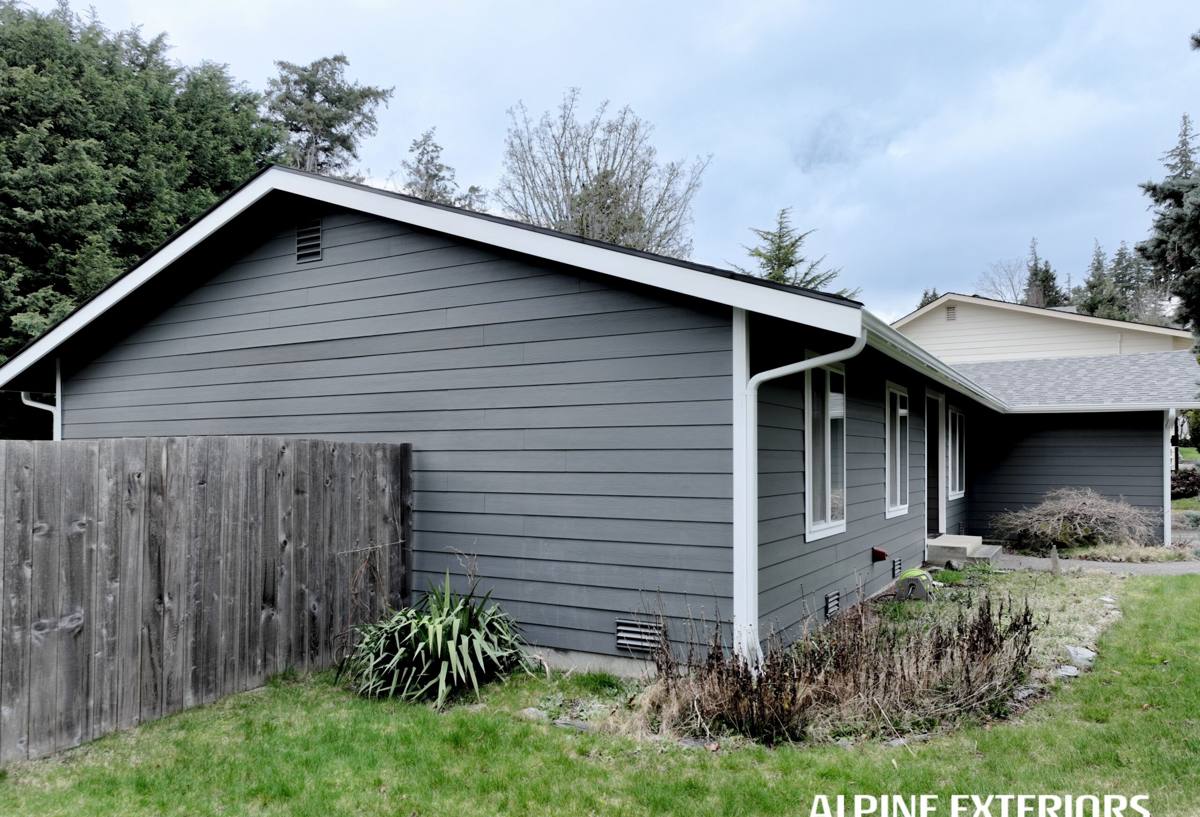
What Lynden's Climate Asks of Siding
Driving Rain and Wind-Driven Moisture
Storms crossing the open farmland around Lynden don't always drop rain straight down — wind pushes it sideways into walls, window trim, and siding seams. On a house where siding is lapped and flashed correctly, that water sheds off before it ever gets a chance to work its way behind the wall. On a house where it isn't, wind-driven rain finds every shortcut a rushed installation left behind, usually at corners, seams, and around windows and doors.
Valley Damp and Slow Drying Time
Open, low-lying farmland doesn't dry out the way a well-drained hillside lot does. Once the ground and the air around a house pick up moisture, they tend to hold onto it longer here than in more sheltered or elevated parts of the county. That matters for siding because materials that absorb even a little moisture during a storm need real drying time between wet spells — and in Lynden, that drying window is often shorter than the material needs.
A Long Moss and Mildew Season
Persistent dampness plus mild temperatures plus shaded, north-facing walls adds up to moss and mildew that can hang around for much of the year on siding that isn't engineered to shed it. It starts as staining or a greenish tint on shaded siding and trim, and while it looks cosmetic at first, sustained growth holds moisture directly against the wall — which is exactly the condition that leads to hidden rot behind siding that looks fine from the yard.
Winter Cold Snaps and Freeze-Thaw Cycling
Being inland and further from the moderating effect of the water, Lynden sees colder winter temperature swings than towns right on Bellingham Bay. When moisture that's already worked into a porous or poorly sealed material freezes, it expands and accelerates cracking and material failure — a problem that shows up faster on materials that absorb water in the first place.
Why James Hardie Fiber Cement Is the Right Call for Lynden
We used to install a wider range of siding products before standardizing on one system. That decision came out of watching, job after job across Whatcom County, which materials genuinely held up to sustained regional moisture and which ones turned into maintenance problems within a few years. For a Lynden home dealing with valley damp, a long moss season, and real winter freeze-thaw, fiber cement holds up in ways that wood-based and vinyl products consistently don't.
- Non-combustible core: Fiber cement won't feed a fire the way wood-based siding can, which matters for both household safety and insurance underwriting.
- Factory-applied ColorPlus finish: The finish is baked on at the factory rather than brushed on in the field, so it resists fading, chalking, and moisture intrusion far longer than site-applied paint — a real advantage in a climate this damp.
- Climate-engineered HZ product lines: Hardie builds different formulations for different climate zones, including versions engineered for regions with sustained moisture exposure, which fits a Nooksack valley property better than a generic, one-size-fits-all board.
- Dimensional stability: Fiber cement doesn't swell, cup, or warp through repeated wet-season moisture cycles the way engineered wood siding can — a meaningful difference given how long Lynden's wet season runs.
- Strong transferable warranty: Hardie backs its products with a solid warranty structure when installation follows spec, which gives a homeowner real recourse rather than a marketing line.
We don't install LP SmartSide, vinyl siding, Cemplank, Allura, primed spruce, or cedar. Each has its place in the broader market, and plenty of homeowners elsewhere are happy with them. But we made a professional decision to install one system we trust completely rather than offer a cheaper alternative that tends to shift maintenance cost and risk back onto the homeowner a few years down the road — and that decision carries even more weight on a property that spends this much of the year wet.
Choosing the Right Hardie Product for a Lynden Property
| Product Line | Best Use | Why It Fits Lynden |
|---|---|---|
| HardiePlank lap siding | Most standard farmhouse and single-family homes | Traditional lap profile sheds wind-driven rain cleanly when overlapped and flashed correctly |
| HardiePanel vertical siding | Gables, accent walls, board-and-batten looks | Common on the barn-style and farmhouse architecture found throughout the area |
| HardieShingle siding | Craftsman-style homes and accent sections | Textured, shingle-style look without real wood's moisture absorption and upkeep |
| HardieTrim boards | Corners, window and door casing, fascia | Factory-finished trim holds up to the same moisture and freeze-thaw cycling as the field siding |
The right combination depends on the home's architecture and the homeowner's preference, but the underlying approach doesn't change: we spec a product and profile that match the actual exposure of a Lynden property rather than defaulting to whatever's fastest to install.
What a Correct Installation Actually Involves
Choosing fiber cement only gets a Lynden home halfway there. The rest comes down to installation detail, and this is where a lot of siding jobs quietly go wrong even when the material itself is right.
Weather Barrier and Flashing
A properly lapped house wrap, correctly integrated window and door flashing, and kick-out flashing where rooflines meet walls do the real work of keeping water out — caulk should be a backup, never the primary defense. On a property that sees this much wind-driven rain, gaps in the weather barrier are exactly where moisture gets in.
Fastening and Clearance
Fasteners need to hit framing at the manufacturer's specified pattern, not just wherever is convenient, and siding needs proper clearance from grade, roof lines, and decks so it isn't wicking up moisture from wet ground or trapping water against a ledger connection. On flat, low-lying lots like much of Lynden, grade clearance is one of the details that gets shortcut most often — and one of the first to cause problems.
Joints and Seams
Joints should be lapped, back-primed where cut, and sealed according to Hardie's installation guidelines rather than simply butted together and caulked over. Sloppy joint work is often invisible at installation and only shows up as staining or soft spots a year or two later, once moisture has had time to work its way in.
Signs Your Lynden Home May Already Need Attention
- Soft spots or visible give when pressing on siding, especially near the bottom courses
- Persistent moss, mildew, or dark staining on shaded or north-facing walls
- Cracking, bubbling, or peeling paint on wood or engineered wood siding
- Gaps or separation at trim around windows and doors
- Siding sitting close to grade or against soil buildup after landscaping changes
- Rising energy bills that suggest the wall assembly isn't sealing the way it used to
Our Process for a Lynden Siding Project
We start with an in-person walk-through of the home, looking at the existing siding, trim, window and door flashing, and any obvious trouble spots before we talk about products or pricing. From there we give an honest read on whether the home needs a full re-side, a partial replacement of specific sections, or targeted repair. If it's new installation, we measure and order material to the home's actual dimensions, confirm tear-off versus overlay based on what's underneath the existing siding, and schedule the work around weather windows that make sense for the job. During installation we handle weather barrier, flashing, fastening, and joint work to spec, then walk the finished job with the homeowner before calling it done.
Repair, Partial Replacement, or Full Re-Side?
Not every siding issue on a Lynden home calls for tearing the whole house down to the studs. A section damaged by impact, an isolated area with failed trim, or storm damage limited to one wall can often be repaired or replaced in place and matched into the surrounding Hardie siding. But if water has clearly been getting behind the wall for a while, or the home is still wearing an older, non-Hardie product that's reaching the end of its useful life, patching it usually just postpones a larger job while hidden damage keeps spreading underneath. We'll tell you plainly which situation you're actually dealing with rather than upselling a full re-side when a repair would do the job.
Cost Factors for Fiber Cement Siding in Lynden
| Factor | What It Affects | Why It Matters in Lynden |
|---|---|---|
| Tear-off vs. overlay | Labor scope and what's found underneath | Tear-off reveals hidden moisture and rot damage more common on homes that have sat through many wet seasons |
| Substrate condition | Repair costs before new siding goes on | Long-term trapped moisture can rot sheathing and framing, adding scope once walls are opened up |
| Home size and complexity | Material quantity and labor hours | Larger farmhouse-style homes and homes with more gables or dormers take more precise cutting and flashing work |
| Site access | Staging and equipment needs | Rural lots and longer driveways common around Lynden can affect setup and material staging |
| Trim and detail work | Labor time on corners, casing, and fascia | Homes with more architectural trim take longer to detail correctly, which affects both cost and long-term performance |
Exact numbers depend on the specific home, which is why we give a real, walked estimate rather than a price quoted sight-unseen over the phone.
Why a Crew That Already Works in Lynden Matters
A crew that installs siding around Lynden regularly has already seen how valley damp, wind-driven rain, and a long moss season play out on real homes here over a full year — not just how a spec sheet describes a product's performance. That experience translates into practical decisions on install day: which wall orientations stay wet longest and deserve extra flashing attention, how much clearance a particular lot's grading actually needs, and which fastening details are worth the extra time so a homeowner isn't dealing with a callback after the next wet winter. Lynden's inland, agricultural setting is different enough from the coastal parts of our service area that a one-size-fits-all approach built for a different exposure doesn't serve it well, and we treat that difference seriously rather than installing the same way everywhere.
If your Lynden home needs new fiber cement siding, a partial repair, or just an honest look at what's happening behind aging siding, we're glad to take a look. Reach out using the form below to schedule a free, no-pressure estimate.