 Ferndale Siding
 Deck Building in Lynden
Lynden homeowners ask for decks that do more than look good for the first summer. Out here, a deck spends most of the year wet, shaded by trees or fog, or slowly greening over with moss before anyone notices. A deck built without that in mind will look fine when it's installed and start showing problems within two or three winters — soft spots, black staining, boards that cup or split. A deck built for this climate holds up because the framing, fasteners, spacing, and finish were chosen for exactly what Lynden weather does to wood and composite over time.
This page covers what we actually do when we build a deck for a Lynden property: how we plan around drainage and moisture, what materials make sense here, what a correct installation involves, and why working with a crew that already knows this area's quirks matters more than it might seem.
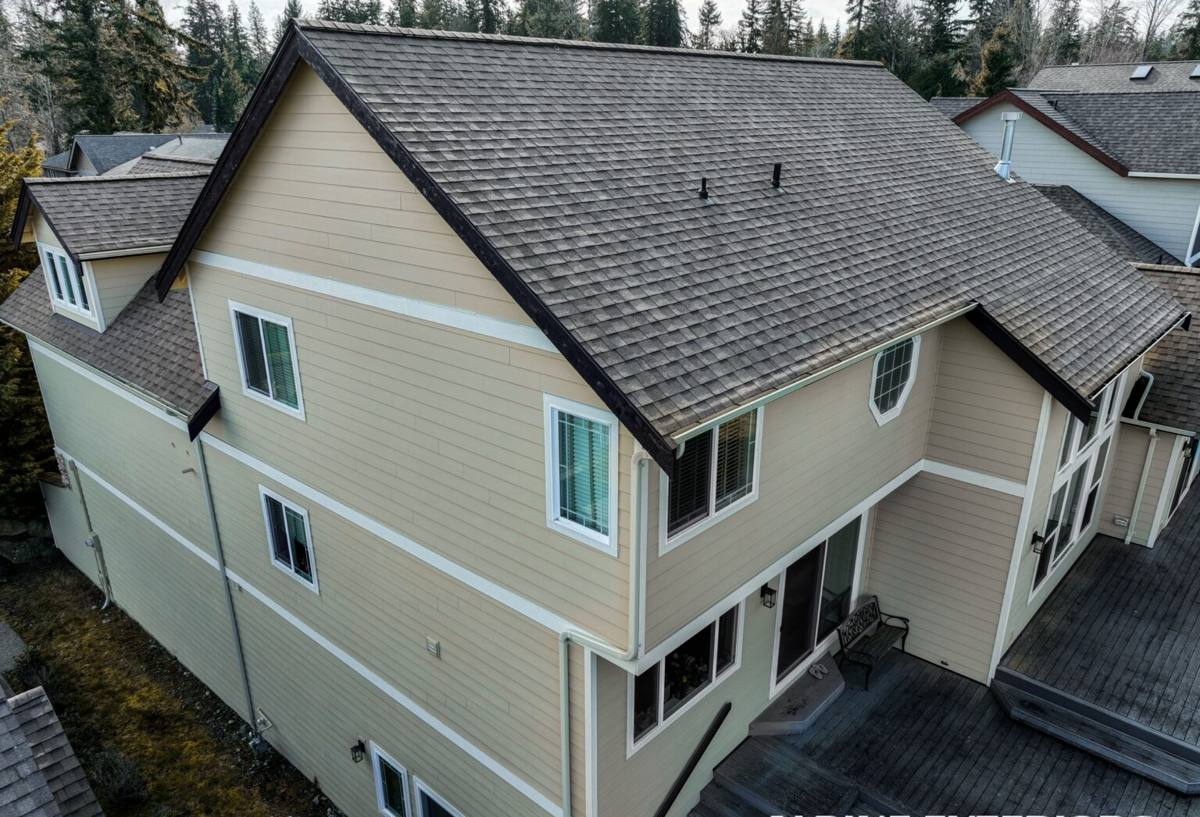
What Lynden's Climate Does to a Deck
Whatcom County sits under a long wet season, and Lynden — sitting inland in the Nooksack Valley — gets its own version of that: heavy fall and winter rainfall, low winter sun angles that leave shaded areas damp for days at a time, and a moss season that can run from October well into spring. Add in the driving rain that comes with Pacific storm systems and periodic coastal-influenced humidity common across the broader region, and you've got conditions that punish any deck built with shortcuts.
The specific problems we see on decks that weren't built with this climate in mind:
- Moss and algae building up on horizontal surfaces that don't get afternoon sun or airflow, making boards slick and starting to hold moisture against the wood
- Ledger boards and framing members rotting from the inside where flashing was skipped or installed wrong
- Fastener corrosion where builders used the wrong hardware grade for a wet climate
- Standing water pooling on decks with flat or poorly sloped surfaces, which accelerates every other problem on this list
- Gaps between boards closing up as wood swells, then trapping debris and moisture when it dries
None of this is unusual for the region — it's just what happens to a deck that wasn't planned around it. The fix isn't exotic materials or a huge budget; it's building the structure and details correctly the first time.
Why Drainage and Airflow Matter More Than the Decking Itself
People tend to focus on the decking material — composite versus wood — as the main decision. In practice, drainage and airflow underneath and around the deck do more to determine how long it lasts. A deck with good slope, proper joist spacing, and open space beneath it for air movement will outlast a more expensive decking product installed over a poorly drained, closed-off substructure. We plan the structure first, then talk material.
Planning a Deck for a Lynden Property
Every deck we build starts with a look at the specific site — not a generic template. That means checking:
Sun and Shade Pattern
A deck on the north or east side of a house, or shaded by mature trees (common on larger Lynden lots), will stay damp longer after rain and needs more attention to ventilation, board spacing, and material choice than a deck that gets full afternoon sun.
Grade and Water Flow
We check how water moves across the yard and off the roofline near the deck. A deck built where runoff collects against the house or pools under the structure is a maintenance headache from day one, no matter how well the deck itself is built.
Ledger Attachment to the House
Where the deck attaches to the home is the single most important detail on the entire project. It has to be flashed correctly so water can't get behind the siding or into the rim joist. This is also the detail most often done wrong on older or budget-built decks — it's hidden once the deck is finished, so problems don't show up until there's already rot.
Use of the Space
A deck for grilling and small gatherings has different structural and layout needs than one meant to host larger groups, hold a hot tub, or connect two entry points on a larger property. We size the framing and footings to the real load, not a minimum.
Materials That Make Sense Here
We don't push one product for every job — the right decking material depends on budget, how much upkeep the homeowner wants to do, and how exposed the deck is to shade and moisture.
| Material | How It Handles Lynden's Wet/Moss Season | Maintenance | Typical Lifespan |
|---|---|---|---|
| Pressure-treated wood | Good if sealed and maintained; absorbs moisture if finish is neglected, which speeds up moss growth | Annual cleaning, re-sealing every 1–3 years | 15–20 years with upkeep |
| Cedar | Naturally moisture- and insect-resistant, but still needs regular cleaning to prevent moss and graying | Cleaning plus periodic oil or sealant | 15–20 years with upkeep |
| Composite decking | Resists rot and doesn't absorb water like wood, but can still grow surface algae/moss in shaded, low-airflow spots if not cleaned | Occasional washing, no sealing or staining | 25–30+ years, varies by product |
| PVC/synthetic decking | Fully moisture-resistant surface; best option for heavily shaded or low-airflow areas | Occasional washing | 25–30+ years |
Whichever material a homeowner chooses, we're honest about the trade-off: lower upfront cost generally means more of the homeowner's own time spent on cleaning and sealing to keep moss and moisture damage at bay. Composite and PVC cost more up front but shift that maintenance burden way down.
What a Correct Deck Build Involves
A deck is a structure first and a finished surface second. The parts nobody sees are what determine whether it's still solid in ten years.
Footings and Framing
Footings go below frost depth and are sized to the deck's actual load, not guessed at. Framing uses lumber rated for ground contact where it's near or in soil contact, with joist spacing tight enough to support the decking material chosen — composite and PVC often need closer spacing than solid wood.
Flashing and Ledger Detail
Proper flashing at the ledger board keeps water from ever reaching the house's rim joist or siding. This is a step that takes real time to do right and is easy to rush — we don't rush it.
Fasteners and Hardware
All structural hardware is rated for exterior, wet-climate use — corrosion-resistant coatings or stainless where it matters. Cheaper hardware corrodes over a few wet seasons and weakens connections long before the wood itself fails.
Spacing and Airflow
Board gaps are set to let water drain through and air move underneath, which is the single biggest factor in keeping moss from taking hold on the surface.
Railings and Stairs
Built to current code for height and baluster spacing, with the same attention to fastener quality and water-shedding details as the deck surface itself.
Our Process
- On-site visit to look at the specific lot, sun/shade pattern, drainage, and how the deck connects to the house
- Design conversation covering size, layout, material options, and an honest cost range for each
- Written estimate with a clear scope — no vague allowances that turn into surprise costs later
- Permitting handled up front where required
- Construction, with the structural details above followed on every job the same way regardless of budget tier
- Final walkthrough covering how to care for the specific material chosen, including moss and moisture prevention
Living With a Deck in Lynden
Even a well-built deck needs some seasonal attention here. A short checklist that keeps most decks trouble-free:
- Sweep leaves and debris off the surface regularly through fall — trapped organic matter is what feeds moss
- Rinse or gently wash the deck once or twice a year, more often in heavily shaded spots
- Check that gaps between boards stay clear of debris so water keeps draining through
- Inspect the ledger area and any spots where the deck meets the house for staining or soft wood once a year
- Reseal wood decking on the schedule appropriate to the product — don't wait until it's visibly gray and dry
- Keep nearby vegetation trimmed back enough to let sun and air reach shaded sections of the deck
Why Hire a Crew That Already Works Lynden
A deck contractor who works Whatcom County regularly already knows how local sun angles, shade patterns, and rainfall behave on a real job site — not just in general terms, but on the kind of lots common around Lynden. That shows up in small decisions: how much to slope a deck surface, where to add extra ventilation, which material actually holds up in a shaded corner versus an open, sunny one. It also means we're not learning the region's climate on someone's project — we're applying what we already know works here.
We build for the way Lynden and the surrounding Ferndale area actually behave through a wet season, not for a showroom photo. That's the difference between a deck that needs real repair work in five years and one that just needs normal seasonal upkeep.
If you're planning a new deck or replacing one that's showing its age, we're happy to come take a look and put together a straightforward, no-pressure estimate. Use the form below to get started.