 Ferndale Siding
 Blaine's Shoreline Climate Is Hard on Siding
Blaine sits right on the water at the northern edge of Whatcom County, close enough to Semiahmoo Bay and Drayton Harbor that salt-laden air is a daily fact of life for homes near the shoreline, not an occasional nuisance. That same exposure brings driving, wind-pushed rain off the Salish Sea — the kind that hits siding sideways instead of falling straight down — plus a long, damp moss season that stretches from fall through spring. Any siding product on a Blaine home has to handle all three at once: salt, wind-driven moisture, and near-constant humidity that never really dries out until summer.
Cheaper or poorly-suited siding shows this wear in predictable ways: chalky or peeling paint, swollen seams where water got behind the panels, and dark green-black streaking on shaded, north-facing walls where moss and algae get a foothold and never let go. None of that is inevitable — it comes down to what the siding is made of and how well it was installed to begin with.
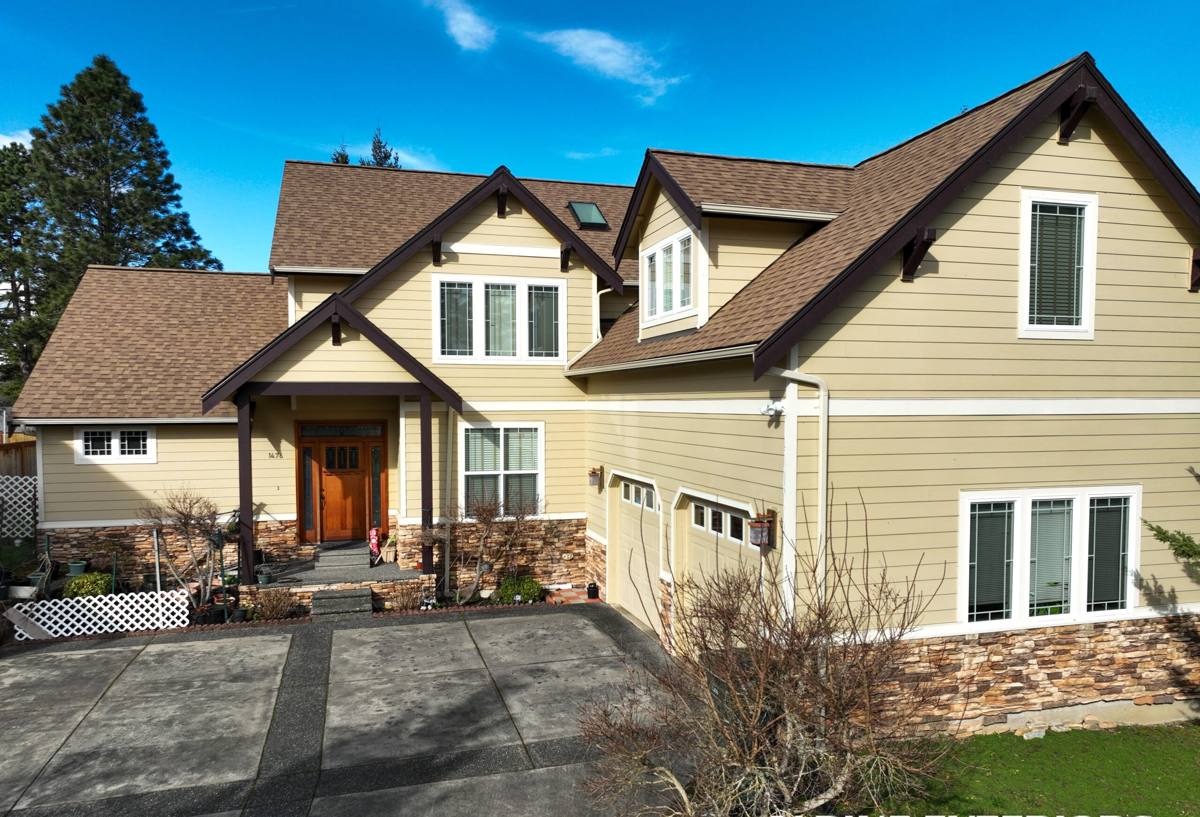
Why James Hardie Holds Up Where Other Materials Struggle
We install James Hardie fiber cement siding exclusively. That's not a marketing preference — it's a decision built around what actually survives a coastal Whatcom County winter without turning into a maintenance project every year.
HZ5 Engineered for Coastal Exposure
James Hardie makes region-specific product formulations, and the HZ5 line is engineered for climates with more moisture cycling and temperature swings — which describes Blaine's marine exposure well. Fiber cement itself is non-combustible and dimensionally stable, meaning it doesn't swell, warp, or rot the way wood-based products can when they take on repeated moisture. Salt air doesn't degrade the material the way it can degrade untreated wood trim or corrode lower-grade fasteners and trim accessories over time.
ColorPlus Factory Finish vs. Field Paint
Most Hardie siding we install carries the ColorPlus factory finish — a baked-on coating applied under controlled conditions, backed by its own finish warranty, and considerably more resistant to fading and chalking than paint applied on-site after installation. In a climate where UV, salt, and moisture are all working against a painted surface simultaneously, that factory-cured finish is doing real work, not just looking nice on day one.
What This Means Next to Other Materials
Vinyl siding can warp or gap in temperature swings and offers no real fire resistance. Cedar and primed spruce look good initially but need real, ongoing maintenance — recoating, caulk checks, moisture monitoring — to survive coastal humidity without rot. LP SmartSide and composite wood products depend heavily on maintaining an intact factory seal at every cut edge; any breach lets moisture into the wood fiber core. Other fiber cement brands like Allura or Cemplank exist, but we've standardized on Hardie for consistency of supply, warranty structure, and the specific HZ engineering options suited to this exact climate.
What a Correct James Hardie Install Involves in This Climate
Fiber cement siding is only as good as the installation behind it. In a wind-driven-rain environment like Blaine's, the parts you never see after the job is done matter more than the parts you do.
Flashing and Water Management
Every window, door, and penetration needs properly lapped flashing so water sheds outward and down, never inward behind the cladding. This is the single most common failure point we find on older or poorly-installed siding jobs — water finds the smallest gap and, given a whole winter, will exploit it.
Fastening for Wind Exposure
Homes with direct water views or open exposure to storm winds need fastening patterns that account for wind load, not just the manufacturer's minimum spacing. Corrosion-resistant fasteners matter more here than in an inland neighborhood — salt air accelerates corrosion on anything less than the right-grade hardware.
Caulking and Joint Details
Joints, butt seams, and trim transitions need the right sealant, applied correctly, at the right gaps — Hardie's own installation specifications are explicit about clearances and joint treatment for good reason. Skipping or rushing this step is invisible at first and expensive later.
Trouble Spots We Watch for on Blaine Homes
Every coastal home has a few areas that take more punishment than the rest of the exterior. On the properties we've worked on in and around Blaine, the recurring issues tend to show up in the same places:
- North- and east-facing walls that stay shaded and damp longest, where moss and algae growth is most persistent
- Lower wall sections and areas near grade, where splashback and ground moisture linger
- Corners and window trim facing the prevailing storm direction, which take the brunt of wind-driven rain
- Old fastener heads or trim nails showing rust bleed, a sign the hardware wasn't rated for salt exposure
- Caulk joints that have shrunk, cracked, or pulled away after repeated wet-dry cycling
Identifying these before a full re-side — or checking them first during a new install — saves callbacks and headaches down the road.
Our Process, Start to Finish
Assessment and Tear-Off
We start with a real look at the existing wall assembly, not just the visible siding — checking sheathing condition, existing flashing, and any moisture damage that needs addressing before new siding goes on. Covering up a wet or damaged wall with new siding just hides the problem.
Water-Resistive Barrier and Rainscreen Details
A correctly lapped water-resistive barrier goes down first, with flashing integrated at every penetration. Depending on the wall assembly and exposure, a rainscreen gap behind the siding gives any incidental moisture a path to drain and dry rather than sitting against the panel.
Installation and Finish Work
Hardie panels, lap siding, or trim go on to manufacturer spec — correct fastener type and spacing, proper clearances at grade and roof lines, and joint treatment done right the first time. We finish with a walk-through so you know exactly what was done and what to expect from the finish over time.
What Affects the Cost of Your Project
| Factor | Why It Matters |
|---|---|
| Tear-off vs. new construction | Removing and disposing of old siding, plus repairing any hidden sheathing damage, adds labor beyond a bare-wall install |
| Home size and wall complexity | More corners, gables, and trim detail mean more cutting, flashing, and finish work per square foot |
| Exposure and elevation | Waterfront or wind-exposed walls may need upgraded fastening and flashing detail beyond a standard inland install |
| Product line and profile | HZ5 panels, specific lap widths, and shingle-style profiles carry different material costs than a standard smooth lap |
| ColorPlus vs. field-applied finish | Factory-finished panels cost more upfront but avoid a full paint job and its recurring maintenance |
| Existing moisture damage | Rotten sheathing or framing found during tear-off needs repair before new siding can go on correctly |
Keeping Your Siding Looking Right Year After Year
James Hardie siding installed correctly needs far less upkeep than wood or vinyl, but "far less" isn't "none" — especially this close to the water. A short annual routine keeps it looking the way it should:
- Rinse salt spray and grime off exterior walls once or twice a year, especially on water-facing sides
- Walk the exterior each fall and check caulk joints for cracking, gaps, or shrinkage
- Treat visible moss or algae growth on shaded walls before it spreads, using a method safe for the finish
- Keep gutters clear so overflow doesn't run down and saturate wall sections below
- Trim back vegetation and landscaping that keeps any wall section shaded and damp longer than necessary
- Have any impact damage or cracked panels repaired promptly rather than left through a wet winter
Why It Matters That We Already Work in Blaine
Installation details that work fine on a sheltered inland lot don't always hold up on an open, water-exposed wall a few blocks from the Salish Sea. Fastener grade, flashing detail, and even which walls need extra attention against wind-driven rain are things you learn by actually working this stretch of coastline, not by reading a spec sheet once. A crew that's already handled Blaine's climate knows where the water wants to go on a home like yours before the first panel goes up — and installs accordingly, so the warranty behind the product actually means something in practice, not just on paper.
If you're considering new siding, a repair, or just want a straight answer about what your current siding needs, we're happy to take a look and put together a free, no-pressure estimate — no obligation, just a clear picture of what your home actually needs.