 Ferndale Siding
 Deck Building for Blaine's Coastal Conditions
Blaine sits right on the water near the Canadian border, and that location comes with a specific set of problems for anything built outdoors. Salt-laden air off the bay, wind-driven rain that comes in sideways more often than straight down, and a long, damp moss season that can run from fall through spring all put real stress on a deck. A deck built to a generic spec sheet, without those conditions in mind, will show it within a few years — soft boards, rusted fasteners, slick moss buildup, and rail posts that start to wobble.
We build decks in Ferndale and the surrounding Whatcom County communities, including Blaine, and we treat coastal exposure as a design factor from the first conversation, not an afterthought. That means different material choices, different fastener grades, and different framing details than you'd get from a crew that mostly works inland.
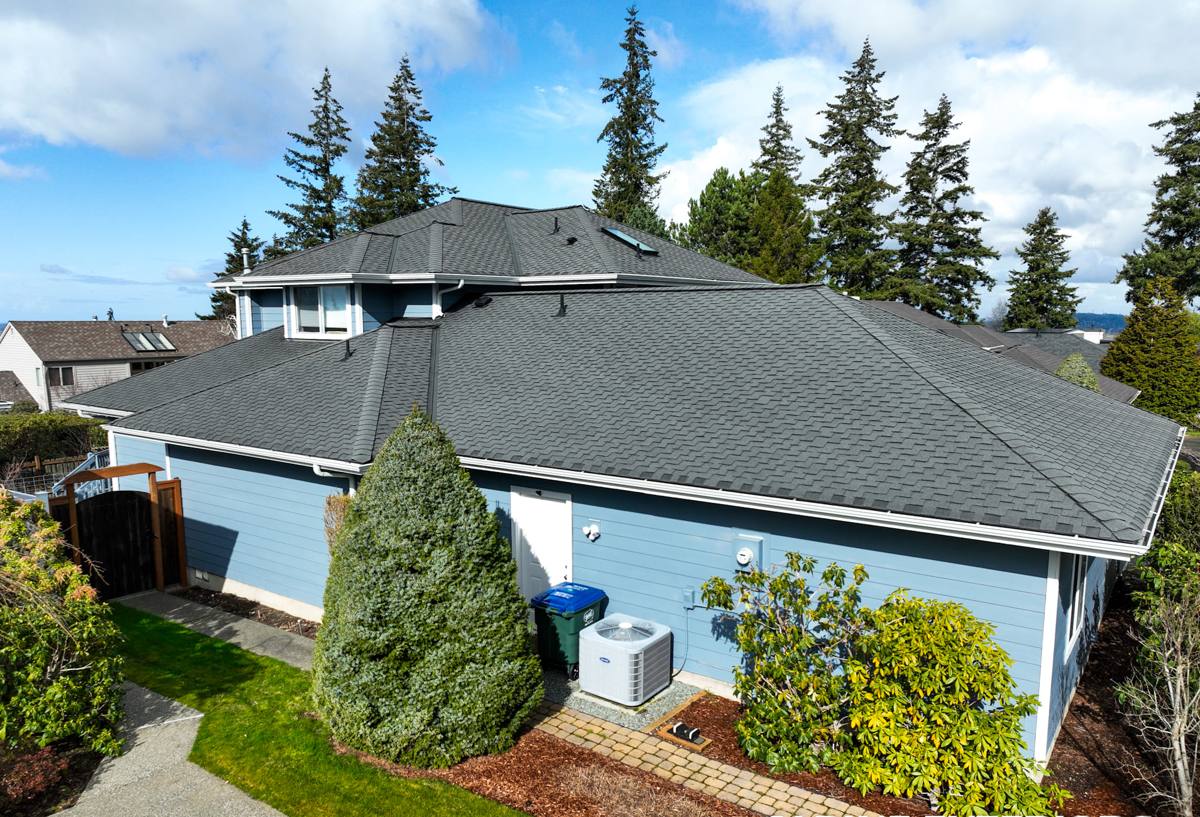
What Blaine's Weather Actually Does to a Deck
It helps to understand the specific failure points before you decide what to build. Three things drive almost every deck problem we see out here:
Moisture That Doesn't Dry Out Fast
Whatcom County doesn't get brief downpours followed by sun — it gets stretches of low clouds, drizzle, and high humidity that keep wood surfaces damp for days at a time. Untreated or poorly sealed wood absorbs that moisture, and once it's inside the fibers, rot and fungal decay follow. This shows up first at joints, fastener holes, and anywhere two boards sit tight against each other.
Salt Air and Metal Corrosion
Being close to the water means airborne salt settles on every exposed surface, including hardware that's supposed to hold the structure together. Standard galvanized screws and joist hangers corrode faster near the coast than they would twenty miles inland. Once a fastener starts rusting, it loses grip strength long before it looks obviously bad.
Moss and Algae Growth
Shaded decks, north-facing decks, and decks under trees stay damp long enough for moss and algae to take hold, usually starting at the edges and in the gaps between boards. Beyond looking bad, a mossy deck surface gets genuinely slippery, and moss holds moisture against the wood underneath it, accelerating rot in exactly the spots you can't see until a board fails.
Choosing Decking Material for a Blaine Property
There's no single right answer here — it depends on your budget, how much upkeep you want to do, and how exposed the deck site is to wind and salt spray. Here's how the common options actually perform in this climate:
| Material | How It Holds Up Here | Maintenance |
|---|---|---|
| Pressure-treated wood | Affordable and strong, but needs consistent sealing to resist the wet cycle; without upkeep, moss and graying set in within a season or two | Annual cleaning and re-sealing recommended |
| Cedar | Naturally more rot-resistant than treated pine and handles moisture well, but still needs periodic sealing to keep its color and resist moss | Sealing every 1-2 years |
| Composite decking | Doesn't absorb moisture or rot, and resists moss better than wood, though it can still get slick if algae builds up in shaded spots | Periodic washing; no sealing or staining |
| PVC/capped composite | Fully sealed surface, best moisture and moss resistance of the group, higher upfront cost | Occasional washing |
For a home with heavy shade or close proximity to the water, we usually steer clients toward composite or capped PVC — not because wood is a bad product, but because the maintenance schedule wood needs in this climate is a real, ongoing commitment, and we'd rather be upfront about that trade-off before you build than after.
What a Correctly Built Deck Involves
The visible decking boards are the smallest part of what makes a deck last in this climate. The framing and connection details underneath do most of the work:
- Ledger board flashing that properly sheds water away from the house rim joist, not just a bead of caulk
- Joist tape or membrane over the top of framing lumber to keep standing water out of the wood grain
- Footings sized and set to local frost and soil conditions, not just poured to the minimum
- Corrosion-resistant hardware rated for the exposure, not general-purpose galvanized
- Proper board spacing to let water drain and air circulate underneath, which slows moss growth
- Ventilation under the deck so the framing can actually dry out between wet stretches
Skip any one of these and the deck will still look fine for a year or two — the problems that come from cutting corners here take time to surface, which is exactly why they're easy for an out-of-town crew to miss or skip.
Railings, Fasteners, and Hardware for Salt Air
Hardware is where a lot of decks near the water quietly fail first. Standard exterior screws and connectors are rated for general outdoor use, not sustained salt exposure. For Blaine properties, especially anything with a clear line to the water or regular wind off the bay, we spec stainless steel or coated fasteners rated for coastal/marine-grade exposure at connection points that matter most: ledger attachment, joist hangers, and railing posts. It costs more upfront than standard hardware, but a rail post that loosens because its fasteners corroded is a safety issue, not just a cosmetic one, and it's far cheaper to spec the right hardware once than to rebuild a railing system later.
Our Deck Building Process
Whether it's a full rebuild or new construction, the process looks the same:
1. On-Site Assessment
We look at sun exposure, drainage, proximity to the water, and how the deck ties into your house before recommending materials. A shaded, water-facing site gets a different recommendation than a sunny, sheltered one.
2. Design and Material Selection
We walk through the material comparison honestly — cost, maintenance, and how each option performs given your specific site conditions — so you're choosing with real information, not just picking off a brochure.
3. Permitting
Most new decks and significant rebuilds in Whatcom County require a permit. We handle that process as part of the job so it's not something you have to chase down separately.
4. Build
Framing, flashing, and structural work come first and get inspected before decking goes down. This is the stage where corners get cut on rushed jobs, and it's the stage that determines how the deck holds up in five or ten years.
5. Finish and Walkthrough
We finish with decking, railings, and any stairs, then walk the site with you so you know what maintenance the specific materials you chose actually need.
Maintenance Checklist for Blaine Deck Owners
Whatever material you go with, a few habits go a long way toward avoiding early repairs in this climate:
- Sweep debris off the deck regularly, especially in fall — trapped leaves hold moisture against the surface
- Rinse off salt residue after storms if your deck faces the water or gets direct wind off the bay
- Check railing posts and stair connections once a year for looseness — an early sign of fastener corrosion
- Clean moss and algae off boards as soon as you notice it, before it spreads or gets slick
- Re-seal wood decking on the schedule your material needs, not just when it starts to look gray
- Keep gutters and downspouts clear near the deck so runoff isn't draining directly onto or under it
Why a Ferndale Crew That Already Works Blaine Matters
A deck built to work in a drier, inland climate isn't automatically wrong for Blaine, but it's built without accounting for the salt air, sustained moisture, and moss pressure that properties here actually face. We work throughout Whatcom County, including Blaine, and the hardware grade, flashing details, and material recommendations above aren't generic advice — they're what we've found actually holds up given the conditions on this stretch of coast. That's the difference between a deck that needs attention every year and one that just quietly does its job.
Permits and Local Considerations
Deck projects in Whatcom County generally need a building permit once they exceed a certain size or height above grade, and setback rules apply depending on your lot and its proximity to the water. Waterfront and near-waterfront properties can also fall under additional shoreline review depending on location. We factor this into the timeline upfront so there are no surprises partway through the project, and we handle the paperwork as part of the job.
If you're planning a new deck or need to replace one that's showing its age, we're happy to come take a look and give you a straightforward, no-pressure estimate. Use the form below to get started.