 Ferndale Siding
 Windows in Blaine Work Harder Than Windows Almost Anywhere Else in Whatcom County
Blaine sits right up against the water, close enough to Boundary Bay and the Strait of Georgia that salt-laden air is just part of daily life. Add in the wind-driven rain that blows through in the fall and winter, plus a moss season that can stretch for months on shaded north- and west-facing walls, and you've got a climate that's genuinely tough on window assemblies. Frames swell and shrink with moisture cycles, seals get tested by sideways rain instead of straight-down rain, and any gap in the flashing detail eventually turns into a stain on the drywall inside.
We work throughout Ferndale and out to Blaine regularly, and the failure patterns we see out here are consistent: sash corners that have started to rot from the inside out, aluminum frames pitted from years of salt exposure, and vinyl units that have gone cloudy or warped on the side that takes the worst of the weather. None of that is a mystery once you've seen it a few dozen times — it's just what happens when a window that was fine somewhere inland gets asked to perform on the coast without the right materials or installation detailing.
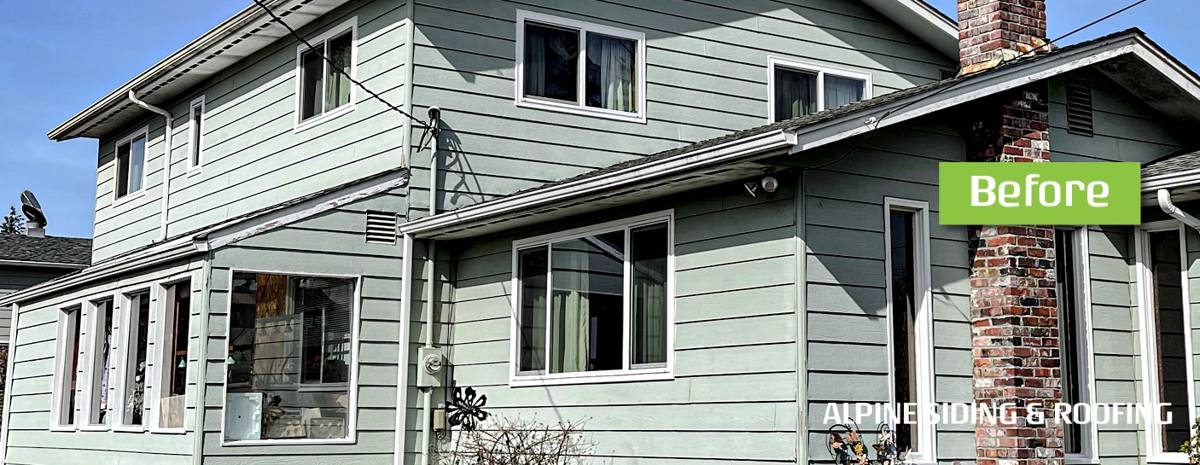
What "Custom" Actually Means Here
Custom doesn't mean expensive or fancy — it means the window is built to the actual opening and the actual conditions of your house, instead of forcing your house to accept a stock size. On older Blaine homes especially, openings are rarely perfectly square after decades of settling, and a lot of production-grade replacement windows are designed around standard dimensions that assume a clean, plumb opening. When that's not what you have, you end up with shims, extra caulk, and a seal that's only as good as the gap it's trying to hide.
A properly custom window is measured to your specific rough opening, ordered to match, and installed with flashing and sealant details sized for that exact gap — not a generic one. That matters more here than in a lot of places, because a marginal seal that might get away with it in a drier climate will get found out fast once the winter storms roll in off the water.
Custom Also Covers Style and Function, Not Just Size
Beyond fit, "custom" covers things like grid patterns that match your home's original character, glass tinting or obscure glass for privacy on a side that faces a neighbor, casement versus double-hung operation depending on how you actually use the room, and trim profiles that match what's already on the house instead of looking like an obvious patch job.
Signs Your Current Windows Are Losing the Battle
Most homeowners don't call about windows until something's visibly wrong, but by then the damage has usually been building for a while. Here's what we typically find when we go out to look at a home in Blaine or the surrounding area:
- Condensation or fogging between the panes — the seal on the insulated glass unit has failed and the argon or air gap is compromised
- Soft or discolored wood at the sill or lower corners, often hidden under paint until it's pressed
- Visible daylight or a draft you can feel with your hand along the frame edge
- Green or black staining on the exterior trim below the window — usually a sign water is tracking down from a bad seal above
- Windows that are hard to open, close, or lock, which often means the frame has swollen or warped
- Moss or algae growth on the sill or lower sash, common on shaded elevations in this climate
- A noticeable rise in heating costs without any other obvious cause
Any one of these on its own might just mean a repair. Several at once, especially on the weather-exposed side of the house, usually means the windows are past the point where patching makes sense.
Frame Material: What Actually Holds Up on the Coast
There's no single "best" window material for every situation, but out here some options clearly earn their keep better than others. This is a rundown of how the common choices perform under Blaine's specific conditions — salt exposure, sustained moisture, and UV from long summer days.
| Material | Coastal Performance | Maintenance | Typical Lifespan |
|---|---|---|---|
| Vinyl | Good — won't corrode from salt, handles moisture well | Low — occasional cleaning | 20-30 years |
| Fiberglass | Very good — dimensionally stable, resists warping in temperature swings | Low | 30-40 years |
| Wood-clad | Good if the cladding stays intact; the wood core is vulnerable if water gets behind it | Moderate to high — cladding seams need monitoring | 20-30 years with upkeep |
| Aluminum | Poor to fair — prone to pitting and corrosion in salt air over time | Moderate | 15-25 years near the coast |
| All-wood | Fair — classic look, but the most exposure-sensitive option here | High — regular painting and sealing required | Varies widely with maintenance |
We don't push people toward any one material by default. A lot of it comes down to which elevation the window is on, how much shade and moss exposure that side of the house gets, and what look you're going for. We'll walk through the honest trade-offs for your specific openings rather than defaulting to whatever's easiest to install.
Glass Packages Matter as Much as the Frame
The frame material gets most of the attention, but the glass package is doing a lot of the actual work. Dual-pane, low-E coated glass with argon fill is the standard baseline for this climate — it cuts heat loss and helps control condensation on the interior pane during cold, wet stretches. On rooms that get direct afternoon sun, a low-E coating tuned to reduce solar heat gain can keep things from overheating in summer without darkening the room noticeably.
The Installation Details That Actually Determine Whether a Window Lasts
The window itself is only part of the equation. We've replaced plenty of windows in Blaine that were decent units undone by a rushed or incomplete installation. The details that matter most in this climate:
- Flashing sequence — water-resistive barrier and flashing tape need to be layered correctly (bottom to top, like shingles) so that any water that gets past the window sheds outward instead of behind the wall
- Sill pan installation — a proper sill pan gives any water that does get in a way out, instead of letting it sit against the framing
- Sealant selection and placement — the wrong caulk, or caulk applied without a proper backer rod, fails faster under constant moisture cycling
- Weep holes kept clear — these let trapped moisture drain out of the frame, and they're easy to accidentally seal shut during installation or later during painting
- Shimming and squaring — a window installed slightly out of square puts uneven stress on the seals and hardware from day one
None of this is visible once the trim goes back on, which is exactly why it's worth asking a contractor how they handle it before they start, not after.
How Our Process Works
1. On-Site Assessment
We start by looking at the actual openings, not just taking a phone order for "12 windows, same as what's there." We check for existing water damage, note which elevations take the worst weather, and measure precisely.
2. Material and Style Selection
We go over frame material, glass package, and grid or trim style options based on your home and budget, with honest input on what performs best where.
3. Ordering and Scheduling
Custom units take lead time to manufacture. We'll give you a realistic timeline and try to schedule installation around drier weather windows when possible, since a controlled installation environment matters for getting the flashing and sealant work right.
4. Removal and Installation
Old windows come out, any hidden damage to the framing gets addressed before the new unit goes in (not papered over), and the new window is set, flashed, insulated, and sealed following the sequence above.
5. Final Walkthrough
We check operation, seals, and finish work with you before calling the job done, and go over basic care so the windows perform the way they're supposed to for the long haul.
What Drives the Cost
There's no honest flat rate for window replacement because too many variables change the number. Here's what typically moves the price up or down on a project in this area:
| Factor | Effect on Cost |
|---|---|
| Frame material (vinyl vs. fiberglass vs. wood-clad) | Fiberglass and wood-clad typically cost more than vinyl |
| Window size and configuration (single unit vs. bay, picture, or multi-panel) | Larger or multi-panel units cost more per opening |
| Existing damage found during removal | Rotten framing or sheathing adds repair cost before the new window goes in |
| Glass package upgrades | Solar-control coatings or triple-pane options add cost, often worth it on sun-exposed or noisy sides |
| Number of openings done at once | Bundling several windows in one visit is usually more efficient than one-off replacements |
| Trim and finish complexity | Matching existing custom trim profiles takes more labor than standard trim |
We'll always give you a firm number in writing before any work starts, and we'll flag it clearly if we find hidden damage during removal instead of just proceeding and adding it to the bill afterward.
Why It Matters That We Already Work in Blaine
A contractor who mostly works inland doesn't necessarily think about salt exposure, weep hole placement on a bay-facing wall, or how much moss buildup a shaded north elevation is going to see over a Whatcom County winter. Those aren't things you learn from a manual — they're things you learn from doing the work in this exact environment, repeatedly, and seeing what holds up five and ten years later versus what doesn't.
We're not asking you to take that on faith. Ask any window contractor bidding your job how they handle flashing sequencing, sill pans, and material selection for a coastal elevation specifically — the answer tells you a lot about whether they've actually done this kind of work before or are just installing the same way everywhere.
Keeping New Windows Performing Long-Term
A well-installed window in a tough climate still benefits from basic upkeep. A short annual routine goes a long way:
- Clear moss and debris off sills and tracks before it holds moisture against the frame
- Check that weep holes are open and draining, especially after painting nearby trim
- Inspect exterior caulk lines once a year and touch up any that have cracked or pulled away
- Operate every window at least a few times a year so hardware and weatherstripping don't seize or take a set
- Watch for early condensation between panes, which signals a seal failure worth addressing before it worsens
If you're dealing with drafty, foggy, or hard-to-operate windows on a Blaine or Ferndale home, we're happy to come take a look and give you a straightforward, no-pressure estimate — just fill out the form below.