 Ferndale Siding
 Blaine's Climate Is Harder on Siding Than Most Homeowners Realize
Blaine sits close enough to the water that salt air is part of daily life, not an occasional nuisance. Add Whatcom County's long wet season, near-constant driving rain off the Strait, and the kind of persistent shade and humidity that keeps moss and algae established on north- and west-facing walls for most of the year, and you have one of the tougher exterior environments in Western Washington. Siding here isn't just a cosmetic layer — it's the first line of defense against moisture intrusion, corrosion, and slow rot that can go unnoticed behind a wall for years.
We install exclusively James Hardie fiber cement siding, and we don't say that lightly. It's a deliberate standard built around what actually holds up in a climate like Blaine's, not just what looks good on install day.
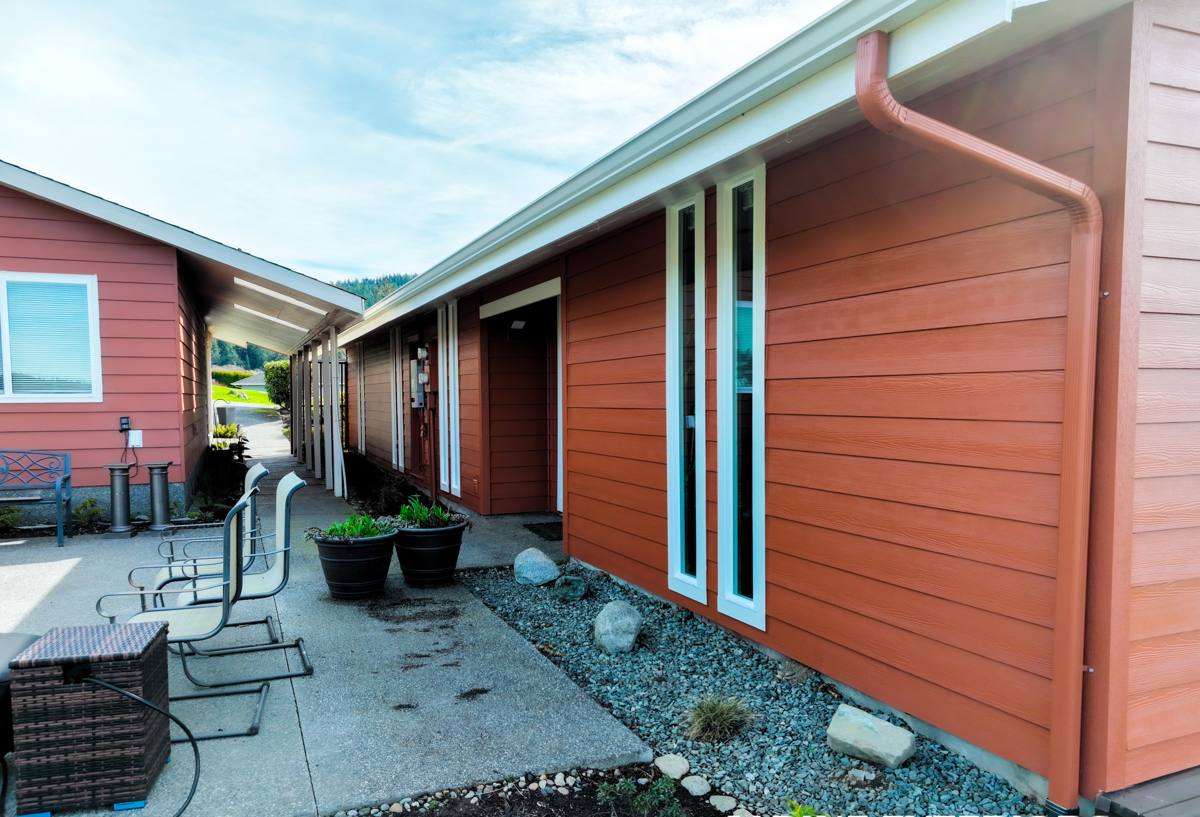
What Blaine Homes Actually Need From Their Siding
Before talking about products or installation methods, it's worth being specific about what this climate does to a home's exterior over time:
- Salt air corrosion — airborne salt accelerates the breakdown of untreated fasteners, thin metal flashing, and lower-grade trim, and it degrades paint finishes faster than inland exposure.
- Wind-driven rain — storms off the water don't just fall straight down; rain gets pushed sideways into seams, laps, and penetrations that would stay dry in a calmer climate.
- Extended moss and algae season — shaded walls and roof lines near mature trees stay damp long enough for moss and mildew to take hold, and once established it holds moisture directly against the siding surface.
- Freeze-thaw swings — Whatcom County gets enough cold snaps to stress any material that absorbs and holds water.
Any siding product can survive one of these conditions. Very few hold up well against all four, year after year, without a maintenance schedule most homeowners don't have time for.
Why We Standardize on James Hardie Fiber Cement
James Hardie fiber cement is engineered from cement, sand, and cellulose fibers — a composition that doesn't absorb water the way wood-based products do, and doesn't expand and contract with humidity the way vinyl does. That matters directly for Blaine's conditions:
It's non-combustible, which matters for wildfire-adjacent insurance considerations even in a coastal county. It holds paint and factory finish far longer than wood because the substrate itself doesn't swell, crack, or absorb moisture at the surface. And James Hardie's ColorPlus factory finish is baked on under controlled conditions, which gives it better fade and chalking resistance against salt-air UV exposure than field-applied paint on wood or engineered wood products.
James Hardie also builds region-specific product lines. HZ5 is engineered for climates with more moisture cycling and freeze-thaw exposure — which fits Whatcom County better than a generic national product. That's an engineering distinction, not marketing language, and it's one reason we don't substitute in other fiber cement brands or engineered wood alternatives: the climate-specific engineering is part of what you're paying for.
What We Deliberately Don't Install, and Why
We don't install vinyl, LP SmartSide, cedar, primed spruce, Cemplank, or Allura on Blaine homes. Each of those products has legitimate uses elsewhere, but each also comes with a trade-off we're not willing to install and stand behind in this specific climate — whether that's moisture sensitivity at cut edges, a shorter finish life under salt-air UV exposure, a higher maintenance burden than most owners want, or a warranty structure that doesn't match what we consider a proper long-term installation. We'd rather explain that plainly upfront than install something we don't believe in and let a homeowner find out ten years later.
What a Correct Fiber Cement Installation Actually Involves
The material is only half the equation. Most siding failures we get called out to inspect — regardless of brand — trace back to installation shortcuts, not product defects. A correct install in a high-moisture, wind-driven-rain environment includes:
Weather Barrier and Drainage Plane
A properly lapped weather-resistant barrier behind the siding, with a drainage gap (rainscreen) where conditions call for it, so any moisture that does get past the siding has somewhere to go instead of sitting against the sheathing.
Flashing at Every Penetration
Windows, doors, hose bibs, vents, and any other wall penetration need properly integrated flashing — not just caulk. Caulk is a backup seal, not a primary water management strategy, and in wind-driven rain conditions that distinction matters more than it does inland.
Fastening and Clearances
James Hardie specifies fastener type, spacing, and minimum clearances from grade, decks, and roof lines for good reason — get those wrong and you create the exact moisture traps that lead to premature failure, no matter how good the siding itself is.
Joint and Butt Seams
Panel and lap seams need correct overlap and sealing detail. Sloppy seams are one of the most common places we find moisture intrusion starting on older installs.
Our Process for Blaine Projects
- On-site assessment — we look at existing siding condition, moisture staining, moss/algae buildup, and wall orientation relative to prevailing wind and rain exposure.
- Substrate check — once old siding comes off, we inspect sheathing and framing for hidden rot or moisture damage before anything new goes up.
- Weather barrier and flashing detail — installed and inspected before a single piece of siding is hung.
- James Hardie installation to manufacturer spec — correct fastening, clearances, and seam detail, using the HZ5 product line suited to this climate.
- Final walkthrough — trim, caulking, and finish details reviewed with the homeowner before we consider the job done.
Comparing Siding Materials for Blaine's Coastal Climate
| Factor | James Hardie Fiber Cement | Vinyl | Cedar / Wood | Engineered Wood (e.g. LP SmartSide) |
|---|---|---|---|---|
| Salt air / UV fade resistance | Strong — factory ColorPlus finish | Moderate — can chalk and fade | Weak — requires repainting/staining | Moderate — finish depends on field application |
| Moisture / rot resistance | Strong — cement-based, doesn't absorb like wood | Doesn't rot, but traps moisture behind it | Weak without diligent maintenance | Moderate — vulnerable at cut edges and seams if not sealed |
| Fire resistance | Non-combustible | Melts/deforms under heat | Combustible | Combustible |
| Maintenance burden | Low — occasional wash, repaint on long cycle | Low, but cracks/fades over time | High — regular staining/sealing | Moderate to high |
| Typical lifespan with proper install | Decades, strong transferable warranty | Shorter, prone to brittleness over time | Shorter without upkeep | Shorter than fiber cement |
No material on this list is inherently "bad." The comparison above reflects why, for Blaine's specific combination of salt exposure, driving rain, and extended moss season, we've standardized on one product installed correctly rather than offering several options installed to a lower common standard.
Signs Your Current Siding Is Struggling With Blaine's Climate
- Persistent moss or algae staining that returns within a season of cleaning
- Soft spots or slight give when pressing on siding near ground level or under windows
- Paint or finish that's chalking, peeling, or fading unevenly, especially on water-facing walls
- Visible gaps or cracking at caulk joints and panel seams
- Musty smell or discoloration on interior walls that back up to exterior siding
- Fasteners showing rust streaks or corrosion staining down the face of the siding
Any one of these on its own isn't necessarily an emergency, but a home showing two or three at once is usually telling you moisture has already gotten past the surface.
Why It Matters That We Already Work in Blaine
A crew that's worked Whatcom County's coastal edge knows which wall orientations take the worst of the wind-driven rain, how aggressively moss establishes itself on shaded siding here compared to more inland parts of the county, and what clearance and flashing details actually hold up against salt air over years, not just on inspection day. That's different from general siding experience. Correct installation in this climate isn't more complicated than anywhere else — it just has less margin for error, and a crew that's already seen how Blaine's conditions test a wall assembly is going to get those details right the first time.
Maintenance After Installation
Even the right product installed correctly benefits from basic upkeep in this climate. A periodic gentle wash to keep moss and algae from establishing on shaded walls, a visual check of caulk joints every year or two, and prompt attention to any landscaping that's creating constant shade and moisture against a wall will extend the life of a fiber cement installation well beyond what a "set it and forget it" approach gets you. None of this is heavy maintenance — it's a fraction of what wood or vinyl typically demand — but it's not zero, either.
If you're weighing a siding replacement on a Blaine property, we're happy to walk the exterior with you, point out what the current material is and isn't handling well, and explain honestly what a James Hardie installation would involve for your specific home. There's a free, no-pressure estimate form below whenever you're ready.