 Ferndale Siding
 Blaine's Roof Climate: Salt Air, Driving Rain, and a Long Moss Season
Blaine sits at the far northwest corner of Whatcom County, close to Semiahmoo Bay and the Strait of Georgia, which means roofs here deal with a combination most inland Washington towns don't see together: salty marine air, wind-driven rain off the water, and long stretches of damp, shaded weather that never quite dries out. Any one of those on its own is manageable. Together, they shorten the life of a poorly installed or poorly maintained asphalt shingle roof faster than most homeowners expect.
Our crew is based in Ferndale and works this stretch of Whatcom County regularly, so we're not guessing at how a roof holds up out here. We're the ones who get the call when moss has worked under a flashing edge, or when a storm off the water finds a gap that a warmer, drier climate would never have exposed in the first place.
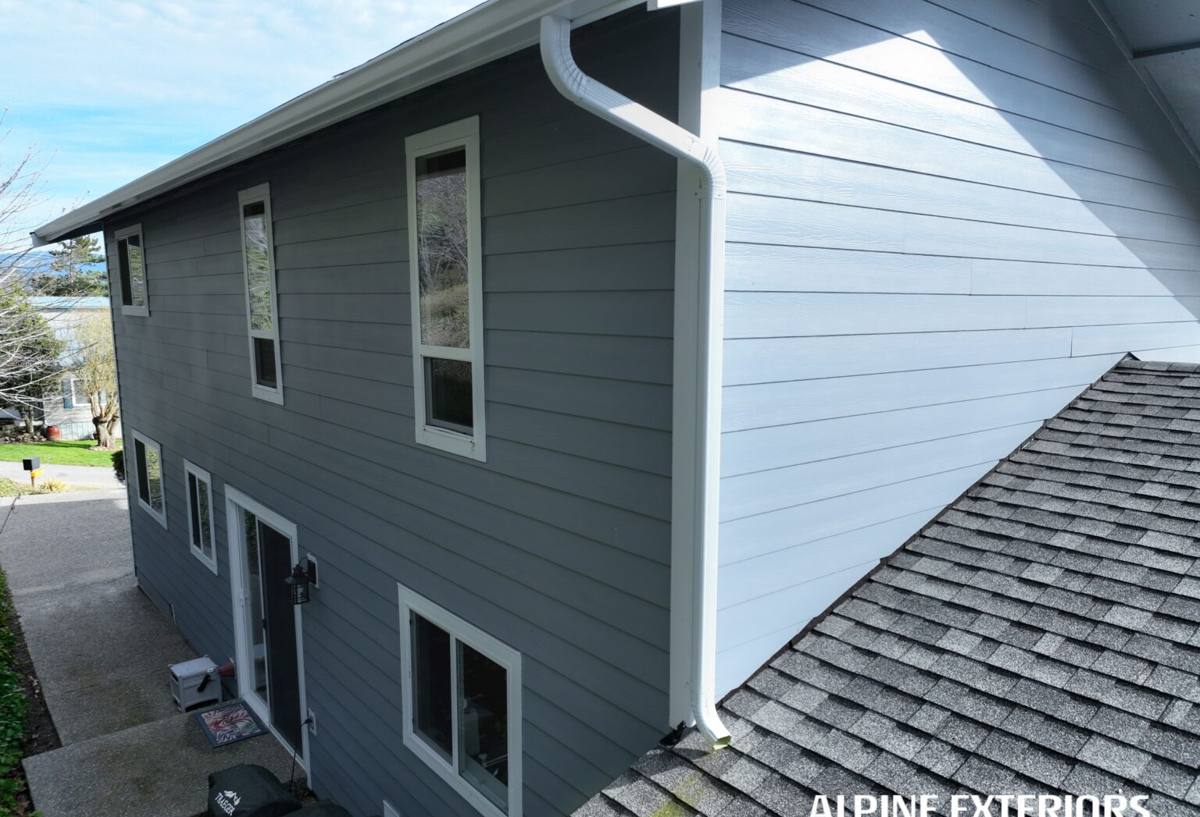
What Blaine Homes Need From an Asphalt Shingle Roof
Wind and Wind-Driven Rain
Homes closer to the water take wind from a different direction and intensity than homes tucked back among trees, and that matters for shingle roofing. Wind-driven rain doesn't just fall on a roof — it gets pushed sideways and upward under shingle edges, ridge caps, and around any flashing that isn't sealed correctly. A shingle roof that would perform fine in a calmer, inland setting can leak within a season or two on a more exposed Blaine property if the installer didn't account for that wind direction.
Salt Air and Metal Components
Asphalt shingles themselves aren't particularly bothered by salt air, but the metal parts of a roofing system — flashing, drip edge, nails, vents, and fasteners — are. Standard galvanized components corrode faster in a marine environment than they would twenty miles inland. We factor that into material choice on every Blaine job, because a roof is only as reliable as its weakest metal part, no matter how good the shingle is.
Shade, Moisture, and Moss
A lot of Blaine properties have mature trees or sit close enough together that part of the roof rarely sees direct sun, especially north-facing slopes. Combined with our long wet season, that shade turns into a long moss and algae season. Moss isn't just a cosmetic issue — it holds moisture against the shingle surface, works its way under tabs, and lifts shingles enough for wind and rain to get underneath.
What a Correct Asphalt Shingle Roofing Job Actually Involves
A shingle roof looks simple from the ground, but the parts you can't see from the driveway are what determine whether it lasts fifteen years or thirty. Here's what we treat as non-negotiable on every job:
Full Tear-Off and Deck Inspection
We don't install a new layer over old, failing shingles. Tear-off lets us actually see the roof deck — soft spots, old water staining, and rot that's often invisible until the old material is gone. In a climate that stays wet as long as ours does, hidden deck damage turns up often enough that skipping this step is a false economy.
Underlayment Built for a Wet Climate
Underlayment is the roof's backup plan if wind or rain ever drives moisture past the shingles. We use synthetic underlayment sized for our wet season, with added ice-and-water membrane at eaves, valleys, and any low-slope transitions — the places where standing water and wind-driven rain cause the most trouble.
Flashing and Sealing at Every Penetration
Chimneys, vents, skylights, and wall-to-roof transitions are where the large majority of shingle roof leaks actually start, not in the open field of shingles. We flash these areas correctly the first time, using corrosion-resistant metal suited to a coastal setting rather than the cheapest stock option.
Attic and Roof Ventilation
A shingle roof needs balanced intake and exhaust ventilation to move moisture out of the attic before it condenses on the underside of the deck. In a humid, marine climate, poor ventilation quietly rots a roof deck from underneath, well before anything looks wrong on the surface above.
Fastening and Nailing Pattern
A shingle's wind rating is only as good as its installation. Every manufacturer specifies an exact number of nails and placement for each shingle, and that pattern shifts based on roof pitch and wind exposure. Skipping nails or placing them too high on the shingle is one of the more common shortcuts in this trade, and it's invisible once the roof is finished — until a storm peels back shingles that should have stayed put. We follow the manufacturer's fastening schedule on every job, not the minimum needed to pass a quick visual check.
Choosing a Shingle That Can Handle This Environment
Not every asphalt shingle product is built the same, and the differences matter more here than they would in a drier climate. The table below covers the broad categories we typically walk through with Blaine homeowners.
| Shingle Type | Typical Lifespan | Moss/Algae Resistance | Best Fit |
|---|---|---|---|
| Standard 3-tab | 15-20 years | Low unless treated | Budget-conscious jobs, less shaded roofs |
| Architectural (laminated) | 25-30 years | Moderate to good with algae-resistant granules | Most Blaine homes, especially shaded or water-exposed sites |
| Algae-resistant (copper/zinc granule) | 25-30+ years | Best available in asphalt shingles | Heavily shaded lots, north-facing slopes, chronic moss history |
We lean toward algae-resistant architectural shingles on most Blaine jobs — not because it's the highest-margin option, but because the moss and algae resistance built into the granules genuinely cuts down how often a roof needs cleaning or early shingle replacement in a shaded, wet setting like this one.
Our Process, Start to Finish
- On-site inspection: We walk the roof itself, not just the ground, and check deck condition where accessible along with ventilation, flashing, and any existing moss or moisture damage.
- Honest scope and estimate: You get a written estimate spelling out materials, tear-off, underlayment, flashing, and ventilation work — no vague line items.
- Material selection: We talk through shingle options based on your roof's sun exposure, slope, and how long you plan to stay in the home.
- Tear-off and deck repair: Old roofing comes off, the deck gets inspected, and any soft or rotted sections are replaced before anything new goes down.
- Installation: Underlayment, ice-and-water membrane at vulnerable areas, flashing, shingles, and ridge components go on in that order, to manufacturer spec.
- Final walkthrough and cleanup: We check the finished roof with you, clean up debris and fasteners from the yard, and go over basic care.
Timing a Reroof Around Our Wet Season
Asphalt shingles and the underlayment beneath them need a dry deck to install correctly, and the shingles themselves are temperature-sensitive. The adhesive strips that bond each course to the one below need enough warmth and sun exposure to soften and seal — which is part of why a roof installed during the coldest, wettest stretch of the year may not seal down fully until the following spring. We watch the weather and plan Blaine tear-offs around realistic dry windows instead of promising a start date and then racing to keep tarps over an open deck. If your roof is actively leaking, we can usually get emergency tarping or a targeted repair done quickly regardless of season; a full tear-off and replacement gets scheduled with the weather in mind.
Moss, Algae, and Keeping a New Roof Looking Right
A correctly installed roof with the right shingle still benefits from a bit of seasonal attention in a climate like ours. This is the short list we give Blaine homeowners after a new install:
- Keep overhanging branches trimmed back so more of the roof gets sun and airflow.
- Clear gutters at least twice a year — clogged gutters hold water against the lower shingle courses.
- Never pressure-wash a shingle roof; it strips granules and shortens shingle life.
- Have visible moss removed gently, with a soft brush or an approved treatment, before it spreads under the tabs.
- Watch for granules collecting in gutters or downspouts — that's a sign of shingle wear worth having looked at.
- Schedule a quick roof check after any unusually heavy windstorm off the water.
Why Hiring a Crew That Already Works Blaine Matters
Roofing crews that mostly work drier, inland areas don't always plan for what a marine climate does to a roofing system over time. We're a Ferndale-based crew that regularly works Blaine and the surrounding Whatcom County coastline, so the underlayment upgrades, corrosion-resistant flashing, and moss-resistant shingle choices described above aren't upsells we're pitching — they're what we've found actually holds up out here. That familiarity also means we're not learning your neighborhood's wind patterns or drainage quirks on your dime, on your roof.
What This Kind of Job Typically Costs
Every roof is different, and we won't put a number on yours without seeing it, but a few factors consistently move the price on Blaine shingle roofing projects.
| Factor | Why It Matters |
|---|---|
| Roof size and number of slopes | More squares and more valleys or hips mean more material and labor |
| Deck condition | Rotted or soft sheathing found at tear-off adds repair cost |
| Shingle grade chosen | Standard 3-tab costs less upfront than architectural or algae-resistant lines |
| Roof pitch and access | Steep or hard-to-access roofs take longer and need more safety setup |
| Existing layers | Removing multiple old roofing layers adds tear-off time |
Broadly speaking, a full asphalt shingle replacement on an average Blaine home runs into the several-thousand to low-five-figure range depending on those factors. We'll give you a firm, itemized number after an actual look at your roof, not a phone-quote guess.
If your Blaine roof is showing moss, missing granules, or you just want an honest read on how much life it has left, we're happy to take a look. Fill out the form below for a free, no-pressure estimate from a crew that already knows this stretch of Whatcom County.