 Ferndale Siding
 Why Siding Replacement Looks Different in Bellingham
Bellingham sits close enough to Bellingham Bay and the Salish Sea that homes here deal with a combination of weather stresses that inland Whatcom County properties don't see nearly as often. Salt-laden air moves in off the water, wind-driven rain comes at siding sideways rather than straight down for much of the fall and winter, and the shaded, damp yards that make this area beautiful also grow moss on anything that holds moisture. A siding replacement in Bellingham has to be planned around all three of those realities at once, not just swapped out because the old material looks tired.
We work on homes throughout Bellingham and the surrounding Ferndale area regularly, and the pattern is consistent: siding failures here are rarely about one bad storm. They're about years of moisture finding small gaps, wood-based products swelling and drying repeatedly, and moss holding water against a wall longer than the material was ever designed to tolerate.
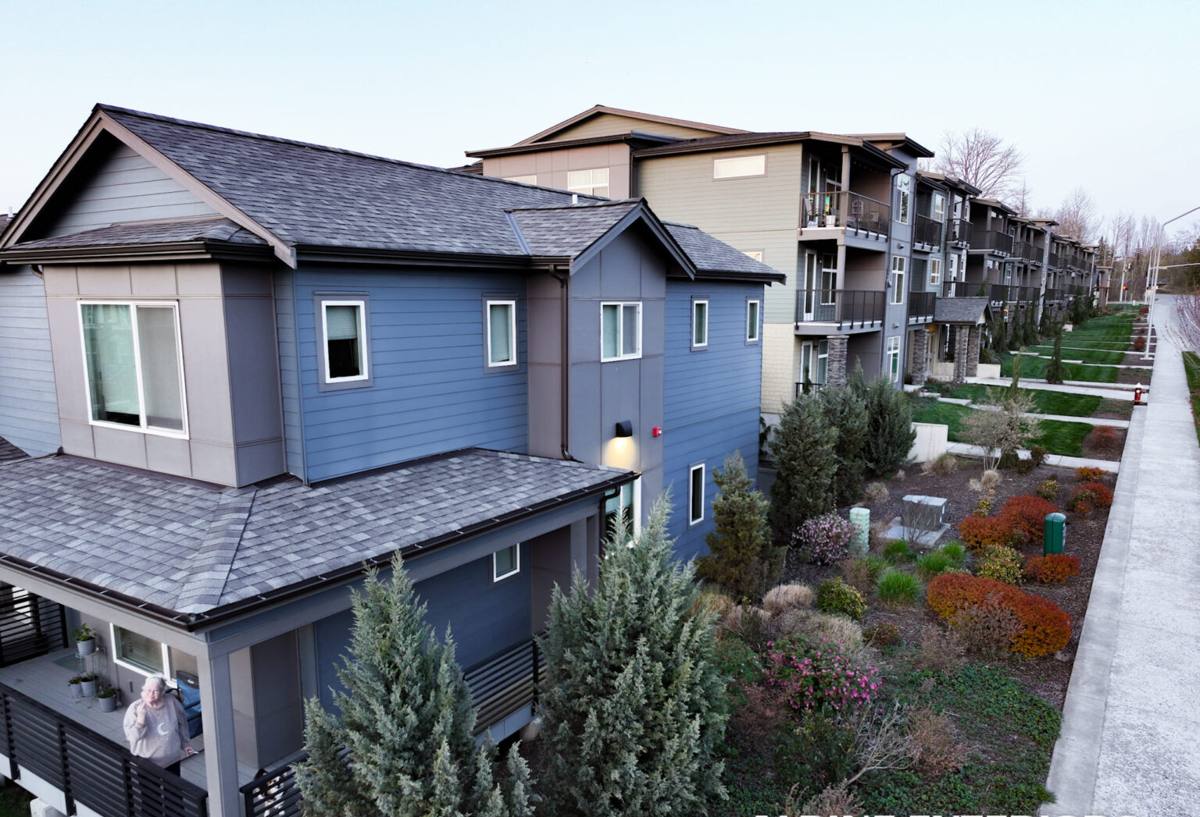
Signs Your Bellingham Home Needs Replacement, Not Just Repair
Not every siding problem calls for a full tear-off. But there's a point where patching stops making sense and full replacement is the more honest recommendation. Watch for:
- Soft or spongy spots when you press on siding, especially near the bottom courses or under windows
- Paint that won't hold longer than a couple of years no matter how well it's prepped
- Persistent moss or dark streaking that comes back within months of cleaning
- Visible warping, cupping, or separation at seams and corners
- Interior signs — musty smell, staining on drywall, or trim that's rotting from the outside in
- Siding that's original to a home built more than 20-25 years ago in wood-based or older composite product
If you're seeing two or more of these, especially on the north or west-facing walls that take the brunt of Bellingham's weather, it's worth a real inspection before spending more money on repairs to a system that's already failing underneath.
What This Climate Actually Demands From a Siding System
Salt Air
Homes closer to the water deal with airborne salt that settles on exterior surfaces and accelerates the breakdown of fasteners, caulking, and paint film. Over time this shows up as premature fading, chalking, or corrosion at nail heads and trim connections — problems that are hard to see until the finish has already started to fail.
Driving Rain
Wind off the bay pushes rain into laps, seams, and butt joints instead of letting it run straight down the wall. Any siding system with weak drainage behind it, or house wrap that isn't detailed correctly at penetrations, will eventually let moisture behind the cladding — and once that happens, the damage is happening where you can't see it.
Moss Season
Bellingham's long wet season, mild temperatures, and shaded lots are close to ideal moss-growing conditions. Moss holds water directly against a wall surface for months at a time. Materials that absorb moisture or swell when wet are especially vulnerable; materials that stay dimensionally stable and don't feed organic growth hold up far better.
Why We Install Only James Hardie Fiber Cement
We made a deliberate decision to install James Hardie fiber cement siding exclusively — not vinyl, not LP SmartSide, not primed wood products. That's not a marketing position, it's a response to what we consistently see happen to other materials in exactly this climate.
Vinyl siding is affordable and low-maintenance in mild, dry climates, but it's a petroleum-based product that expands and contracts with temperature and can become brittle over time, and it typically relies on lap joints and trim pieces that give wind-driven rain more opportunities to get behind the wall. Wood-based composite siding products perform well when the factory sealed edges and finish stay perfectly intact, but any cut edge, nail penetration, or finish breach exposed to Bellingham's rain and humidity is a moisture entry point, and once a wood-based product absorbs water it doesn't fully recover.
James Hardie fiber cement is cement, sand, and cellulose fiber — it doesn't rot, it isn't a food source for moss or mold, and it holds its shape in wet-dry cycles far better than wood-based or vinyl alternatives. Hardie's HZ5 product line is engineered specifically for climates with prolonged moisture exposure, which describes Whatcom County well. It comes with a factory-applied ColorPlus finish baked on under controlled conditions, so the color and protective topcoat aren't dependent on job-site weather during installation, and it carries a strong transferable limited warranty when installed to Hardie's specifications.
None of this means fiber cement is magic. It still requires correct installation — proper clearances, flashing, and fastening — to deliver on that durability. That's exactly why we treat installation as seriously as the product choice itself.
Siding Options Compared for This Climate
| Factor | Vinyl | Wood-Based Composite | James Hardie Fiber Cement |
|---|---|---|---|
| Moisture resistance | Doesn't absorb, but seams can leak | Vulnerable at cut edges/breaches | Non-absorbent, dimensionally stable |
| Moss/organic growth | Can host surface growth | More susceptible if finish fails | Not an organic food source |
| Salt air durability | Fasteners/finish can degrade | Finish breakdown accelerates decay | Factory finish holds up well |
| Fire resistance | Combustible | Combustible | Non-combustible |
| Typical lifespan (installed to spec) | 20-30 years | 20-30 years | 30-50+ years |
What a Correct Bellingham Siding Job Actually Involves
The siding itself is only part of the equation. In a climate that drives rain sideways and grows moss on anything damp, the details behind and around the siding matter as much as the panels themselves:
- Full tear-off and inspection — removing old siding to check sheathing, framing, and any existing water damage before it's covered up again
- Repair of any rotten or compromised sheathing — installing over damaged substrate just locks the problem in
- Correct weather-resistive barrier installation — house wrap lapped and taped properly, especially around windows, doors, and penetrations
- Rainscreen or proper drainage gap where called for — giving any moisture that does get behind the cladding a way to drain and dry
- Flashing at every horizontal transition — window heads, trim boards, and roof-to-wall intersections are where driving rain finds its way in
- Hardie-specified fastening and clearances — correct nail placement, gaps at grade and roof lines, and joint treatment per manufacturer instructions
- Final finish and caulking — using products rated for this climate, not generic fillers
Skipping any one of these steps is how a "new" siding job ends up with the same moisture problems as the old one, just hidden behind a fresh face for a few years.
Our Process for Bellingham-Area Projects
We start with an on-site inspection and walk the exterior with you, pointing out what we're seeing and why. If replacement makes sense, we put together a written scope that covers material, any sheathing repair allowance, and the specific Hardie products and colors that fit the home. Once work begins, we handle tear-off, substrate repair, weather barrier and flashing work, and installation to Hardie's specifications, then walk the finished job with you before we consider it done. We keep the schedule realistic around Bellingham's wet-season timing so the home isn't left exposed longer than necessary.
Cost Factors for Siding Replacement Here
| Factor | How It Affects Cost |
|---|---|
| Home size and wall complexity | More corners, gables, and dormers mean more cutting and detail work |
| Extent of existing damage | Rotten sheathing or framing found during tear-off adds repair cost |
| Hardie product line and profile | Lap siding, shingle-style panels, and trim packages vary in price |
| Trim and accessory scope | Fascia, soffit, and trim replacement alongside siding adds to the total |
| Access and site conditions | Tight lots, second stories, and landscaping can affect labor time |
We won't quote a number without seeing the home, but these are the factors that actually move the price, and we'll walk through them with you during the estimate.
Why a Crew That Already Works in Bellingham Matters
A contractor who works this specific area regularly already knows which walls take the worst of the wind-driven rain, how aggressively moss comes back on shaded north sides, and what kind of moisture exposure a home near the water deals with compared to one further inland in Ferndale. That familiarity shows up in the details — where extra flashing attention goes, how drainage is handled, and which parts of a home need the most conservative approach. It's the difference between a crew following a generic install guide and one that's seen how these choices actually hold up through a Whatcom County winter.
If your Bellingham home needs new siding, we're happy to take a look and give you a straightforward, no-pressure estimate — no obligation, just an honest read on what your home needs and what it would take to do it right.