 Ferndale Siding
 Bellingham's Climate Is Rough on Ordinary Siding
Homes in and around Bellingham sit close to the water and take weather from several directions at once. Salt-laden air drifts in off the bay, driving rain comes through on winter storms, and the region's long, wet, low-light season keeps exterior surfaces damp for weeks at a stretch. That combination is a tough test for any siding material, and it's why so many homes in this part of Whatcom County show early paint failure, swelling, soft trim, or moss creeping up the north and west walls within just a few years of installation.
Fiber cement siding was engineered specifically for climates like this. It doesn't rely on a paint film alone to keep water out, it doesn't feed mold and moss the way wood fiber does, and it holds its shape and color through repeated wet-dry cycles far better than vinyl or engineered wood products. For a Bellingham home, that's not a cosmetic upgrade — it's the difference between siding that needs attention every few years and siding that gets checked off the maintenance list for a decade or more.
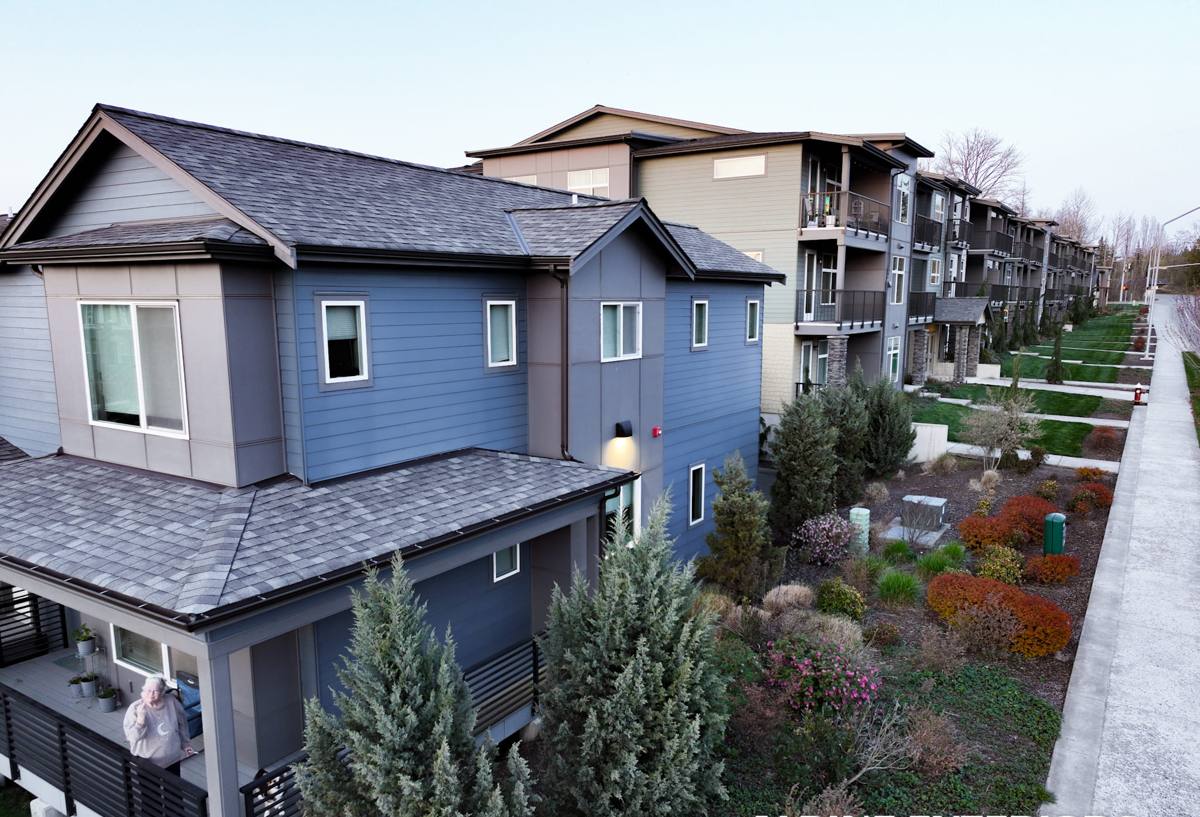
What Local Homes Actually Need From Their Siding
Every siding job in this area has to answer the same three questions: how will it handle standing moisture, how will it handle salt exposure, and how will it resist moss and algae growth on shaded or north-facing walls. A product that fails any one of those three tends to fail visibly and fairly fast here.
Moisture Management
Bellingham gets sustained rain events, not just short showers. Siding needs to shed water quickly and, just as importantly, allow any moisture that does get behind the cladding to dry out instead of sitting against the wall sheathing. This is as much about the installation detailing — flashing, gaps, drainage planes — as it is about the siding material itself.
Salt Air Exposure
Proximity to the water means airborne salt settles on exterior surfaces and accelerates corrosion of fasteners and degradation of some coatings. Fiber cement's cementitious composition doesn't corrode, and factory-applied finishes hold up to salt exposure far better than field-applied paint on wood or the printed finish on lower-grade composite products.
Moss and Algae
Shaded, north- and west-facing walls in this climate stay damp long enough for moss and algae to take hold on porous or textured surfaces. Wood siding, primed spruce, and some composite products are especially prone to this. A dense, factory-finished fiber cement surface gives moss far less to grip onto and makes it much easier to rinse off before it becomes established.
Why We Install Only James Hardie Fiber Cement
We standardized on James Hardie products because they consistently perform in exactly the conditions Bellingham and greater Ferndale throw at exterior walls. That's not a brand preference for its own sake — it comes down to a few concrete factors:
- Non-combustible core — fiber cement doesn't burn, unlike wood-based and many polymer-based siding products.
- ColorPlus factory finish — baked-on color and a clear coat applied under controlled conditions, which resists fading and chipping far better than site-applied paint.
- Climate-engineered HZ product lines — Hardie manufactures different formulations for different moisture and freeze exposure, and the HZ5 line is built for the wetter Pacific climate zone that Whatcom County falls into.
- Proven long-term performance — decades of real-world installations in similar coastal Pacific Northwest conditions, not a newer product still building a track record.
- A strong transferable warranty — meaningful protection for the homeowner, and it stays meaningful if the home changes hands.
We don't install LP SmartSide, vinyl, Cemplank, Allura, primed spruce, or cedar. Some of those are reasonable products in the right application, but none of them match fiber cement's combination of moisture tolerance, non-combustibility, and finish durability for this specific climate, and we'd rather stand fully behind one system we trust than split our expertise across several.
What a Correct Fiber Cement Installation Involves
Fiber cement siding is only as good as the installation behind it. A rushed or generic install can undercut everything the material is capable of, especially in a wet climate where water intrusion behind the cladding is the real long-term risk. A correct install in this area includes:
- A drainage plane and weather-resistive barrier installed and lapped correctly, so any moisture that gets behind the siding has a path to escape.
- A rain screen gap where the wall assembly calls for it, keeping the back of the siding ventilated instead of sitting flush and damp against the sheathing.
- Flashing at every window, door, deck ledger, and roof-to-wall intersection — the points where the large majority of siding leaks actually start.
- Manufacturer-specified fastener type, spacing, and placement, since incorrect fastening is one of the most common causes of premature fiber cement failure.
- Proper joint treatment and caulking limited to where it belongs — over-reliance on caulk to compensate for poor flashing is a common shortcut we avoid.
- Correct clearance from grade, decks, and roof lines so the siding never sits in standing water or constant splash-back.
None of this is unique to Bellingham, but it matters more here than in a drier climate, because installation mistakes that might go unnoticed for years elsewhere tend to show up fast when the wall assembly is wet more often than it's dry.
Our Process for Bellingham Jobs
We approach every fiber cement job in this area with the local climate as a starting assumption, not an afterthought.
1. On-Site Assessment
We look at the home's exposure — which walls take direct rain, which stay shaded and damp, proximity to the water, existing moss or moisture damage, and the condition of the sheathing underneath the current siding.
2. Product and Line Selection
We select the Hardie plank profile, texture, and climate-appropriate HZ line for the home, and go over ColorPlus finish options that hold up well against salt air and UV exposure.
3. Tear-Off and Sheathing Check
Old siding comes off and we inspect the sheathing underneath for rot or existing water damage before anything new goes on — covering up a problem is worse than finding it.
4. Weather Barrier and Rain Screen Install
We install the drainage plane, flashing, and rain screen components to spec, since this hidden layer is what actually protects the wall long-term.
5. Siding Installation
Panels or planks go on to manufacturer fastening specifications, with attention to butt joints, corners, and penetrations.
6. Final Walkthrough
We review the finished work with the homeowner and go over basic care so the siding performs the way it's designed to for the long haul.
Fiber Cement vs. Other Siding Options in This Climate
| Factor | James Hardie Fiber Cement | Vinyl | Wood / Primed Spruce | LP SmartSide |
|---|---|---|---|---|
| Moisture tolerance | High | Moderate (can trap moisture behind panels) | Low — swells and rots if not maintained | Moderate — engineered wood core is moisture-sensitive at cut edges |
| Moss/algae resistance | High — dense, smooth factory finish | Moderate | Low — porous surface, feeds growth | Moderate |
| Salt air performance | High | Can become brittle over time | Low without frequent refinishing | Moderate |
| Fire resistance | Non-combustible | Combustible | Combustible | Combustible |
| Finish durability | Factory-baked ColorPlus finish | Can fade, doesn't repaint well | Requires repainting every few years | Field-applied or factory finish, wood-based substrate |
This isn't a claim that other products can't work anywhere — it's a summary of why they're a harder bet specifically in a marine, wet, moss-prone climate like Bellingham's.
What Fiber Cement Siding Costs to Consider
| Cost Factor | Why It Matters Here |
|---|---|
| Home size and wall complexity | More corners, gables, and trim details mean more cutting and detailing time |
| Tear-off and sheathing repair | Homes with existing moisture damage from prior siding may need sheathing work before new siding goes on |
| Product line and texture | HZ5 planks, panel styles, and ColorPlus finish options vary in material cost |
| Trim and accessory work | Fascia, soffit, and trim in matching fiber cement adds cost but keeps the whole exterior consistent |
| Access and site conditions | Sloped lots, limited access, or landscaping near the walls can affect labor time |
We give firm, itemized quotes after an on-site look at the home — broad ranges without seeing the actual walls and trim aren't useful to a homeowner trying to budget accurately.
Maintenance in a Wet, Salt-Exposed Climate
Fiber cement is low-maintenance compared to wood or vinyl, but "low-maintenance" isn't "no-maintenance" in this climate. A simple annual routine keeps it performing for decades:
- Rinse the exterior once or twice a year, paying attention to shaded north and west walls where moss and algae are most likely to start.
- Check caulking at windows, doors, and trim joints for cracking or separation and have it addressed before water gets behind it.
- Keep gutters clear so overflow isn't running down the siding face during heavy rain.
- Trim back landscaping and tree branches that keep siding in constant shade and moisture.
- Watch for any soft spots, staining, or bubbling paint near ground level, deck ledgers, or roof intersections — these are the areas most likely to show a flashing or drainage problem early.
Why Hiring a Crew That Already Works Bellingham Matters
A siding crew that regularly works in and around Bellingham and Ferndale already knows which walls on a typical home take the worst weather, how local moisture and moss issues tend to show up, and what detailing actually holds up under Whatcom County conditions year after year. That local pattern recognition shows up in small decisions — where extra flashing gets added, how a rain screen gap is handled at a tricky transition, which walls get flagged for closer inspection during tear-off — that a crew unfamiliar with this specific climate might not think to make.
It also means we're a known, reachable local business if a question comes up five or ten years down the road, not a name in an app that finished a job and moved on to another region.
Get a Free Estimate for Your Bellingham Home
If your siding is showing moss, fading, soft trim, or you're planning ahead for a replacement, we're happy to take a look and walk you through what a correctly installed James Hardie system would involve for your home. The estimate is free and there's no pressure — fill out the form below to get started.