 Ferndale Siding
 Board & Batten Siding, Built for a Pacific Northwest Wall
Board and batten is one of the oldest siding patterns in the Pacific Northwest, and it has never gone out of style around Bellingham. Wide vertical boards run the height of the wall, and narrower battens cover the seams between them. The result is a clean, strong vertical line that suits craftsman homes, farmhouse-style new builds, and additions that want to stand apart from the lap siding on the rest of the block. It also happens to be a smart technical choice for this part of Whatcom County, where the siding on a house has to shed water that comes at it sideways more often than it falls straight down.
We install board and batten as one option within our James Hardie fiber cement lineup, and this page focuses specifically on what that looks like on Bellingham homes — the conditions your walls actually face, what a correct installation involves, and why the details matter more here than they would in a drier climate.
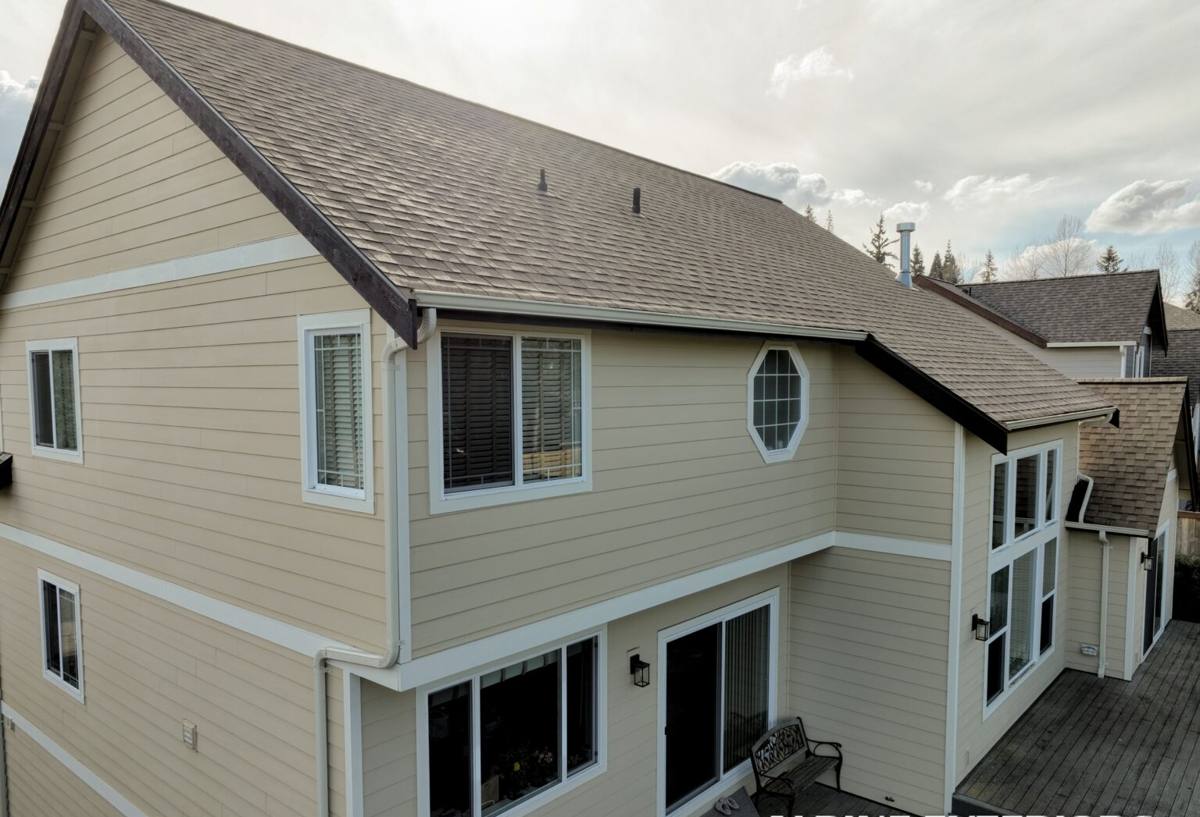
What Bellingham Siding Is Actually Up Against
Bellingham sits close enough to Bellingham Bay that salt-laden air reaches homes well inland, especially on windier days. That air is hard on unprotected fasteners, raw wood ends, and any siding material that depends on paint film alone to keep moisture out. Add in driving rain — rain that comes in at an angle off Puget Sound weather systems rather than falling straight down — and you get water pressure against vertical seams and lap joints that a lot of siding details simply weren't built to handle.
Then there's moss. Whatcom County's tree cover and persistent damp shoulder seasons mean north- and west-facing walls, and anything shaded by mature trees, stay wet longer after every storm. Moss and algae don't just look bad — they hold moisture against the siding surface for extended periods, which is exactly the condition that causes problems for materials that swell, rot, or lose their finish when they can't dry out between rain events.
None of this is unique to board and batten. It's the reality for every siding style in this area. But board and batten has fewer horizontal laps than traditional siding, which is an advantage — fewer horizontal shelves for water to sit on — provided the vertical seams, the batten fastening, and the bottom terminations are detailed correctly. Get those wrong and you've traded one weak point for another.
What a Correct Board & Batten Installation Actually Involves
Board and batten looks simple from the curb — boards and strips, painted or factory-finished. What's underneath is where the job is won or lost, especially in a climate that stays wet as long as this one does.
The drainage plane comes first
A weather-resistive barrier goes over the sheathing before any siding touches the wall. Behind that, we install vertical furring strips to create a rainscreen gap — a continuous air space between the back of the siding and the barrier. That gap lets any moisture that does get past the siding drain out and lets the wall assembly dry, instead of trapping water against the sheathing where it can sit for weeks during a wet Whatcom County spring.
Flashing at every transition
Windows, doors, rooflines, and any horizontal trim need proper flashing and kick-out details so driving rain is directed away from the wall rather than funneled behind it. This is the step that gets skipped most often on rushed jobs, and it's the step that causes the most expensive hidden damage.
Seams, fasteners, and battens
Vertical board seams are backed and fastened to manufacturer spec, with the batten strips covering each seam and fastened into structural framing — not just into the boards themselves. Fastener heads get set correctly and, on a coastal-influenced climate like this one, corrosion-resistant fasteners aren't optional. Gaps are left where the product calls for expansion, and every cut end gets sealed before it goes on the wall, since a raw, unsealed end grain is the fastest way for moisture to work its way into any siding board.
Clearance and terminations
Bottom edges are held above grade, decks, and roof lines with the clearance the manufacturer specifies, so splash-back and ponding water don't sit against the siding through a long wet season.
The James Hardie System We Install
We install James Hardie fiber cement exclusively, and for board and batten that typically means HardiePanel vertical siding paired with HardieTrim battens, finished in a factory-applied ColorPlus finish. A few reasons this combination holds up specifically where you live:
- Non-combustible material that doesn't rot, delaminate, or feed moss and mildew the way wood-based products can.
- Factory-baked ColorPlus finish that's cured harder than a field-applied paint job and backed by its own finish warranty, so color stays consistent through years of grey, wet weather.
- HZ5 climate-engineered formulation, built specifically for regions with sustained moisture exposure rather than a one-size-fits-all product.
- Dimensionally stable boards that hold their seams tighter over time than products prone to swelling and shrinking with moisture cycles.
- A strong, transferable manufacturer warranty that protects the investment if you sell the home.
We don't install LP SmartSide, vinyl, Cemplank, Allura, primed spruce, or cedar board and batten. Each of those has real strengths, but they also carry moisture-management or maintenance trade-offs that we don't think hold up well against a Bellingham winter year after year. James Hardie is what we've standardized on, and it's the only product line we put our name behind.
Board & Batten vs. Traditional Lap Siding for a Bellingham Home
Both styles are available in James Hardie fiber cement, and both perform well when installed correctly. The right choice usually comes down to the look you want and a few site-specific factors.
| Factor | Board & Batten | Lap Siding |
|---|---|---|
| Visual style | Vertical, farmhouse/craftsman lines | Traditional horizontal shadow lines |
| Horizontal water shelves | Fewer — vertical seams instead of stacked laps | Each course creates a horizontal edge |
| Best suited to | Gable ends, accent walls, full-house farmhouse styling | Whole-house classic siding replacement |
| Installation sensitivity | Seam sealing and batten fastening are critical | Lap overlap and nailing height are critical |
| Moss/algae exposure on shaded walls | Performs well with correct rainscreen detailing | Performs well with correct rainscreen detailing |
Many Bellingham homeowners mix the two — board and batten on a gable end, entry feature, or addition, with lap siding across the rest of the house. That's a detail we work out with you at the estimate, based on the home's actual exposure and your goals for the project.
Our Process, Start to Finish
Every job starts with a walk-around of the house, not just a look at the siding you can see. We check for existing moisture damage, moss buildup patterns, roofline flashing, and how much shade and wind exposure each wall gets — that tells us where extra attention is needed before a single board goes up.
- On-site assessment and measurement, including a look at trim, flashing, and any areas with existing moss or water staining.
- Removal of old siding where needed, with the sheathing inspected for hidden rot or damage before we cover it back up.
- Weather-resistive barrier and rainscreen furring installed correctly, with flashing detailed at every window, door, and roofline.
- James Hardie board and batten installed to manufacturer spec — proper fastening, sealed cut ends, correct clearances.
- Trim, caulking, and touch-up work completed with quality sealants rated for this climate.
- Final walkthrough and cleanup, with the site left the way we found it.
Why a Crew That Already Works Bellingham Matters
Siding installation isn't just a spec sheet — it's judgment calls about a specific house, on a specific lot, in specific weather. A crew that already works Whatcom County knows which walls in this area tend to hold moss longest, how far driving rain pushes water up under trim during a bad storm off the Bay, and where the old fastening or flashing shortcuts from decades-old siding jobs tend to hide. That's the kind of thing you only learn by doing the work here repeatedly, not by reading an installation manual once.
It also matters for warranty protection. James Hardie's product warranty depends on the siding being installed to the manufacturer's specifications — the rainscreen gap, the fastening pattern, the clearances. A crew unfamiliar with this climate's demands can install siding that looks fine on day one but falls short of spec in ways that only show up after a few wet seasons, sometimes putting the warranty itself at risk.
Living With Board & Batten in a Moss-Prone Climate
A correctly installed James Hardie board and batten system is genuinely low-maintenance, but "low-maintenance" doesn't mean "no attention needed" in a climate like this one. A little seasonal care goes a long way toward keeping it looking right for decades.
- Rinse siding gently once or twice a year, especially on shaded or north-facing walls where moss and algae tend to establish first.
- Keep gutters clear so overflow doesn't run down the wall face during heavy rain events.
- Trim back trees and shrubs that keep a wall shaded and damp longer than the rest of the house.
- Check caulking at trim and seams every couple of years and have any cracked or missing sealant replaced before it becomes an entry point for water.
- Have a professional look at any area that develops a persistent damp patch, discoloration, or soft spot — catching it early is far cheaper than catching it late.
If you're weighing board and batten for a Bellingham home, we're happy to walk the property with you, point out what your specific walls are dealing with, and give you a straightforward, no-pressure estimate. There's a form below — reach out and we'll get you a time.