 Ferndale Siding
 Building New in Bellingham Means Building for Wet Weather From Day One
When a house is going up in Bellingham, the windows aren't a fix-it-later item — they're part of the weatherproofing system for the entire building envelope. Whatcom County sits in a marine climate that sends driving rain in off Bellingham Bay and the Strait of Georgia for months at a stretch, layered with salt-laden air near the water and long stretches of gray, damp weather that keep north-facing walls wet and shaded enough to grow moss. A new-construction window has to be flashed, sealed, and fastened correctly the first time, because by the time siding, trim, and paint go on, any shortcuts underneath are buried for good.
This page is specifically about installing windows into new framing in the Bellingham area — not swapping out old windows in an existing wall. The two jobs share a product category but almost nothing else in terms of technique, sequencing, or what can go wrong.
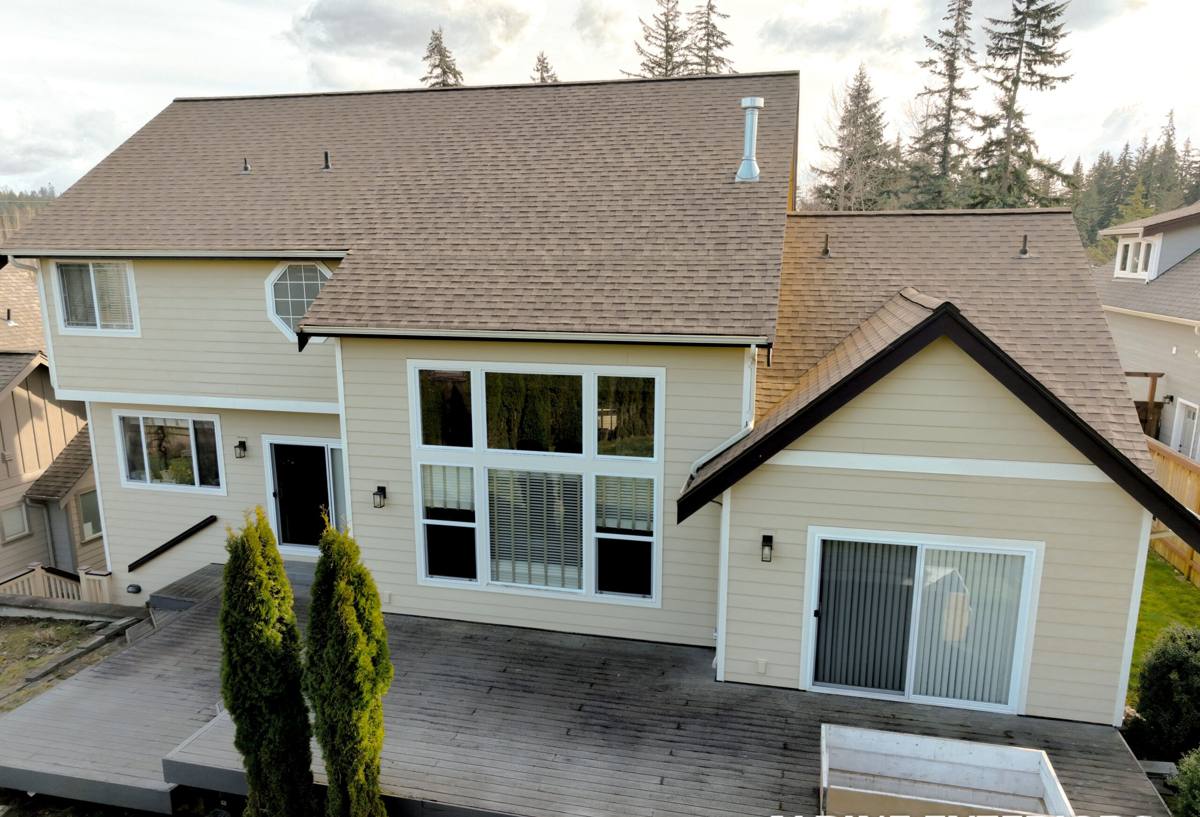
New-Construction Windows vs. Replacement Windows: Why the Distinction Matters
A new-construction window has a nailing fin (sometimes called a nail flange) around the perimeter of the frame. That fin gets fastened directly to the wall sheathing and integrated into the weather-resistive barrier (WRB) and flashing before any siding or trim covers it. A replacement window, by contrast, is built to fit inside an existing, already-finished opening without disturbing the exterior wall covering.
Installing a nail-fin window on a new build is a sequencing job as much as a carpentry job. It has to happen in the right order relative to the house wrap, flashing tape, and siding trades, or the whole point of the fin — a continuous, shingled drainage path for water — gets defeated. Get the order wrong and you can end up with a window that looks fine for years before a hidden leak shows up as rot in the framing.
Why This Matters More in Whatcom County Than in Drier Climates
In a dry inland climate, a mediocre flashing job might never get tested hard enough to fail. In Bellingham, wind-driven rain hits building envelopes from multiple directions over a wet season that runs most of the year. Marginal flashing work here doesn't stay marginal — it gets found.
What Bellingham Homes Specifically Need From Their New Windows
Three regional factors drive the decisions we make on a new-construction window job in this area:
- Driving rain resistance — wind off the bay pushes water sideways and upward against window openings, not just straight down, so flashing has to shed water in every direction, not just off the sill.
- Salt air exposure — homes closer to the water deal with airborne salt that accelerates corrosion on fasteners, hinges, and cheaper hardware over time.
- Extended damp and shaded conditions — Whatcom County's long moss season isn't just a roof problem. Window sills, trim, and the top of flashing details that stay damp and shaded can host moss and algae growth if drainage isn't designed to dry out between rain events.
None of these factors change the window product itself as much as they change the installation detailing and hardware choices around it.
Choosing Frame and Glass for a Wet Marine Climate
Frame material and glass package are builder and homeowner decisions, and we install what's specified. What we can offer is honest guidance on how each option tends to hold up in this specific climate.
| Frame Material | Moisture / Corrosion Behavior | Maintenance | Typical Cost Position |
|---|---|---|---|
| Vinyl | Won't rot or corrode; UV exposure over many years can affect color/finish | Low | Lower |
| Fiberglass | Very stable in wet and temperature-swing conditions; strong dimensional stability | Low | Mid to higher |
| Wood-clad | Exterior clad face resists weather well; any breach in cladding exposes wood beneath to rot | Moderate | Higher |
| Aluminum | Prone to corrosion in salt-air exposure unless properly coated; conducts cold, prone to condensation | Low to moderate | Varies |
For homes closer to the water, we also pay attention to hardware — hinges, locks, and cranks — since standard-grade hardware can pit or corrode faster under salt air than the frame material itself does. Stainless steel or marine-grade coated hardware is worth the small upcharge on exposed elevations.
Glass Packages: What to Ask For
Most new construction in this climate calls for double-pane, low-E glass with argon fill as the baseline, with U-factor and solar heat gain coefficient (SHGC) chosen to fit Washington's energy code requirements for our climate zone. On homes with large west- or water-facing glazing, we'll talk through whether an upgraded glass package makes sense for comfort and condensation control, not just code minimums.
What a Correct New-Construction Window Installation Actually Involves
The window itself is the easy part. The flashing sequence around it is where the job is won or lost, and it has to happen in a specific order:
- Rough opening is checked for size, square, and level before the window ever arrives on site.
- A sloped sill pan is installed at the bottom of the opening so any water that gets past the window has a dedicated path back outside, not into the wall cavity.
- The window is set into the opening, shimmed level and plumb, and fastened through the nail fin per the manufacturer's schedule.
- Flashing tape is applied in a shingle-style sequence — sides first, then head flashing last — so every layer overlaps the one below it, the same way roof shingles overlap.
- The weather-resistive barrier is lapped over the flashing at the top and sides, maintaining the same drainage-down principle through the rest of the wall assembly.
- Interior air sealing and exterior sealant are applied with a sealant compatible with both the window frame and the WRB — not just whatever caulk is on the truck.
Skipping the sill pan, reversing the flashing order, or using incompatible sealants are the three most common shortcuts we see on jobs we're called in to correct later. Every one of them is invisible once siding goes on.
A Practical Checklist for Homeowners and Builders
If you're supervising a build or just want to understand what "done right" looks like before the wall gets closed in, these are worth confirming:
- Sill pan flashing is present and sloped to drain outward, not just a flat strip of tape.
- Flashing tape is applied shingle-style (bottom to top, side to side) so upper layers overlap lower ones.
- Nail fin fasteners follow the window manufacturer's schedule, not a generic pattern.
- Sealant used at the interior and exterior is rated compatible with the window frame material.
- Hardware on water-facing or coastal-exposed elevations is corrosion-resistant, not standard grade.
- Photos or a walkthrough of the flashing are available before it's covered by siding — once it's closed in, it's not visually verifiable again without removing trim.
How We Work Alongside Your Builder or GC
On most new-construction jobs, we're one trade in a sequence that includes framing, house wrap, window install, and siding, often on a tight schedule set by the general contractor. Our process is built around fitting into that sequence cleanly:
- We coordinate directly with the builder on scheduling so windows go in at the right point relative to WRB installation — not too early, not after siding prep has already started.
- We confirm rough openings against actual window specs before install day, catching sizing mismatches while they're still cheap to fix.
- We document flashing details as we go, so there's a record of what's behind the siding if it's ever needed for warranty or resale purposes.
- We hand off a clean, ready-to-trim opening so the siding crew — whether that's us or another trade — isn't working around problems we created.
What Drives Cost on a New-Construction Window Job
Every build is different, but the same handful of factors move the price on new-construction window installation in this area:
| Cost Factor | Why It Matters |
|---|---|
| Number and size of openings | More openings and larger units mean more flashing detail work and labor hours, not just material cost. |
| Frame material and glass package | Vinyl, fiberglass, wood-clad, and upgraded glass packages carry different unit costs before labor. |
| Wall height and access | Second-story and vaulted openings need staging or lift access, which adds time and equipment cost. |
| Flashing and sill pan complexity | Standard rectangular openings are straightforward; bays, corners, and unusual shapes take more custom flashing work. |
| Coordination and schedule | Jobs that fit cleanly into the builder's existing schedule are more efficient than ones requiring return trips. |
Because so much of this depends on your specific plans and window schedule, we'd rather walk a set of drawings or a framed house with you than quote a number in the abstract.
Why a Crew That Already Works Bellingham Homes Is Worth Having on Site
Flashing details that work fine in a drier climate can fail here, and window specs that are overkill in eastern Washington can be underbuilt for a home two blocks from Bellingham Bay. A crew that installs windows across Whatcom County regularly has already seen how driving rain, salt air, and our long damp season actually behave against a building — not just how they're supposed to behave on paper.
That local pattern recognition shows up in small decisions: which elevations get upgraded hardware, where extra flashing overlap earns its keep, and which sealants actually stay flexible through a Bellingham winter instead of cracking. It also means familiarity with how local building departments in Bellingham and Whatcom County expect flashing and moisture details to be documented and inspected on new construction.
Get a Straight Answer on Your Project
If you're framing a new home or addition in the Bellingham area and want windows installed the way they should be for this climate, we're happy to walk your plans or your framed structure with you and give you a clear, no-pressure estimate. There's a form below — send us a few details about the project and we'll get back to you.