 Ferndale Siding
 Bellingham's Roof Climate: Salt Air, Driving Rain, and a Long Moss Season
Roofs in the Bellingham area take a different kind of beating than roofs almost anywhere else in the country. You've got salt-laden air moving in off Bellingham Bay and Puget Sound that quietly accelerates corrosion on exposed fasteners, flashing, and metal components. You've got driving, wind-blown rain that finds every weak seam, nail pop, and undersized flashing detail sooner or later. And thanks to heavy tree cover and a long wet season, most homes here deal with several months of active moss growth every single year, not just an occasional patch.
None of that is unusual for Whatcom County. It's just the reality of building and maintaining a roof in this part of Western Washington. A roof that would hold up fine in a dry climate can fail early here if it wasn't installed with these conditions in mind. That's the whole idea behind this page: what a roof replacement needs to actually deliver for a Bellingham-area home, and how we approach that job as a crew that already works in this climate day to day.
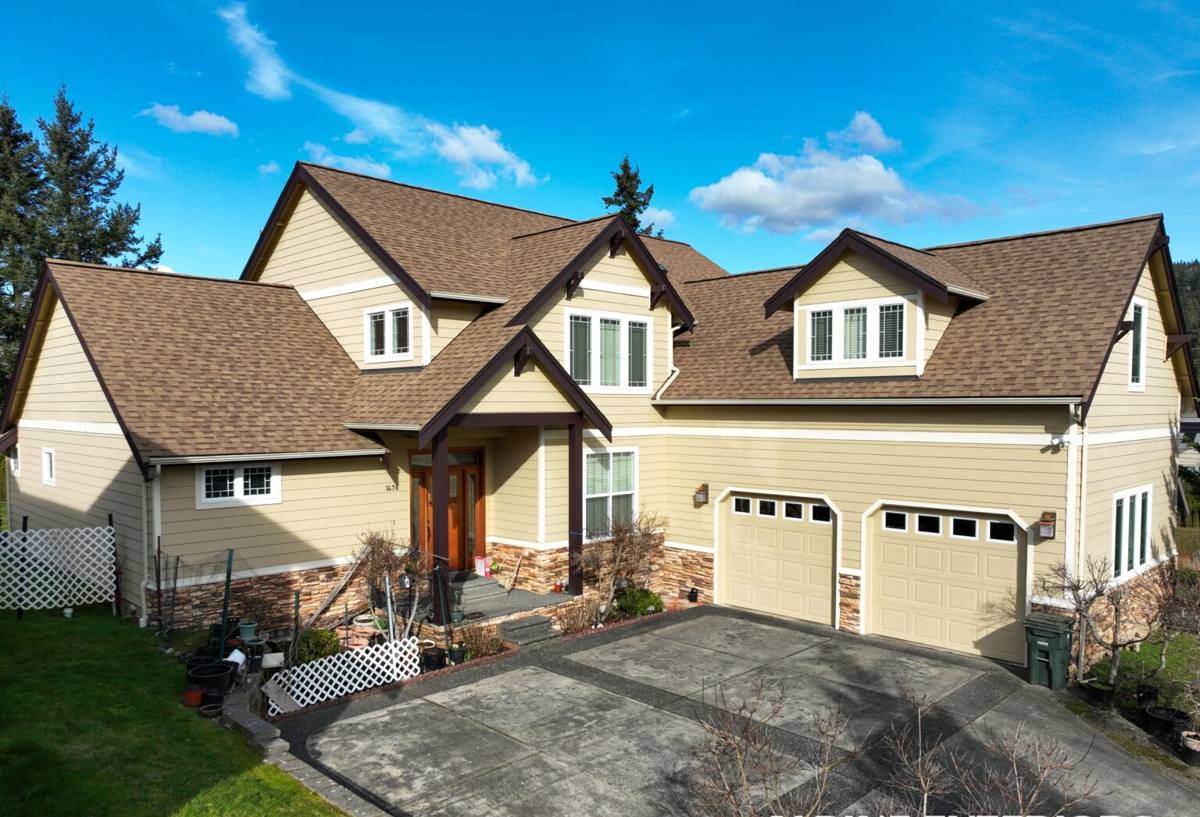
Signs Your Bellingham Roof Needs Replacement, Not Another Repair
Repairs make sense when a roof has isolated damage and the rest of the system is still sound. Replacement makes sense when the roof as a whole is wearing out. Here's what typically tips that decision one way or the other:
- Granules collecting in gutters or downspouts, or shingles that look patchy and bare in spots
- Shingles curling, cupping, or lifting at the edges instead of lying flat
- Thick moss mats holding moisture directly against the shingle surface, especially on north-facing or shaded slopes
- Soft, spongy spots when walking the roof, which usually means the decking underneath is compromised
- Daylight visible through the roof boards from inside the attic
- Rusted, cracked, or lifting flashing around chimneys, vents, and valleys
- Water stains on ceilings or attic insulation, even if they aren't actively dripping right now
- A roof that's already had two or more repairs in the last few years, or is close to its manufacturer's rated lifespan
If you're seeing two or three of these at once, that's usually a sign the roof is failing as a system rather than having one bad spot. That's when replacement stops being optional and starts being the more cost-effective path.
What a Correct Roof Replacement Actually Involves
A roof replacement is more than swapping old shingles for new ones. In a climate that sees this much rain and moss pressure, the parts you don't see matter as much as the shingles you do.
Tear-Off and Deck Inspection
We remove the old roofing down to the deck rather than layering over it. That's the only way to actually see what's underneath. Any soft, rotted, or delaminated decking gets identified and replaced before anything new goes down. Skipping this step is how a brand-new roof ends up failing early because it was installed over a weak substrate.
Underlayment and Flashing Built for Wet Climates
Underlayment is the roof's backup line of defense against wind-driven rain, and it matters more here than in drier regions. We use underlayment and ice-and-water protection at vulnerable areas like eaves, valleys, and roof-to-wall transitions. Flashing around chimneys, skylights, and penetrations gets properly formed and integrated with the underlayment and shingle courses, not just caulked over. Caulk is a maintenance item, not a waterproofing strategy.
Ventilation That Actually Works With Moss-Prone Roofs
Proper intake and exhaust ventilation keeps the roof deck at a more even temperature and moisture level, which reduces the damp, cool conditions moss and algae prefer, and helps prevent condensation issues in the attic. A roof that traps warm, moist air underneath it will grow moss and wear out faster no matter how good the shingles on top are.
Choosing a Roofing Material for Bellingham's Marine Climate
There's no single "best" roofing material for every home. The right choice depends on your budget, your roof's exposure to shade and moisture, and how long you want to go between maintenance cycles. Here's how the common options compare for this climate specifically.
| Material | Moss & Moisture Resistance | Maintenance Needs | Cost Tier |
|---|---|---|---|
| Standard 3-tab asphalt shingle | Fair — algae-resistant granules help, but flat profile holds more surface moisture | Periodic moss removal on shaded slopes | Economical |
| Architectural (laminate) asphalt shingle | Good — thicker profile sheds water and debris better than 3-tab | Occasional cleaning, longer intervals | Mid-range |
| Metal (standing seam or panel) | Very good — smooth, non-porous surface gives moss little to hold onto | Low; mainly fastener and sealant checks over time | Premium |
| Wood shake alternatives / composite shingle | Varies widely by product; needs careful detailing in a wet climate | Depends on manufacturer specifications | Mid to Premium |
We'll walk you through which option fits your roof's actual exposure — a heavily shaded, tree-covered slope has different needs than a sunny, open one, even on the same house.
Our Roof Replacement Process, Start to Finish
Inspection and a Written, Itemized Estimate
We start by physically walking the roof and the attic, not just looking from the ground. You get a written estimate that spells out material, scope, and any decking or ventilation work we expect to need, so there are no surprise line items once the crew is already on the roof.
Protecting Your Property During Tear-Off
Landscaping, siding, and windows get covered or protected before tear-off starts. Debris is contained and hauled off the same day whenever possible rather than left sitting on the property.
Installation Day
Deck repairs, underlayment, flashing, and the finish roofing material go down in that order, with attention to the details that matter most in a wet climate: valleys, penetrations, and transitions. We don't rush flashing work to hit a schedule.
Final Walkthrough and Cleanup
Once the roof is on, we walk the property with you, check the gutters and downspouts are clear, and do a magnetic sweep for stray nails. You should be able to see and understand exactly what was done and why.
What Affects the Cost of a Roof Replacement Here
Every roof is different, so exact pricing comes from an in-person estimate, but a few factors consistently move the number:
- Roof size and complexity — more valleys, dormers, and penetrations mean more labor and flashing work
- Roof pitch and access — steep or hard-to-reach roofs take longer and require more safety setup
- Existing layers — removing multiple old layers of roofing costs more than tearing off one
- Decking condition — rot or soft spots found during tear-off add material and labor
- Material choice — asphalt, architectural, and metal roofing sit at different cost tiers, as shown above
We'd rather walk you through these factors on your actual roof than throw out a number that doesn't hold up once we get up there.
Why a Crew That Already Works Bellingham and Ferndale Roofs Matters
A roofing crew that works this specific area regularly knows what to expect before the tear-off even starts. We know how quickly moss builds back on a shaded, tree-covered slope near the water versus an open, sunny roof further inland. We know that wind-driven rain off the Sound tests flashing and valley work harder than a calm, dry climate ever would. That familiarity shapes real decisions — where to add extra underlayment protection, which ventilation setup makes sense, and how to detail flashing so it holds up through another Whatcom County winter, not just looks fine on installation day.
It also matters after the job is done. If a question comes up during the first heavy rain of the season, you're calling a crew that's local and already knows your roof, not chasing down a company that worked in the area once and moved on.
Keeping Moss and Moisture From Cutting Your New Roof's Life Short
A correctly installed roof still needs some upkeep in this climate to hit its full lifespan. A few habits go a long way:
- Clear gutters and downspouts at least twice a year so water isn't backing up under the roof edge
- Have moss growth removed gently before it forms thick mats, rather than letting it sit season after season
- Keep overhanging branches trimmed back to cut down on shade, debris, and moisture buildup on the roof surface
- Schedule a periodic roof check, especially after major windstorms, to catch small issues before they become leaks
These are simple habits, but skipping them is one of the most common reasons a good roof underperforms its expected lifespan in this region.
If your roof is showing wear, or you just want a straight answer on whether repair or replacement makes more sense for your home, we're glad to take a look. The estimate is free, there's no pressure, and you'll get a clear explanation of what we find — just fill out the form below to get started.