 Ferndale Siding
 Why Metal Roofing Works Differently in Bellingham's Climate
Homes near Bellingham Bay deal with a combination of weather stresses that most roofing materials weren't designed to handle at once: salt-laden air rolling in off the water, long stretches of wind-driven rain, and a wet season that runs far longer than a calendar would suggest. A roofing material that performs fine in a drier inland climate can start showing problems here within a few years if it wasn't chosen or installed with these local conditions in mind. Metal roofing, done correctly, is one of the few systems built to shrug off all three at once — but "done correctly" is doing a lot of work in that sentence, and it's worth understanding what that actually means before you commit to a project.
Salt Air and Coastal Corrosion
Proximity to Bellingham Bay means airborne salt is a real factor for roofs in this area, especially on homes with unobstructed exposure to the water or prevailing winds. Salt accelerates corrosion on unprotected metal, particularly at cut edges, fastener heads, and any spot where the protective coating has been scratched or worn through during installation. This is why the metal alloy, coating system, and even the type of fastener used matter more here than they would on a similar roof twenty miles inland.
Wind-Driven Rain and Wall-to-Roof Transitions
Whatcom County storms don't always drop rain straight down. Wind pushes water sideways and upward under eaves, around dormers, and into any gap at a roof-to-wall transition. A metal roof sheds water fast when it's flat and open, but every valley, chimney, skylight, and sidewall is a place where wind-driven rain can find a weakness if the flashing and underlayment weren't detailed for that specific condition. Most leaks we're called out to diagnose on metal roofs trace back to a transition detail, not the panels themselves.
Moss, Algae, and Shade
The Pacific Northwest's long, mild, wet stretch from fall through spring is exactly what moss and algae need to establish themselves, and Bellingham's tree cover and cloud cover only extend that window. Moss is mostly known as a shingle-roof problem, but it will still take hold in the seams, fastener rows, and shaded valleys of a metal roof if debris and organic matter are allowed to sit there. The good news is that metal's smooth, non-porous surface gives moss far less to grip onto than shingle granules do, which is one of the material's real advantages in this climate — as long as the roof is detailed and maintained in a way that doesn't undercut that advantage.
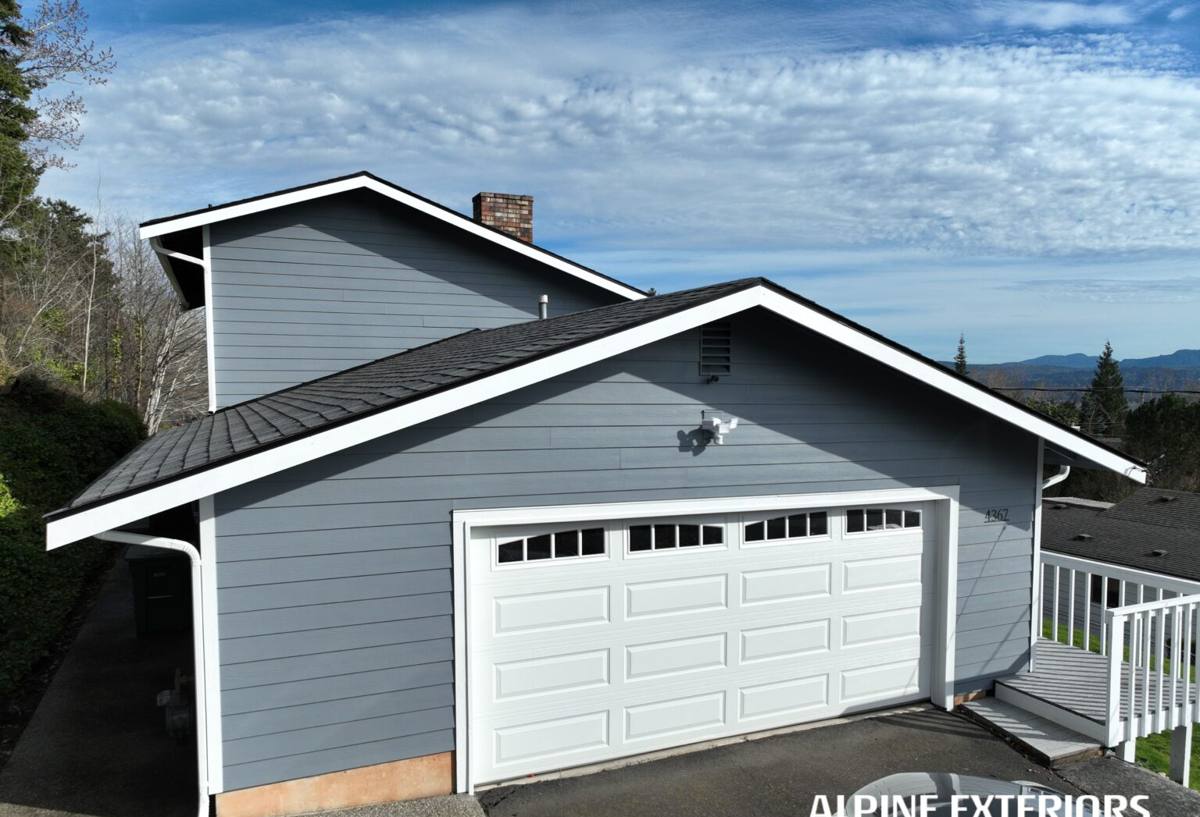
What a Correctly Installed Metal Roof Includes
A metal roof is only as good as the assembly underneath it. The panels get the attention, but the layers and details you don't see are usually what determine whether the roof performs for decades or starts causing problems in year five.
Underlayment Built for Wet Winters
In a climate where a roof deck can stay damp for days at a time during winter storm cycles, the underlayment beneath the metal panels needs to manage condensation as well as block bulk water. We use synthetic and self-adhered underlayments suited to this, with extra protection at eaves and valleys where water concentrates and lingers longest.
Flashing at Every Transition
Every point where the roof plane changes — ridges, hips, valleys, chimneys, skylights, sidewalls — needs flashing that's fabricated and installed for that specific geometry, not a generic trim piece bent to roughly fit. Given how much of this region's water intrusion is wind-driven rather than straight-down rain, we treat flashing detail as the difference between a roof that performs and one that looks right until the first real storm.
Fasteners and Panel Attachment
Exposed-fastener systems rely on screws with rubber washers that compress against the panel; those washers degrade with age and sun exposure and eventually need replacing or become a leak point. Concealed-fastener systems, like standing seam, attach through clips hidden under the seams, which removes that failure point entirely. In a salt-air environment, we also pay close attention to fastener material compatibility — mixing incompatible metals accelerates corrosion through a reaction called galvanic corrosion, which is avoidable with the right hardware but easy to get wrong if it isn't considered up front.
Choosing the Right Metal Roofing System
Not every metal roofing system is the right fit for every Bellingham home. The choice usually comes down to how the fastening is handled, how the roof will be used and viewed, and what long-term maintenance the homeowner wants to take on.
| System | Fastening | Best For | Maintenance Consideration |
|---|---|---|---|
| Standing seam | Concealed clips, no exposed screws | Homes wanting the longest service life and cleanest look | Lowest long-term maintenance; higher upfront cost |
| Exposed-fastener panel | Screws with rubber washers | Budget-conscious projects, outbuildings, shops | Washers need periodic inspection and eventual replacement |
| Metal shingle or shake profile | Concealed or interlocking | Homes wanting a traditional look with metal's durability | More seams and profile detail; moss/debris removal takes more care |
For most primary residences in this climate, we steer homeowners toward standing seam because eliminating exposed fasteners also eliminates the maintenance item most likely to cause a leak down the road. That said, exposed-fastener panels are a legitimate, cost-effective choice for detached garages, shops, and other structures where the tradeoff makes sense.
Our Process, Start to Finish
- On-site assessment of the existing roof deck, ventilation, and any trouble spots specific to the home's exposure and shading.
- A written scope covering panel system, underlayment, flashing details, and ventilation — no vague line items.
- Deck inspection and repair once tear-off begins; damaged or spongy decking gets replaced before anything new goes down.
- Underlayment and ice-and-water protection installed at eaves, valleys, and all penetrations.
- Panel installation with attention to expansion allowance, seam alignment, and fastener spacing appropriate to the system.
- Custom-fabricated flashing at every transition point, not stock trim forced to fit.
- Final walkthrough covering what was done, what to watch for, and how the roof should be maintained going forward.
Maintaining a Metal Roof Through Moss Season
Metal roofs need far less maintenance than shingles, but "far less" isn't "none" — especially under Bellingham's tree cover and long damp season. A short annual routine keeps the roof performing the way it was designed to.
- Clear needles, leaves, and debris from valleys and around penetrations before the fall rains set in.
- Check gutters and downspouts for blockages that can cause water to back up under eave edges.
- Look for moss or algae starting to build up in shaded valleys or along fastener rows, and remove it before it spreads.
- Watch for any fastener that's backed out, loose, or showing rust bleed at the washer.
- Trim back overhanging branches to reduce shade, debris, and physical contact with the roof surface.
- After major windstorms, do a visual check for lifted flashing or displaced panels.
None of this requires walking the roof yourself, and we'd rather you didn't — metal surfaces can be slick when wet or mossy. Most of this is easy to check from the ground or during a brief professional inspection.
Repair or Replace: How We Help You Decide
Not every issue on a metal roof means starting over. A single damaged panel, a failed washer, or flashing that's come loose at one valley can usually be repaired without touching the rest of the roof, especially on newer installations. Replacement becomes the more honest recommendation when corrosion has spread across multiple panels, when the underlying deck has taken on sustained moisture damage, or when the original installation has systemic flashing problems that would just resurface elsewhere after a spot repair. We'll tell you which situation you're in and explain why, rather than defaulting to the more expensive answer.
Why Local Experience in Bellingham Matters
A metal roofing crew that mostly works drier, inland climates will often spec a roof correctly for that climate — and that roof can still underperform once it's exposed to Whatcom County's combination of coastal salt exposure, wind-driven rain, and extended moss season. Working in and around Bellingham regularly means we already know which flashing details tend to fail here, which sides of a home take the worst of the weather, and which fastener and coating choices hold up near the water versus further inland. That local pattern recognition is difficult to substitute with a generic install checklist, and it's usually the difference between a roof that needs attention again in a few years and one that doesn't.
If you're weighing a metal roof for your Bellingham home, we're happy to take a look and give you a straight assessment — no pressure, no inflated scope. Use the form below to request a free estimate and we'll go from there.