 Ferndale Siding
 Composite Decking Built for Bellingham's Weather, Not Against It
Bellingham sits close enough to the water that homes here deal with a specific combination most inland decks never see: salt-tinged air off Bellingham Bay, driving rain that comes in sideways off Puget Sound weather systems, and a moss and algae season that can stretch from October through May. A deck that looks fine on installation day can start showing problems within a year or two if it wasn't built with that combination in mind. Composite decking handles this climate better than wood in most respects, but only if the substructure, drainage, and hardware underneath it are done correctly. The composite boards on top are the easy part.
We're a Ferndale-based crew that works Bellingham and the surrounding Whatcom County area regularly, so this isn't theory for us — it's what we see when we tear out failed decks and what we build to avoid the same failures on the next one.
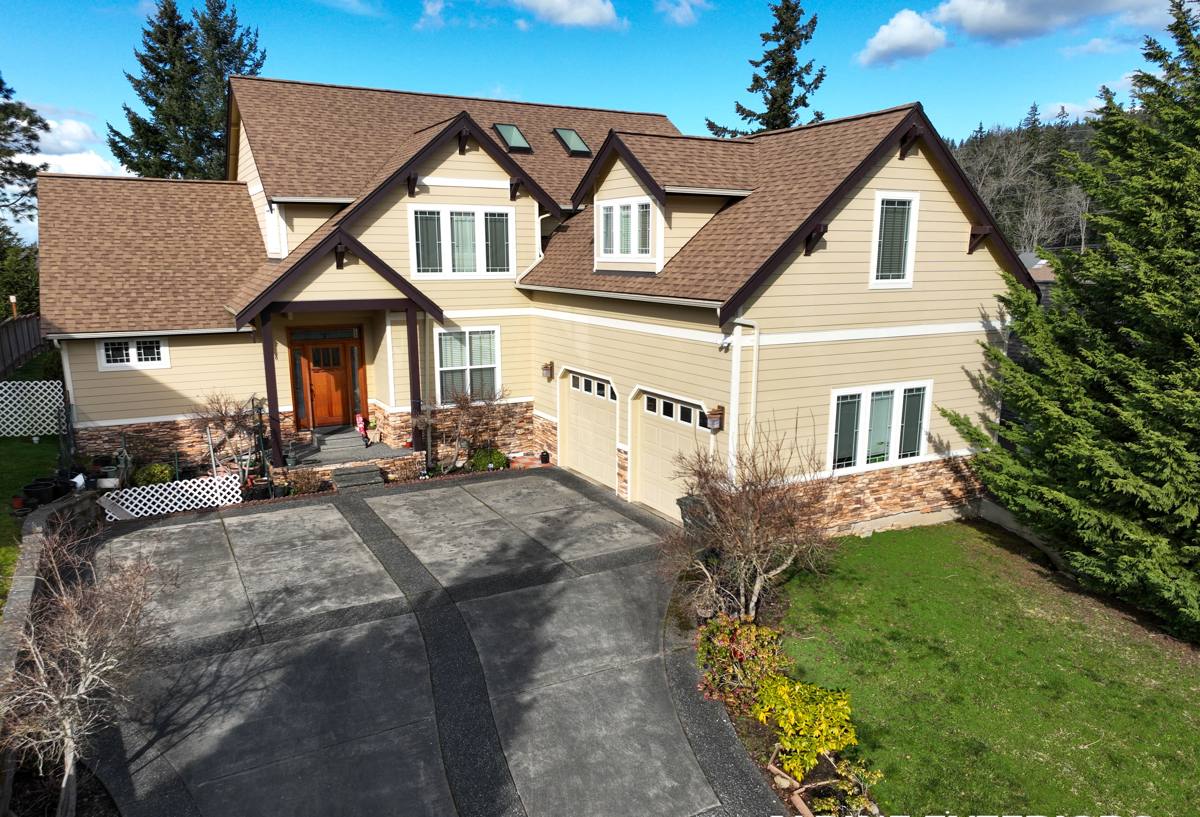
What Bellingham's Climate Actually Does to a Deck
Salt Air and Metal Hardware
Homes closer to the water get a steady dose of airborne salt that accelerates corrosion on any fastener, bracket, or ledger connection that isn't rated for it. Standard zinc-coated screws and joist hangers can start rusting and staining within a couple of seasons in this environment. This matters more than most homeowners realize, because the hardware is what's holding the whole structure together — it's not something you want to find out was undersized or wrong-rated five years in.
Driving Rain and Moisture Intrusion
Bellingham gets a lot of its rain in wind-driven storms rather than gentle straight-down showers. That means water gets pushed sideways into gaps, under boards, and against the house at the ledger connection — the single most common point of rot and hidden water damage on any deck attached to a home in this region. Flashing details that would be optional in a drier climate are not optional here.
Moss, Algae, and a Long Wet Season
Whatcom County's extended damp season gives moss and algae a long runway to establish themselves on any horizontal surface that doesn't drain and dry properly. Composite decking resists rot the way wood can't, but it isn't immune to surface growth — boards that sit in standing water or deep shade will still green up over time if airflow and drainage weren't part of the design.
Where Composite Decking Fits in This Climate
We recommend composite decking for a lot of Bellingham homes because it removes several of the maintenance headaches wood decking creates in this climate — no annual staining or sealing, no splintering as it weathers, and much better resistance to rot at the board level. That said, composite is not a "set it and forget it" material, and it's not the right fit for every project or every budget. Being straight about the trade-offs up front is part of doing the job right.
| Factor | Composite Decking | Pressure-Treated Wood |
|---|---|---|
| Surface maintenance | Occasional cleaning; no staining/sealing | Annual or biennial staining/sealing needed |
| Rot resistance | High — engineered core resists moisture damage | Moderate — depends on sealing upkeep |
| Moss/algae resistance | Good with proper airflow; can still grow in shaded, poorly drained areas | Similar risk, plus surface graying and splintering |
| Upfront cost | Higher material cost | Lower material cost |
| Long-term cost | Lower — minimal recurring maintenance spend | Higher over time with staining/sealing/repairs |
| Substructure requirements | Same rigor needed — composite doesn't excuse a weak frame | Same rigor needed |
The substructure line in that table is worth repeating: composite decking is only as good as what's underneath it. A composite deck built on an undersized or poorly flashed frame will still fail — it just fails less visibly at first, because the boards themselves aren't rotting even while the framing underneath is.
What a Correct Installation Actually Involves
Ledger Attachment and Flashing
Where the deck attaches to the house is the highest-risk point for water intrusion in our climate. A correct ledger installation uses proper flashing that directs water away from the house sheathing, not just a bead of caulk and a hope. This is the detail we see skipped most often on older or DIY decks we're called to repair or replace.
Framing and Joist Spacing
Composite boards have their own span-rating requirements from the manufacturer, and they're often tighter than what's standard for wood decking. Using wood-spec joist spacing under composite boards leads to bounce, sag, and premature wear at the fastener points. We frame to the specific product's published spec, not a generic rule of thumb.
Ground Clearance and Airflow
Low decks with poor ventilation underneath trap moisture against the joists and the underside of the boards — exactly the conditions that grow moss and accelerate corrosion on fasteners. Adequate clearance and, where the site doesn't allow for it, engineered airflow paths keep the structure drying out between storms instead of staying damp for weeks at a time.
Fasteners and Hardware Rating
Given the salt air exposure common in Bellingham, we use corrosion-resistant, code-rated hardware and fasteners throughout — hangers, screws, and structural connectors alike. This is a small cost difference on the front end and a significant difference in how the deck holds up over a decade or more.
Board Spacing and Drainage
Proper gapping between boards lets water shed through instead of pooling on the surface. Too tight, and you get standing water and algae growth; too loose, and debris builds up in the gaps. We set spacing to the manufacturer's spec, adjusted slightly for our wetter-than-average conditions.
Our Process for a Bellingham Deck Build
- Site walk and assessment — we look at drainage, sun/shade exposure, existing structure (if replacing a deck), and how the deck ties into the house.
- Design and product selection — board style, color, and railing system chosen based on your home and budget, with the composite line's specific span and fastening requirements factored into the plan.
- Permit and code check — Whatcom County and City of Bellingham both have permit requirements for most deck work, especially anything attached to the structure or above a certain height; we handle that step rather than leaving it on you.
- Demo (if replacing) — old decking and, where needed, framing removed and hauled off.
- Framing and flashing — ledger, joists, and flashing installed to the spacing and moisture-protection standards this climate calls for.
- Decking and railing installation — boards, fascia, and railing system installed per manufacturer spec.
- Final walkthrough — we go over care basics with you and make sure everything meets the standard we'd want on our own homes.
Permits and Local Code in Whatcom County
Most deck projects in and around Bellingham require a permit, particularly when the deck attaches to the house or sits above a certain height off grade. Inspection points typically cover the ledger connection, footings, and framing before decking goes down. Skipping permitting isn't a shortcut worth taking — it creates real problems at resale and, more importantly, it removes the inspection checkpoints that catch structural issues before they're buried under finished decking. We pull permits as a standard part of the job rather than an upsell.
Cost Factors Homeowners Should Know
Composite decking costs vary by square footage, board tier, railing system, height off grade, and whether existing decking needs to be removed first. Rather than quote a number that won't mean much without seeing your project, here's what actually moves the price:
| Factor | Why It Affects Cost |
|---|---|
| Deck size and shape | More square footage and complex angles/cuts mean more material and labor |
| Board tier | Composite lines range from entry-level to premium cap-stock products with different price points and warranty terms |
| Height off grade | Taller decks need more substantial framing, footings, and often guardrails |
| Railing system | Composite, metal cable, and glass rail systems all have different material and install costs |
| Existing deck removal | Demo and haul-off of an old structure adds labor before the new build starts |
| Site access | Difficult access for materials and equipment can add labor time |
Maintaining a Composite Deck in This Climate
Composite decking cuts down on maintenance significantly compared to wood, but "low maintenance" isn't "no maintenance" in a climate like ours. A short seasonal checklist keeps a composite deck performing the way it's supposed to:
- Sweep debris out of board gaps regularly, especially in fall when leaves and fir needles accumulate
- Rinse the surface periodically to prevent pollen, dirt, and organic buildup that feeds moss and algae
- Check and clear any drainage paths underneath the deck, particularly after major storms
- Inspect railing connections and fastener points annually for looseness or corrosion staining
- Trim back vegetation that shades the deck heavily and keeps it from drying out between rains
- Address any standing water spots promptly — they're usually a sign of a leveling or drainage issue worth checking
Why a Crew That Already Works Bellingham Matters
A lot of deck problems we get called to fix weren't caused by bad materials — they were caused by a build that didn't account for this specific climate. A crew based somewhere dry, or one that treats every region the same, is more likely to under-flash a ledger, use standard-grade hardware, or space framing to a generic spec instead of the product's actual requirements. Working Ferndale, Bellingham, and the rest of Whatcom County regularly means we're not guessing at how this climate behaves — we've built and repaired enough decks here to know exactly where the failure points show up first, and we build to avoid them from day one.
We also know the local permitting process, which keeps your project from stalling out waiting on paperwork we could have handled up front.
Get an Estimate
If you're considering a new composite deck or replacing an aging one in Bellingham, we're happy to take a look and give you a straightforward, no-pressure estimate — what it would take, what it would cost, and what we'd recommend for your specific site. Use the form below to get started.