 Ferndale Siding
 Bellingham roofs work harder than most people realize. Between the salt-laden air rolling in off the bay, long stretches of driving rain through fall and winter, and a moss season that can run most of the year under the right (or wrong) conditions, a roof here takes on moisture pressure that a drier climate simply doesn't create. A repair that would hold up fine somewhere inland can fail within a season in this part of Whatcom County if it isn't done with local conditions in mind.
Roofs in Bellingham Face a Different Kind of Wear
Three things drive most of the roof repair calls we see in and around Bellingham: persistent moisture, moss growth, and the slow corrosive effect of salt air near the water. None of these show up as a single dramatic failure — they show up as a slow leak that takes months to trace, a soft spot near a valley, or granules collecting in the gutters after a windy rain. By the time a homeowner notices a stain on the ceiling, the underlying problem has usually been developing for a while.
Driving rain is a bigger factor than people expect. It doesn't just fall — it gets pushed sideways and up under laps, edges, and flashing that would stay dry in a calm rain. That means repairs here need to account for wind-driven water intrusion, not just water running downhill off the roof.
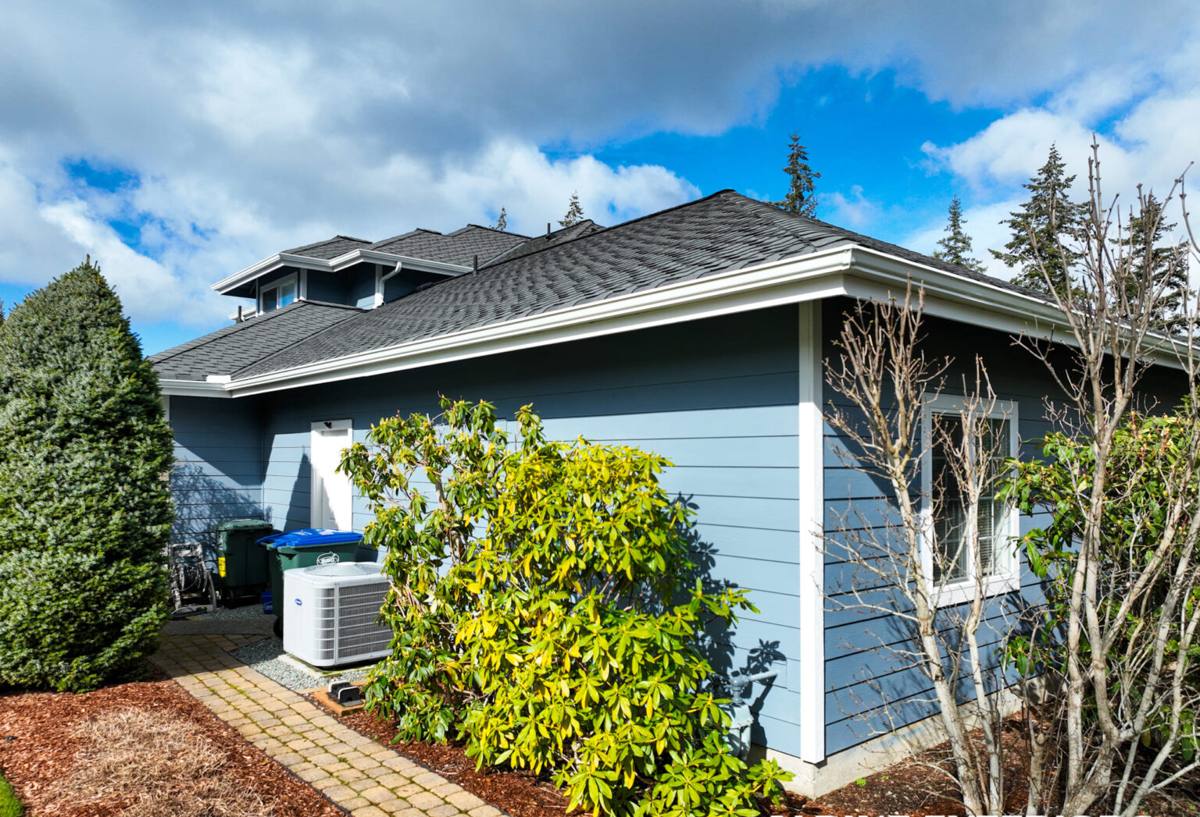
What "Roof Repair" Actually Means for a Bellingham Home
Roof repair isn't one task — it's a category that covers a range of problems, each with its own correct fix. Treating all of them the same way is how homeowners end up paying twice.
Leak Repair
A leak is a symptom, not the problem itself. Water can travel several feet from where it enters to where it shows up on a ceiling or in an attic, following framing and sheathing before it drips somewhere visible. Real leak repair starts with tracing the water back to its actual entry point, which is often nowhere near the stain.
Flashing Repair
Flashing — the metal or membrane detailing around chimneys, skylights, vent pipes, and roof-to-wall transitions — is where most leaks actually originate, not out in the open field of shingles. Flashing takes the brunt of driving rain because it's the roof's weak point by design; it has to be sealed and lapped correctly or water finds its way in.
Moss and Moisture Damage
Long-term moss growth holds moisture directly against roofing material, which accelerates granule loss on asphalt shingles and can lead to rot in the decking underneath on any roof type. Once moss has been established for a while, repair often includes remediation of the surface underneath it, not just cleaning it off.
Common Roof Repair Issues We See Around Bellingham
| Issue | Typical Cause Locally | What a Correct Fix Involves |
|---|---|---|
| Leak near a chimney or skylight | Aging or improperly lapped flashing exposed to driving rain | Remove and rebuild flashing with proper step and counter-flashing, not just resealing the surface |
| Soft, spongy roof sections | Long-term moisture trapped under moss or debris | Cut back to sound decking, replace rotted sheathing, then re-roof that section correctly |
| Granule loss and bald patches | Moss and standing moisture wearing down shingle surface | Section replacement matched to existing shingle where possible, moss treatment to stop recurrence |
| Corroded metal flashing or fasteners | Prolonged exposure to salt-influenced air near the water | Replace with corrosion-resistant metal and fasteners rated for coastal exposure |
| Gutter overflow and fascia rot | Needles, moss debris, and heavy rain volume overwhelming gutters | Clear and correct drainage path, repair or replace damaged fascia and trim |
How We Diagnose a Roof Problem Before We Touch a Shingle
A repair is only as good as the diagnosis behind it. We start from the inside where possible — attic, ceiling, and framing — to understand where water is actually entering, then move to the roof surface to confirm it. This matters because two roofs with the exact same visible symptom can have completely different root causes, and a fix aimed at the wrong one just delays the next call.
We also look at the roof as a system, not a collection of separate problems. A leak next to a vent pipe might actually be a flashing issue three feet away, made worse by a clogged gutter backing water up under the shingle edge. Fixing the visible spot without addressing the contributing factors is how the same "fixed" leak comes back a year later.
Our Repair Process
- Inspection of the affected area plus a general check of flashing, valleys, and moss coverage across the whole roof
- A clear explanation of what we found, what's causing it, and what it will take to fix — before any work starts
- Repair using materials matched to your existing roof as closely as possible, so the fixed section doesn't stand out or behave differently than the rest
- Correcting any contributing conditions — clogged drainage, moss buildup, deteriorated flashing nearby — so the same problem doesn't resurface
- A final walk-through so you know what was done and what to watch going forward
Repair or Replace? How to Tell the Difference
Not every roof problem calls for a full replacement, and not every leak can be solved with a small patch. The honest answer depends on the age and condition of the roof, how widespread the damage is, and whether the underlying decking is still sound.
As a general guide: isolated damage on a roof that's otherwise in good shape — a single failed flashing detail, one storm-damaged section, moss confined to a shaded corner — is usually a good candidate for repair. Widespread granule loss across most of the roof, multiple soft spots, or a roof that's already near the end of its expected service life is a sign that repair would just be a temporary patch on a bigger problem. We'll tell you plainly which situation you're in rather than defaulting to whichever job is bigger.
Materials and Methods We Rely On
For shingle repairs, matching the existing roofing as closely as possible keeps the repaired section from standing out and, more importantly, keeps it performing the same as the rest of the roof under wind and rain. For flashing, we use corrosion-resistant metal suited to the coastal-influenced air common near Bellingham, since standard fasteners and flashing can corrode faster this close to the water than they would further inland.
Where moss has been an ongoing issue, we address the surface it's been growing on, not just the moss itself, and can advise on preventive treatments to slow regrowth in shaded or north-facing sections of a roof — which is often where moss keeps coming back regardless of how many times it's cleaned off.
Why Local Experience in Bellingham and Whatcom County Matters
A roofer who mainly works in a drier climate will diagnose a Bellingham roof differently than one who works this region every week. Knowing how moss actually behaves through a long wet season here, how far driving rain can push water under a lap, and which flashing details tend to fail first near the water isn't something you get from a general roofing background — it comes from repeatedly seeing how local homes age under these specific conditions. That local pattern recognition is often the difference between a repair that holds and one that needs revisiting.
It also means showing up with the right materials the first time, rather than needing a second trip once it becomes clear that standard fasteners or standard flashing weren't going to hold up in this environment.
After the Repair: Keeping Your Roof Ahead of the Weather
A good repair buys you time, but a few habits stretch that further, especially given how much moisture this region deals with over a typical year.
- Keep gutters and downspouts clear, especially heading into fall when leaf and needle debris builds up fast
- Watch shaded or north-facing roof sections for early moss growth and address it before it spreads
- After any significant windstorm, do a visual check for lifted or missing shingles, especially around flashing points
- Don't ignore small interior stains — trace them early, before the source does more damage to decking below
- Have flashing around chimneys, skylights, and vents checked periodically, since these details fail well before the shingle field usually does
If you're dealing with a leak, a soft spot, moss that's gotten out of hand, or you just want an honest read on what your roof actually needs, we're glad to take a look. Estimates are free and there's no pressure — just a straight answer about what's going on and what it would take to fix it right, using the form below.