 Ferndale Siding
 Deck Building in Bellingham, Washington
A deck in Bellingham lives a different life than a deck almost anywhere else in the country. Between the marine air rolling in off Bellingham Bay, the long stretch of driving rain that runs from October through April, and a moss and algae season that never fully quits, the structure under your feet is under constant, quiet pressure. Most deck problems we get called out for in this area didn't start as one big failure — they started as a small moisture issue that had months, sometimes years, to work on the wood before anyone noticed.
We build and repair decks for homeowners in and around Bellingham as part of our regular service area out of Ferndale. This page covers what we think matters most when you're planning a new deck or replacing an old one here: what the climate demands, what a correctly built deck actually involves, and how we approach the job from first call to final walkthrough.
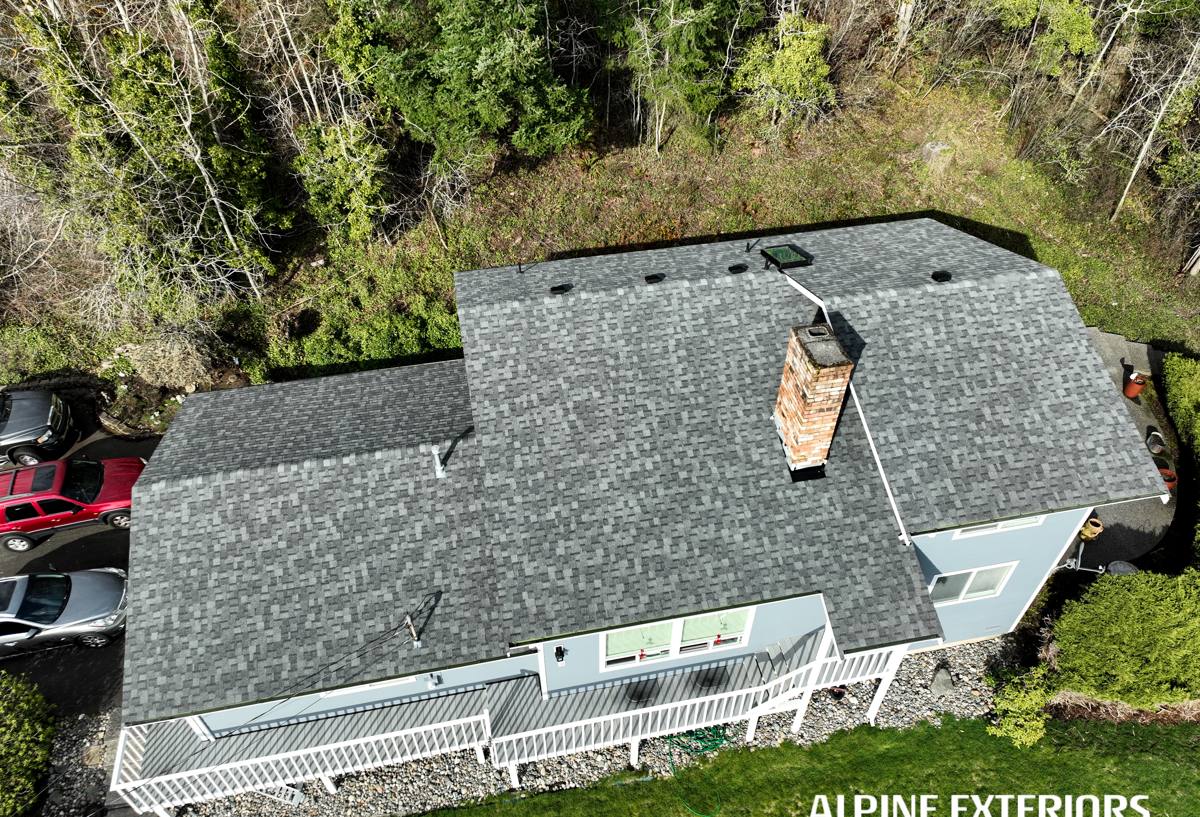
What Bellingham's Climate Does to a Deck
Whatcom County doesn't get the extreme freeze-thaw cycles you'd see further inland, but it makes up for that with sheer duration of moisture exposure. Salt-tinged air near the bay accelerates corrosion on fasteners and hardware. Sustained rain finds its way into any gap in flashing, fastening, or board spacing and stays there instead of drying out between storms. And shaded decks under trees or on the north side of a house pick up moss and algae growth that holds water against the wood surface long after the rain has stopped.
None of this means a deck can't last in Bellingham — it means the details that get skipped in drier climates can't get skipped here.
The failure points we see most often
- Ledger boards attached to the house without proper flashing, letting water track behind the siding and into the rim joist
- Undersized or poorly set post footings that shift as saturated soil freezes and settles seasonally
- Fasteners that aren't rated for treated lumber or coastal exposure, leading to corrosion staining and weakened connections
- Deck boards installed tight with no drainage gap, trapping moisture and accelerating rot from the top down
- Moss and algae left to build up on walking surfaces, which holds water against the wood and creates a genuine slip hazard
What a Correctly Built Deck Involves Here
Footings and framing
Everything starts below grade. Footings need to be sized and set to local frost depth and soil conditions, not just poured to the minimum. We use hardware and fasteners rated for treated lumber and exterior exposure — standard bright fasteners corrode quickly in this air and cause staining and weakening at every connection point. Framing gets built with drainage in mind from the start: proper joist spacing, blocking where the span calls for it, and no low spots where water can pool against the wood.
The ledger connection
If your deck attaches to the house, the ledger board is the single most important connection on the structure — and the most common source of hidden rot when it's done wrong. It needs correct flashing integrated with the house's water-resistive barrier, not just caulked and hoped for. We treat this connection as a small siding and waterproofing job in its own right, because that's effectively what it is.
Decking material and spacing
Board choice matters, but so does how the boards are installed. Proper gapping between boards lets water pass through instead of sitting on the surface, and it lets the structure underneath actually dry out between rain events — which in this climate can mean the difference between a deck that lasts fifteen years and one that needs major repair in five.
Rail systems and code
Guardrails, baluster spacing, and stair rail requirements are governed by code, and inspectors here check them. We build to current code as a baseline, not a suggestion, on every deck we put up.
Choosing Decking Material for This Climate
There's no single right answer for every homeowner — it comes down to budget, maintenance tolerance, and how the deck will be used. Here's how the common options compare for Whatcom County conditions specifically.
| Material | Moisture Performance Here | Maintenance | Typical Lifespan |
|---|---|---|---|
| Pressure-treated lumber | Good if properly sealed and re-coated; end grain and cuts need extra attention | Annual cleaning, periodic sealing/staining | 10–15 years with upkeep |
| Cedar | Naturally moisture- and rot-resistant; still benefits from sealing in this rainfall volume | Cleaning and re-sealing every 1–2 years to hold color and protection | 15–20 years with upkeep |
| Composite decking | Excellent — doesn't absorb water or rot, resists moss staining better than wood | Periodic cleaning to prevent surface algae film; no sealing or staining | 25+ years, manufacturer-warrantied |
| PVC decking | Excellent — fully moisture-proof material | Low; occasional cleaning | 25+ years, manufacturer-warrantied |
We install all of these. What we won't do is put any of them down without correct spacing, flashing, and fastening — the material only performs as well as the installation underneath it. A composite deck built on a poorly flashed ledger will still rot the framing behind it even though the boards on top look fine.
Moss, Algae, and Ongoing Care
Given how much of the year Bellingham stays damp, moss and algae growth is close to unavoidable on any deck that isn't in full sun. A few habits go a long way toward keeping a deck safe and looking good between our visits:
- Sweep debris and standing leaves off the deck regularly, especially in fall, so organic matter doesn't hold moisture against the boards
- Rinse or gently wash the surface a couple of times a year to interrupt moss and algae buildup before it gets established
- Trim back overhanging branches where possible to let more light and airflow reach shaded sections
- Check the ledger flashing and any wall connections annually for signs of staining or soft wood
- Reseal or re-stain wood decking on the schedule the product calls for — skipping a cycle in this climate compounds fast
New Build vs. Repair or Replacement
Not every aging deck needs to come out entirely. When we evaluate a deck, we're checking framing and footings first, since those are the parts that determine whether repair is worth doing or whether a full rebuild is the honest recommendation.
Signs a deck can likely be repaired
- Surface boards are worn or graying but the framing underneath is solid when probed
- Isolated soft spots near a single connection point rather than throughout the structure
- Railings that are loose or out of code but the posts and framing are sound
Signs a full rebuild makes more sense
- Soft or spongy framing in multiple areas, not just at the surface
- Visible rot or staining at the ledger connection
- Footings that have shifted, causing the deck to feel uneven or separate slightly from the house
- A structure that was never built to current code and would need to be substantially reworked to bring it up to standard anyway
We'll tell you honestly which category your deck falls into. There's no benefit to us or you in patching something that needs to come out, and no reason to rebuild something that just needs targeted repair.
Our Process for Bellingham Deck Projects
- On-site evaluation. We look at the existing structure (if there is one), the site conditions, drainage, sun exposure, and how the ledger connects to the house.
- Design and material discussion. We walk through layout, size, material options, and rail requirements based on how you actually plan to use the space.
- Permitting. Deck projects of most sizes require a permit and inspection locally. We handle that process as part of the job so it's built to pass, not just built to look finished.
- Construction. Footings, framing, ledger flashing, decking, and rail installation, built in that order of priority — because everything below the surface matters more than what's on top of it.
- Final walkthrough. We go over the finished deck with you, including what maintenance it needs and on what schedule, before we consider the job done.
Why Local Experience with Bellingham Conditions Matters
A deck built to a generic national spec will often survive a dry climate just fine and still fail early here. Footing depth, flashing details, fastener selection, and even board spacing decisions all need to account for what Whatcom County weather actually does over a full year, not just what a materials chart says in ideal conditions. We work this area regularly, which means we're not guessing at how salt air, rainfall volume, or moss exposure will treat a given material or detail — we've seen it play out on real structures in real Bellingham and Ferndale yards.
That local pattern recognition is often the difference between a deck that needs attention in year five and one that's still solid at year twenty.
Get a Straightforward Estimate
If you're planning a new deck, or you've got one that's showing its age and you want an honest read on repair versus rebuild, we're happy to come take a look. The estimate is free, there's no pressure attached to it, and you'll get a clear explanation of what we're seeing and why. Fill out the form below to get started.