 Ferndale Siding
 Siding Built for Custer's Weather, Not Just Its Curb Appeal
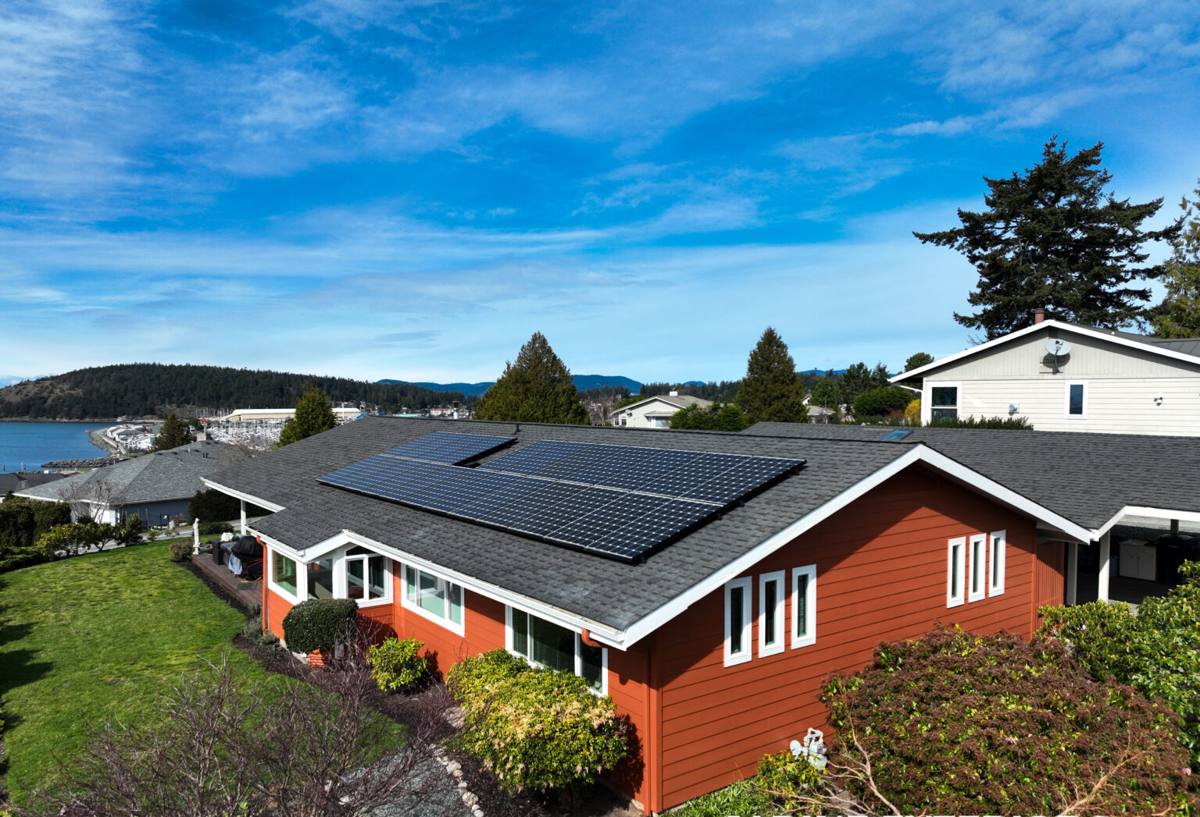
Custer sits close enough to the water and open farmland that homes here take a different kind of weather beating than siding fifteen miles inland. Wind-driven rain off the Strait, salt-laden air, and the long gray stretch from October through April when moss and algae get a running start on anything that stays damp — all of it adds up over the years. A siding installation in Custer isn't just a cosmetic upgrade. It's a decision about what's going to stand between your framing and that weather for the next several decades.
We install James Hardie fiber cement siding exclusively. Not because it's the only product on the market, but because after years of exterior work in Whatcom County, it's the only one we're willing to put our name behind for this climate. This page covers what that means specifically for a Custer installation — what the site conditions demand, how a correct job goes together, and why the crew doing the work matters as much as the material itself.
What Custer's Climate Actually Does to Siding
Salt Air and Coastal Exposure
Properties in and around Custer are close enough to Puget Sound and Birch Bay that salt-laden air is a real factor, not a theoretical one. Salt accelerates corrosion on fasteners and metal flashing, and it degrades some paint and coating systems faster than inland exposure would. It also tends to hold moisture against a surface longer than dry air does, which matters more than most homeowners realize.
Driving Rain
Whatcom County doesn't just get a lot of rain — it gets a lot of rain pushed sideways by wind off the water. Driving rain finds every gap in a siding system: unsealed laps, poorly flashed windows, butt joints without proper backing. A siding job that looks fine on a still day can fail its real test the first time a winter storm comes through sideways.
The Long Moss Season
Shaded north- and west-facing walls in Custer can stay damp for weeks at a stretch during the fall and winter. That's exactly the environment moss and algae need to take hold. Once organic growth establishes itself on a siding surface, it holds even more moisture against the substrate, which is how a maintenance nuisance turns into a rot problem over a few seasons.
Why We Standardized on James Hardie
James Hardie fiber cement is engineered from cement, sand, and cellulose fiber — it doesn't have the organic wood content that gives rot, insects, and moss something to feed on. It's also non-combustible, which matters given how many Custer properties back up to open fields, farmland, or treelines where wildfire risk is a real consideration, not just a coastal-storm one.
The ColorPlus factory finish is the other half of the equation. It's baked on in a controlled environment rather than field-applied, which means better adhesion and better resistance to fading and moisture intrusion than most job-site paint jobs achieve — especially relevant when the walls in question are getting hit with salt air and driving rain on a regular basis. Hardie's HZ5 product line is specifically engineered for climates like ours, with moisture and freeze-thaw performance suited to the Pacific Northwest.
We don't install LP SmartSide, vinyl, Cemplank, Allura, primed spruce, or cedar. Each of those has legitimate uses somewhere, but none of them hold up to Custer's combination of salt exposure, driving rain, and extended damp seasons the way fiber cement does, and we'd rather turn down work than install something we don't trust on a local roofline.
What a Correct Installation Actually Involves
Fiber cement siding is only as good as the assembly behind it. A rushed or shortcut install can fail in this climate even with the best material on the market. Here's what we treat as non-negotiable on every Custer job:
- Weather-resistive barrier, installed correctly: A properly lapped and sealed WRB behind the siding is the backup layer that catches whatever driving rain gets past the cladding.
- Rainscreen gap: A ventilated air gap between the WRB and the siding lets any moisture that does get in dry out instead of sitting against the wall — critical in a climate with as many damp weeks as Custer sees.
- Flashing at every penetration: Windows, doors, hose bibs, vents, and any other wall penetration get proper head flashing and kick-out flashing where water is directed away from the wall assembly, not into it.
- Correct fastening: Hardie specifies fastener type, placement, and spacing for a reason — under- or over-driven nails, wrong fastener material, or missing studs all create early failure points, especially with salt air accelerating corrosion on the wrong hardware.
- Proper clearance: Siding needs clearance from grade, roof lines, and decks so it isn't sitting in standing water or getting splashback that keeps it perpetually damp — a direct defense against moss and algae getting a foothold.
- Caulking and sealant at butt joints: Done to Hardie spec, not just "close enough," since a poorly sealed joint is one of the most common entry points for wind-driven rain.
Skip any one of these and you don't find out until years later, when the wall assembly behind the siding has already been quietly absorbing moisture.
Our Process on a Custer Job
1. On-Site Assessment
We walk the property, check the existing siding and sheathing condition, note exposure direction (which walls take the most driving rain and shade-driven dampness), and flag any existing moisture or rot issues before we quote anything.
2. Tear-Off and Sheathing Check
Old siding comes off and we inspect the sheathing underneath. Any soft, delaminated, or water-damaged sheathing gets replaced before the new system goes on — covering over a compromised substrate just locks the problem in.
3. Weather Barrier and Rainscreen Installation
The WRB and rainscreen system go on next, with careful attention to lapping and sealing at every seam and penetration, since this is the layer doing the real work if anything gets past the siding.
4. Flashing and Trim
All windows, doors, and penetrations get flashed before siding installation begins, not patched around afterward.
5. Hardie Panel Installation
Siding goes on to manufacturer spec — fastener pattern, clearances, and joint treatment — with attention to how each wall's exposure should shape small details like joint placement and sealant use.
6. Final Walkthrough
We walk the finished job with you, cover care and maintenance specifics for a coastal-adjacent property, and answer whatever questions come up before we consider the job done.
Choosing a Siding Contractor Who Actually Works Custer
Generic experience isn't the same as local experience. A crew that's installed siding on plenty of homes in a dry inland climate can still get caught out by what Whatcom County's coastal weather demands — under-flashing a window that would've been fine somewhere with less driving rain, or skipping a rainscreen gap that wouldn't have mattered in a climate with a shorter wet season. A contractor who already works Custer and the surrounding Ferndale area knows which walls need the extra attention, how much clearance actually matters given local rain patterns, and what moss and algae pressure looks like on a real property here, not in a manual.
That local track record also matters for warranty follow-through. James Hardie's product warranty is only as good as the installation behind it — improper installation can affect warranty coverage — so the contractor's installation practices are part of what you're actually buying, not just the siding material itself.
Cost Factors for a Custer Siding Installation
Every property is different, but these are the main variables that move the price on a fiber cement siding job in this area:
| Factor | Why It Matters |
|---|---|
| Home size and wall complexity | More square footage and more corners, dormers, and trim details mean more labor and material |
| Existing sheathing condition | Rot or water damage found during tear-off requires repair before new siding goes on |
| Siding profile and Hardie product line | Lap width, texture, and product line (HZ5, Artisan, etc.) affect material cost |
| ColorPlus vs. field-applied finish | Factory-finished ColorPlus costs more upfront but eliminates job-site painting and holds up better long-term |
| Access and site conditions | Tight lots, multi-story walls, or landscaping obstacles affect labor time |
| Trim and flashing detail work | Homes with more windows, doors, and penetrations require more flashing labor |
We give a firm, itemized quote after the on-site assessment — no generic per-square-foot number pulled out of thin air, since so much of the real cost depends on what we find once tear-off starts.
What to Watch For If You're Getting Multiple Quotes
- Ask specifically whether a rainscreen gap is included — some bids quote siding installed directly over the WRB with no ventilation gap, which is a real problem in this climate.
- Ask what happens if damaged sheathing is found during tear-off — get this in writing before work starts, not as a surprise change order.
- Confirm whether the quote is for ColorPlus factory finish or field-primed-and-painted siding — these are very different products with different long-term maintenance.
- Ask how the contractor handles flashing at windows and penetrations specifically — a vague answer here is a red flag.
- Check that fastener type and spacing follow Hardie's published installation instructions for your specific product line and exposure.
If your Custer home is due for a siding replacement, or you're weighing your options for a new build, we're happy to walk the property with you and give a straight, no-pressure estimate. There's no obligation — just an honest read on what your home needs and what it would take to do it right.