 Ferndale Siding
 Roof Repair in Custer's Coastal Climate
Custer sits in the open, breezy stretch of Whatcom County just north of Ferndale, close enough to the Salish Sea that salt-laden air and wind-driven rain are part of daily weather, not an occasional event. Roofs out here work harder than roofs twenty miles inland. The combination of marine moisture, wind exposure, and a wet season that can stretch from October through May means small roofing problems don't stay small for long. A pinhole leak that would take years to matter in a dry climate can soak sheathing in a single winter here.
That's the backdrop for every repair call we take in this area. We're not treating a generic roof — we're treating a roof that lives under Whatcom County's specific weather pattern, and the repair has to hold up to that pattern, not just look fixed on a dry afternoon.
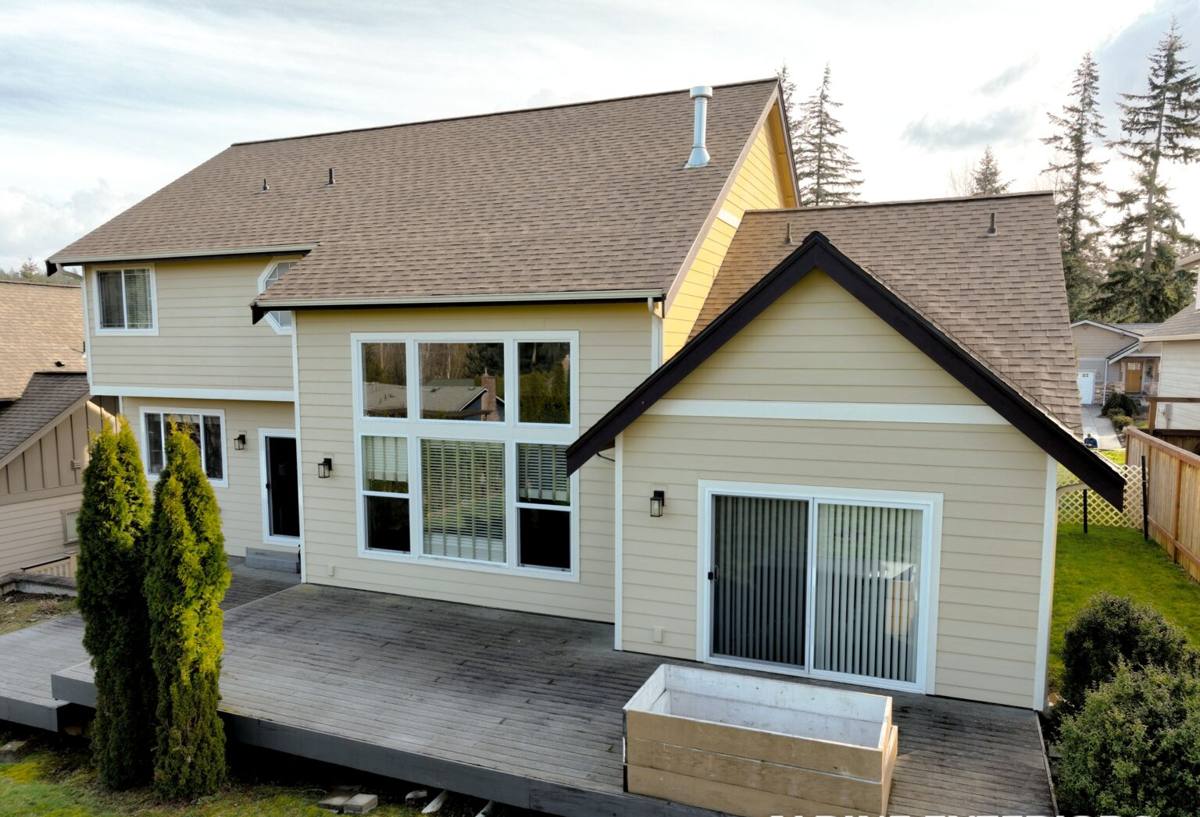
Signs Your Custer Home Needs Roof Repair
Interior warning signs
- Ceiling stains that appear or darken after a windy rainstorm specifically, rather than every rain
- A musty smell in an attic or upper closet that wasn't there last year
- Soft or sagging drywall near a chimney, skylight, or roof valley
- Daylight visible through the roof deck when you look up into the attic
Exterior warning signs
- Shingles that are cupping, curling at the edges, or missing granules in patches
- Dark green or black streaks and thick moss mats, especially on north-facing slopes
- Rust streaks or gaps at metal flashing around chimneys, vents, and wall intersections
- Sections of roof that stay wet or shaded long after the rest has dried
None of these signs mean the whole roof is failing. Most of them point to a specific, repairable problem area — but only if it's addressed before repeated soaking rots the decking underneath.
Moss and Algae: The Slow Damage Nobody Notices
Whatcom County's long wet season and heavy tree cover give moss everything it needs to thrive on a roof: shade, standing moisture, and months at a stretch without a real drying-out period. Moss itself doesn't just sit on top of shingles — its root structure lifts shingle edges and holds water directly against the roofing material, which is exactly the opposite of how a roof is designed to shed water.
Left alone through a few wet seasons, moss growth turns a cosmetic nuisance into a functional problem: lifted shingle tabs let wind-driven rain work underneath, and trapped moisture accelerates rot in the decking below. A repair on a moss-affected roof isn't just about replacing damaged shingles — it's about clearing the moss correctly, addressing the moisture it trapped, and reducing the conditions that let it come back so quickly.
Salt Air, Wind-Driven Rain, and Flashing Failure
Metal flashing — around chimneys, vent pipes, skylights, and wherever a roof plane meets a wall — is usually the first thing to fail on a coastal-exposed roof, well before the field shingles show their age. Salt-carrying air accelerates corrosion on fasteners and thin flashing metal, and driving rain finds any gap that corrosion or minor movement has opened up.
This is why so many "roof leaks" in this area turn out to be flashing failures rather than worn-out shingles. It's also why a repair that only replaces shingles without inspecting and, where needed, replacing the flashing underneath is a repair that's likely to leak again in the next storm.
What a Proper Roof Repair Actually Involves
Diagnosing the actual leak path
Water rarely enters a roof at the spot where it shows up on the ceiling. It can travel along rafters, framing, or the underside of the decking before dripping somewhere else entirely. A repair that starts by patching the visible ceiling stain without tracing the water back to its actual entry point is a repair that treats the symptom, not the cause. Our process starts on the roof itself — checking flashing, fastener lines, valleys, and shingle laps — before any material is opened up or replaced.
Matching materials to what's already there
A repair patch that doesn't match the existing roofing in material, profile, and weathering will fail differently than the surrounding roof and can create a new leak point at the seam between old and new. Where an exact match isn't available — common on older roofs — we explain the trade-offs honestly rather than forcing a mismatched patch and calling it done.
Sealing for wind, not just water
Because this area gets rain that comes in sideways as often as straight down, repairs here need attention to lap direction, fastener placement, and sealant at every penetration — not just a shingle laid flat and nailed.
Roofing Materials Common in Custer — Repair Considerations
| Roofing Type | Typical Repair Concern in This Climate | What We Check |
|---|---|---|
| Asphalt composition shingle | Granule loss and curling from age plus moisture cycling | Underlayment condition, nail pattern, matching shingle profile |
| Wood shake/shingle (older homes) | Moss retention and slower drying between rain events | Rot in individual shakes, ventilation behind the roof deck |
| Metal roofing | Fastener backout and sealant washer failure over time | Panel seams, exposed fastener condition, flashing at penetrations |
| Flat or low-slope sections (additions, porches) | Ponding water and membrane seam separation | Drainage slope, seam integrity, transition flashing to the main roof |
Whatever material is on the roof, the repair approach has to account for how that specific material behaves under repeated wet-dry cycling and coastal wind — a patch method that works fine on a dry-climate roof isn't automatically the right call here.
Our Process for a Custer Roof Repair
- Inspection first. We walk the roof (weather permitting) and check the attic from inside, tracing suspected leak paths rather than guessing from ground level.
- Honest scope discussion. We tell you what's actually wrong, what it will take to fix it correctly, and whether a repair is the right call versus a larger project.
- Correct removal. Damaged material comes out cleanly, including checking the decking underneath for rot before anything new goes back on.
- Repair matched to conditions. Flashing, underlayment, and fasteners are selected for this area's moisture and wind exposure, not just whatever's on the truck.
- Cleanup and a final check. We confirm the repair sheds water correctly at every lap and seam before we consider the job finished.
Repair or Replace? Cost Factors to Weigh
Most roofs with a single leak, isolated storm damage, or a moss-related problem area are good candidates for repair rather than full replacement. The decision usually comes down to a few honest factors:
| Factor | Leans Toward Repair | Leans Toward Replacement |
|---|---|---|
| Age of roof | Under roughly two-thirds of expected material lifespan | Near or past expected lifespan for the material |
| Extent of damage | Isolated to one section, valley, or penetration | Spread across multiple slopes or widespread granule loss |
| Decking condition | Solid, dry decking under the damaged area | Soft or rotted decking found during inspection |
| Moss/algae history | First significant occurrence, caught early | Repeated heavy growth despite past cleaning |
We'll always tell you plainly which side of that line your roof falls on, including when a repair is genuinely the right, cost-effective answer rather than upselling a replacement you don't need yet.
Why a Crew That Already Works Custer Matters
A roofer who works this specific stretch of Whatcom County regularly already knows how the marine air, tree cover, and rain patterns particular to the Ferndale and Custer area tend to show up in roof damage — where moss builds up fastest, which flashing details tend to fail first on local homes, and how long a given repair actually needs to hold before the next wet season tests it. That's different from general roofing knowledge; it's familiarity with how this specific climate wears down a roof over time, which shapes both the diagnosis and the material choices in a repair.
It also means a faster response when weather is the reason you're calling in the first place — a storm-damaged roof needs attention before the next system rolls through, not after a long wait for a crew to travel in from elsewhere.
Quick Homeowner Checklist Before You Call
- Note when the leak or stain appears — every rain, only wind-driven rain, or only after heavy moss buildup
- Check the attic (if safely accessible) for staining, daylight, or damp insulation
- Look for moss concentration on north-facing or heavily shaded roof slopes
- Photograph any visible shingle damage or flashing gaps from the ground
- Avoid walking on the roof yourself, especially if it's mossy — it's more slippery than it looks
If you're seeing any of these signs on a Custer or Ferndale-area roof, we're glad to take a look. We offer free, no-pressure estimates — just fill out the form below and we'll get back to you to schedule a straightforward inspection.