 Ferndale Siding
 Roofing in Custer Isn't the Same as Roofing Inland
Custer sits close enough to the water that salt air is a daily fact of life for anything on a roof — nails, flashing, vent caps, even the granules on a shingle. Add Whatcom County's long wet season, where driving rain comes sideways off storms rolling in from the Strait, and a roof here works harder than one twenty miles inland. Then there's moss. Between the marine moisture and the tree cover common on Custer properties, moss season isn't a once-in-a-while nuisance — it's closer to a permanent condition for anything north-facing or shaded.
None of that means asphalt shingles are the wrong choice for Custer homes. They're still one of the most cost-effective, proven roofing systems available, and when they're installed correctly for this specific environment, they hold up well. The problems we see almost always trace back to a roof that was built to a generic spec instead of one that accounted for salt exposure, wind-driven rain, and moss from day one.
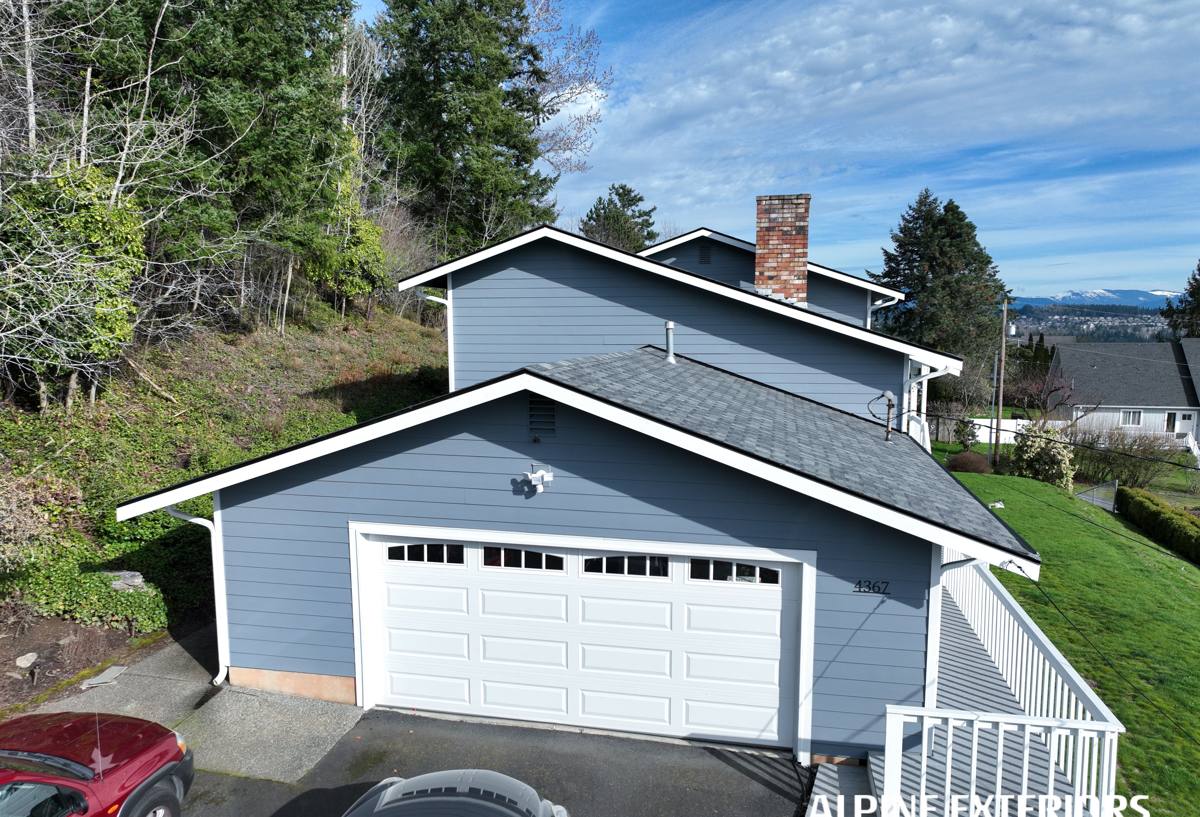
What Salt Air, Rain, and Moss Actually Do to a Shingle Roof
It helps to understand the mechanics, because it changes what "correct installation" means out here.
Salt Air and Corrosion
Salt-laden air accelerates corrosion on anything metal — roofing nails, flashing, drip edge, vent stacks, and gutter hardware. A fastener that would last decades inland can start rusting years sooner near the coast. Once a nail head corrodes and loses its grip, the shingle above it becomes vulnerable to wind lift, and a small leak path opens up long before the shingle itself is worn out.
Driving Rain
Wind-driven rain doesn't just fall on a roof — it gets pushed sideways and upward under shingle edges, around vents, and along flashing seams. A roof designed for calmer weather might get away with minimal underlayment coverage or a loose flashing detail. In Custer, those shortcuts show up as leaks at the eaves, around chimneys, and at wall-roof intersections within a few wet seasons.
Moss
Moss doesn't just look bad. It holds moisture against the shingle surface, works its way under shingle tabs as it grows, and can lift edges enough for wind and rain to get underneath. On north-facing slopes and roofs shaded by trees, moss growth can start within a year or two of installation if the roof wasn't treated or ventilated with that in mind.
Choosing the Right Shingle System for a Custer Roof
Not every asphalt shingle product is built the same way, and for a coastal, moss-prone property, some choices matter more than they would elsewhere.
- Algae-resistant granules: Most quality shingle lines now include copper- or zinc-infused granules specifically to slow algae and moss growth. For Custer, this isn't optional — it's a baseline requirement.
- Architectural (laminated) shingles: Their heavier, multi-layer construction gives better wind resistance and a tighter seal against driving rain than basic three-tab shingles.
- Corrosion-resistant fasteners and flashing: Hot-dip galvanized or stainless fasteners and flashing hold up far better in salt air than standard electro-galvanized hardware.
- Proper granule coverage at the coast: Heavier granule embedment protects the asphalt mat beneath from UV and moisture cycling, which matters more where humidity stays elevated for long stretches.
We don't push one specific brand as "the answer" — several manufacturers make solid products in this category. What matters is matching the shingle's construction and warranty structure to what a marine-influenced climate actually demands, rather than defaulting to whatever is cheapest per square.
What a Correct Installation Involves
A shingle roof is a system, not just a layer of shingles nailed to plywood. For Custer conditions, every layer underneath the shingle earns its keep.
Deck Inspection and Repair
Before anything goes down, the existing roof deck gets inspected for soft spots, delamination, or rot — common where past moss growth or slow leaks have kept the sheathing damp longer than it should have been.
Ice and Water Barrier at Vulnerable Points
Self-adhering ice-and-water membrane at eaves, valleys, and around penetrations gives a second line of defense exactly where wind-driven rain is most likely to force its way under shingles.
Synthetic Underlayment Across the Field
A full synthetic underlayment, properly lapped and fastened, sheds any moisture that gets past the shingle layer — critical during the extended wet stretches Whatcom County sees each year.
Flashing Done Right
Step flashing at walls, proper counterflashing at chimneys, and correctly lapped valley metal keep water moving off the roof instead of finding a seam to exploit. This is one of the most common failure points on older or poorly installed roofs in this area.
Balanced Ventilation
Intake at the eaves and exhaust at the ridge keep air moving under the roof deck, which reduces trapped moisture, helps shingles cure and perform as designed, and slows the conditions moss needs to establish itself.
Nailing Pattern and Wind Rating
Manufacturer-specified nailing patterns, placed correctly (not high, not low), are what the shingle's wind rating actually depends on. This is a detail that's easy to rush and impossible to verify once the roof is finished — which is why it matters who's up there doing it.
Our Process, Start to Finish
- On-site inspection: We walk the roof (or use a drone where access is limited), check the deck, flashing, ventilation, and current shingle condition, and photograph anything relevant.
- Straight-talk estimate: You get a written scope and price — what's being replaced, what products are used, and why, with no pressure to upsell beyond what the roof needs.
- Scheduling around weather: Given how much of the year is wet here, we plan installation windows carefully and protect the home if conditions shift mid-project.
- Tear-off and deck check: Old roofing comes off, the deck gets inspected in daylight, and any repairs are addressed before anything new goes down.
- Installation: Ice-and-water membrane, underlayment, flashing, ventilation components, and shingles installed to manufacturer spec.
- Cleanup and magnetic sweep: Full site cleanup, including a magnetic sweep for stray nails around the property and driveway.
- Final walkthrough: We review the finished roof with you before calling the job done.
Comparing Shingle Options for Coastal Conditions
| Shingle Type | Typical Lifespan | Best Fit for Custer Conditions | Key Trade-Off |
|---|---|---|---|
| Standard 3-tab | 15–20 years | Budget-conscious projects, secondary structures | Lower wind resistance, less algae protection unless upgraded |
| Architectural (laminated) | 25–30 years | Most primary homes in this area | Higher upfront cost, but better wind and rain performance |
| Premium/designer laminate | 30+ years | Homes prioritizing longevity and appearance | Highest material cost; installation quality matters even more at this tier |
| Impact-rated (Class 4) | Varies by line | Homes wanting extra durability against debris and hail | Premium pricing; insurance discounts vary by carrier |
Cost also depends on roof pitch and access, the number of layers being removed, deck repairs uncovered during tear-off, and how many penetrations (chimneys, skylights, vents) need flashing work. We break all of this out in the estimate so you know exactly what's driving the number.
Moss and Long-Term Maintenance
Even a well-built roof in Custer benefits from ongoing attention, because the climate doesn't let up after installation day.
- Keep gutters clear so water isn't sitting against the fascia and eave line during heavy rain events.
- Trim back overhanging branches where practical — less shade means slower moss growth.
- Have moss physically removed rather than pressure-washed, which can strip granules and shorten shingle life.
- Schedule a roof check every couple of years, especially after a rough winter, to catch lifted shingles or flashing issues early.
- Watch for granule buildup in gutters, which can signal a shingle surface starting to wear.
Signs a Custer Roof Needs Attention
- Moss visibly growing on or under shingle tabs, especially on north-facing slopes
- Curling, cupping, or cracked shingles, particularly on sections exposed to prevailing wind
- Rust staining running down from nail heads, vents, or flashing
- Daylight visible through the attic roof deck or damp insulation after storms
- Granules collecting in gutters or at downspout outlets
- Soft or spongy spots when walking the roof
- Flashing that looks lifted, corroded, or separated at chimneys and walls
Why It Matters Who You Hire in This Area
A roofing crew that only works inland, drier climates may not think twice about fastener grade, ventilation balance, or algae-resistant granules — because they don't have to. Out here, those aren't upgrades; they're the difference between a roof that reaches its expected lifespan and one that starts showing problems years early. A crew that regularly works in Custer and the surrounding Whatcom County coastline knows which details to get right the first time, because they're the ones who get called back if it's wrong.
We also carry proper licensing and insurance, and we're glad to walk you through both before any work starts — a legitimate contractor should never make you feel awkward for asking.
Ready for a Straight Answer on Your Roof?
If your roof is showing moss, wear, or you just want an honest read on where it stands, we're happy to take a look. There's no pressure and no obligation — just a clear inspection and a straightforward estimate you can use to make the right call for your home. Use the form below to get started.