 Ferndale Siding
 Roofing Built for Custer's Coastal Climate
Custer sits in the rural stretch of Whatcom County just north of Ferndale, close enough to the water that salt-laden air, wind, and near-constant winter moisture are simply part of owning a home here. Roofs in Custer work harder than roofs almost anywhere else in the state. Between the salt air drifting in off the Strait of Georgia, driving rain that comes in sideways during winter storms, and a moss season that can stretch nine months out of the year under tree cover and cloud, a roof here needs to be installed with those specific stresses in mind — not just installed to code.
A new roof installation in Custer isn't the same job as a re-roof in a drier inland county, and it shouldn't be treated that way. This page covers what actually wears out roofs in this part of Whatcom County, what a correctly installed new roof includes, and how we approach the job for homeowners in and around Custer.
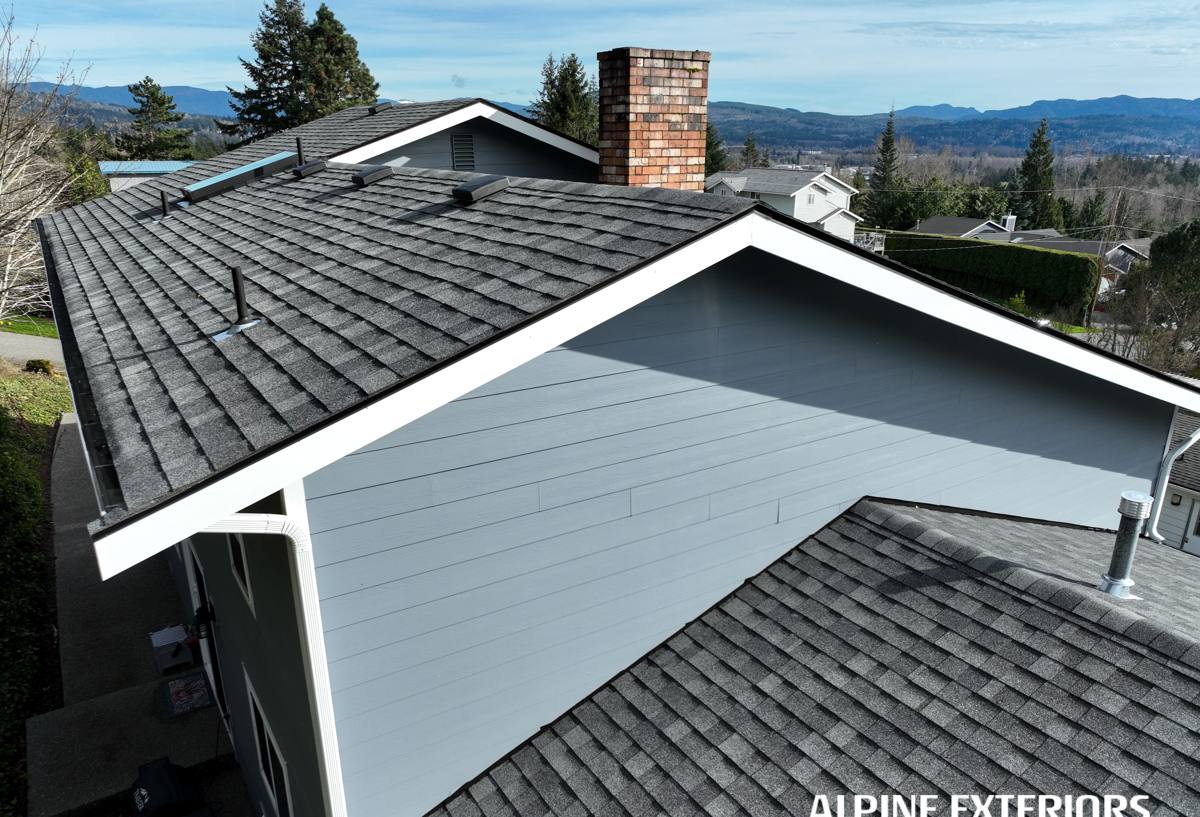
What Salt Air, Rain, and Moss Actually Do to a Roof
Salt Air and Corrosion
Custer's proximity to the water means airborne salt settles on roofing surfaces, flashing, fasteners, and any exposed metal. Over years, that accelerates corrosion on lower-grade fasteners and flashing, which is where most "surprise" leaks start — not through the shingles themselves, but through corroded metal at valleys, vent boots, and chimney flashing.
Driving Rain and Wind-Driven Water
Open, rural properties around Custer often get more direct wind exposure than roofs in denser, more sheltered parts of Ferndale. Wind-driven rain doesn't just fall straight down — it gets pushed up under shingle edges, into laps, and around penetrations that would stay dry in a calmer storm. A roof system that relies only on gravity to shed water isn't enough out here; the underlayment and flashing details have to assume water will be pushed sideways at some point every winter.
Moss and Trapped Moisture
Shaded, tree-lined lots that are common around Custer keep roof surfaces damp long after a storm passes. That moisture is exactly what moss needs to take hold. Moss doesn't just look bad — its root structure lifts shingle edges, holds water against the roofing surface, and slowly works its way under the shingle mat. A roof installed without moss-resistant materials or proper airflow will grow moss again within a couple of seasons, no matter how well the shingles themselves are rated.
Repair or Replace? Signs Your Custer Home Needs a New Roof
Not every roof problem calls for full replacement, but out here certain signs mean patching is just delaying a bigger repair bill. Consider a new roof installation instead of another repair if you're seeing:
- Granule loss heavy enough that you can see it collecting in gutters or downspouts
- Curling, cupping, or cracked shingles across multiple areas of the roof, not just one spot
- Moss or algae growth that comes back within a year of cleaning
- Soft spots or sagging when you walk the roof or view it from a ladder
- Daylight visible through the roof deck from inside the attic
- Repeated leaks in different locations after storms, rather than one recurring spot
- A roof approaching or past 20-25 years old, even if it "looks okay" from the ground
If you're only dealing with one or two of these, a targeted repair may still make sense. Once several show up together, that's usually a sign the roofing system as a whole has reached the end of its service life.
What a Correct New Roof Installation Involves
Tear-Off and Deck Inspection
A proper installation starts with a full tear-off down to the roof deck, not an overlay. That's the only way to actually see what the old roof was hiding — soft or rotted decking, prior moisture damage, or improperly installed flashing from a previous job. Any damaged decking gets replaced before anything new goes down; installing new roofing over a compromised deck just guarantees an early failure.
Underlayment and Water Protection
Given how much wind-driven rain Custer sees, underlayment choice matters more here than in drier parts of the state. We use synthetic or ice-and-water underlayment in valleys, eaves, and other vulnerable areas as a second line of defense — so that if wind ever forces water past the primary roofing surface, there's still a water-resistant barrier between that moisture and the deck.
Ventilation
Proper intake and exhaust ventilation keeps the attic space closer to outdoor temperature and humidity, which reduces condensation on the underside of the deck and slows moss and mold growth from below. It also protects the shingle warranty — most manufacturers require adequate ventilation to honor coverage, and it's one of the most commonly skipped steps in lower-quality installs.
Flashing and Penetrations
Every chimney, vent pipe, skylight, and roof-to-wall transition is a potential entry point for water. Given the corrosive effect of salt air on cheaper metal, we install flashing rated for coastal exposure and make sure every penetration is properly sealed and lapped with the underlayment — not just caulked over, which is a short-term fix that fails within a few years.
Choosing a Roofing Material for a Custer Property
There's no single "best" roofing material for every home — the right choice depends on your roof's pitch, sun/shade exposure, budget, and how much maintenance you want to do. Here's how the common options compare for a property in this climate:
| Material | Moss & Moisture Resistance | Salt Air / Wind Durability | Typical Lifespan | Maintenance |
|---|---|---|---|---|
| Architectural asphalt shingle | Good with algae-resistant granules | Good with corrosion-resistant fasteners and flashing | 25-30 years | Periodic moss treatment and gutter cleaning |
| Standing seam metal | Excellent — sheds moisture quickly, little surface for moss to grip | Very good with proper coating and fastener selection | 40-50+ years | Low; occasional inspection of seams and fasteners |
| Synthetic/composite shingle | Good to very good depending on product | Good; resists cracking in wind and temperature swings | 30-50 years | Low to moderate |
Our professional standard is to steer homeowners away from untreated wood shake roofing in this specific climate. It's not that wood shake can't be installed well — it's that in an area with this much sustained moisture and moss pressure, it demands a level of ongoing maintenance and moisture management that most homeowners don't want to sign up for, and the trade-offs in longevity and warranty coverage generally don't compare favorably to the options above for a primary roof.
Our New Roof Installation Process
- On-site assessment — we inspect the current roof, attic ventilation, and any visible trouble spots before quoting anything
- Material selection — we walk through options based on your home's exposure, budget, and how it looks with your siding and trim
- Written estimate — a clear scope of work, so you know exactly what's included before any tear-off starts
- Tear-off and deck inspection — full removal of old roofing, with any deck repairs identified and addressed
- Underlayment, flashing, and ventilation installation — the parts of the job that determine whether the roof actually performs in a Whatcom County winter
- Final roofing installation — shingles, panels, or your chosen material, installed to manufacturer specification to protect the warranty
- Site cleanup and walkthrough — magnetic sweep for debris and a final review of the finished roof with you
Why a Crew That Already Works in Custer Matters
Roofing crews that mostly work drier, more sheltered areas don't always account for how much harder Custer's exposure is on materials and fasteners. A crew that already works this part of Whatcom County knows which flashing and fastener grades hold up against salt air, how much ventilation these homes actually need given the tree cover and moisture, and where moss tends to establish itself first on a given roof orientation.
There's also the practical side: local crews know the permitting process with Whatcom County, aren't estimating drive time from another region into every job, and can respond faster if a storm causes an issue after installation. For a job as weather-dependent as roofing, working with a crew that's already familiar with your area's conditions reduces the guesswork on both sides.
Keeping a New Roof Performing After Installation
A correctly installed roof still benefits from basic upkeep, especially in a climate this wet. Simple habits go a long way toward protecting the investment:
- Clean gutters at least twice a year so water isn't backing up under the roof edge
- Trim back overhanging branches to reduce shade and debris buildup, both of which feed moss growth
- Have moss growth treated early rather than waiting until it's visibly thick
- Do a visual check after major windstorms for lifted or missing shingles
- Schedule a roof inspection every few years, even without an obvious problem
What Affects the Cost of a New Roof in Custer
Every roof is priced individually, but the same handful of factors drive most of the variation from home to home:
| Factor | Why It Matters |
|---|---|
| Roof size and pitch | More surface area and steeper pitches mean more material and labor time |
| Number of existing layers | Removing multiple old layers takes longer than a single tear-off |
| Decking condition | Rotted or soft decking found during tear-off adds repair cost |
| Material choice | Asphalt, metal, and synthetic products carry different material costs and install times |
| Ventilation upgrades | Adding intake or exhaust ventilation where none existed adds labor and materials |
| Roof complexity | Valleys, dormers, chimneys, and skylights each add flashing and labor time |
We won't know the real numbers for your home until we've actually looked at the roof — anyone quoting a firm price sight unseen is guessing.
If your roof in Custer is showing its age or you just want an honest opinion on whether repair or replacement makes more sense, we're happy to take a look. Use the form below to request a free, no-pressure estimate.