 Ferndale Siding
 Board & Batten in Custer: A Style That Fits the Landscape
Custer sits in the quieter, more rural stretch of Whatcom County between Ferndale and Blaine, close enough to the water that salt air is part of daily life and far enough from town that a lot of homes here still sit on acreage, working land, or long driveways backed by trees. Board and batten siding — vertical boards with narrow strips covering the seams — has always suited that kind of property. It reads as farmhouse, barn-modern, or Pacific Northwest simple, and it holds up visually on both a small rambler and a larger outbuilding-style home.
We install board and batten siding in Custer regularly, and almost every job we look at falls into one of two categories: a full re-side after the original siding failed, or an addition/shop/barn build where the owner wants the board and batten look to match or complement the main house. Either way, the material and the installation details matter more here than they would somewhere drier and further inland.
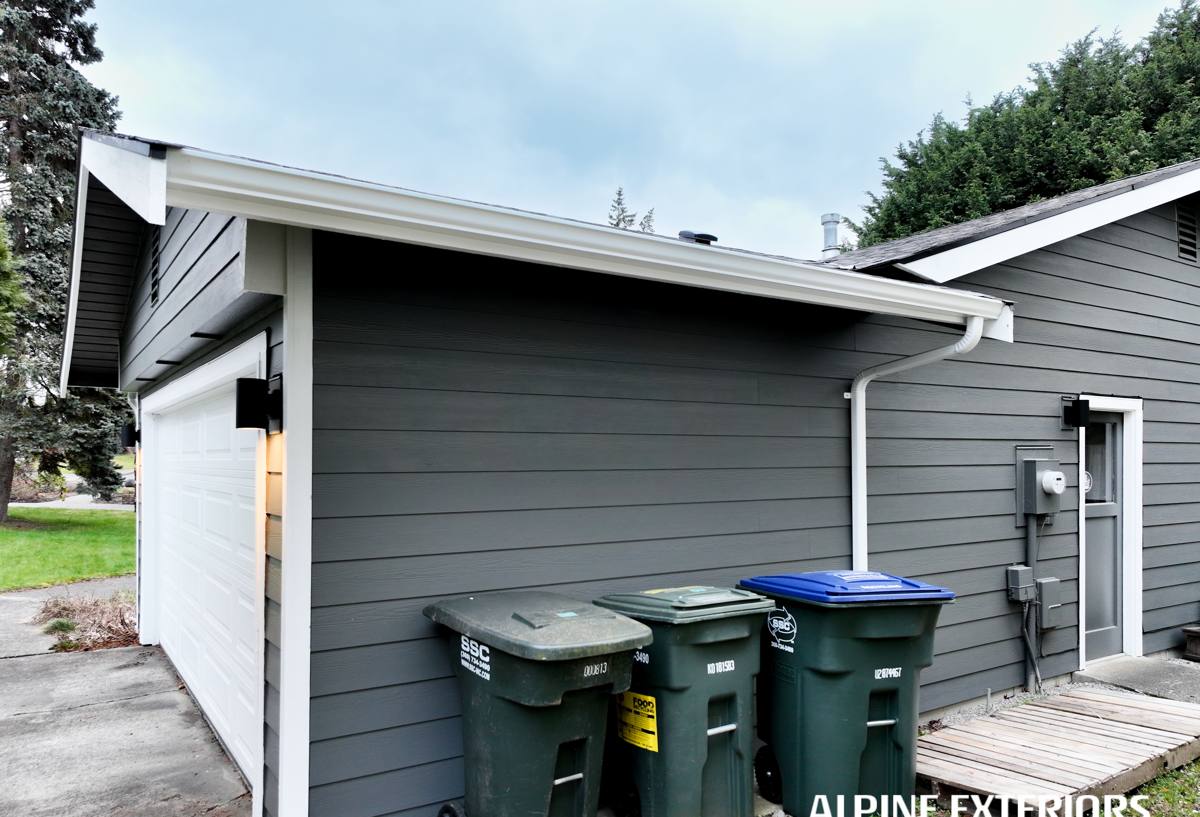
What Custer's Climate Actually Does to Vertical Siding
Vertical siding has more seams than horizontal lap siding, and every one of those seams — especially the batten joints — is a place water can find its way in if the assembly isn't built correctly. In Custer, that matters for three specific reasons:
Salt air
Being close to the Strait of Georgia and Puget Sound means airborne salt reaches homes here even without a direct waterfront view. Salt accelerates corrosion on fasteners and metal flashing, and it's harder on paint films and caulking than inland air. Cheap fasteners or unprotected metal trim are the first things to show it.
Driving rain
Whatcom County storms don't just fall straight down — wind off the water pushes rain sideways into wall assemblies, and vertical siding gives wind-driven water a more direct path along the boards toward every batten joint and every horizontal trim line. A board and batten wall that isn't detailed for wind-driven rain will eventually show it at the bottom courses and around window heads first.
A long moss season
Damp, shaded, mild winters mean moss and algae have months to establish themselves, especially on north-facing walls, under eaves, and anywhere tree cover keeps a wall from drying out between rain events. Moss holds moisture against the siding surface longer than the siding was ever meant to sit wet, which is hard on any material that isn't inherently rot-proof.
Why We Only Install James Hardie for This
Board and batten can be built out of several materials, and the material choice matters more for this style than for almost any other siding profile, because of how many vertical seams are involved. We standardized on James Hardie fiber cement for every siding job we do, board and batten included, for a simple reason: it's a non-combustible, engineered material that doesn't rot, doesn't feed moss and algae the way wood fiber does, and holds a factory-applied ColorPlus finish that's built to handle UV and moisture cycling — not a field-applied coat of paint that starts failing at the seams first.
We don't install primed wood board and batten, cedar, vinyl vertical panels, or LP SmartSide here, and we're upfront about why:
| Material | How it handles salt air & moisture | Maintenance burden | Why it's not our standard |
|---|---|---|---|
| James Hardie fiber cement | Non-combustible, dimensionally stable, doesn't absorb moisture like wood fiber | Occasional wash; factory finish holds color | This is what we install |
| Primed wood / cedar | Natural material, absorbs moisture at cut edges and joints, prone to rot over time | Repainting/staining on a recurring cycle | Field finish and end-grain exposure are the weak point in a wet climate |
| Vinyl vertical panel | Won't rot, but expands/contracts with temperature and can warp or fade | Low, but limited repair options once damaged | Panel movement at seams and limited color depth |
| LP SmartSide | Engineered wood strand product; performs well when detailed correctly | Moderate; relies on factory treatment staying intact at cuts | We chose to standardize on fiber cement instead of engineered wood |
This isn't a knock on every homeowner who has one of these products on their house today — plenty perform fine when properly maintained. It's a statement of what we've decided to stand behind as installers, and Hardie fiber cement is the material we're willing to warranty our workmanship on.
What a Correct Board & Batten Installation Actually Involves
Board and batten looks simple from the street, but it's less forgiving of shortcuts than lap siding. Most of the failures we get called out to inspect trace back to one of a handful of installation details being skipped.
A rainscreen gap behind the siding
Vertical furring strips create a drainage and drying gap between the siding and the water-resistive barrier. In a climate with Custer's rainfall and moss exposure, this gap is what lets any moisture that does get past the surface actually dry out instead of sitting against the sheathing.
Fastening pattern and board spacing
Fiber cement board and batten needs to be fastened per the manufacturer's engineering — correct nail or screw type, correct embedment, and enough clearance at panel edges to allow for slight material movement without cracking the substrate.
Flashing at every horizontal transition
Window heads, water tables, roof-to-wall intersections, and the base of the wall all need proper flashing and kick-out details. On a vertical siding assembly, these horizontal transitions are exactly where wind-driven rain concentrates, so this is not a place to save time.
Batten and joint treatment
Battens need consistent reveal spacing and correct fastening through to framing or furring — not just into the board beneath them — so the whole assembly stays flat and the joints stay tight over time.
James Hardie Board & Batten Options
For this look, we typically work with Hardie's vertical panel products paired with battens in a factory ColorPlus finish, matched to the trim and accent colors already common on Whatcom County homes. Because the finish is baked on at the factory rather than applied on site, the color holds consistently across every board and batten strip — including the cut ends, which get factory-sealed edge treatment during installation rather than relying on field touch-up alone. This matters more on a vertical profile than a horizontal one, simply because there are more vertical cut edges exposed to weather.
Our Process for a Custer Board & Batten Project
We keep the process straightforward and try not to waste a homeowner's time with vague estimates or surprise change orders:
- On-site assessment of the existing wall assembly, moisture conditions, and any rot or moss damage already present
- A written estimate that specifies the exact Hardie product, finish, and batten spacing — not a vague "siding allowance"
- Removal of failed siding and inspection of sheathing, with repairs called out and priced separately before we cover anything up
- Installation of the water-resistive barrier, rainscreen furring, flashing, and then the board and batten system itself
- A final walkthrough so you know what was installed and what, if anything, needs periodic attention
We don't cover damaged sheathing or skip flashing details to hit a lower number on the estimate. If we find rot once the old siding is off, we show it to you before it goes back under new siding.
Living With Board & Batten Through Custer's Moss Season
Even the right material benefits from a little seasonal attention, especially on shaded or north-facing walls. A short list covers most of it:
- Rinse walls once or twice a year with a garden hose and soft brush attachment — no pressure washer aimed directly at seams or battens
- Trim back shrubs and tree limbs that keep a wall shaded and slow to dry after rain
- Check gutters and downspouts before the fall rains start; overflowing gutters dump extra water directly onto board and batten walls below
- Look at ground-level clearance yearly — soil, mulch, or debris piling against the bottom boards holds moisture against the siding
- Have caulking at trim and window transitions checked every few years, even though the panels themselves don't need repainting
Why It Matters That We Already Work in Custer
Board and batten done correctly depends on getting the wind-driven rain and moisture details right for the specific site — a shaded, tree-lined lot on the inland side of Custer sees different conditions than an open property with more direct exposure to weather coming off the water. A crew that already installs siding across Ferndale and the surrounding Whatcom County communities has seen how these variations actually play out on real walls, not just in a spec sheet, and that shows up in where we add extra flashing attention or adjust the furring detail without being asked.
If you're considering board and batten siding for a home, shop, or addition in Custer, we're glad to come take a look and put together a straightforward, no-pressure estimate — no vague allowances, no pressure to decide on the spot. Just fill out the form below and we'll get in touch.