 Ferndale Siding
 Siding That Actually Holds Up in Custer
Custer sits close enough to the water that homes here take a different kind of beating than siding fifteen miles inland. Salt-laden air off the coast works into seams and fasteners year-round, driving rain off the Strait pushes moisture sideways into every gap a wall assembly offers, and the long gray stretch from October through April keeps north-facing walls and shaded siding damp long enough for moss and algae to take hold. None of that is exotic weather. It's just Whatcom County doing what Whatcom County does. But it means a siding job that would be fine in a drier climate can fail here in a fraction of the time if it's not built for these conditions from the start.
This page is specifically about fiber cement siding for Custer homes — what the material needs to do here, what correct installation actually involves, and why we only install one product system rather than offering a menu of options.
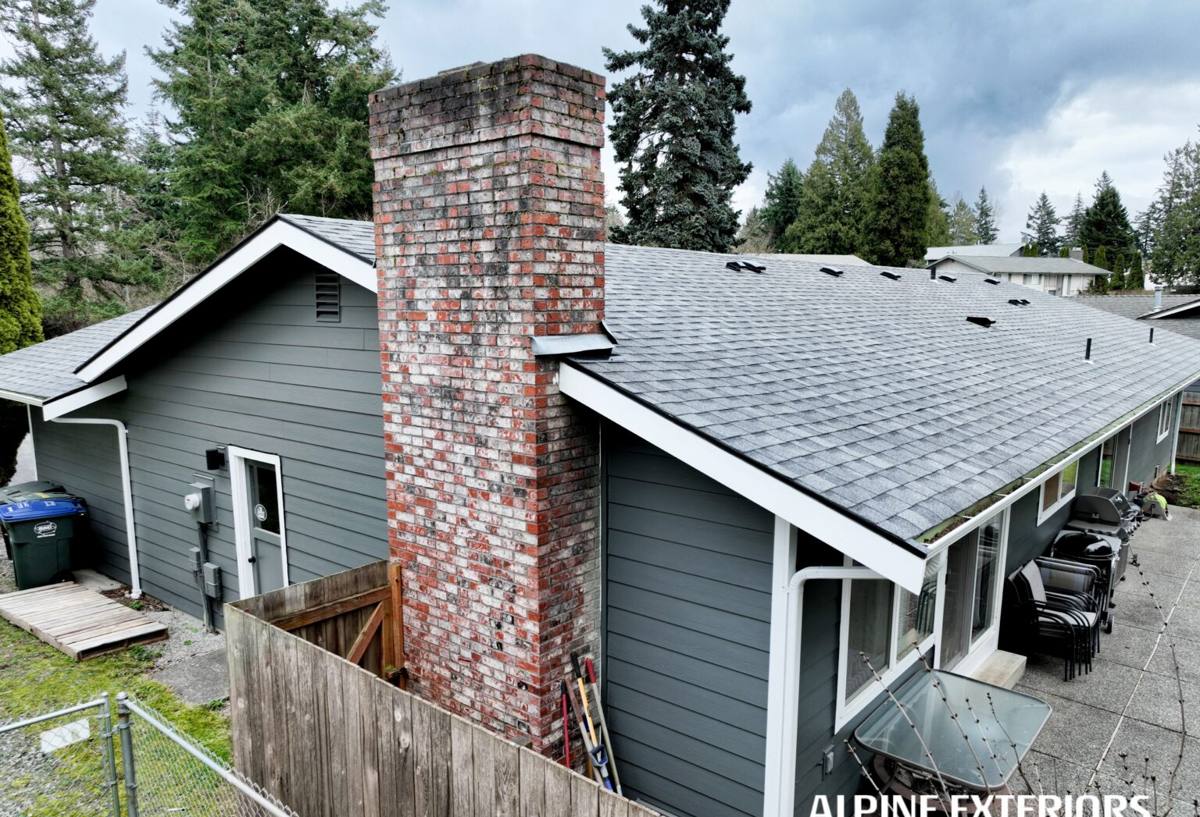
What Salt Air, Rain, and Moss Actually Do to a Wall
Salt Air
Airborne salt is corrosive to metal fasteners, flashing, and trim. Over years, undersized or wrong-grade fasteners can corrode at the head, staining the siding face and eventually losing their grip. Salt exposure also accelerates the breakdown of lower-grade paint films, which is one reason a factory-cured finish matters more here than in a dry inland climate.
Driving Rain
Wind-driven rain doesn't just fall — it gets pushed horizontally and upward, finding its way behind siding through any gap at joints, corners, and penetrations (hose bibs, light fixtures, vents). A wall that relies on caulk alone to keep water out will eventually leak. A wall built with correct drainage — a weather-resistant barrier, proper flashing, and clearances that let water drain and air circulate — sheds that same rain without issue.
Moss and Algae
Shaded, north-facing, and tree-adjacent walls in Custer stay damp far longer after a storm than south-facing walls in full sun. That extended dampness is exactly what moss and algae need to establish. Once moss gets a foothold at a butt joint or behind a piece of trim, it holds moisture against the substrate constantly — which is a much bigger problem for wood-based or wood-composite siding than it is for cement-based siding, since fiber cement doesn't feed mold or rot the way organic material can.
Why We Only Install James Hardie Fiber Cement
We don't offer LP SmartSide, vinyl, Cemplank, Allura, primed spruce, or cedar as options — not because those products have no merit, but because we've made a professional decision about what we're willing to put our name behind in this climate. Here's the honest version of that reasoning:
- Vinyl can warp and become brittle with age, and its seams and J-channels give wind-driven rain more opportunities to work behind the cladding over time.
- LP SmartSide and other wood-strand products are engineered wood — they perform well when maintained, but they're still organic material, which means moisture that gets past a compromised seal has something to feed on. In a moss-prone, high-moisture climate like this one, that's a maintenance burden we don't want to hand a homeowner.
- Primed spruce and cedar require the most ongoing maintenance of any option — regular repainting and moisture vigilance — which is a tough ask given how much of the year this area spends wet.
- Other fiber cement brands (Cemplank, Allura) are legitimate cement-based products, but we've standardized on one manufacturer's system so our crew installs one set of specs, one flashing detail, and one warranty structure every time — consistency that protects the homeowner more than brand-shopping would.
James Hardie's fiber cement is non-combustible, dimensionally stable in wet-dry cycling, and available in HZ5 formulations engineered for exactly this kind of climate exposure. Combined with a factory-applied ColorPlus finish — cured before the boards ever reach the jobsite — it holds color and resists the fade and chalking that field-applied paint is prone to. That's the whole reason we standardized on it: fewer variables, fewer callbacks, and a product built for weather like ours.
What Correct Installation Actually Involves
Fiber cement siding is only as good as the wall assembly behind it. Most siding failures we get called to inspect trace back to installation shortcuts, not the material itself. A correct job includes:
The Water-Resistive Barrier
A continuous, properly lapped weather-resistant barrier behind the siding, with all penetrations (vents, outlets, fixtures) flashed and sealed before a single board goes up. This is the layer that actually keeps bulk water out of the wall cavity — the siding itself is the second line of defense, not the only one.
Flashing and Clearances
Z-flashing above every horizontal trim board and window head, correct kick-out flashing where roof lines meet walls, and minimum clearances at grade, roof lines, and decks so siding isn't sitting in standing water or trapped moisture. Manufacturer clearance specs exist for a reason — skipping them is one of the most common causes of early rot and staining at the bottom courses.
Fastening
Corrosion-resistant fasteners, driven at the correct depth (not overdriven, which cracks the board's edge and creates a moisture entry point) and into framing, not just sheathing. In a salt-air environment, fastener grade isn't a place to cut corners.
Joints and Caulking
Butt joints backed with the correct flashing tape or H-molding rather than caulk alone, and caulk used only where the manufacturer specifies — as a supplement to good flashing detail, not a substitute for it.
How We Approach a Custer Job
- On-site assessment. We walk the exterior, check current siding condition, look at moisture staining patterns, moss growth on shaded elevations, and existing flashing details before quoting anything.
- Tear-off and substrate check. Removing existing siding lets us actually see the sheathing and framing underneath — this is where hidden rot or past water damage shows up, and it needs to be addressed before new siding goes on top of it.
- Barrier and flashing installation. The weather-resistive barrier, flashing, and any needed trim carpentry go in first, inspected before siding starts.
- Hardie installation to spec. Boards, panels, or shingles installed per manufacturer clearance, fastening, and joint specifications — not per shortcut.
- Trim, caulk, and touch-up. Corner boards, trim, and any factory-finish touch-up completed last, with attention to the details that keep water moving down and out rather than in.
Comparing How Common Siding Options Handle This Climate
| Material | Salt Air Exposure | Driving Rain / Moisture | Moss-Prone Shade | Maintenance Load |
|---|---|---|---|---|
| James Hardie Fiber Cement | Corrosion-resistant fasteners, factory finish holds up well | Engineered for wet-dry cycling when installed to spec | Cement substrate doesn't feed organic growth | Low — occasional wash, no repainting for years |
| Vinyl | Can become brittle with UV and salt exposure over time | Seams and channels offer more entry points | Doesn't feed growth, but growth sits visibly on the surface | Low, but limited repair options if damaged |
| LP SmartSide / engineered wood | Performs adequately with intact seal | Vulnerable if seal is compromised | Organic material — moisture behind it can lead to swelling | Moderate — seal integrity needs monitoring |
| Cedar / primed spruce | Needs regular refinishing near salt exposure | Requires vigilant sealing and drainage | Most vulnerable — organic and absorbent | High — repainting and moisture checks are ongoing |
What Drives the Cost of a Custer Fiber Cement Project
Every home is different, but the same handful of factors move the estimate up or down on most jobs in this area:
| Factor | Why It Matters Here |
|---|---|
| Tear-off scope | Full removal of old siding vs. new construction changes labor significantly |
| Sheathing condition | Hidden rot found during tear-off (more common on shaded, moisture-prone walls) adds repair time |
| Flashing complexity | Roof lines, dormers, and multiple wall planes each need correct flashing detail |
| Product line and profile | Lap siding, shingle-style panels, and board-and-batten carry different material and labor costs |
| Trim and color | Factory-finished ColorPlus trim vs. field-painted trim affects both cost and long-term upkeep |
Why a Crew That Already Works Custer Matters
Whatcom County's coastal microclimates aren't uniform — a wall that gets full afternoon sun handles moisture very differently than one tucked in shade behind trees or a neighboring structure, and a crew that regularly works Custer, Ferndale, and the surrounding coastline learns to read those differences before the first board goes up. That translates into flashing details sized for what a specific wall actually faces, fastener choices that account for proximity to salt air, and an eye for the moss-prone spots that get missed by crews unfamiliar with this stretch of coastline. It also means fewer surprises during tear-off, since local crews have already seen how this region's moisture and salt exposure typically age a wall assembly over time.
Homeowner Maintenance Checklist
Correctly installed Hardie siding is low-maintenance, not no-maintenance. A short seasonal routine keeps it performing the way it's designed to:
- Rinse siding annually (a garden hose is usually enough) to clear salt residue and organic buildup before it can take hold
- Inspect shaded and north-facing walls each fall for early moss or algae growth and address it early
- Check caulk lines at trim and penetrations yearly for cracking or gaps
- Keep gutters clear so overflow doesn't run down siding faces or pool at the base of walls
- Trim back vegetation that shades walls or holds moisture against the siding
- Watch for any staining near fastener heads, which can signal a corrosion issue worth having checked
Let's Look at Your Home
If you're weighing a siding replacement in Custer or anywhere around Ferndale, we're happy to walk the exterior with you, point out what the current siding and wall assembly are dealing with, and give you a straightforward, no-pressure estimate for doing it right the first time. There's a form below — reach out and we'll set up a time to take a look.