 Ferndale Siding
 Storm Damage in Custer: Why This Corner of Whatcom County Takes a Beating
Custer sits in an exposed stretch of Whatcom County, close enough to the water that homes here catch weather other inland neighborhoods don't. Wind off the Strait pushes rain sideways instead of straight down, open farmland offers less of a windbreak than a wooded lot would, and the salt-tinged air that drifts inland corrodes metal faster than it would in a drier climate. None of that is a reason to panic about your roof. It's just the reason storm damage in this area tends to show up in specific, predictable places, and why a repair that ignores those patterns often fails again in the next windstorm.
This page is about one job: storm damage roof repair for Custer homes. Not a general roofing overview, not a full replacement pitch — just what actually needs to happen when wind, rain, or falling debris has damaged a roof out here, and how to get it fixed correctly the first time.
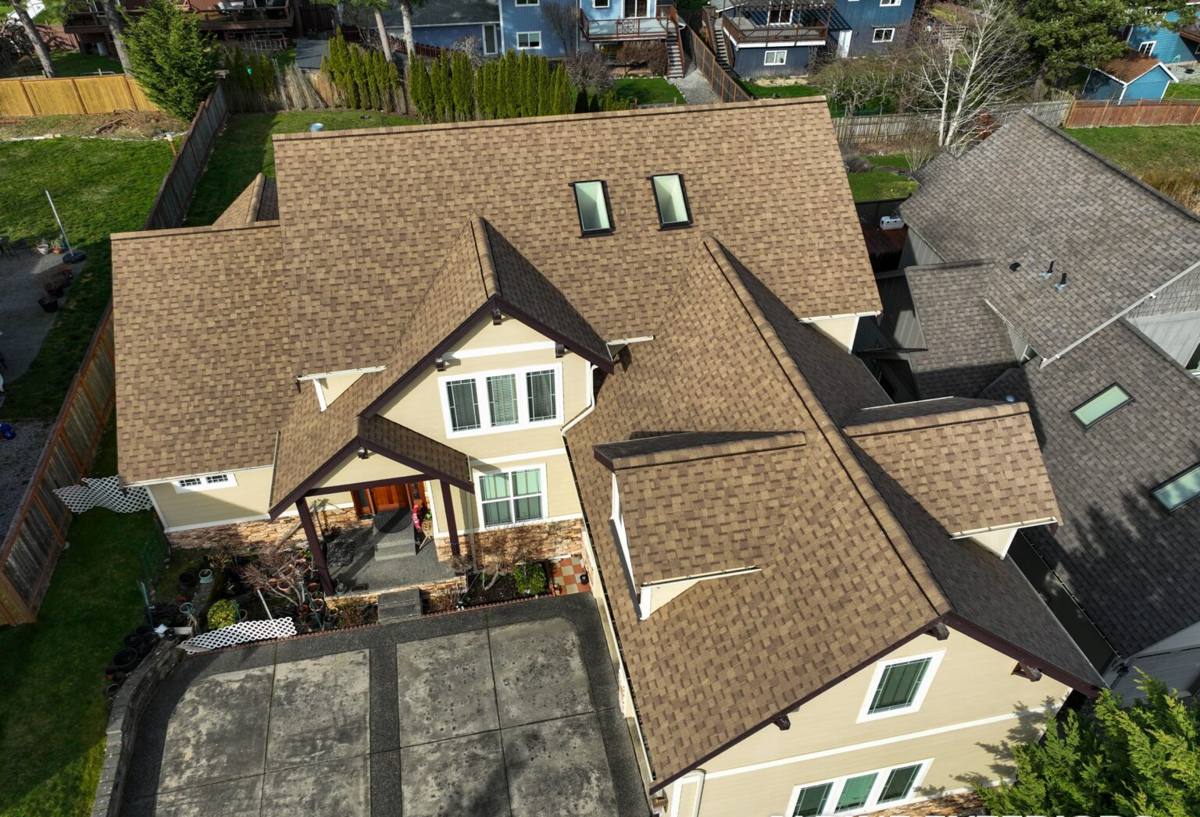
How Wind and Rain Actually Damage a Roof Out Here
Wind uplift
Shingles and metal panels are designed to shed water, not fight upward pressure. When gusts get under a shingle edge or a loose panel seam, they can peel material back or snap it off entirely. Once a shingle is lifted even slightly, it rarely seals back down on its own — it stays vulnerable until it's reset or replaced.
Wind-driven rain intrusion
Straight-down rain and sideways rain behave differently on a roof. Driving rain gets pushed uphill under shingle laps, around chimney flashing, and into valleys that would shed a normal rainfall without issue. This is why storm damage often shows up as an interior leak days after the wind has died down — water worked its way in during the storm and took time to travel through the decking.
Falling limbs and debris
Open, rural lots around Custer often have mature trees near the house. A storm doesn't need to drop a whole tree to cause damage — a single limb can crack shingles, dent metal roofing, or puncture underlayment in a way that isn't obvious from the ground.
Salt Air and Moss: The Slow Damage Between Storms
Storm damage isn't only about the storm itself. In this part of Whatcom County, salt air and a long moss season set the stage for how badly a storm hits. Salt-laden air accelerates corrosion on exposed nails, flashing, and metal fasteners — a fastener that's already rusted and weakened is far more likely to back out or shear off in high wind than one that's still sound. Moss does something different but just as costly: it holds moisture against the roof surface, lifts shingle edges as it grows under them, and clogs the gutters and valleys that are supposed to carry storm runoff away. A roof going into storm season with heavy moss or corroded fasteners is starting from a weaker position, and the damage that results is often worse than the storm alone would have caused on a well-maintained roof.
This is why we look at more than just the obvious storm damage when we're on a Custer roof — a repair that only patches the visible hole but ignores nearby moss buildup or corroding flashing is a repair that gets revisited next season.
The First 24–48 Hours After a Storm
What you do right after a storm affects both the repair and, if you're filing a claim, the outcome of that claim.
- Stay off the roof. Storm damage is often not stable — cracked decking or loosened panels can give way under weight.
- Check the attic or top-floor ceilings for staining, dampness, or a fresh musty smell, which can appear before a visible drip does.
- Photograph anything visible from the ground: missing shingles, dented metal, debris on the roof or in the gutters.
- If water is actively entering the living space, place containers and move anything valuable — but don't attempt roof-level repairs yourself.
- Avoid tarping or patching the roof yourself unless you have the right harness and footing experience; a fall risk is not worth saving a day.
- Call for an inspection before the next rain event if at all possible, since a small entry point can become a larger one with a second storm.
What a Correct Storm Damage Repair Actually Involves
A repair that only replaces the shingles you can see from the driveway is a partial repair. A correct one traces the damage back to its source and checks everything water could have reached.
- Surface inspection — every shingle, panel, or tile in and around the damaged area, checked for cracking, lifting, and granule loss, not just the obviously missing pieces.
- Flashing check — chimney, vent, and valley flashing, since wind-driven rain concentrates at these transitions and corroded or bent flashing is a common hidden entry point.
- Fastener condition — especially relevant here given salt-air corrosion; a repair that reuses weakened fasteners is a repair that comes loose again.
- Underlayment and decking — pulled back far enough to confirm there's no soft, rotted, or water-stained decking beneath the visible damage. This is the step most often skipped by a rushed repair, and it's the one that matters most.
- Interior verification — a look at the attic and ceiling below the repair area to confirm no moisture has already traveled past the roofline.
- Surrounding roof condition — moss, granule loss, or aging materials nearby, flagged even if they're outside the immediate repair scope, so you know what's coming next rather than being surprised by it.
Repair or Replace? How We Make the Call
Storm damage doesn't automatically mean a full new roof, and it doesn't automatically mean a quick patch either. The right call depends on a few honest factors.
| Factor | Points toward repair | Points toward replacement |
|---|---|---|
| Extent of damage | Localized to one section or slope | Spread across multiple slopes or the whole roof |
| Age of roof | Roof is within its expected service life | Roof was already near end of life before the storm |
| Decking condition | Decking is sound once exposed | Decking shows rot or repeated soft spots |
| Fastener/flashing condition | Hardware elsewhere is still sound | Widespread corrosion found during inspection |
| Insurance scope | Adjuster scopes a defined repair area | Adjuster's scope covers full slopes or full roof |
We'll always tell you plainly which side of this table your roof falls on, and why — including when a repair is the honest answer even if a replacement would be the bigger job for us.
Our Process, Start to Finish
- Inspection and documentation. We walk the roof, photograph the damage, and note anything else that could affect the repair or a future claim.
- Written scope and explanation. You get a plain-language explanation of what's damaged, what needs to happen, and why — not just a line-item invoice.
- Insurance coordination, if applicable. We can walk the roof with your adjuster and speak to what we found, since our documentation and their scope need to match for the claim to go smoothly.
- Repair. Damaged materials removed, decking checked and replaced where needed, correct underlayment and flashing installed, new shingles or panels matched as closely as possible to the existing roof.
- Final check. We confirm the repair sheds water correctly under the same wind-driven conditions that caused the original damage — not just under a garden-hose test on a calm day.
Cost Factors and What Drives the Price
Every storm repair is different, but the same handful of factors drive most of the cost swing.
| Cost factor | Why it matters |
|---|---|
| Size of the damaged area | A single lifted section costs far less than damage spread across a slope |
| Decking replacement needed | Rotted or soft decking adds material and labor beyond the surface repair |
| Roof material | Matching existing shingle or panel style affects material cost and availability |
| Roof pitch and access | Steeper or harder-to-access roofs take longer and require more safety setup |
| Flashing and fastener replacement | Corrosion from salt air can mean replacing more hardware than the visible damage alone suggests |
Simple, localized repairs are generally a modest expense; repairs that uncover decking rot or widespread corrosion cost more because there's genuinely more work involved. We'll never pad a scope, and we'll never quietly shrink one either — if the decking's bad, you'll see it before we close it back up.
Why a Crew That Already Works Custer Matters
Storm damage repair isn't the place to learn a neighborhood's quirks on the job. A crew that already works this stretch of Whatcom County knows that Custer roofs take wind-driven rain from a different angle than a sheltered lot in town, that salt air shortens the working life of exposed fasteners, and that moss season here is long enough to undo a mediocre repair before the next storm even arrives. That familiarity shows up in faster, more accurate diagnosis — knowing where to look first instead of guessing — and in repairs built to hold up against the specific weather this area sees, not generic textbook conditions. It also means a shorter wait when storm season has everyone calling at once, since local response time matters when water is actively getting into your home.
If a recent storm has left your Custer home with missing shingles, a new leak, or roof damage you're not sure how serious it is, we're glad to take a look. Reach out for a free, no-pressure estimate — the form below gets you started.