 Ferndale Siding
 Building Decks That Actually Hold Up in Custer
Custer sits close enough to the water that salt air is part of daily life, and far enough into Whatcom County's rain belt that a deck here spends more days wet than dry across a typical year. Add a long moss season that stretches from fall through spring, and you've got a combination that's hard on wood, hard on fasteners, and unforgiving of shortcuts. A deck built the way it might be built in a drier inland climate simply doesn't last the same number of years out here.
We build and replace decks for homeowners throughout the Custer area, and the jobs we get called back for later are almost always ones where someone else cut a corner that doesn't show up as a problem until year three or four — fastener corrosion, trapped moisture under boards, or framing that was never really rated for the exposure it was going to see. This page covers what a Custer deck actually needs, what a correct build looks like, and how we approach the work.
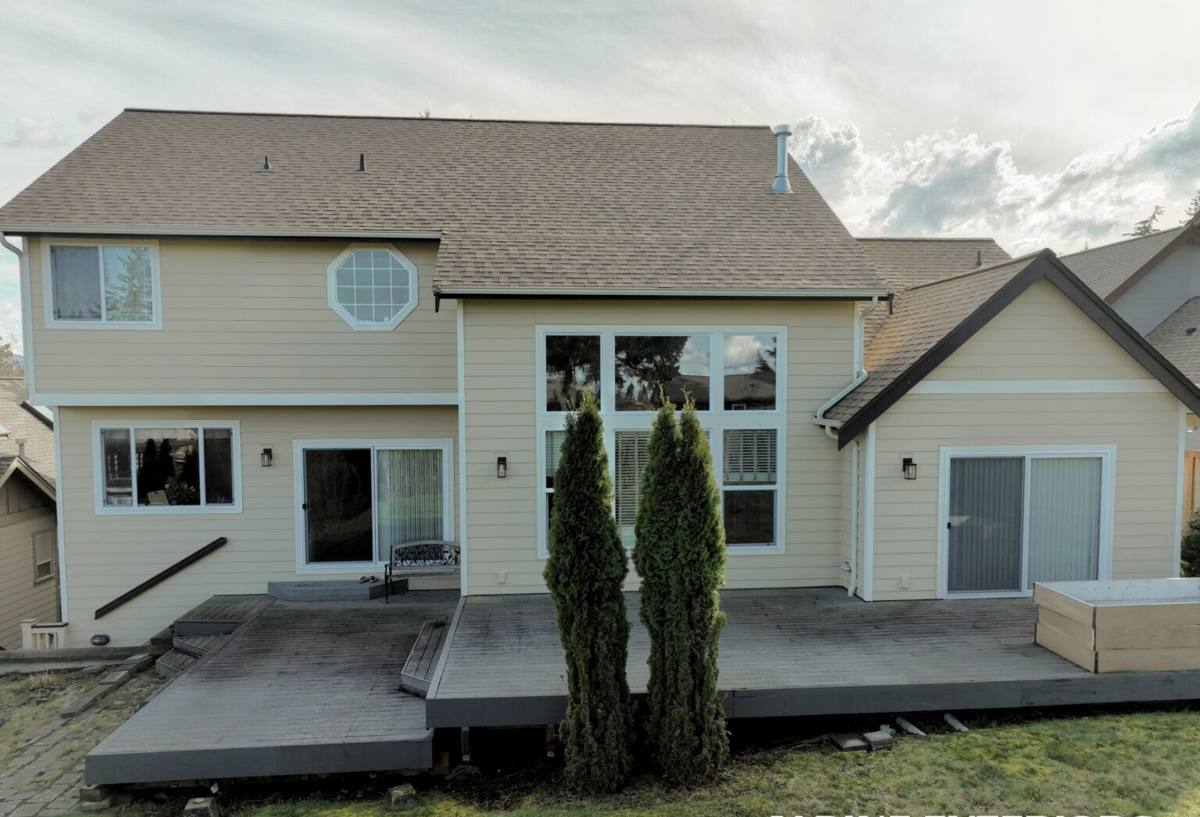
What Custer's Climate Does to a Deck
Salt Air and Metal Fasteners
Properties closer to the water and the open exposure common around Custer see airborne salt that accelerates corrosion on anything metal — screws, joist hangers, structural connectors, railing hardware. Standard galvanized fasteners can start showing rust streaks and pitting well before a deck's wood components are ready to be replaced. Once a fastener corrodes, it loses holding strength quietly, with no visible sign until something works loose.
Driving Rain and Moisture Cycling
Whatcom County rain doesn't just fall straight down — wind-driven rain gets pushed sideways into ledger connections, under railing posts, and into any gap where end grain is exposed. Wood that's constantly cycling between wet and dry swells and shrinks, which loosens fasteners over time and opens up small gaps that let even more water in. It's a slow feedback loop, and it's the single biggest reason older decks in this area develop soft spots at the ledger board and around post bases.
Moss and Organic Growth
A long, cool, damp season gives moss and algae plenty of time to establish on any horizontal wood surface that doesn't get much sun or airflow — the north side of a deck, areas shaded by the house or trees, and gaps between boards where debris collects. Moss holds moisture directly against the wood surface, which speeds up decay underneath it even when the deck still looks structurally fine from a distance.
What a Correct Deck Build Looks Like Here
Given all of that, a deck built for Custer needs a few things a generic build might skip:
- Corrosion-resistant fasteners and structural hardware rated for coastal or high-moisture exposure, not standard-grade galvanized
- Proper flashing at the ledger board where the deck attaches to the house, with a drainage gap so water can't sit against the siding or rim joist
- Board spacing and airflow underneath the deck so wood can dry out between rain events instead of staying saturated
- Post bases set above grade and away from standing water, with hardware that keeps the post end grain from sitting in a wet pocket
- Decking material selected with moss and slip resistance in mind, not just appearance
- Railing and stair connections that account for wind exposure if the site is open to weather off the water
None of this is exotic — it's standard good practice — but it's exactly the detail that gets skipped when a crew is trying to move fast or is used to building in a drier climate.
Choosing the Right Decking Material
There's no single "best" decking material for every Custer property — it depends on budget, how much upkeep you want to do, and how shaded or exposed the site is. Here's how the common options compare for this climate specifically:
| Material | Moisture Behavior Here | Moss/Algae Resistance | Maintenance |
|---|---|---|---|
| Pressure-treated wood | Handles wet cycling well if sealed regularly; end grain and cuts need re-treatment | Needs periodic cleaning, especially shaded areas | Annual cleaning and re-sealing recommended |
| Cedar | Naturally moisture-resistant but softer; can gray and check under constant wet/dry cycling | Moderate — still benefits from cleaning | Periodic sealing to hold color and resist decay |
| Composite decking | Doesn't absorb water or swell, handles rain cycling well | Better resistance, though moss can still grow on the surface film if never cleaned | Occasional washing, no sealing or staining |
| PVC decking | Fully moisture-sealed material, best for constant-wet exposure | Good resistance; smooth surfaces shed moss more easily | Low — washing only |
We'll walk through these trade-offs honestly for your specific site — a heavily shaded, north-facing deck has different needs than one that gets full sun and wind off open ground.
Framing and Structure: Where Decks Actually Fail
The decking boards are what you see, but the framing underneath is what determines whether a deck lasts fifteen years or forty. Most structural problems we find on older decks in this area trace back to three spots: the ledger connection to the house, the post bases, and any joist that sits close to grade or in a shaded, poorly ventilated section. We inspect all three on every project — new build or replacement — and we won't build over framing that's already compromised, even if the visible decking looks fine.
For replacements, this sometimes means the honest recommendation is to rebuild the substructure rather than just swap the surface boards. It costs more up front, but resurfacing over failing framing just delays the real repair and can create a safety issue.
Railings, Stairs, and Code Requirements
Washington building code sets requirements for deck railing height, baluster spacing, stair rise and run, and guardrail strength — and these aren't optional details. We build to code as a baseline, then account for the added wear that wind and moisture put on railing posts and connections in this area. Loose or corroded railing hardware is one of the more common issues we find on older decks during inspections, and it's also one of the more serious ones from a safety standpoint since railings take direct load from people leaning or bracing against them.
Repair, Resurface, or Full Rebuild?
Not every deck needs to be torn out completely. When we evaluate an existing deck, we're looking at three possible paths:
- Repair: Isolated fixes — replacing a few soft boards, re-securing loose railing hardware, addressing a moss problem before it becomes a rot problem
- Resurface: New decking boards over structurally sound framing, often paired with fastener and flashing upgrades
- Full rebuild: Necessary when the framing, ledger connection, or post bases show decay or corrosion — resurfacing over this just hides the problem
We'll tell you honestly which category your deck falls into. A resurface is cheaper, but if the substructure is failing, it's not the right call regardless of budget.
Our Process for Custer Deck Projects
1. On-Site Evaluation
We walk the property, assess sun exposure, drainage, and wind exposure specific to your lot, and check existing structure if this is a replacement. Custer properties vary a lot in exposure depending on how close and how open they are to the water, so we don't use a one-size-fits-all approach.
2. Material and Design Discussion
We go over decking material trade-offs, railing style, and layout based on how you actually use the space and what upkeep you're willing to do long-term.
3. Written Estimate
You get a clear, itemized estimate before any work starts — no vague allowances that turn into surprise costs later.
4. Build
Proper flashing, corrosion-resistant hardware, correct board spacing, and code-compliant railing and stairs, built by a crew that works this climate regularly.
5. Walkthrough
We go over the finished deck with you, including basic maintenance guidance specific to your site's sun and moisture exposure.
Maintaining Your New Deck in a Wet Climate
A well-built deck still needs some seasonal attention in this climate. A short checklist that applies to most Custer decks:
- Sweep debris out of board gaps regularly — trapped leaves and needles hold moisture against the wood
- Clean moss and algae off shaded or north-facing sections before it spreads, ideally before the wet season builds up
- Check railing posts and stair connections annually for movement or corrosion signs on hardware
- Reseal wood decking on the schedule appropriate to the product — don't wait until it's visibly gray and dry
- Keep gutters and downspouts near the deck clear so runoff isn't dumping extra water onto or under the structure
None of this is time-consuming if it's done on a regular schedule — it's neglect over several seasons that turns into real repair costs.
Why Local Deck-Building Experience Matters in Custer
A deck built by a crew that mostly works drier inland climates can look fine on installation day and still be the wrong build for this area — wrong fastener grade, no drainage gap at the ledger, decking chosen for looks rather than moisture behavior. We work in Ferndale and the surrounding Whatcom County communities, including Custer, and we build every deck assuming it's going to see driving rain, salt-tinged air, and months of damp shade every year, because around here, it will.
If you're planning a new deck or need an honest assessment of one that's showing its age, we're happy to take a look. Reach out for a free, no-pressure estimate using the form below — we'll give you a straight answer about what your deck actually needs.