 Ferndale Siding
 Deck Replacement in Custer: What Makes This Job Different
Custer sits close enough to the water and open farmland north of Ferndale that decks here take a beating most inland homeowners never think about. Salt-laden air off the Strait, driving winter rain that comes in sideways, and a moss season that can stretch from October into April all work against wood and fasteners at the same time. A deck that would last two decades in a drier climate can start failing in half that time here if it wasn't built or replaced with this environment in mind. When we replace a deck in Custer, we're not just swapping old boards for new ones — we're addressing the specific ways this corner of Whatcom County wears a structure down.
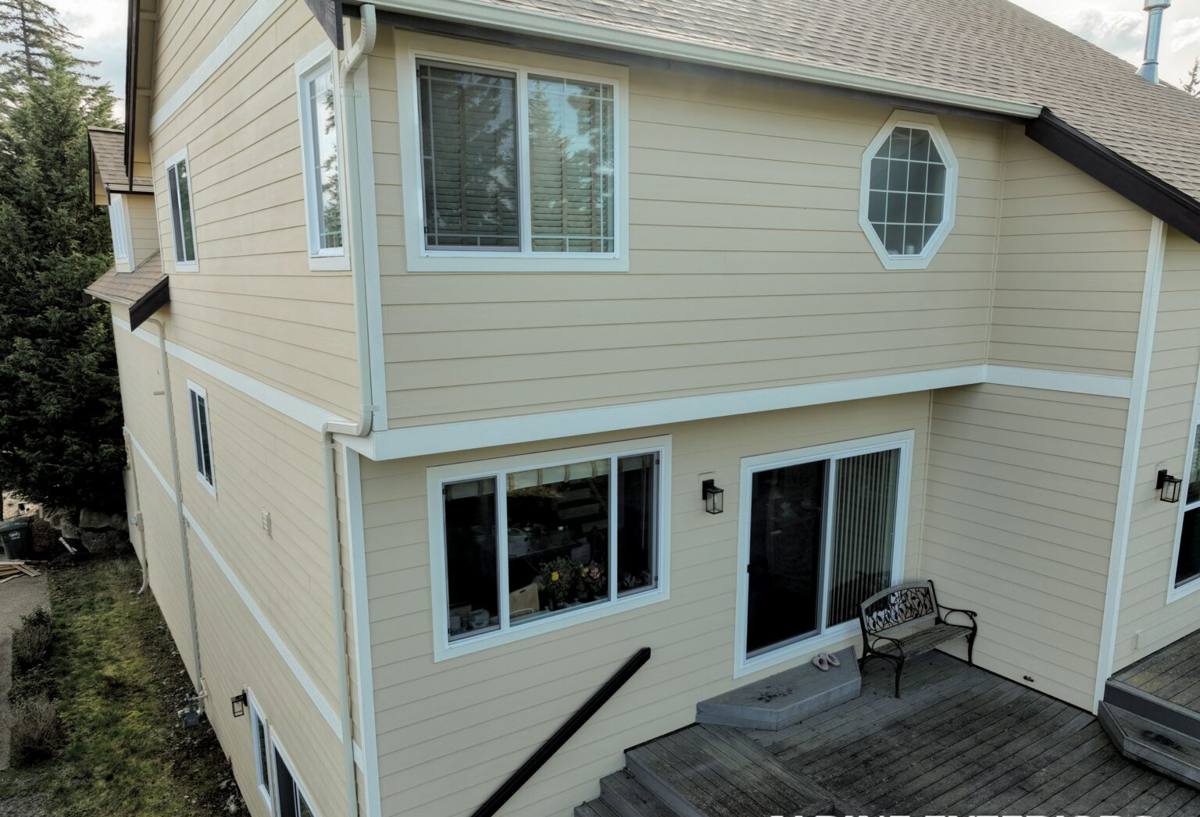
Why Decks Fail Faster Here
Salt Air and Fastener Corrosion
Homes within a few miles of Puget Sound and the Strait of Georgia see airborne salt settle on every exposed surface, including deck hardware. Standard galvanized screws and joist hangers can start corroding well before the wood itself shows real wear. Once a fastener rusts, it loses grip strength and can stain the surrounding wood — and by the time that staining is visible, the connection underneath is often already compromised.
Moss, Algae, and Trapped Moisture
Whatcom County's moss season isn't a minor cosmetic issue. Moss and algae hold moisture directly against decking boards and ledger connections for months at a time. On a deck with poor drainage or boards installed too tight together, that trapped moisture accelerates rot at the exact spots you can't see without pulling boards — under railings, around post bases, and where the deck meets the house.
Driving Rain and the Ledger Board Connection
The ledger board — where the deck attaches to the house — is the single most important structural connection on most decks, and it's also the spot most exposed to wind-driven rain in this area. A ledger without proper flashing lets water track behind it and into the rim joist and wall framing. This is the failure point we find most often on older Custer decks, and it's rarely visible until the wood is already soft.
Signs a Custer Deck Needs Replacing, Not Just Patching
- Soft or spongy spots in the decking, especially near the house or around posts
- Visible rust streaks below screw heads or joist hangers
- Gaps opening up between the ledger board and the house siding
- Persistent moss or dark staining that comes back within weeks of cleaning
- Railings that feel loose or flex when leaned on
- Boards that have cupped, split, or pulled away from fasteners
- A musty smell coming from underneath the deck
Any one of these on its own might be repairable. Two or three together, especially combined with a deck that's already 15-20 years old, usually means the structure has aged past the point where patching makes financial sense.
What a Correct Deck Replacement Involves
Tear-Out and Inspection
We start by removing the old deck down to the ledger and posts, which is also when we find out what's really going on structurally. This is where hidden rot, undersized framing, or a ledger connection that was never properly flashed gets discovered — problems that don't show up until the old boards are off.
Ledger Flashing Done Right
Given how much of Custer's deck damage starts at the ledger, we treat this connection as the most important part of the job, not a step to rush through. That means proper flashing that sheds water away from the house rather than trapping it behind the board, and lag bolts or structural screws sized and spaced to the load the deck will actually carry.
Framing Sized for the Climate
Joists, beams, and posts get sized and spaced with this region's rain load in mind, not just the minimum the building code allows. We also pay attention to airflow underneath the deck — a low, tight deck that can't breathe holds moisture against the framing far longer after a storm than one with adequate clearance.
Fasteners and Hardware
Given the salt-air exposure common in Custer, we use corrosion-resistant fasteners and connectors rated for coastal or treated-lumber contact rather than standard galvanized hardware. It costs a little more up front and it's the difference between hardware that lasts the life of the deck and hardware that starts staining and weakening within a few years.
Decking Surface Choice
Whether you go with wood or composite decking, the install details matter more than the material brand. Proper board spacing for drainage, correct fastening patterns, and attention to how each board sheds water all affect how well the surface resists the moss and algae buildup that's constant here for months at a time.
Decking Material Comparison for This Climate
| Material | How It Handles Moss/Moisture | Maintenance | Typical Lifespan Here |
|---|---|---|---|
| Pressure-treated wood | Needs regular cleaning and sealing to resist moss staining | Annual cleaning, re-sealing every 2-3 years | 15-20 years with upkeep |
| Cedar | Naturally moisture-resistant but still needs periodic sealing | Cleaning and sealing every 2-3 years | 15-25 years with upkeep |
| Composite decking | Resists rot; surface can still grow algae film if not cleaned | Periodic washing, no sealing needed | 25-30+ years, manufacturer-warrantied |
There's no universal right answer — it comes down to budget, how much upkeep you want to do, and how the deck will be used. We'll walk through the honest trade-offs for your specific situation rather than push one product line.
Why It Matters That We Already Work in Custer
A crew that works this specific stretch of Whatcom County regularly already knows the failure patterns before we pull the first board. We know that a ledger connection on a home facing open exposure toward the water needs closer attention than one tucked against a windbreak. We know how fast moss returns on a shaded north-facing deck versus one that gets afternoon sun. That familiarity means fewer surprises during the job and a replacement built to actually hold up to what this area throws at it year-round, not a generic install pulled from a manual written for a drier climate.
Being local also means we're not disappearing after the invoice is paid. If a question comes up about how the new deck is settling or draining through its first wet season, we're a short drive away, not a company that worked in the area once and moved on.
Our Process, Start to Finish
- Free on-site estimate: We look at the existing deck, ledger condition, and framing, and talk through what replacement will realistically involve.
- Written scope and cost: You get a clear breakdown of materials, labor, and timeline before any work starts — no vague allowances.
- Permitting: Most deck replacements in Whatcom County require a permit; we handle that process so it's not on you to navigate.
- Tear-out and structural inspection: Old decking and framing come off, and we confirm what's underneath before proceeding.
- Framing, flashing, and fastening: The structural work happens first and gets inspected before decking goes down.
- Decking and railing installation: Surface material and railings go in to the spec agreed on up front.
- Final walkthrough: We go over the finished deck with you, including basic care guidance for this climate.
Cost Factors to Expect
Every deck replacement quote in Custer will depend on a handful of variables. Understanding these upfront helps you compare estimates apples-to-apples:
- Deck size and shape — multiple levels or angles add labor and material
- Height off the ground and whether stairs are involved
- Decking material chosen (treated wood, cedar, or composite)
- Condition of the existing framing — reusable versus full rebuild
- Railing style and any code-required guard height changes
- Ledger and flashing work if the current connection needs correcting
- Permit requirements based on deck size and elevation
We'll walk through which of these apply to your specific deck during the estimate, so the number you get reflects your project, not a generic average.
Maintaining Your New Deck Through the Wet Season
Even a well-built deck needs some seasonal attention in this climate. A quick fall cleaning to clear leaves and debris before the heavy rains hit prevents moisture from sitting in corners and against railings all winter. Keeping gutters and downspouts clear near the deck area also matters — overflow from a clogged gutter can dump directly onto decking or the ledger connection during a storm, undoing some of the protection built into the install. If you chose wood decking, plan on periodic cleaning and resealing; composite decking mainly just needs washing to keep the algae film from building up.
If you're weighing a deck replacement in Custer, we're happy to take a look and give you a straightforward, no-pressure estimate — just fill out the form below.