 Ferndale Siding
 Metal Roofing Built for Kendall's Wet, Shaded Terrain
Kendall sits back from the coast in the tree-covered foothill country east of Ferndale, and that setting creates its own roofing problems. You're farther from the salt-laden marine air that eats at fasteners and flashing closer to Bellingham Bay, but Kendall properties trade that for something just as hard on a roof: heavy tree canopy, deep shade, and long stretches where a roof surface simply never dries out. Combine that with Whatcom County's driving rain and a moss season that can run eight or nine months of the year, and you have a climate that punishes any roofing material with weak points at the seams, fasteners, or valleys.
Metal roofing holds up to that combination better than most alternatives when it's installed correctly. It sheds water fast, gives moss and moisture far less to grab onto, and doesn't absorb water the way organic shingle mats do. But "metal roof" covers a wide range of products and installation quality, and a roof that's wrong for Kendall's terrain will still fail early even in metal. This page covers what actually matters for a metal roof on a Kendall home.
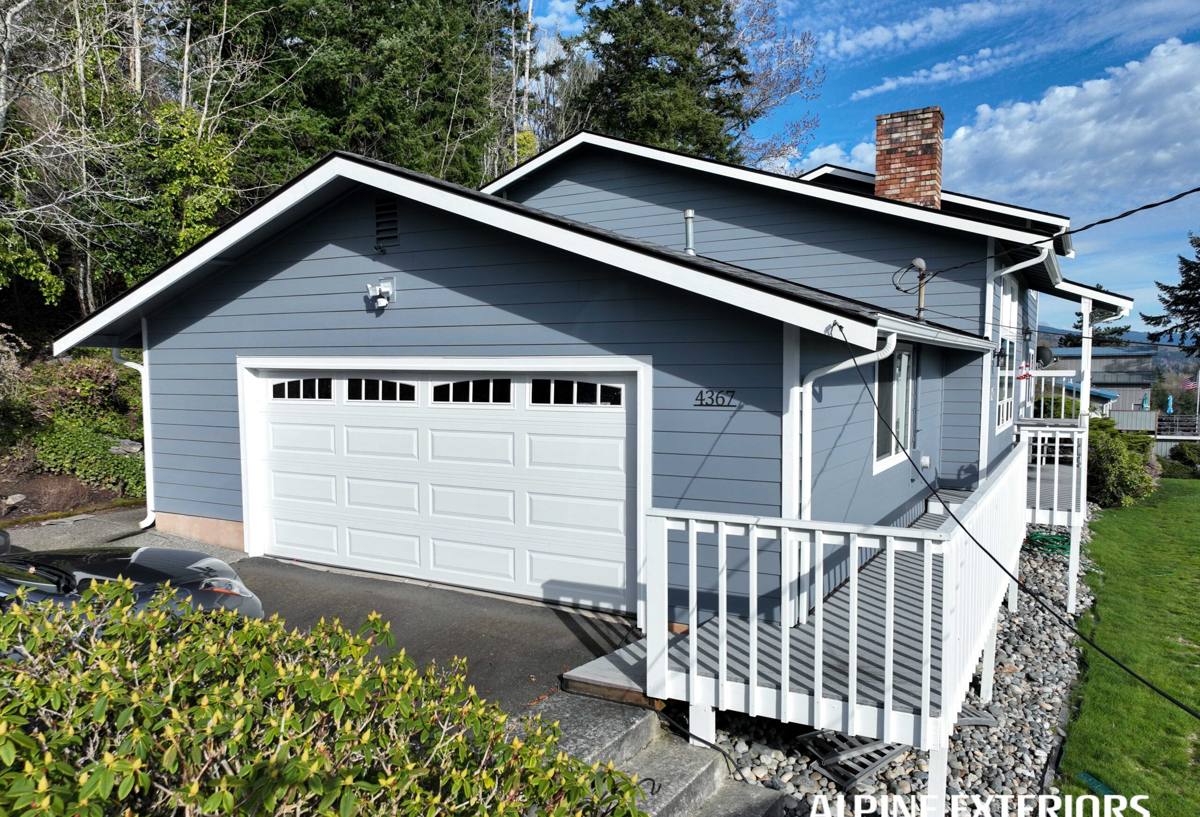
What Kendall's Tree Cover and Terrain Mean for Your Roof
Most Kendall lots have more overhead canopy and more shaded roof area than homes closer to town. That changes the maintenance math on any roofing material:
- Shaded roof sections stay damp longer after every rain, which is exactly the condition moss and moss-related fungal growth need to establish.
- Needle and leaf litter collects in valleys and against any obstruction, holding moisture against the roof surface if it isn't cleared.
- Overhanging limbs mean more debris impact and, during wind events, more risk of branch strikes on the roof.
- Lower morning sun angles under tree cover mean some roof planes may barely dry between rain events for weeks at a time in fall and winter.
None of this is unique to Kendall, but it's more pronounced here than on open lots closer to Ferndale proper. A roofing system that depends on a rough surface texture to hold granules or relies on organic felt underlayment gives moss and moisture more to work with. Standing seam metal, by contrast, presents a smooth, continuous surface with almost nowhere for standing water or debris to sit long-term, provided the panels are laid out to actually funnel water off the roof rather than pooling it at a poorly planned valley or transition.
Panel Types We Work With
Not every metal roofing product performs the same way in a wet, shaded, debris-prone setting. Here's how the common options compare for a property like yours in Kendall.
| Panel Type | Fastening | Best Fit | Trade-Offs |
|---|---|---|---|
| Standing seam | Concealed clips, no exposed screws through the panel field | Homes with heavy shade, moss pressure, or long roof runs | Higher material and labor cost; requires a crew experienced with seaming and panel layout |
| Exposed-fastener panel (screw-down) | Screws driven through the panel into the deck or purlins | Outbuildings, shops, lower-slope accessory roofs | Gasketed screws compress and loosen over time; each fastener is a potential leak point that needs periodic re-torquing or replacement |
| Stone-coated steel shingle/shake panel | Concealed fastener, interlocking panels | Homes wanting a traditional shingle or shake look with metal's durability | More surface texture and overlap detail than standing seam, which can hold debris and moss spores in heavy shade |
For most Kendall homes, we recommend standing seam as the default. Its smooth, unbroken panel field and hidden fastening system give moss the least amount of surface to colonize and eliminate the exposed screw penetrations that tend to be the first thing to fail on a shaded, rarely-dry roof.
Panel Finish and Gauge
Panel material matters as much as panel style. We install steel and aluminum panels with a factory-applied PVDF (Kynar-type) paint finish, which resists fading and chalking far better than lower-grade polyester coatings — a real consideration under filtered tree light where UV exposure is uneven across the roof and mismatched fading becomes visible over time. Panel gauge (thickness) should match the spans and expected loads on your specific roof; a thinner panel that's fine on a small, well-framed section can oil-can or drum under foot traffic and heavy rain on longer runs.
What a Correct Metal Roof Installation Involves
Metal roofing rewards good installation and punishes shortcuts more visibly than asphalt does. A few areas we treat as non-negotiable on every job:
Underlayment
Metal panels move with temperature, and any underlayment beneath them needs to handle both that movement and the reality that a metal roof in a shaded, wet climate stays cooler and damper longer than one in full sun. We use synthetic, high-temp-rated underlayment rather than old-style felt, which breaks down faster under sustained moisture.
Ventilation
A metal roof over an under-ventilated attic can trap condensation on the underside of the panels — a problem that shows up as hidden deck rot long before it's visible from the ground. We check and correct intake and exhaust ventilation as part of the job, not as an afterthought.
Flashing and Valleys
Valleys, chimneys, skylights, and wall transitions are where the large majority of roof leaks originate, metal or otherwise. On a Kendall roof with heavy debris load, valleys also need enough width and slope to actually clear needles and leaves rather than damming them.
Fastening and Panel Layout
Panel runs are laid out to minimize seams in high-flow water paths and to keep clip spacing within the manufacturer's wind and snow load spec for our area — not a generic default spacing.
Snow, Ice, and Whatcom County Weather
Kendall sits at a slightly higher elevation and closer to the foothills than most of Ferndale, which means it can see snow accumulation and colder overnight temperatures that the lowland parts of the county miss. Metal roofing sheds snow readily, which is generally an advantage — but it means snow can slide off in a sheet rather than melting gradually, so we plan snow retention (guards or bars) over entries, walkways, and anywhere a sudden slide would be a hazard or damage plantings and gutters below. We also size and space fasteners and clips to the snow and wind loads applicable to your specific site, not just a standard coastal spec.
What Drives the Cost of a Metal Roof
| Factor | Why It Matters |
|---|---|
| Panel type and finish | Standing seam with PVDF coating costs more upfront than exposed-fastener panel, but needs far less maintenance over its life |
| Roof complexity | Valleys, dormers, and multiple roof planes add seams, flashing, and labor time |
| Tear-off vs. overlay | Removing old roofing and inspecting the deck adds cost but is the only way to confirm the deck underneath is sound |
| Access and tree cover | Limited access and overhanging limbs slow staging and material handling on wooded Kendall lots |
| Ventilation and deck repairs | Correcting inadequate attic ventilation or replacing soft decking adds line items but protects the new roof |
Because every one of these varies by property, we won't quote a number without walking the roof. Broadly, expect metal roofing to run higher upfront than asphalt shingles, with the difference offset over time by a much longer service life and lower repair frequency — especially on a shaded, moss-prone roof where asphalt tends to need attention sooner.
Maintenance a Metal Roof Actually Needs
Metal roofing is low-maintenance, not no-maintenance, particularly under Kendall's tree cover. A simple annual routine keeps most problems from starting:
- Clear needles, leaves, and debris from valleys and around any roof penetrations, especially after fall leaf drop
- Check gutters and downspouts for clogging, since a backed-up gutter can push water back under the roof edge
- Look for any limbs that have grown closer to the roofline since the last trim
- Inspect flashing around chimneys, skylights, and vents for sealant that's dried out or pulled away
- Confirm snow guards and fasteners are still tight and undamaged after winter
Why Hire a Crew That Already Works in Kendall
Metal roofing installation is unforgiving of guesswork, and a roof designed for a dry, open lot doesn't automatically work on a shaded, debris-heavy, higher-elevation property. A crew that already works in Kendall knows to widen valleys for debris flow, plan snow retention for the elevation, and account for the extended damp periods under tree cover when choosing underlayment and ventilation details. That local familiarity is the difference between a metal roof that quietly does its job for decades and one that develops moss, trapped moisture, or leak points within a few years despite being the "right" material on paper.
If you're weighing a metal roof for a Kendall property, we're glad to walk the roof, explain what we see, and put together a free, no-pressure estimate using the form below.